• Skip to primary navigation
  • Skip to main content
  • Skip to primary navigation
  • Skip to main content
Choose which site to search.
University of Arkansas for Medical Sciences Logo University of Arkansas for Medical Sciences
Translational Research Institute
  • UAMS Health
  • Jobs
  • Giving
  • About TRI
    • What We Offer
    • Leadership & Governance
    • Staff
    • Citing Translational Research Institute CTSA Support
    • What is Translational Research?
    • Contact TRI
  • Funding Opportunities
    • Grants
      • Pilot Award Program
      • Consortium of Rural States (CORES) Multi-Institutional Pilot Award Program
      • Team Science Voucher Program
      • Winthrop P. Rockefeller Cancer Institute Rural Research Award Program
    • Scholarships
      • K12 Mentored Research Career Development Scholar Awards Program
      • Health Sciences Innovation and Entrepreneurship Postdoctoral Training Program
      • Implementation Science Scholar Program
      • (STARs) Program – Strategies for Training and Advancing Researchers
      • SMART Program [Master’s in Clinical and Translational Sciences (MS-CTS)]
    • Community
      • Community Based Participatory Research (CBPR) Scholars Program
      • Community Partners Educated as Arkansas Research Leaders (CPEARL) Program
    • Awardee Responsibilities
  • Services & Resources
    • Services
      • Biostatistics, Epidemiology and Research Design (BERD) Consultation
      • Clinical Data Repository (AR-CDR)
      • Comprehensive Informatics Resource Core
      • Mock Study Sections
      • Research Participant Recruitment
      • Research Support: Clinical Trials Innovation Unit (CTIU)
      • Implementation Science Program
      • Research Ethics Consultation
    • Resources
      • ARresearch Registry
      • Center for Health Literacy
      • Data Safety Monitoring
      • Grant Writing & Dissemination
      • UAMS Profiles
      • UAMS Rural Research Network
      • Other Resources
      • COVID-19 Research Guidelines
      • Community Partner Research Training
  • Career Development & Scholarships
    • Scholarship Opportunities
      • K12 Mentored Research Career Development Scholar Awards Program
      • Health Sciences Innovation and Entrepreneurship Postdoctoral Training Program
      • Data Science Scholars Program
      • Implementation Science Scholar Program
      • SMART Program
      • Translational Research Innovations and Partners (TRIP) Program
    • Training & Educational Opportunities
      • innOVATION Seminar Series
      • Path 2 K Program
      • Translational Workforce Development
      • Graduate Certificate in Implementation Science
      • SMART Program [Master’s in Clinical and Translational Sciences (MS-CTS)]
      • Good Clinical Practice Training
    • Didactic Training
  • Community
    • Community Engagement Leadership
    • Community Advisory Board
    • Community Engagement Partners
      • Community Partner Celebration
      • Faith-Academic Initiatives for Transforming Health (FAITH) Network
    • Community Engagement Services
      • Consultations and Technical Assistance
      • Community Review Boards
      • Community Partner Research Training
      • Equipment Library
    • Programs and Funding
      • Community Partners Educated as Arkansas Research Leaders (CPEARL) Program
      • Community Based Participatory Research (CBPR) Scholars Program
      • Community Scientist Academy
    • Toolkits
      • CSA Online Toolkit
      • CPEARL Toolkit
  • Events
    • Research Day
    • Clinical Trials Learning Collaborative
  • Newsroom
  1. University of Arkansas for Medical Sciences
  2. Translational Research Institute
  3. Author: uamsonline
  4. Page 6

uamsonline

UAMS Opioid/Pain Pilot Awardees Named

Six UAMS faculty have received pilot awards in opioid addiction and pain research. The one-year awards of up to $25,000 each were made possible through the UAMS Office of Vice Chancellor for Research and are being administered by the UAMS Translational Research Institute. The pilot projects will provide important preliminary data for these research teams to submit future federal grants to expand opioid addiction and pain research at UAMS.

Below are the awardees, their research titles and their video summaries of their projects:

Johnathan Goree, M.D., Video-based, Patient-Focused Opioid Education in the Perioperative Period: A Feasibility Study; https://youtu.be/QB9f_E9AOG0

Corey Hayes, Pharm.D., MPH, Linking the Arkansas Prescription Drug Monitoring Program Data with the Arkansas All-Payer Claims Database; https://youtu.be/ScgtR2OLZWE

Linda Larson-Prior, Ph.D., Impact of Buprenorphine-Assisted Treatment on Sleep, Mood and Cognition among Opioid Use Disorder Patients; https://youtu.be/sRWujnCwnOQ

 Issam Makhoul, M.D., The Development and Implementation of a Standardized Pain Management Protocol for Adult Sickle Cell Patients; https://youtu.be/rpkW7TqqUVU

Clare Nesmith, M.D., Quantitation of Opioids in Neonates with Neonatal Opioid Withdrawal; https://youtu.be/WA8nL6fucoM

Alison Oliveto, Ph.D., Gamified Intervention to Prevent Adolescent Opioid Misuse; https://youtu.be/uCdG2L3fNN8

The awardees were selected from a diverse and competitive pool of applicants. Seventeen Letters of Intent were submitted, and 12 were invited to submit a full application. Ten full applications were reviewed and scored by a study section of 29 faculty and community reviewers.

The project start date is Jan. 1, 2019.

Filed Under: Front, News, Newsroom Tagged With: Alison Oliveto, Clare Nesmith, Corey Hayes, Issam Makhoul, Johnathan Goree, Laura James, Linda Larson-Prior, opioid, pain, pilot awards, research, translational research, TRI, UAMS, University of Arkansas for Medical Sciences

First UAMS Digital Health Conference a Hit for Researchers, Providers

Nearly everyone in the audience raised their hand when Curtis Lowery, M.D., asked if they used their smartphones for banking or making purchases. In welcoming UAMS’ first Digital Health

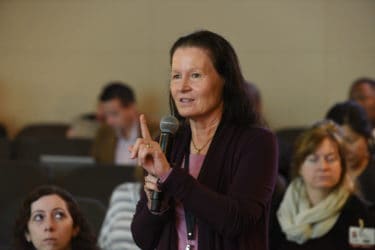
Carolyn Greene, Ph.D., asks a question during the conference

Conference on Nov. 30, he told the 80-plus attendees the health care industry has been frustratingly slower to follow the banking industry’s embrace of digital technology.

“It is unacceptable for me in women’s health to have maternal deaths that are preventable,” said Lowery, a nationally recognized pioneer and innovator in the use of telemedicine who chairs the Department of Obstetrics and Gynecology in the UAMS College of Medicine. “We can do something about it.”

The conference gave researchers and health care providers an overview of the fast evolving digital health technologies and a chance to learn more specifically about the current lag in policies and regulations, and the endless opportunities this technology brings to providers and patients.

Digital health includes interactive video (telemedicine, telehealth), wearable devices, implantable devices, smartphone applications, robotics, augmented intelligence and machine learning.

UAMS digital health researcher Carolyn Greene, Ph.D., associate professor in the College of Medicine Department of Psychiatry, said the

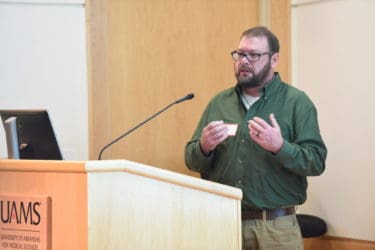
Anita Walden, M.S., speaks with a patient who uses digital health.

day-long conference was a valuable use of her time.

“I loved that there was an opportunity to think about research and the promise of digital health in the future, but also we got a chance to hear about all the incredible digital health work that’s happening right now across the UAMS campuses and across the state,” she said. “As a clinician, you want to know about the shiny objects – you know, the exciting stuff – but sometimes your ability to really use it depends on being able to get reimbursed for it. I thought the conference did a good job of discussing some of those practical aspects also.”

The conference’s keynote speakers were Penny Mohr from the Patient-Centered Outcomes Research Institute (PCORI), where she is senior advisor for Emerging Technology and Delivery System Innovation Research Initiatives; and Mei Wa Kwong, J.D., executive director of the Center for Connected Health Policy, the federally designated National Telehealth Policy Resource Center.

“I really enjoyed hearing Mei Wa Kwong talk,” said Sarah Rhoads, Ph.D., D.N.P., a former UAMS faculty researcher and now a professor at the University of Tennessee Health Science Center at Memphis. “She did a great job simplifying and explaining the payment for mobile health and telehealth and telemedicine and the issues surrounding remote patient monitoring. It’s very important to know what the payers are willing to pay for when it comes to implementing technology.”

John Paul Nolan, a research community advisory board member, urged UAMS to take the lead on digital health.

Rhoads also said she enjoyed Mohr’s perspective on what PCORI can and cannot fund. “It just provided a lot of clarity for me,” she said.

Health systems are behind other industries in adopting digital technologies in part because government policies haven’t kept pace with the advances, said Anita Walden, M.S., a conference organizer and instructor in the Department of Biomedical Informatics in the UAMS College of Medicine.

“Patients are looking forward to using digital technologies, and the industry companies and the payers are moving forward with trying to implement it,” Walden said. “They need the providers to catch up.”

Despite the challenges, Lowery said that UAMS, with the strong support of Chancellor Cam Patterson, M.D., MBA, will lead the state in adoption of digital health technologies.

“I think over the next few years we’re going to build the most modern, connected health care delivery system in the nation because we’re the only teaching hospital in the state and we have a lot of really rural and poor hospital systems everywhere,” he said. “I think all of us are committed to changing that.”

Linda Larson-Prior, Ph.D., asks a question during the conference.

In the next five years, he predicted, the same percentage who are banking on their phones today will be receiving health care through their mobile devices.

John Paul Nolan, a research participant and Community Advisory Board member for a UAMS research study, urged Lowery and other UAMS leaders to take the lead in digital health care. Holmes, a veteran, said an expansion of telemedicine is desperately needed in rural communities. In small towns, residents notice whose vehicle is parked at a mental health clinic. Because of the stigma, people who need help often don’t get it. If mental health services could be provided via interactive video to a veteran with post-traumatic stress disorder, for example, that scenario could be avoided.

“UAMS is poised to provide care,” Nolan said. With smartphones and other mobile devices, “In that moment of crisis, they don’t have to get out of the house. Those are the things we need to be looking at. UAMS brings a very powerful chip to the table because of its infrastructure, its national and international partners and the way that it is set up to study and to disseminate the information to make the public more aware of what’s going on.”

The Digital Health Conference was sponsored by the UAMS Office of Interprofessional Education, with support from the UAMS Center for Distance Health, the Department of Biomedical Informatics, South Central Telehealth Resource Center, and the UAMS Translational Research Institute.

Filed Under: Front, News, Newsroom Tagged With: Carolyn Greene, Curtis Lowery, digital health, digital health conference, Telehealth, Telemedicine, Translational Research Institute, UAMS, University of Arkansas for Medical Sciences

November-December TRIbune

The November–December TRIbune newsletter features the unique community engaged research of Keneshia Bryant-Moore, Ph.D., APRN, FNP-BC. Bryant-Moore, a TRI KL2 Scholar graduate, has secured five Patient Centered Outcomes Research Institute (PCORI) awards. The funding supports her research in partnership with faith leaders to address depression and other health issues.

We also highlight the work of Andrew Burrow, M.D., a rare diseases researcher who has found TRI to be vital in helping him achieve his goals. Our TRI New Study of the Month features an industry-sponsored clinical trial, led by Seth Berney, M.D., of a possible drug for systemic lupus erythematosus.

Filed Under: News, Newsroom Tagged With: Andrew Burrow, Keneshia Bryant-Moore, Laura James, newsletter, Translational Research Institute, TRI, TRIbune, UAMS

Chancellor’s Community Partner Award Goes to Better Community Development Inc.

Better Community Development Inc. (BCD), which has a 25-year history of collaboration with UAMS, received the Chancellor’s Community Research Partner Award at the UAMS Translational Research Institute Community Partner Celebration.

UAMS Chancellor Cam Patterson, M.D., MBA, and TRI Director Laura James, M.D., presented the award to the Rev. William H. Robinson, Deborah Bell and Arlene Williams during a Nov. 16 celebration dinner at The Centre at University Park in Little Rock.

Other UAMS community partners receiving awards were:

Community Based Organization of the Year: Holman Heritage Community Center

The Holman Heritage Community Center, formerly the Holman School serving African American students in Stuttgart until 1970, was restored by Calvin Criner and the school’s alumni to serve as an educational, civic, recreational, and business development resource for their community.

For the past eight years, Criner, executive director of the Holman Heritage Community Center, has served as a community guide for UAMS College of Public Health doctoral students. Criner has demonstrated a commitment to bridging the racial divide in his community. By transparently sharing his extensive knowledge of the historical, geographic, and political landscape of his hometown, the students have learned how complex and deeply rooted the causes of health disparities can be.

Community Advisory Board of the Year Award: 12TH Street Health & Wellness Center Community Advisory Board

Members of the 12th Street Health and Wellness Center Community Advisory Board (CAB) represent various groups and interests of the midtown Little Rock area.  The CAB has provided support for the clinic through advertisement of the clinic’s services, recommendation of services needed by the community, development of the first patient satisfaction survey, and volunteering at the night clinics.   The CAB’s efforts have helped to make sure the clinic is no longer just another building in the community, but a valuable community asset.

Community Partnership Student Award: John Musser

John Musser, a second-year medical student in the UAMS College of Medicine. His vision for Rural Ophthalmology Optometry Treatment and Screening (ROOTS), predates his first year of medical school. This nonprofit partners with eye doctors to help children receive vision treatment. His group has hosted several screenings beginning with an outreach in the Little Rock School District. They provided glasses at no cost to the students and set up follow-up care. Additionally, ROOTS hosted a summer camp to educate children about eye health. Musser has a passion for helping others and is making a difference in children’s lives.

Institutional Health Partner Award: Benton County

Benton County has provided invaluable opportunities to collaboratively develop trainings, interventions, and evidence-based practices for vulnerable populations. Without their support UAMS would not have been able to pilot interventions (such as HIV education and training) that are now statewide and have resulted in over $1 million in revenue for prevention and research.

UAMS has worked with the Benton County Drug Court for over 13 years to enhance the treatment for substance abuse, co-occurring substance abuse and mental health, and wraparound health services offered through the drug court.

Without Benton County’s strong collaboration, much of UAMS’ research and evaluation of the health needs of Arkansas’ most vulnerable residents would not have been possible.

The Chancellor’s Community Research Partner Award: Better Community Development Inc. (BCD)

This award recognizes an outstanding community-based organization that has participated in health research. Previous winners are not eligible for nomination until three years has passed since they received this award.

BCD has been serving high-risk, low-income Arkansans for 37 years. UAMS colleagues from the College of Public Health and College of Medicine, Department of Family and Preventive Medicine, have collaborated with BCD for 25 of those years. UAMS is now partnering with BCD in a three-year Substance Abuse and Mental Health Services Administration (SAMHSA)-funded project to decrease HIV and viral hepatitis (VH) transmission and improve health outcomes among 270 high-risk, low-income, adult African-American women in treatment for substance use disorder (SUD) in Pulaski County. The project is inserting HIV/VH education and testing and other evidence-based services as part of an existing women’s substance use disorder treatment program to increase client engagement and retention, knowledge and self-care behaviors to prevent HIV/VH and improve overall health and well-being.

Filed Under: News, Newsroom Tagged With: 12th Street Health and Wellness, BCD, Benton County, Better Community Development, Community Partner Celebration, Holman Heritage Community Center, John Musser, Translational Research Institute, UAMS

Ten Graduate from UAMS/TRI Community Scientist Academy

Researcher Tiffany Haynes, Ph.D., threw down the gauntlet for the 10 graduates of the UAMS Community Scientist Academy.

“You can’t stop here,” Haynes, assistant professor in the UAMS College of Public Health, said in her keynote speech. She urged the group at their Oct. 30 graduation to share their experience in the academy on social media to help spread the word. She advised them not to be shy about letting UAMS researchers know about their interests and the needs of their communities.

“Don’t wait to find out what research projects are going on at UAMS,” Haynes said. “You come and ask us, ‘What’s going on? How can I get involved?’ Whatever it is you’re passionate about, ask us. You are health champions; you’re on the front lines.”

Haynes got enthusiastic applause, and academy graduate Ferrin Lunestad of Hot Springs said afterward that the call to action resonated with her.

“I’d love to be a science advocate in my own hometown,” Lunestad said. “I have a 6-year-old, and I love the appeal that she made to look at our communities and see what’s needed in a science direction —  recommend research that needs to be done.”

The UAMS Translational Research Institute established the Community Scientist Academy in 2016 on the recommendation of its Community Advisory Board. Its purpose is to increase community understanding about the research process and offer research decision-making opportunities to communities, patients and other stakeholders. These opportunities include reviewing grants; advising on research projects; serving on community review boards, community advisory boards, and patient and family advisory councils; and assisting with ARresearch, the Translational Research Institute’s research participant registry.

Through five academies it has graduated 54 Arkansans.

Below is a sampling of comments other graduates made at the Oct. 30 graduation ceremony:

“I wanted to learn more about research because I previously had an injury and my mother died from breast cancer.” — Sherita Williams, Little Rock

“I was interested because I have been a research participant, and I was interested in looking at the other side of it. I learned that a whole lot of work goes into research; it takes years.” — Christine Murrell, Little Rock

“I learned a lot from this class. There’s probably six or seven (volunteer participant opportunities) that I checked off the list that I would be interested in.” – J.A. Young, Little Rock

Filed Under: News, Newsroom

Amputation Pain Study at UAMS Enrolling Participants

People with frequent and recurring pain from an amputated leg are being enrolled in a University of Arkansas for Medical Sciences (UAMS) research study of a device designed to reduce

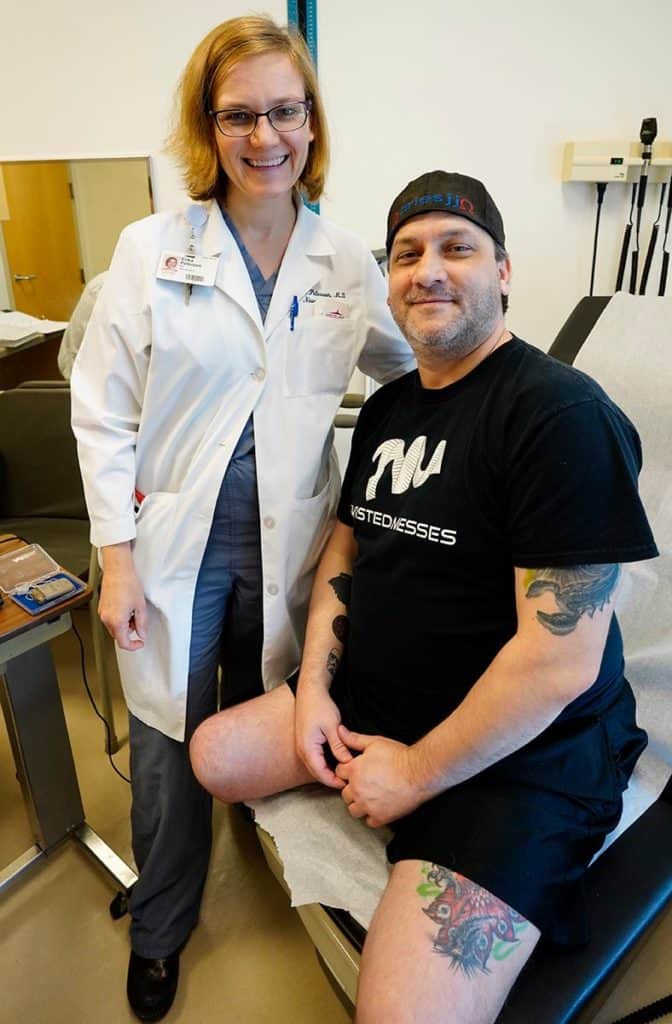
Erika Peterson, M.D., implanted the device in the thigh of Jared Jackson's amputated leg.
Erika Peterson, M.D., implanted the device in the thigh of Jared Jackson’s amputated leg.

amputation pain.

Led at UAMS by Erika Petersen, M.D., a neurosurgeon and researcher, the study is part of a clinical trial being conducted at sites across the United States.

The study is testing the safety and effectiveness of an implanted device, Altius® High Frequency Nerve Block, that is designed to block nerve signals and reduce pain in an amputated limb. The investigational device sends a high-frequency electrical signal to targeted nerves to block the nerve transmission. It was developed by Neuros Medical Inc., in Cleveland, Ohio.

Called the QUEST study (High-FreQUEncy Nerve Block for PoST-Amputation Pain, ClinicalTrials.gov Identifier: NCT02221934), it is a randomized, controlled clinical study of up to 180 patients, at up to 25 clinical study sites in the U.S.

Study participants will undergo surgery to be implanted with the device. It includes a cuff electrode, which is coiled around the nerve, and a pulse generator, which is similar to a pacemaker. Together they deliver an electrical signal to the nerve when activated. Once implanted, study participants can activate a 30-minute treatment session on demand, as needed for their pain. Participants will be followed for a year and seen in clinic once a month. They will also receive modest compensation for their time and travel.

Eligibility requirements for participating in the study include:

  • Having one amputated leg
  • Frequent and recurring amputation pain
  • 21 years of age or older

Those interested in learning if they are eligible may contact the UAMS Translational Research Institute study coordinator, 501-398-8622.

An earlier pilot study involving 10 participants demonstrated that the implant device may be safe and effective for post-amputation pain. (Soin A., Syed Shah N., Fang Z-P. 2015. High-Frequency Electrical Nerve Block for Postamputation Pain: A Pilot Study. Neuromodulation 2015; 18:197-206). DCO# 18-0030 / LB-0042 Rev. A / Effective May 23, 2018 Page 4 of 11.

The project described is supported by the Translational Research Institute (TRI), grant 1U54TR001629-01A1 through the National Center for Advancing Translational Sciences of the National Institutes of Health (NIH). The content is solely the responsibility of the authors and does not necessarily represent the official views of the NIH.

UAMS is the state’s only health sciences university, with colleges of Medicine, Nursing, Pharmacy, Health Professions and Public Health; a graduate school; hospital; northwest Arkansas regional campus; statewide network of regional centers; and six institutes: the Winthrop P. Rockefeller Cancer Institute, Jackson T. Stephens Spine & Neurosciences Institute, Harvey & Bernice Jones Eye Institute, Psychiatric Research Institute, Donald W. Reynolds Institute on Aging and Translational Research Institute. It is the only adult Level 1 trauma center in the state. UAMS has 2,834 students, 822 medical residents and six dental residents. It is the state’s largest public employer with more than 10,000 employees, including 1,200 physicians who provide care to patients at UAMS, its regional campuses throughout the state, Arkansas Children’s Hospital, the VA Medical Center and Baptist Health. Visit www.uams.edu or www.uamshealth.com. Find us on Facebook, Twitter, YouTube or Instagram.

Filed Under: Front, News, Newsroom Tagged With: amputation, clinical trial, implant, pain, Petersen, research, Translational Research Institute, TRI, UAMS, University of Arkansas for Medical Sciences

Digital Health Conference Nov. 30

UAMS’ first Digital Health Conference will be Friday, Nov. 30, 9 a.m. – 3:30 p.m., at Reynolds Institute on Aging. View the agenda. There is no charge for attendance but you must register. Space is limited, so Register Now.

Hear from leaders in the field how emerging digital technologies, such as mobile apps, wearable biomonitors, predictive analytics and artificial intelligence, are transforming health care.

Question? Contact: Anita Walden, acwalden@uams.edu, or Aaron Kemp, ASKemp@uams.edu.

The conference is sponsored by the Office of Interprofessional Education, with support from the South Central Telehealth Resource Center and the Translational Research Institute (TRI).

Filed Under: Front, News, Newsroom Tagged With: conference, digital health, mobile health, research, UAMS

UAMS Staff Recognized by International Group for Research Education Efforts

For a record seventh year in a row, the Arkansas chapter of the international Society of Clinical Research Associates (SOCRA) has been recognized for ensuring the highest quality research by providing the most continuing education hours of any chapter. The annual Chapter Chairperson Recognition Award was presented to Carrie Chiaro, M.P.H., C.C.R.P., from the UAMS Office of Research Compliance, who co-chairs the SOCRA chapter with Melisa Clark, M.S., C.C.R.P., from the UAMS Office of Research Regulatory Affairs.

The Arkansas chapter is the only one of 50+ volunteer chapters to win the award seven consecutive years.

SOCRA chapters offer no-cost clinical research continuing education to enhance research quality, to protect research participants, and to improve the health of the global community.

Also during the annual meeting in New Orleans, Amy Jo Jenkins, M.S., C.C.R.P., C.C.R.A., C.C.R.C., executive director of the UAMS Translational Research Institute, was named president-elect of the SOCRA Board of Directors. Jenkins, a past chapter chairperson, said the chapter’s continued success is due to the participation, collaboration, and common goals of the state’s research professionals.

“UAMS support, particularly from the Office of the Vice Chancellor for Research, the Translational Research Institute, Office of Research Regulatory Affairs, and the Office of Research Compliance, has allowed the chapter to flourish over the last seven years,” Jenkins said. “While the award is technically given to one person, we know that it is our whole membership and those that support us that contribute to our success.”

The Arkansas chapter provided 15.5 continuing education credit hours from June 1, 2017, to May 31, 2018.

“The continuing education we provide ultimately improves the quality of research in our state and enhances the experience and protection of our valued participants,” Jenkins said.

The chapter also provides an avenue for career growth and development, including training and resources for new research staff and the opportunity to earn an accredited professional certification (certified clinical research professional – CCRP) that is recognized internationally by the clinical research industry as evidence of advanced competency in the profession.

The continuing education hours offered by the Arkansas SOCRA chapter also help research staff at UAMS and other sites earn or maintain their Certified Research Specialist (CRS) certification. The CRS certification program, administered by the UAMS Office of Research Compliance, ensures an understanding of, and respect for, the principles of research integrity and the protection of those who participate in research. Although the certification is not required by all departments, UAMS research employees routinely complete the 28 hours of coursework and the comprehensive CRS proficiency exam.

Filed Under: Front, News, Newsroom Tagged With: Amy Jo Jenkins, Carrie Chiaro, Melisa Clark, research, SOCRA, Translational Research Institute, UAMS

ARresearch ‘Kick-Starts’ Digital Health Study Enrollment

A UAMS NIH-funded digital health study needed 128 participants with mild to moderate depression. Within 10 weeks, it had 103, well ahead of schedule, said Carolyn Greene, Ph.D., who is leading the study. TRI’s ARresearch registry of volunteers, she said, has provided about 20 participants.

“That was a good way for us to kick-start this study,” said Greene, associate professor in the Department of Psychiatry, Division of Health Services Research.

Greene’s study is targeting UAMS primary care patients with untreated depression. She said finding such patients for her study is difficult because they may not be coming in for regular doctor visits, or may not feel comfortable discussing their mental health with their doctors.

“That’s where the ARresearch database was extremely helpful to us,” she said.

Greene, who is also the national manager of Mental Health Web Services at the Department of Veterans Affairs, said the study is conducted online or over the phone, from screening to receipt of a gift card for participants.

For eight weeks, a coach will help patients with downloading and using a portfolio of mobile apps, and provide encouragement.

The apps use evidence-based cognitive behavioral tools and have shown that they can help significantly reduce depression. Greene’s study will address how the apps, combined with a coach, could fit into UAMS’ system of care.

“The goal isn’t for the coach to replace a therapist, but to help them use the apps to learn skills and tools to become their own therapist,” Greene said.

The study includes gathering input from clinicians and administrators.

“Our goal is to solve a problem for the primary care clinics, which have many patients with mild to moderate depression but not a lot of resources to provide interventions,” she said.

Filed Under: Front, News, Newsroom Tagged With: ARresearch, Carolyn Greene, depression, digital health, TRI

The October TRIbune Is Out!

In this month’s TRIbune we’re highlighting digital health research successes. For Tamara Perry, M.D., years of dedication developing an asthma application to help teens got a big shot in the arm with a $3.1 million NIH grant. Her app will be tested with 400 asthma patients over the next five years. Perry used data and a prototype app developed with a TRI pilot award and a follow-up pilot from Arkansas Children’s Research Institute to help secure the NIH funding. Carolyn Greene, Ph.D., said TRI’s ARresearch registry of volunteers was a great way to kick-start enrollment for her digital health study seeking participants with depression. This issue also announces UAMS’ first Digital Health Conference on Nov. 30. Our Research on the Horizon features Rohit Dhall, M.D., who is the local principal investigator on an industry-sponsored Parkinson’s disease study. As always, we feature the latest TRI-cited publications.
Read the October TRIbune.

Filed Under: Front, News, Newsroom Tagged With: 2018, digital health, Greene, October, Perry, TRIbune

  • «Previous Page
  • Page 1
  • Interim pages omitted …
  • Page 4
  • Page 5
  • Page 6
  • Page 7
  • Page 8
  • Interim pages omitted …
  • Page 29
  • Next Page»
Translational Research Institute LogoTranslational Research InstituteTranslational Research Institute
Mailing Address: 4301 West Markham Street, Little Rock, AR 72205
Phone: (501) 686-7000
  • Facebook
  • X
  • Instagram
  • YouTube
  • LinkedIn
  • Pinterest
  • Disclaimer
  • Terms of Use
  • Privacy Statement
  • Legal Notices

© 2026 University of Arkansas for Medical Sciences