• Skip to primary navigation
  • Skip to main content
  • Skip to primary navigation
  • Skip to main content
Choose which site to search.
University of Arkansas for Medical Sciences Logo University of Arkansas for Medical Sciences
Translational Research Institute
  • UAMS Health
  • Jobs
  • Giving
  • About TRI
    • What We Offer
    • Leadership & Governance
    • Staff
    • Cite TRI
    • What is Translational Research?
    • Contact TRI
  • Funding Opportunities
    • Grants
      • Pilot Award Program
      • Consortium of Rural States (CORES) Multi-Institutional Pilot Award Program
      • Team Science Voucher Program
      • Winthrop P. Rockefeller Cancer Institute Rural Research Award Program
    • Scholarships
      • K12 Mentored Research Career Development Scholar Awards Program
      • HSIE (T32) Training Program
      • Implementation Science Scholar Program
      • (STARs) Program – Strategies for Training and Advancing Researchers
      • SMART Program [Master’s in Clinical and Translational Sciences (MS-CTS)]
    • Community
      • Community Based Participatory Research (CBPR) Scholars Program
      • Community Partners Educated as Arkansas Research Leaders (CPEARL) Program
    • Awardee Responsibilities
  • Services & Resources
    • Services
      • Biostatistics, Epidemiology and Research Design (BERD) Consultation
      • Clinical Data Repository (AR-CDR)
      • Comprehensive Informatics Resource Core (CIRC)
      • Mock Study Sections
      • Research Participant Recruitment
      • Research Support: Clinical Trials Innovation Unit (CTIU)
      • Implementation Science Program
      • Research Ethics Consultation
    • Resources
      • ARresearch Registry
      • Center for Health Literacy
      • Data Safety Monitoring
      • Grant Writing & Dissemination
      • UAMS Profiles
      • UAMS Rural Research Network
      • Other Resources
      • COVID-19 Research Guidelines
      • Community Partner Research Training
  • Career Development & Scholarships
    • Scholarship Opportunities
      • K12 Mentored Research Career Development Scholar Awards Program
      • HSIE (T32) Training Program
      • Data Science Scholars Program
      • Implementation Science Scholar Program
      • SMART Program
      • Translational Research Innovations and Partners (TRIP) Program
    • Training & Educational Opportunities
      • innOVATION Seminar Series
      • Path 2 K Program
      • Translational Workforce Development
      • Graduate Certificate in Implementation Science
      • SMART Program [Master’s in Clinical and Translational Sciences (MS-CTS)]
      • Good Clinical Practice Training
    • Didactic Training
  • Community
    • Community Engagement Leadership
    • Community Advisory Board
    • Community Engagement Partners
      • Community Partner Celebration
      • Faith-Academic Initiatives for Transforming Health (FAITH) Network
    • Community Engagement Services
      • Consultations and Technical Assistance
      • Community Review Boards
      • Community Partner Research Training
      • Equipment Library
    • Programs and Funding
      • Community Partners Educated as Arkansas Research Leaders (CPEARL) Program
      • Community Based Participatory Research (CBPR) Scholars Program
      • Community Scientist Academy
    • Toolkits
      • CSA Online Toolkit
      • CPEARL Toolkit
  • Events
    • Research Day
    • Clinical Trials Learning Collaborative
  • Newsroom
  1. University of Arkansas for Medical Sciences
  2. Translational Research Institute
  3. TRI

TRI

NIH Awards Five-Year, $24.2 Million Grant to UAMS Translational Research Institute

The University of Arkansas for Medical Sciences (UAMS) Translational Research Institute announced July 3 it will receive five years of federal funding totaling $24.2 million to accelerate research that addresses Arkansas’ biggest health challenges.
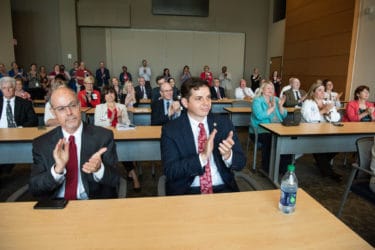
University of Arkansas System President Donald R. Bobbitt, Ph.D., front left, and Jimmy Harris, front right, Little Rock field representative for U.S., Sen. John Boozman, applaud the announcement.

The Translational Research Institute helps researchers turn their ideas and findings into new medical treatments and other health interventions. Its focus is on rural Arkansas populations, where health and health care disparities persist. A major emphasis of the award is research partnerships with Arkansas communities to ensure that research supported by the institute aligns with the priorities and needs of Arkansans.

“This funding recognizes the outstanding research occurring right here in Arkansas,” said U.S. Senator John Boozman. “It will help UAMS researchers build on their successes and develop new therapies and medical procedures that will improve lives in Arkansas and beyond. I was pleased to support the efforts of UAMS to secure this funding, but this award truly is a testament to the body of work produced by UAMS. Arkansans can be proud of all UAMS has accomplished and its bright future that lies ahead.”

The new funding, called a Clinical and Translational Science Award (CTSA), comes from the National Center for Advancing Translational Sciences (NCATS), part of the National Institutes of Health (NIH). UAMS is one of more than 50 CTSA Program sites in the United States. The institute first received CTSA funding in 2009.

“Competition for these awards is fierce, so having a CTSA means we’ve shown UAMS to be among the country’s leading research innovators,” said UAMS Chancellor Cam Patterson, M.D., MBA. “For Arkansans, this award is significant because it will translate to improved health and health care. The university also thanks Sen. Boozman for his important help in achieving this result.”
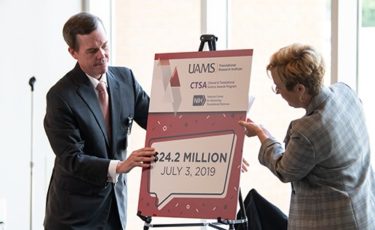
Patterson, left, and James finish unveiling a poster announcing the grant award.

The CTSA award includes a main grant and two training grants. Laura James, M.D., is the principal investigator on the primary Translational Research Institute grant, which totals $20.6 million, and provides research infrastructure and oversite for the entire CTSA program.

“A CTSA is among the most significant NIH awards an institution can receive,” said James, also institute director and UAMS associate vice chancellor for clinical and translational research.  “We are thrilled over this award because it represents the collective effort of numerous faculty members working across diverse research programs. This award demonstrates the synergy and strengths of research talents at UAMS. In addition, the CTSA will harmonize our efforts as health care providers and researchers to improve the health outcomes of Arkansans through research innovations.”

“We are also very proud that this opportunity allows us to work closer with our partner institutions, Arkansas Children’s Hospital (ACH), Arkansas Children’s Research Institute (ACRI) and Central Arkansas Veterans Healthcare System (CAVHS), as well as the UAMS Northwest Regional Campus, to expand the impact of research throughout the state,” James said.

The institute is supporting novel research that addresses significant health issues in Arkansas, such as opioids and pain management, diabetes and obesity, mental health and rare diseases. It is also expanding opportunities for UAMS researchers to participate in multisite clinical trials, including cross-CTSA research opportunities.

“The Translational Research Institute has created a collaborative cross-campus and cross-CTSA environment that enables our researchers to thrive,” said Shuk-Mei Ho, Ph.D., UAMS vice chancellor for research. “The funding is important, and the prestige of being part of the CTSA Program helps us recruit the best researchers nationally.”

The two other grants that are part of the award include the Institutional Career Development Core grant totaling $2.3 million, led by Mary Aitken, M.D., and Brooks Gentry, M.D.; and the National Research Service Award Training Core, $1.3 million, led by Nancy Rusch, Ph.D., and Curtis Lowery, M.D.

“Supporting the development of our early stage translational researchers is critical to ensuring that UAMS and Arkansas have the capacity to meet health challenges of the future,” Aitken said. “The KL2 program has been an central part of the TRI’s efforts to identify and cultivate our research pool and launch the careers of our faculty, and plans for the next phase of TRI to further refine the program make it likely to have continued success.”

The new funding will enable important new and existing efforts to continue, including:

  • Providing the public with easier access to cutting-edge clinical trials.
  • Increasing the number of clinical trials offered at UAMS, ACH, and CAVHS.
  • Pilot grants for the best translational research ideas for improving health and health care.
  • Education and translational science training for early career researchers.
  • Entrepreneurship training to help researchers commercialize their ideas.
  • Implementation science training to identify and adopt the most successful approaches and the latest medical advances.
  • Supporting team-based collaborations at the local and national level.
  • Increasing partnerships with communities to ensure the most meaningful clinical and translational research is conducted with rural populations.
  • Streamlining translational research processes and enhancing research quality with state-of-the-art informatics approaches and methods.
  • Adopting “plain language” communications to ensure research opportunities and findings are disseminated broadly to the public.

In preparation for the award, UAMS developed a number of new research approaches that will help expand research opportunities in the future, including:

  • ARresearch.org, a volunteer research participant registry and website, providing researchers a pool of nearly 6,000 potential research volunteers.
  • Expanding researcher access to de-identified patient data that can be used to understand disease patterns and that provide a framework to guide studies testing new research treatments or approaches.
  • Expansion of cross-institutional collaborations with multiple other CTSA programs across the U.S.
  • Expansion of study management tools and resources, to ensure that research is conducted according to the highest standards of quality and reproducibility.
  • Creation of a Community Scientist Academy, to provide in-depth training for the public on clinical research and to provide service and decision-making opportunities for the public.
  • Expansion of its Community Advisory Board, ensuring that its grassroots stakeholders have a voice in the institute’s efforts.
  • An efficient, cost-saving electronic service request system for researchers, which allows them to select from a menu of over 30 unique services and receive customized help with research-related tasks.

In addition to partnerships with ACH/ACRI and the CAVHS, the institute fosters research collaborations across all UAMS colleges – Medicine, Nursing, Pharmacy, Health Professions and Public Health, as well as the UAMS Graduate School. The National Research Service Award Training Core, led by Rusch, involves a training partnership with the Sam M. Walton College of Business at the University of Arkansas at Fayetteville.

The NCATS/NIH award is under Award Number U54TR001629.

UAMS is the state’s only health sciences university, with colleges of Medicine, Nursing, Pharmacy, Health Professions and Public Health; a graduate school; hospital; a main campus in Little Rock; a Northwest Arkansas regional campus in Fayetteville; a statewide network of regional campuses; and seven institutes: the Winthrop P. Rockefeller Cancer Institute, Jackson T. Stephens Spine & Neurosciences Institute, Harvey & Bernice Jones Eye Institute, Psychiatric Research Institute, Donald W. Reynolds Institute on Aging, Translational Research Institute and Institute for Digital Health & Innovation. It is the only adult Level 1 trauma center in the state. UAMS has 2,727 students, 870 medical residents and five dental residents. It is the state’s largest public employer with more than 10,000 employees, including 1,200 physicians who provide care to patients at UAMS, its regional campuses, Arkansas Children’s Hospital, the VA Medical Center and Baptist Health. Visit www.uams.edu or www.uamshealth.com. Find us on Facebook, Twitter, YouTube or Instagram.

Filed Under: Front, News, Newsroom Tagged With: Cam Patterson, Clinical and Translational Science Award, CTSA, Laura James, NCATS, Senator John Boozman, Translational Research Institute, TRI, UAMS, University of Arkansas for Medical Sciences

The Seven Traits of a Successful Translational Scientist

What makes a successful translational scientist? Members of Translation Together, an international partnership with the National Center for Advancing Translational Sciences (NCATS) and other organizations collaborated to answer this question. Their work resulted in a vision of the ideal translational scientist that encompasses seven traits. Read more about what it means to be a translational scientist.

NCATS also produced an educational video that illustrates these seven fundamental traits. View the video on the TRI website. These efforts aim to raise awareness of the field and the need to foster a highly skilled, creative, and diverse translational science workforce.

Filed Under: Front, News, Newsroom Tagged With: translational research, Translational Research Institute, Translational Science, TRI, UAMS

The June TRIbune

June TRIbune
June TRIbune

In this month’s TRIbune we feature some exciting developments in implementation science. Geoffrey Curran, Ph.D., and Jeremy Thomas, Pharm.D., are leading newly funded efforts to address critical health care issues for rural residents. Implementation science is a relatively new field that aims to promote the uptake of evidence-based interventions into routine care.

Curran, who leads the UAMS Center for Implementation Research, is also spearheading the TRI-supported Implementation Science Scholars Program, a first at UAMS.

The New TRI Study of the Month highlights Mitch McGill, Ph.D., the principal investigator on an acetaminophen study involving liver cirrhosis patients.

Also included are the latest publications citing TRI support.

Read The TRIbune.

Filed Under: Front, News, Newsroom Tagged With: Geoffrey Curran, Implementation Science, Jeremy Thomas, rural health, Telehealth, Translational Research Institute, TRI, UAMS

The TRIbune Features UAMS Neurosurgeons’ Research

The latest TRIbune features the research of neurosurgeons J.D. Day, M.D., and Thomas W. Morris III. The co-principal investigators hope to help determine if a relatively new surgical procedure is better than standard medical management in certain cases of intracerebral hemorrhage. We also highlight the work of our Community Engagement program and its Community Scientist Academy, which has been adapted for the first time to teach students in the Little Rock School District’s Excel Program. We include news that TRI’s innovative methods for incorporating community members into the grant review process will be studied at five institutions (including UAMS) with support from the NIH National Center for Advancing Translational Sciences. The newsletter has our new study of the month led by Clare Nesmith, M.D., and recently cited publications by researchers who received TRI support.

Read The TRIbune

Filed Under: Front, News, Newsroom Tagged With: Clare Nesmith, J.D. Day, Kate Stewart, Laura James, newsletter, Thomas W. Morris, Translational Research Institute, TRI, TRIbune, UAMS

The February TRIbune Newsletter

This month’s TRIbune newsletter highlights exciting developments with the TRI-supported Arkansas Clinical Data Repository (AR-CDR) team, led by Ahmad Baghal, M.D. This talented team

is making UAMS clinical data, as well as data from other institutions, more accessible to researchers.

Read The TRIbune.

Filed Under: Front, News, Newsroom Tagged With: Arkansas Clinical Data Repository, Baghal, data warehouse, newsletter, Translational Research Institute, TRI, TRIbune, UAMS, University of Arkansas for Medical Sciences

TRI Helps Busy Neurosurgeon Lead Multiple Studies

Erika Petersen, M.D., saw the outlines of her career when she was just 16. As a participant in a summer research program at Duke Cancer Institute, she gained insights beyond the lab work.

“As part of the program, I got to stand beside an anesthesiologist and watch open-heart surgery,” she said. “That was the moment I knew I was interested in medicine.”

Petersen, a UAMS neurosurgeon and associate professor in the College of Medicine, also noted at the time how her Duke mentor, a breast oncologist, was able to run a research lab in addition to seeing patients.

“That helped me see a model of how doctors could do research in different ways,” she said.

Futuristic Therapies
Petersen came to UAMS in 2010 and sees patients at the Stephens Spine & Neurosciences Institute. Her expertise in neuromodulation is unique to the region, futuristic even, with her ability to use deep brain stimulation and implant other devices to treat movement disorders and chronic pain.

“I have a friend who jokes that I’m creating cyborgs,” she said.

She’s not, of course. But by working at the cutting edge of medicine, she can help patients who don’t respond to conventional therapies.

“When you meet people who have seen dozens of practitioners, and they come to you saying, ‘I’ve heard great things about you, can you please help me?’ you want to offer every single possibility you can,” Petersen said.

Unfortunately, some of her work isn’t covered by insurance because the procedures are still considered experimental. It’s distressing for her and her patients.

“The compassion to treat versus the business decision of coverage is frustrating, so I’m motivated to create the evidence that will remove the disconnect between the two,” she said.

Prolific PI
Although she has no protected time for research, Petersen has been a prolific principal investigator. She is overseeing two active industry-sponsored clinical trials and three more are in the works. The active studies are testing implanted nerve stimulation devices for chronic amputation pain and diabetic neuropathy. The pending studies will test devices designed for treating chronic back pain (failed back surgery syndrome), and headache pain, including migraines. Another study involves the use of stem cells for stroke patients.

Her leadership of multiple clinical trials is a lot of extra work, but it’s doable for a couple of reasons: One, she is able to blend the trials into her clinical practice, and two, she can get the clinical trial services she needs from the Translational Research Institute (TRI).

Leveraging TRI
“A single clinician with a single nurse doesn’t have the institutional context like TRI for navigating the regulatory issues, the budget negotiations, and legal negotiations,” Petersen said. “Having the team of coordinators at TRI who are backing each other up also ensures that a research participant always has support, and that’s been essential.”

TRI has also helped her promote her research to the general public. “A clinical trial is only as successful as what you can do through recruitment,” she said. “Working with TRI, we’ve done a lot in terms of media and outreach and in identifying subjects in the UAMS Epic (electronic medical record) system. So having those resources to help with recruiting is phenomenal.”

Despite her busy schedule, Petersen has appeared on four local broadcast stations to advocate for the amputation pain study and diabetic neuropathy study. Her public education efforts, which also include an active Twitter account, have contributed to her growing national reputation in the field. UAMS is among a select group of institutions chosen to conduct neuromodulation research. In fact, she said UAMS’ management of the amputation pain study will be a model used by Neuros, the sponsor, for the remaining research centers preparing for participant enrollment.

“When you have a good system and support to successfully manage the research, it leads to ongoing partnerships across multiple studies,” Petersen said.

Filed Under: Front, News, Newsroom Tagged With: Erika Petersen, neuromodulation, neurosurgery, research, Translational Research Institute, TRI, UAMS, University of Arkansas for Medical Sciences

Promise Garden Project Earns Unity Award for TRI, CAVHS

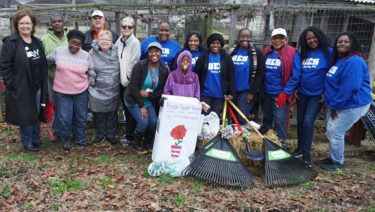
The Translational Research Institute (TRI) was named winner of the Unity Award during the UAMS 2019 Dr. Martin Luther King Jr. Day Celebration, sponsored by the UAMS Center for Diversity Affairs.

Representatives from TRI, CAVHS and Order of the Eastern Stars, Tariq Chapter #6 presented the donations at a recent visit to the Promise Garden.

The Unity Award celebrated the legacy of service advocated by King with a challenge to UAMS groups to partner with others on community service projects. TRI and its partner on the project, the Central Arkansas Veterans Healthcare System, were recognized for a donation drive to benefit the Promise Garden, a community garden at 12th and Peyton streets in Little Rock. Their efforts were bolstered by participation from the women’s sorority Order of the Eastern Stars, Tariq Chapter #6.

Billy Thomas, M.D., M.P.H., vice chancellor, said the center hosts the event not just to celebrate King, but to remind the campus and the broader community that his work is still ongoing.

“In these types of celebrations, we think about all of the things that Dr. King stood for and all the things that he did. But I think we should take this opportunity to build upon his legacy and leave this celebration with the idea that we can do things, not only individually but as an institution, to accomplish that,” he said.

The event included remarks from UAMS Chancellor Cam Patterson, M.D., MBA, as well as a keynote address from Tracey Steele, the first executive director of the Arkansas Martin Luther King Jr. Commission and a former state senator who is now the director of the Health Services Permit Agency.

“Here at UAMS you are a shining example,” he said. “I’m so proud of this institution. I brag on it everywhere I go. I tell people from all over the world of the health care they can receive at this institution. But even when you’re the best, it’s time to step it up. Because you can be even a greater example of what is right.”

In his remarks, Chancellor Patterson said he’s influenced by King in three ways: his urging to do the right thing and avoid doing wrong, the importance of doing the right thing even when facing adversity, and remembering that there is always a vision of a better world, even if it does not exist yet today.

“We cannot give up the struggle until we are there. While we may not get there in our lifetimes, we cannot give up,” Patterson said. “That’s the work that I invest myself in, and I’m reminded of that every year when we celebrate Dr. King.”

Five teams were recognized:

UAMS Translational Research Institute and Central Arkansas Veterans Healthcare System – Health and Wellness Committee: Collected and distributed items needed by the Promise Garden at 12th and Peyton streets in Little Rock. Collection included seeds and tools, as well as cash for chicken feed with the hope of offering sustainable assistance.

College of Medicine – Office of Admissions and UAMS student chapter of the League of United Latin American Citizens: Leading up to Christmas, collected and distributed toys in a drive benefitting community service organization Integrity, Inc. and Bethany Christian Services.

Department of Lab Animal Medicine and Division of Endocrinology – Research: Organized a collection drive of bedding, linens, toiletries and other products and donated them to the Compassion Center, a shelter for homeless, transient, and displaced people in the Little Rock metro area.

Campus Operations – Operational Support Services and Institutional Compliance: Organized a collection for a variety of items, from toiletries to blankets to tents, and provided them to the Van, a nonprofit that reaches out and brings such essentials to homeless camps directly.

Office of Sponsored Programs Administrative Network, Office of Research and Sponsored Programs, Science Communication Group and Grants Management Program Alumni: Organized two fundraisers to supply Christmas gifts to students in three Head Start classrooms and arranged a collection to buy gifts for young people in the care of Immerse Arkansas, which serves youth in crisis not served by the state foster care system.

In an effort to encourage the message of community service so prominent in King’s work, the celebration included a volunteer fair, in which a number of local organizations in need of volunteers were invited to provide staff and students an outlet for community service. They included:

Arkansas Youth Challenge Program

Goodwill Arkansas

Habitat for Humanity of Central Arkansas

Heart of Arkansas United Way

Hospice Home Care

Humane Society of Pulaski County

Jericho Way Day Resource Center

Literacy Action of Central Arkansas

Little Rock Zoo

Our House

UAMS Volunteer Services

Filed Under: Front, News, Newsroom Tagged With: CAVHS, Celebration, Martin Luther King, Promise Garden, Translational Research Institute, TRI, UAMS, Unity Award

UAMS Opioid/Pain Pilot Awardees Named

Six UAMS faculty have received pilot awards in opioid addiction and pain research. The one-year awards of up to $25,000 each were made possible through the UAMS Office of Vice Chancellor for Research and are being administered by the UAMS Translational Research Institute. The pilot projects will provide important preliminary data for these research teams to submit future federal grants to expand opioid addiction and pain research at UAMS.

Below are the awardees, their research titles and their video summaries of their projects:

Johnathan Goree, M.D., Video-based, Patient-Focused Opioid Education in the Perioperative Period: A Feasibility Study; https://youtu.be/QB9f_E9AOG0

Corey Hayes, Pharm.D., MPH, Linking the Arkansas Prescription Drug Monitoring Program Data with the Arkansas All-Payer Claims Database; https://youtu.be/ScgtR2OLZWE

Linda Larson-Prior, Ph.D., Impact of Buprenorphine-Assisted Treatment on Sleep, Mood and Cognition among Opioid Use Disorder Patients; https://youtu.be/sRWujnCwnOQ

 Issam Makhoul, M.D., The Development and Implementation of a Standardized Pain Management Protocol for Adult Sickle Cell Patients; https://youtu.be/rpkW7TqqUVU

Clare Nesmith, M.D., Quantitation of Opioids in Neonates with Neonatal Opioid Withdrawal; https://youtu.be/WA8nL6fucoM

Alison Oliveto, Ph.D., Gamified Intervention to Prevent Adolescent Opioid Misuse; https://youtu.be/uCdG2L3fNN8

The awardees were selected from a diverse and competitive pool of applicants. Seventeen Letters of Intent were submitted, and 12 were invited to submit a full application. Ten full applications were reviewed and scored by a study section of 29 faculty and community reviewers.

The project start date is Jan. 1, 2019.

Filed Under: Front, News, Newsroom Tagged With: Alison Oliveto, Clare Nesmith, Corey Hayes, Issam Makhoul, Johnathan Goree, Laura James, Linda Larson-Prior, opioid, pain, pilot awards, research, translational research, TRI, UAMS, University of Arkansas for Medical Sciences

November-December TRIbune

The November–December TRIbune newsletter features the unique community engaged research of Keneshia Bryant-Moore, Ph.D., APRN, FNP-BC. Bryant-Moore, a TRI KL2 Scholar graduate, has secured five Patient Centered Outcomes Research Institute (PCORI) awards. The funding supports her research in partnership with faith leaders to address depression and other health issues.

We also highlight the work of Andrew Burrow, M.D., a rare diseases researcher who has found TRI to be vital in helping him achieve his goals. Our TRI New Study of the Month features an industry-sponsored clinical trial, led by Seth Berney, M.D., of a possible drug for systemic lupus erythematosus.

Filed Under: News, Newsroom Tagged With: Andrew Burrow, Keneshia Bryant-Moore, Laura James, newsletter, Translational Research Institute, TRI, TRIbune, UAMS

Amputation Pain Study at UAMS Enrolling Participants

People with frequent and recurring pain from an amputated leg are being enrolled in a University of Arkansas for Medical Sciences (UAMS) research study of a device designed to reduce

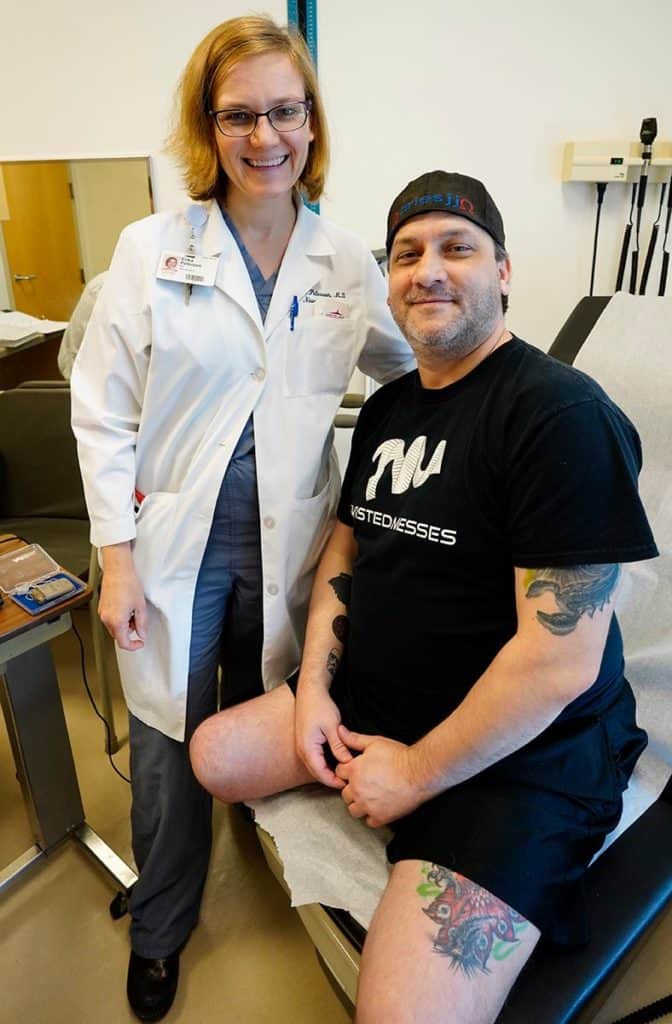
Erika Peterson, M.D., implanted the device in the thigh of Jared Jackson's amputated leg.
Erika Peterson, M.D., implanted the device in the thigh of Jared Jackson’s amputated leg.

amputation pain.

Led at UAMS by Erika Petersen, M.D., a neurosurgeon and researcher, the study is part of a clinical trial being conducted at sites across the United States.

The study is testing the safety and effectiveness of an implanted device, Altius® High Frequency Nerve Block, that is designed to block nerve signals and reduce pain in an amputated limb. The investigational device sends a high-frequency electrical signal to targeted nerves to block the nerve transmission. It was developed by Neuros Medical Inc., in Cleveland, Ohio.

Called the QUEST study (High-FreQUEncy Nerve Block for PoST-Amputation Pain, ClinicalTrials.gov Identifier: NCT02221934), it is a randomized, controlled clinical study of up to 180 patients, at up to 25 clinical study sites in the U.S.

Study participants will undergo surgery to be implanted with the device. It includes a cuff electrode, which is coiled around the nerve, and a pulse generator, which is similar to a pacemaker. Together they deliver an electrical signal to the nerve when activated. Once implanted, study participants can activate a 30-minute treatment session on demand, as needed for their pain. Participants will be followed for a year and seen in clinic once a month. They will also receive modest compensation for their time and travel.

Eligibility requirements for participating in the study include:

  • Having one amputated leg
  • Frequent and recurring amputation pain
  • 21 years of age or older

Those interested in learning if they are eligible may contact the UAMS Translational Research Institute study coordinator, 501-398-8622.

An earlier pilot study involving 10 participants demonstrated that the implant device may be safe and effective for post-amputation pain. (Soin A., Syed Shah N., Fang Z-P. 2015. High-Frequency Electrical Nerve Block for Postamputation Pain: A Pilot Study. Neuromodulation 2015; 18:197-206). DCO# 18-0030 / LB-0042 Rev. A / Effective May 23, 2018 Page 4 of 11.

The project described is supported by the Translational Research Institute (TRI), grant 1U54TR001629-01A1 through the National Center for Advancing Translational Sciences of the National Institutes of Health (NIH). The content is solely the responsibility of the authors and does not necessarily represent the official views of the NIH.

UAMS is the state’s only health sciences university, with colleges of Medicine, Nursing, Pharmacy, Health Professions and Public Health; a graduate school; hospital; northwest Arkansas regional campus; statewide network of regional centers; and six institutes: the Winthrop P. Rockefeller Cancer Institute, Jackson T. Stephens Spine & Neurosciences Institute, Harvey & Bernice Jones Eye Institute, Psychiatric Research Institute, Donald W. Reynolds Institute on Aging and Translational Research Institute. It is the only adult Level 1 trauma center in the state. UAMS has 2,834 students, 822 medical residents and six dental residents. It is the state’s largest public employer with more than 10,000 employees, including 1,200 physicians who provide care to patients at UAMS, its regional campuses throughout the state, Arkansas Children’s Hospital, the VA Medical Center and Baptist Health. Visit www.uams.edu or www.uamshealth.com. Find us on Facebook, Twitter, YouTube or Instagram.
Filed Under: Front, News, Newsroom Tagged With: amputation, clinical trial, implant, pain, Petersen, research, Translational Research Institute, TRI, UAMS, University of Arkansas for Medical Sciences

  • Page 1
  • Page 2
  • Next Page»
Translational Research Institute LogoTranslational Research InstituteTranslational Research Institute
Mailing Address: 4301 West Markham Street, Little Rock, AR 72205
Phone: (501) 686-7000
  • Facebook
  • X
  • Instagram
  • YouTube
  • LinkedIn
  • Pinterest
  • Disclaimer
  • Terms of Use
  • Privacy Statement
  • Legal Notices

© 2025 University of Arkansas for Medical Sciences