• Skip to primary navigation
  • Skip to main content
  • Skip to primary navigation
  • Skip to main content
Choose which site to search.
University of Arkansas for Medical Sciences Logo University of Arkansas for Medical Sciences
Translational Research Institute
  • UAMS Health
  • Jobs
  • Giving
  • About TRI
    • What We Offer
    • Leadership & Governance
    • Staff
    • Cite TRI
    • What is Translational Research?
    • Contact TRI
  • Funding Opportunities
    • Grants
      • Pilot Award Program
      • Consortium of Rural States (CORES) Multi-Institutional Pilot Award Program
      • Team Science Voucher Program
      • Winthrop P. Rockefeller Cancer Institute Rural Research Award Program
    • Scholarships
      • K12 Mentored Research Career Development Scholar Awards Program
      • Health Sciences Innovation and Entrepreneurship Postdoctoral Training Program
      • Implementation Science Scholar Program
      • (STARs) Program – Strategies for Training and Advancing Researchers
      • SMART Program [Master’s in Clinical and Translational Sciences (MS-CTS)]
    • Community
      • Community Based Participatory Research (CBPR) Scholars Program
      • Community Partners Educated as Arkansas Research Leaders (CPEARL) Program
    • Awardee Responsibilities
  • Services & Resources
    • Services
      • Biostatistics, Epidemiology and Research Design (BERD) Consultation
      • Clinical Data Repository (AR-CDR)
      • Comprehensive Informatics Resource Core (CIRC)
      • Mock Study Sections
      • Research Participant Recruitment
      • Research Support: Clinical Trials Innovation Unit (CTIU)
      • Implementation Science Program
      • Research Ethics Consultation
    • Resources
      • ARresearch Registry
      • Center for Health Literacy
      • Data Safety Monitoring
      • Grant Writing & Dissemination
      • UAMS Profiles
      • UAMS Rural Research Network
      • Other Resources
      • COVID-19 Research Guidelines
      • Community Partner Research Training
  • Career Development & Scholarships
    • Scholarship Opportunities
      • K12 Mentored Research Career Development Scholar Awards Program
      • Health Sciences Innovation and Entrepreneurship Postdoctoral Training Program
      • Data Science Scholars Program
      • Implementation Science Scholar Program
      • SMART Program
      • Translational Research Innovations and Partners (TRIP) Program
    • Training & Educational Opportunities
      • innOVATION Seminar Series
      • Path 2 K Program
      • Translational Workforce Development
      • Graduate Certificate in Implementation Science
      • SMART Program [Master’s in Clinical and Translational Sciences (MS-CTS)]
      • Good Clinical Practice Training
    • Didactic Training
  • Community
    • Community Engagement Leadership
    • Community Advisory Board
    • Community Engagement Partners
      • Community Partner Celebration
      • Faith-Academic Initiatives for Transforming Health (FAITH) Network
    • Community Engagement Services
      • Consultations and Technical Assistance
      • Community Review Boards
      • Community Partner Research Training
      • Equipment Library
    • Programs and Funding
      • Community Partners Educated as Arkansas Research Leaders (CPEARL) Program
      • Community Based Participatory Research (CBPR) Scholars Program
      • Community Scientist Academy
    • Toolkits
      • CSA Online Toolkit
      • CPEARL Toolkit
  • Events
    • Research Day
    • Clinical Trials Learning Collaborative
  • Newsroom
  1. University of Arkansas for Medical Sciences
  2. Translational Research Institute
  3. research

research

TRI Now Accepting Applications for KL2 Scholar Awards

Junior faculty, here’s your chance to jump-start your careers!

The Translational Research Institute (TRI) is now accepting applications for its KL2 Mentored Research Career Development Scholar Awards.

  • Letters of Intent are due April 29, 2019.
  • Applications are due June 10, 2019.

Benefits of the two-year program:

  • 75 percent salary support (up to $95,000 per year)
  • $25,000 per year research funding
  • Professional development support

Eligible candidates are faculty with professional doctorates committed to academic careers in translational research.

Special for 2019, one of the four KL2 awards will go to an early-career breast cancer researcher.

More information is available on the TRI Website.

Potential applicants are encouraged to attend the KL2 Information Session on April 11 at noon in the Cancer Institute, Betsy Blass Boardroom, Room 1013. For those offsite, the session is available via Blackboard Collaborate.

For more information, please contact Nia Indelicato, NLIndelicato@uams.edu, 501-526-0363.
Filed Under: Front, News, Newsroom Tagged With: career development, KL2, research, training, Translational Research Institute, UAMS, University of Arkansas for Medical Sciences

TRI Helps Busy Neurosurgeon Lead Multiple Studies

Erika Petersen, M.D., saw the outlines of her career when she was just 16. As a participant in a summer research program at Duke Cancer Institute, she gained insights beyond the lab work.

“As part of the program, I got to stand beside an anesthesiologist and watch open-heart surgery,” she said. “That was the moment I knew I was interested in medicine.”

Petersen, a UAMS neurosurgeon and associate professor in the College of Medicine, also noted at the time how her Duke mentor, a breast oncologist, was able to run a research lab in addition to seeing patients.

“That helped me see a model of how doctors could do research in different ways,” she said.

Futuristic Therapies
Petersen came to UAMS in 2010 and sees patients at the Stephens Spine & Neurosciences Institute. Her expertise in neuromodulation is unique to the region, futuristic even, with her ability to use deep brain stimulation and implant other devices to treat movement disorders and chronic pain.

“I have a friend who jokes that I’m creating cyborgs,” she said.

She’s not, of course. But by working at the cutting edge of medicine, she can help patients who don’t respond to conventional therapies.

“When you meet people who have seen dozens of practitioners, and they come to you saying, ‘I’ve heard great things about you, can you please help me?’ you want to offer every single possibility you can,” Petersen said.

Unfortunately, some of her work isn’t covered by insurance because the procedures are still considered experimental. It’s distressing for her and her patients.

“The compassion to treat versus the business decision of coverage is frustrating, so I’m motivated to create the evidence that will remove the disconnect between the two,” she said.

Prolific PI
Although she has no protected time for research, Petersen has been a prolific principal investigator. She is overseeing two active industry-sponsored clinical trials and three more are in the works. The active studies are testing implanted nerve stimulation devices for chronic amputation pain and diabetic neuropathy. The pending studies will test devices designed for treating chronic back pain (failed back surgery syndrome), and headache pain, including migraines. Another study involves the use of stem cells for stroke patients.

Her leadership of multiple clinical trials is a lot of extra work, but it’s doable for a couple of reasons: One, she is able to blend the trials into her clinical practice, and two, she can get the clinical trial services she needs from the Translational Research Institute (TRI).

Leveraging TRI
“A single clinician with a single nurse doesn’t have the institutional context like TRI for navigating the regulatory issues, the budget negotiations, and legal negotiations,” Petersen said. “Having the team of coordinators at TRI who are backing each other up also ensures that a research participant always has support, and that’s been essential.”

TRI has also helped her promote her research to the general public. “A clinical trial is only as successful as what you can do through recruitment,” she said. “Working with TRI, we’ve done a lot in terms of media and outreach and in identifying subjects in the UAMS Epic (electronic medical record) system. So having those resources to help with recruiting is phenomenal.”

Despite her busy schedule, Petersen has appeared on four local broadcast stations to advocate for the amputation pain study and diabetic neuropathy study. Her public education efforts, which also include an active Twitter account, have contributed to her growing national reputation in the field. UAMS is among a select group of institutions chosen to conduct neuromodulation research. In fact, she said UAMS’ management of the amputation pain study will be a model used by Neuros, the sponsor, for the remaining research centers preparing for participant enrollment.

“When you have a good system and support to successfully manage the research, it leads to ongoing partnerships across multiple studies,” Petersen said.

Filed Under: Front, News, Newsroom Tagged With: Erika Petersen, neuromodulation, neurosurgery, research, Translational Research Institute, TRI, UAMS, University of Arkansas for Medical Sciences

UAMS Opioid/Pain Pilot Awardees Named

Six UAMS faculty have received pilot awards in opioid addiction and pain research. The one-year awards of up to $25,000 each were made possible through the UAMS Office of Vice Chancellor for Research and are being administered by the UAMS Translational Research Institute. The pilot projects will provide important preliminary data for these research teams to submit future federal grants to expand opioid addiction and pain research at UAMS.

Below are the awardees, their research titles and their video summaries of their projects:

Johnathan Goree, M.D., Video-based, Patient-Focused Opioid Education in the Perioperative Period: A Feasibility Study; https://youtu.be/QB9f_E9AOG0

Corey Hayes, Pharm.D., MPH, Linking the Arkansas Prescription Drug Monitoring Program Data with the Arkansas All-Payer Claims Database; https://youtu.be/ScgtR2OLZWE

Linda Larson-Prior, Ph.D., Impact of Buprenorphine-Assisted Treatment on Sleep, Mood and Cognition among Opioid Use Disorder Patients; https://youtu.be/sRWujnCwnOQ

 Issam Makhoul, M.D., The Development and Implementation of a Standardized Pain Management Protocol for Adult Sickle Cell Patients; https://youtu.be/rpkW7TqqUVU

Clare Nesmith, M.D., Quantitation of Opioids in Neonates with Neonatal Opioid Withdrawal; https://youtu.be/WA8nL6fucoM

Alison Oliveto, Ph.D., Gamified Intervention to Prevent Adolescent Opioid Misuse; https://youtu.be/uCdG2L3fNN8

The awardees were selected from a diverse and competitive pool of applicants. Seventeen Letters of Intent were submitted, and 12 were invited to submit a full application. Ten full applications were reviewed and scored by a study section of 29 faculty and community reviewers.

The project start date is Jan. 1, 2019.

Filed Under: Front, News, Newsroom Tagged With: Alison Oliveto, Clare Nesmith, Corey Hayes, Issam Makhoul, Johnathan Goree, Laura James, Linda Larson-Prior, opioid, pain, pilot awards, research, translational research, TRI, UAMS, University of Arkansas for Medical Sciences

Amputation Pain Study at UAMS Enrolling Participants

People with frequent and recurring pain from an amputated leg are being enrolled in a University of Arkansas for Medical Sciences (UAMS) research study of a device designed to reduce

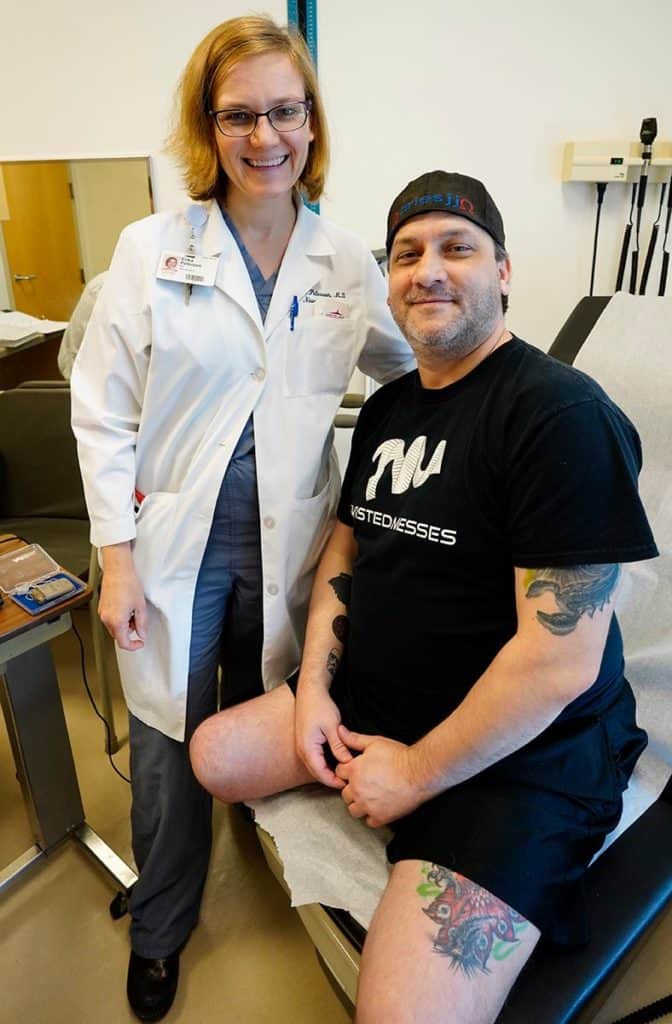
Erika Peterson, M.D., implanted the device in the thigh of Jared Jackson's amputated leg.
Erika Peterson, M.D., implanted the device in the thigh of Jared Jackson’s amputated leg.

amputation pain.

Led at UAMS by Erika Petersen, M.D., a neurosurgeon and researcher, the study is part of a clinical trial being conducted at sites across the United States.

The study is testing the safety and effectiveness of an implanted device, Altius® High Frequency Nerve Block, that is designed to block nerve signals and reduce pain in an amputated limb. The investigational device sends a high-frequency electrical signal to targeted nerves to block the nerve transmission. It was developed by Neuros Medical Inc., in Cleveland, Ohio.

Called the QUEST study (High-FreQUEncy Nerve Block for PoST-Amputation Pain, ClinicalTrials.gov Identifier: NCT02221934), it is a randomized, controlled clinical study of up to 180 patients, at up to 25 clinical study sites in the U.S.

Study participants will undergo surgery to be implanted with the device. It includes a cuff electrode, which is coiled around the nerve, and a pulse generator, which is similar to a pacemaker. Together they deliver an electrical signal to the nerve when activated. Once implanted, study participants can activate a 30-minute treatment session on demand, as needed for their pain. Participants will be followed for a year and seen in clinic once a month. They will also receive modest compensation for their time and travel.

Eligibility requirements for participating in the study include:

  • Having one amputated leg
  • Frequent and recurring amputation pain
  • 21 years of age or older

Those interested in learning if they are eligible may contact the UAMS Translational Research Institute study coordinator, 501-398-8622.

An earlier pilot study involving 10 participants demonstrated that the implant device may be safe and effective for post-amputation pain. (Soin A., Syed Shah N., Fang Z-P. 2015. High-Frequency Electrical Nerve Block for Postamputation Pain: A Pilot Study. Neuromodulation 2015; 18:197-206). DCO# 18-0030 / LB-0042 Rev. A / Effective May 23, 2018 Page 4 of 11.

The project described is supported by the Translational Research Institute (TRI), grant 1U54TR001629-01A1 through the National Center for Advancing Translational Sciences of the National Institutes of Health (NIH). The content is solely the responsibility of the authors and does not necessarily represent the official views of the NIH.

UAMS is the state’s only health sciences university, with colleges of Medicine, Nursing, Pharmacy, Health Professions and Public Health; a graduate school; hospital; northwest Arkansas regional campus; statewide network of regional centers; and six institutes: the Winthrop P. Rockefeller Cancer Institute, Jackson T. Stephens Spine & Neurosciences Institute, Harvey & Bernice Jones Eye Institute, Psychiatric Research Institute, Donald W. Reynolds Institute on Aging and Translational Research Institute. It is the only adult Level 1 trauma center in the state. UAMS has 2,834 students, 822 medical residents and six dental residents. It is the state’s largest public employer with more than 10,000 employees, including 1,200 physicians who provide care to patients at UAMS, its regional campuses throughout the state, Arkansas Children’s Hospital, the VA Medical Center and Baptist Health. Visit www.uams.edu or www.uamshealth.com. Find us on Facebook, Twitter, YouTube or Instagram.

Filed Under: Front, News, Newsroom Tagged With: amputation, clinical trial, implant, pain, Petersen, research, Translational Research Institute, TRI, UAMS, University of Arkansas for Medical Sciences

Digital Health Conference Nov. 30

UAMS’ first Digital Health Conference will be Friday, Nov. 30, 9 a.m. – 3:30 p.m., at Reynolds Institute on Aging. View the agenda. There is no charge for attendance but you must register. Space is limited, so Register Now.

Hear from leaders in the field how emerging digital technologies, such as mobile apps, wearable biomonitors, predictive analytics and artificial intelligence, are transforming health care.

Question? Contact: Anita Walden, acwalden@uams.edu, or Aaron Kemp, ASKemp@uams.edu.

The conference is sponsored by the Office of Interprofessional Education, with support from the South Central Telehealth Resource Center and the Translational Research Institute (TRI).

Filed Under: Front, News, Newsroom Tagged With: conference, digital health, mobile health, research, UAMS

UAMS Staff Recognized by International Group for Research Education Efforts

For a record seventh year in a row, the Arkansas chapter of the international Society of Clinical Research Associates (SOCRA) has been recognized for ensuring the highest quality research by providing the most continuing education hours of any chapter. The annual Chapter Chairperson Recognition Award was presented to Carrie Chiaro, M.P.H., C.C.R.P., from the UAMS Office of Research Compliance, who co-chairs the SOCRA chapter with Melisa Clark, M.S., C.C.R.P., from the UAMS Office of Research Regulatory Affairs.

The Arkansas chapter is the only one of 50+ volunteer chapters to win the award seven consecutive years.

SOCRA chapters offer no-cost clinical research continuing education to enhance research quality, to protect research participants, and to improve the health of the global community.

Also during the annual meeting in New Orleans, Amy Jo Jenkins, M.S., C.C.R.P., C.C.R.A., C.C.R.C., executive director of the UAMS Translational Research Institute, was named president-elect of the SOCRA Board of Directors. Jenkins, a past chapter chairperson, said the chapter’s continued success is due to the participation, collaboration, and common goals of the state’s research professionals.

“UAMS support, particularly from the Office of the Vice Chancellor for Research, the Translational Research Institute, Office of Research Regulatory Affairs, and the Office of Research Compliance, has allowed the chapter to flourish over the last seven years,” Jenkins said. “While the award is technically given to one person, we know that it is our whole membership and those that support us that contribute to our success.”

The Arkansas chapter provided 15.5 continuing education credit hours from June 1, 2017, to May 31, 2018.

“The continuing education we provide ultimately improves the quality of research in our state and enhances the experience and protection of our valued participants,” Jenkins said.

The chapter also provides an avenue for career growth and development, including training and resources for new research staff and the opportunity to earn an accredited professional certification (certified clinical research professional – CCRP) that is recognized internationally by the clinical research industry as evidence of advanced competency in the profession.

The continuing education hours offered by the Arkansas SOCRA chapter also help research staff at UAMS and other sites earn or maintain their Certified Research Specialist (CRS) certification. The CRS certification program, administered by the UAMS Office of Research Compliance, ensures an understanding of, and respect for, the principles of research integrity and the protection of those who participate in research. Although the certification is not required by all departments, UAMS research employees routinely complete the 28 hours of coursework and the comprehensive CRS proficiency exam.

Filed Under: Front, News, Newsroom Tagged With: Amy Jo Jenkins, Carrie Chiaro, Melisa Clark, research, SOCRA, Translational Research Institute, UAMS

Call for Pilot Awards to Address Opioid Addiction and Pain Management

Researchers are encouraged to apply for pilot study awards being offered for opioid addiction and pain management research. Funded by UAMS, one-year awards of $25,000 will be available for studies that can produce data to support applications for larger extramural awards. Letters of intent (LOI) are due Oct. 8, 2018, by noon. View the Letter of Intent cover page.

Multidisciplinary teams will be given priority.  Any UAMS faculty, including at Arkansas Children’s Hospital and Research Institute, and the Central Arkansas Veterans Healthcare System, are invited to apply. View the Request for Applications (RFA) LOI document.  

Frequently Asked Questions

Contact: Nia Indelicato, NLIndelicato@uams.edu, or 501-526-0363.

Key Dates:

  • RFA released: Sept 10
  • Letter of Intent due: Oct. 8, by noon
  • Full applications invited: Oct. 12
  • TRI/Biostatistics consultations: Oct. 15 – 26
  • Proof of IRB submission due: Oct. 29, by noon (include in application)
  • Application due: Oct. 29, by noon
  • Videos due: Nov. 5 
  • Awardees announcement: Dec. 10 
  • Start date: Jan. 1, 2019

Filed Under: Front, News, Newsroom Tagged With: Arkansas Children's, Central Arkansas Veterans Healthcare System, opioids, pilot awards, research, RFA, Translational Research Institute, UAMS, VA

ARresearch.org Registry Hits 5,000 Volunteer Milestone

A registry that matches people’s health interests with research studies at the University of Arkansas for Medical Sciences (UAMS) now has more than 5,000 Arkansans signed up.

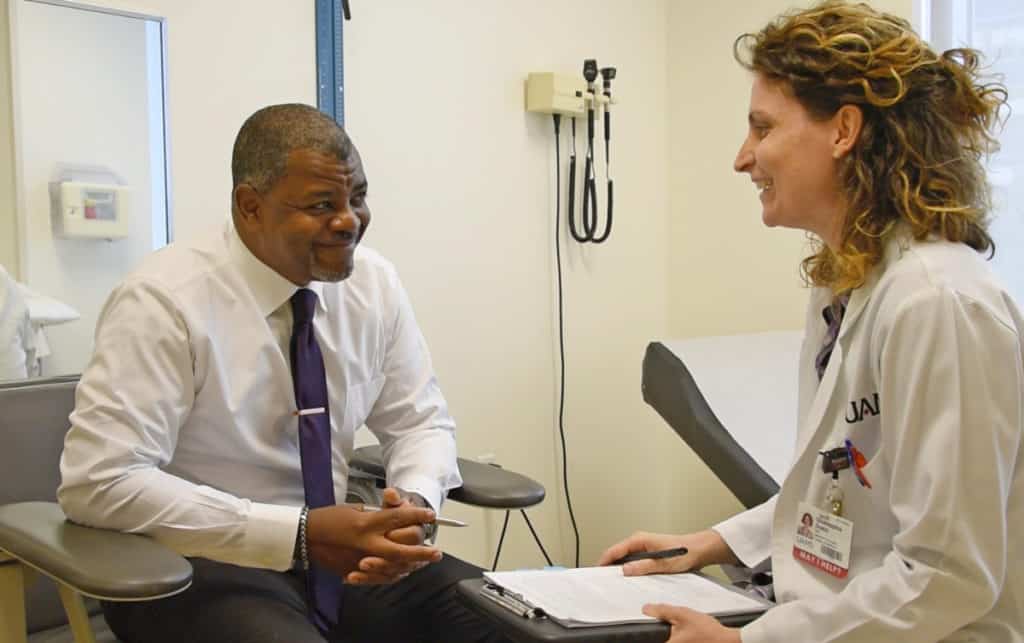
Nathaniel Noble of Little Rock joined the ARresearch.org registry and participated in a UAMS research study coordinated by Research Associate Dusio Giuseppina, Ph.D. (right).

The milestone was reached just two years after the registry was created to help address the critical need for research study volunteers.

“Five thousand is significant because now we are reaching a critical mass of volunteers needed to help our researchers meet their study enrollment targets and produce high-quality findings,” said Laura James, M.D., director of the UAMS Translational Research Institute, which established the registry. “We appreciate the tremendous support of our fellow Arkansans. They tell us wherever we recruit that they love UAMS and enthusiastically support our research mission.”

The registry is at ARresearch.org, a UAMS website created by the Translational Research Institute with input from its Community Advisory Board and UAMS patient advisory groups. Registrants select from a list of 29 health interest areas (allergy, heart disease, skin disorders, etc.) so that researchers know who to contact when they have studies in those health areas. Registrants can select as many of the categories as they want.

Studies at UAMS range from clinical trials (investigational drugs and devices) to health-related surveys and tests of health interventions.

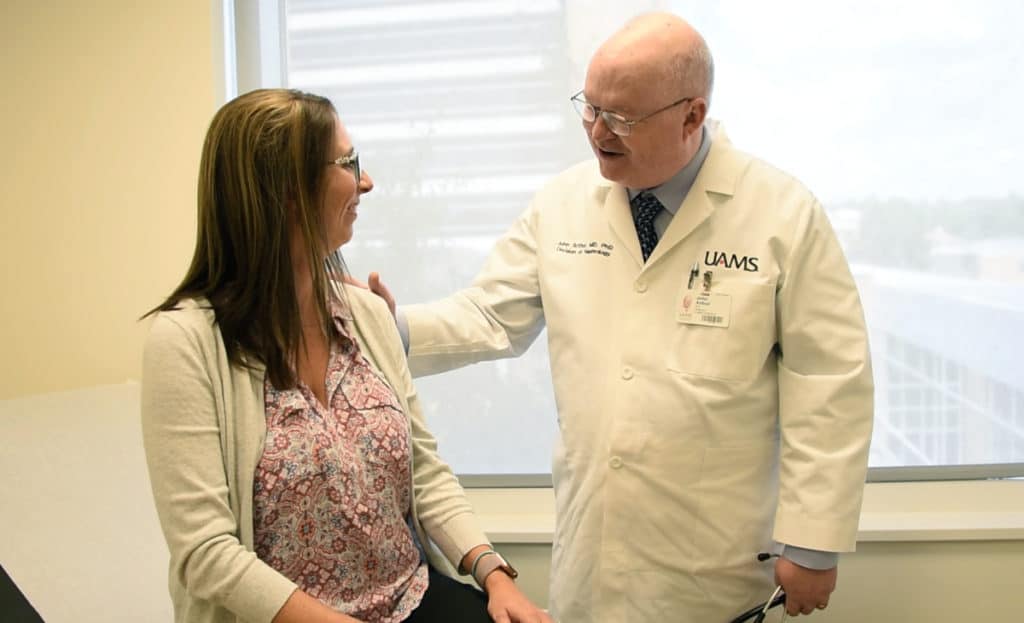
One researcher who has found the registry invaluable is John Arthur, M.D., Ph.D., professor and chief of nephrology in the UAMS College of Medicine. Arthur was able to find 31 participants for his research studying bacteria in the gut of chronic kidney disease patients.

Using the ARresearch.org registry, John Arthur, M.D., Ph.D., found 31 Arkansans to participate in his kidney disease study.

“We really couldn’t have conducted this research without the ability to find fairly large numbers of healthy volunteers, and ARresearch has been fabulous for that,” said Arthur, also associate director of the Translational Research Institute. In addition to helping UAMS researchers, the registry is also popular with Arkansans.

Nathaniel Noble, of Little Rock, joined the ARresearch.org registry last year after hearing about it at a Rotary Club luncheon. He checked the “Healthy Volunteer” option on the form and soon received an email from UAMS asking if he would be interested in participating in Arthur’s kidney research study.

“It hit home because my dad was on dialysis the last years of his life,” Noble said. “I felt that I needed to do my part so maybe someone else’s dad won’t have to go through the same experience.”

Noble said his participation was a good experience. “They were very personable and walked me through the tests they were running. Mine was in three parts and they did whatever it took to work around my schedule.”

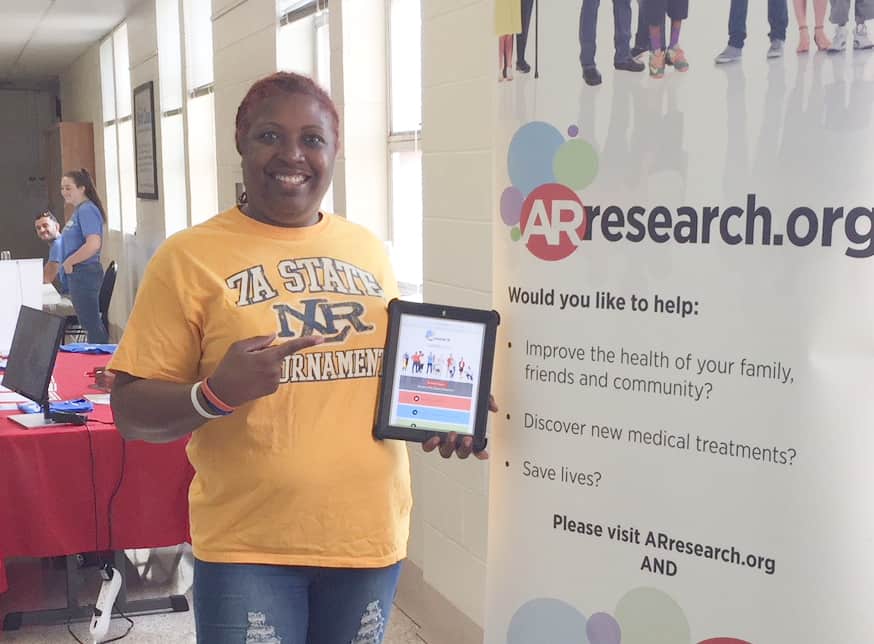
Anita Rose, of North Little Rock, helped put the registry over the 5,000 mark when she joined during the Back to School Bash at North Little Rock Academy on Aug. 11. She said the word “research” immediately got her attention when she saw the

Anita Rose, of North Little Rock, said her mother's breast cancer inspired her to join the ARresearch.org volunteer registry.
Anita Rose, of North Little Rock, said her mother’s breast cancer inspired her to join the ARresearch.org volunteer registry.

ARresearch.org booth.

“My mom had breast cancer and we need that researched more,” Rose said.

Jean McSweeney, Ph.D., R.N., who led development of ARresearch.org, noted that the registry compares well to the demographics in Arkansas’ census data.

“We’ve worked hard to ensure that we are recruiting a broad pool of registrants, and we are proud to have registrants from all 75 Arkansas counties,” said McSweeney, professor and associate dean for research in the College of Nursing. “I think our success can be attributed in part to the early involvement of community representatives when we were developing ARresearch.”

Nationally, up to 48 percent of research studies fail to meet their enrollment goals and most require twice the amount of time to meet their recruitment goals than originally planned, according to a 2013 Tufts University study. As a result, increasing public participation in research has become a priority for the National Institutes of Health (NIH). The Translational Research Institute represents UAMS as part of a national consortium of Clinical and Translational Science Award (CTSA) Program institutions supported by the National Center for Advancing Translational Sciences (NCATS) of the NIH.

UAMS is the state’s only health sciences university, with colleges of Medicine, Nursing, Pharmacy, Health Professions and Public Health; a graduate school; hospital; northwest Arkansas regional campus; statewide network of regional centers; and six institutes: the Winthrop P. Rockefeller Cancer Institute, Jackson T. Stephens Spine & Neurosciences Institute, Harvey & Bernice Jones Eye Institute, Psychiatric Research Institute, Donald W. Reynolds Institute on Aging and Translational Research Institute. It is the only adult Level 1 trauma center in the state. UAMS has 2,834 students, 822 medical residents and six dental residents. It is the state’s largest public employer with more than 10,000 employees, including 1,200 physicians who provide care to patients at UAMS, its regional campuses throughout the state, Arkansas Children’s Hospital, the VA Medical Center and Baptist Health. Visit www.uams.edu or www.uamshealth.com. Find us on Facebook, Twitter, YouTube or Instagram.

Filed Under: Front, Newsroom Tagged With: ARresearch, ARresearch.org, clinical trial, Jean McSweeney, John Arthur, Laura James, participant, recruitment, research, Translational Research Institute, UAMS, University of Arkansas for Medical Sciences, volunteer

Speed Collaborating Event Creates New Research Opportunities

UAMS’ first Speed Collaborating event was so productive for at least one researcher that she joked she now has too many collaboration options.

The two-hour gathering Oct. 5 drew 34 UAMS faculty. Researchers were paired based on their top five research interests and were given 5-10 minutes to discuss potential collaborations. After each brief session, they were paired with another researcher.

Participants who filled out an evaluation form following the event all rated it as either excellent or good. A sampling of their comments include:

  • “This was so good now I have too many collaboration options lol”
  • “The best thing about the event was meeting folks from across campus and hearing about different lines of research going on all over UAMS.”
  • “Thank you very much for the organization. This was something new and exciting I’ve never seen done before. I enjoyed meeting new people!”
  • “What a wonderful networking opportunity, thank you!”

The event was led by the Women’s Faculty Development Caucus Research Committee with support from the UAMS Faculty Center, the Translational Research Institute (TRI) and Office of Interprofessional Education.

Filed Under: Front, News Tagged With: Collaboration, Lisa Brents, research, Robert Reis, Translational Research Institute, UAMS

First TRI Open House Draws More than 100

Sarah Rhoads, Ph.D., D.N.P., visits with TRI’s Nia Indelicato and Amy Jo Jenkins.

The first Open House for the UAMS Translational Research Institute (TRI) drew more than 100 attendees from UAMS’ research community interested in learning about the resources and services offered by TRI.

TRI held the open house as a fun way to introduce itself to new researchers and for others to learn more about what all TRI has to offer. In addition to the 19 featured research services, the event included food and wine, as well as door prizes.

Both new and veteran UAMS researchers echoed their approval.

Hari Eswaran, Ph.D., a long-time professor in the College of Medicine Department of Obstetrics and Gynecology, said he was familiar with many of TRI’s offerings, but he discovered more during the open house.

TRI-supported services and resources on display included those of its Clinical Trials Innovation Unit, community engagement, participant recruitment, pilot awards, KL2 scholar awards, biostatistics, biomedical informatics, implementation science and entrepreneurship initiatives.

“Everybody knows TRI but probably not the whole gamut of what they do,” Eswaran said. “For example, I didn’t know about their implementation science function.”

Carolyn Greene, Ph.D., an associate professor in the Department of Psychiatry who is new to UAMS, said she was pleasantly surprised by the event.

“I’m really impressed by all the resources in one place,” she said. “Everything I need is right here.”

Sarah Rhoads, Ph.D., D.N.P., was also happy with the event. “I like how I can see everything that TRI offers, from A to Z, in one place.”

TRI’s Kate Stewart, M.D., M.P.H., and Anna Huff, (seated) speak with attendees about TRI’s Community Engagement Program.

TRI Director Laura James, M.D., said she plans to hold the Open House annually.

Filed Under: Front, News Tagged With: Laura James, Open House, research, Resources, Sarah Rhoads, Services, Translational Research Institute, TRI

  • Page 1
  • Page 2
  • Next Page»
Translational Research Institute LogoTranslational Research InstituteTranslational Research Institute
Mailing Address: 4301 West Markham Street, Little Rock, AR 72205
Phone: (501) 686-7000
  • Facebook
  • X
  • Instagram
  • YouTube
  • LinkedIn
  • Pinterest
  • Disclaimer
  • Terms of Use
  • Privacy Statement
  • Legal Notices

© 2026 University of Arkansas for Medical Sciences