• Skip to primary navigation
  • Skip to main content
  • Skip to primary navigation
  • Skip to main content
Choose which site to search.
University of Arkansas for Medical Sciences Logo University of Arkansas for Medical Sciences
Translational Research Institute
  • UAMS Health
  • Jobs
  • Giving
  • About TRI
    • What We Offer
    • Leadership & Governance
    • Staff
    • Cite TRI
    • What is Translational Research?
    • Contact TRI
  • Funding Opportunities
    • Grants
      • Pilot Award Program
      • Consortium of Rural States (CORES) Multi-Institutional Pilot Award Program
      • Team Science Voucher Program
      • Winthrop P. Rockefeller Cancer Institute Rural Research Award Program
    • Scholarships
      • K12 Mentored Research Career Development Scholar Awards Program
      • Health Sciences Innovation and Entrepreneurship Postdoctoral Training Program
      • Implementation Science Scholar Program
      • (STARs) Program – Strategies for Training and Advancing Researchers
      • SMART Program [Master’s in Clinical and Translational Sciences (MS-CTS)]
    • Community
      • Community Based Participatory Research (CBPR) Scholars Program
      • Community Partners Educated as Arkansas Research Leaders (CPEARL) Program
    • Awardee Responsibilities
  • Services & Resources
    • Services
      • Biostatistics, Epidemiology and Research Design (BERD) Consultation
      • Clinical Data Repository (AR-CDR)
      • Comprehensive Informatics Resource Core
      • Mock Study Sections
      • Research Participant Recruitment
      • Research Support: Clinical Trials Innovation Unit (CTIU)
      • Implementation Science Program
      • Research Ethics Consultation
    • Resources
      • ARresearch Registry
      • Center for Health Literacy
      • Data Safety Monitoring
      • Grant Writing & Dissemination
      • UAMS Profiles
      • UAMS Rural Research Network
      • Other Resources
      • COVID-19 Research Guidelines
      • Community Partner Research Training
  • Career Development & Scholarships
    • Scholarship Opportunities
      • K12 Mentored Research Career Development Scholar Awards Program
      • Health Sciences Innovation and Entrepreneurship Postdoctoral Training Program
      • Data Science Scholars Program
      • Implementation Science Scholar Program
      • SMART Program
      • Translational Research Innovations and Partners (TRIP) Program
    • Training & Educational Opportunities
      • innOVATION Seminar Series
      • Path 2 K Program
      • Translational Workforce Development
      • Graduate Certificate in Implementation Science
      • SMART Program [Master’s in Clinical and Translational Sciences (MS-CTS)]
      • Good Clinical Practice Training
    • Didactic Training
  • Community
    • Community Engagement Leadership
    • Community Advisory Board
    • Community Engagement Partners
      • Community Partner Celebration
      • Faith-Academic Initiatives for Transforming Health (FAITH) Network
    • Community Engagement Services
      • Consultations and Technical Assistance
      • Community Review Boards
      • Community Partner Research Training
      • Equipment Library
    • Programs and Funding
      • Community Partners Educated as Arkansas Research Leaders (CPEARL) Program
      • Community Based Participatory Research (CBPR) Scholars Program
      • Community Scientist Academy
    • Toolkits
      • CSA Online Toolkit
      • CPEARL Toolkit
  • Events
    • Research Day
    • Clinical Trials Learning Collaborative
  • Newsroom
  1. University of Arkansas for Medical Sciences
  2. Translational Research Institute
  3. University of Arkansas for Medical Sciences

University of Arkansas for Medical Sciences

UAMS Translational Research Institute Launches Entrepreneurship Training Program with University of Arkansas, Fayetteville

A first-of-its-kind entrepreneurship training program at the University of Arkansas for Medical Sciences (UAMS) will teach its most promising young innovators how to move their health-science technologies into the marketplace.

The UAMS Translational Research Institute kicked off the program with the announcement of its first four postdoctoral trainees in the Health Science Innovation & Entrepreneurship (HSIE) Postdoctoral Scholars Program.

Entrepreneurship scholars: Melody Penning, Ph.D., Aaron Storey, Ph.D., Samir Jenkins, Ph.D., and Astha Malhotra, Ph.D.
Entrepreneurship scholars: Melody Penning, Ph.D., Aaron Storey, Ph.D., Samir Jenkins, Ph.D., and Astha Malhotra, Ph.D. 

The 15-credit graduate entrepreneurship training includes a significant new partnership with the Sam M. Walton College of Business at the University of Arkansas, Fayetteville.

The college will provide distance education courses to the UAMS scholars, who also will work with MBA student teams at the UA to develop commercialization plans for health-science technologies conceived at UAMS. The four selected in the competitive application process and their research interest areas are:

  • Samir Jenkins, Ph.D., nanomaterials and stem cell differentiation.
  • Astha Malhotra, Ph.D., 3-D printing and tissue regeneration.
  • Melody Penning, Ph.D., algorithms to predict adverse events in health care.
  • Aaron Storey, Ph.D., identification of bacteria in synovial fluid.

“The concept of translational research challenges us to more quickly move biomedical innovations and new technologies into everyday practice, and knowledge of the commercialization process is a critical factor to meet that challenge,” said Nancy Rusch, Ph.D., the program’s co-director, and professor and chair of the Department of Pharmacology and Toxicology in the UAMS College of Medicine.

“I am thrilled to see this program take off and to have such an esteemed partner as Dr. Carol Reeves at the Walton College of Business, who is known nationally for developing entrepreneurs,” she said.

Carol Reeves, Ph.D., UA associate vice chancellor for entrepreneurship and innovation, said the program establishes an important new link for collaboration between the UA and UAMS.

“What the Translational Research Institute is doing with this program is a great complement to our MBA program and our graduate certificate in entrepreneurship. The UAMS scholars, biomedical discoveries and innovations are an exciting addition that strengthens both institutions.”

The collaborative relationship with Reeves’ program has its roots in the 2016 Entrepreneurship Boot Camp for UAMS graduate students. Reeves led instruction along with Rusch and Nancy Gray, Ph.D., president of BioVentures, and there have been many other collaborations since then.

The boot camp inspired Amanda Stolarz, Ph.D., a then UAMS graduate student, to join one of Reeves’ MBA teams that went on to win the 2017 Donald W. Reynolds Governor’s Cup competition along with the $25,000 top prize.

“Dr. Stolarz set a high bar for future UAMS entrepreneurs,” said Gray, who is part of the program’s leadership team. “We have a program in place now to provide the mentorship and coaching that will help aspiring UAMS entrepreneurs translate biomedical discoveries into new products, diagostics and medications to improve health outcomes. In parallel, and in partnership with the Arkansas’ business community, we plan to contribute to the growth of biotechnology-based jobs in the state.”

In addition to Rusch and Gray, the program’s leadership team includes other UAMS faculty with entrepreneurial backgrounds: Curtis Lowery, M.D., the program’s co-director and director of the new UAMS Institute for Digital Health & Innovation; Kevin Sexton, M.D., a surgeon and assistant professor in the College of Medicine, and Jay Gandy, Ph.D., chair of the program’s Internal Advisory Committee. Gandy also is professor and chair of the Department of Environmental and Occupational Health in the UAMS College of Public Health and incoming associate provost at the UAMS Northwest Regional Campus.

The project is supported by the Translational Research Institute, grant TL1 TR003109 funded by the National Center for Advancing Translational Sciences of the National Institutes of Health (NIH). The content is solely the responsibility of the authors and does not necessarily represent the official views of the NIH.

UAMS is the state’s only health sciences university, with colleges of Medicine, Nursing, Pharmacy, Health Professions and Public Health; a graduate school; hospital; a main campus in Little Rock; a Northwest Arkansas regional campus in Fayetteville; a statewide network of regional campuses; and seven institutes: the Winthrop P. Rockefeller Cancer Institute, Jackson T. Stephens Spine & Neurosciences Institute, Harvey & Bernice Jones Eye Institute, Psychiatric Research Institute, Donald W. Reynolds Institute on Aging, Translational Research Institute and Institute for Digital Health & Innovation. It is the only adult Level 1 trauma center in the state. UAMS has 2,727 students, 870 medical residents and five dental residents. It is the state’s largest public employer with more than 10,000 employees, including 1,200 physicians who provide care to patients at UAMS, its regional campuses, Arkansas Children’s Hospital, the VA Medical Center and Baptist Health. Visit www.uams.edu or www.uamshealth.com. Find us on Facebook, Twitter, YouTube or Instagram.
Filed Under: Front, News, Newsroom Tagged With: Carol Reeves, Curtis Lowery, entrepreneurship, Nancy Gray, Nancy Rusch, Translational Research Institute, UAMS, University of Arkansas, University of Arkansas for Medical Sciences, Walton College of Business

NIH Awards Five-Year, $24.2 Million Grant to UAMS Translational Research Institute

The University of Arkansas for Medical Sciences (UAMS) Translational Research Institute announced July 3 it will receive five years of federal funding totaling $24.2 million to accelerate research that addresses Arkansas’ biggest health challenges.

University of Arkansas System President Donald R. Bobbitt, Ph.D., front left, and Jimmy Harris, front right, Little Rock field representative for U.S., Sen. John Boozman, applaud the announcement.

The Translational Research Institute helps researchers turn their ideas and findings into new medical treatments and other health interventions. Its focus is on rural Arkansas populations, where health and health care disparities persist. A major emphasis of the award is research partnerships with Arkansas communities to ensure that research supported by the institute aligns with the priorities and needs of Arkansans.

“This funding recognizes the outstanding research occurring right here in Arkansas,” said U.S. Senator John Boozman. “It will help UAMS researchers build on their successes and develop new therapies and medical procedures that will improve lives in Arkansas and beyond. I was pleased to support the efforts of UAMS to secure this funding, but this award truly is a testament to the body of work produced by UAMS. Arkansans can be proud of all UAMS has accomplished and its bright future that lies ahead.”

The new funding, called a Clinical and Translational Science Award (CTSA), comes from the National Center for Advancing Translational Sciences (NCATS), part of the National Institutes of Health (NIH). UAMS is one of more than 50 CTSA Program sites in the United States. The institute first received CTSA funding in 2009.

“Competition for these awards is fierce, so having a CTSA means we’ve shown UAMS to be among the country’s leading research innovators,” said UAMS Chancellor Cam Patterson, M.D., MBA. “For Arkansans, this award is significant because it will translate to improved health and health care. The university also thanks Sen. Boozman for his important help in achieving this result.”

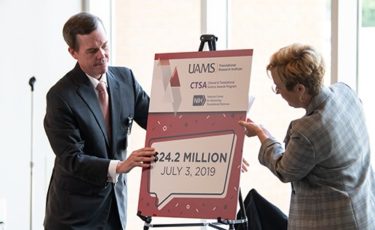
Patterson, left, and James finish unveiling a poster announcing the grant award.

The CTSA award includes a main grant and two training grants. Laura James, M.D., is the principal investigator on the primary Translational Research Institute grant, which totals $20.6 million, and provides research infrastructure and oversite for the entire CTSA program.

“A CTSA is among the most significant NIH awards an institution can receive,” said James, also institute director and UAMS associate vice chancellor for clinical and translational research.  “We are thrilled over this award because it represents the collective effort of numerous faculty members working across diverse research programs. This award demonstrates the synergy and strengths of research talents at UAMS. In addition, the CTSA will harmonize our efforts as health care providers and researchers to improve the health outcomes of Arkansans through research innovations.”

“We are also very proud that this opportunity allows us to work closer with our partner institutions, Arkansas Children’s Hospital (ACH), Arkansas Children’s Research Institute (ACRI) and Central Arkansas Veterans Healthcare System (CAVHS), as well as the UAMS Northwest Regional Campus, to expand the impact of research throughout the state,” James said.

The institute is supporting novel research that addresses significant health issues in Arkansas, such as opioids and pain management, diabetes and obesity, mental health and rare diseases. It is also expanding opportunities for UAMS researchers to participate in multisite clinical trials, including cross-CTSA research opportunities.

“The Translational Research Institute has created a collaborative cross-campus and cross-CTSA environment that enables our researchers to thrive,” said Shuk-Mei Ho, Ph.D., UAMS vice chancellor for research. “The funding is important, and the prestige of being part of the CTSA Program helps us recruit the best researchers nationally.”

The two other grants that are part of the award include the Institutional Career Development Core grant totaling $2.3 million, led by Mary Aitken, M.D., and Brooks Gentry, M.D.; and the National Research Service Award Training Core, $1.3 million, led by Nancy Rusch, Ph.D., and Curtis Lowery, M.D.

“Supporting the development of our early stage translational researchers is critical to ensuring that UAMS and Arkansas have the capacity to meet health challenges of the future,” Aitken said. “The KL2 program has been an central part of the TRI’s efforts to identify and cultivate our research pool and launch the careers of our faculty, and plans for the next phase of TRI to further refine the program make it likely to have continued success.”

The new funding will enable important new and existing efforts to continue, including:

  • Providing the public with easier access to cutting-edge clinical trials.
  • Increasing the number of clinical trials offered at UAMS, ACH, and CAVHS.
  • Pilot grants for the best translational research ideas for improving health and health care.
  • Education and translational science training for early career researchers.
  • Entrepreneurship training to help researchers commercialize their ideas.
  • Implementation science training to identify and adopt the most successful approaches and the latest medical advances.
  • Supporting team-based collaborations at the local and national level.
  • Increasing partnerships with communities to ensure the most meaningful clinical and translational research is conducted with rural populations.
  • Streamlining translational research processes and enhancing research quality with state-of-the-art informatics approaches and methods.
  • Adopting “plain language” communications to ensure research opportunities and findings are disseminated broadly to the public.

In preparation for the award, UAMS developed a number of new research approaches that will help expand research opportunities in the future, including:

  • ARresearch.org, a volunteer research participant registry and website, providing researchers a pool of nearly 6,000 potential research volunteers.
  • Expanding researcher access to de-identified patient data that can be used to understand disease patterns and that provide a framework to guide studies testing new research treatments or approaches.
  • Expansion of cross-institutional collaborations with multiple other CTSA programs across the U.S.
  • Expansion of study management tools and resources, to ensure that research is conducted according to the highest standards of quality and reproducibility.
  • Creation of a Community Scientist Academy, to provide in-depth training for the public on clinical research and to provide service and decision-making opportunities for the public.
  • Expansion of its Community Advisory Board, ensuring that its grassroots stakeholders have a voice in the institute’s efforts.
  • An efficient, cost-saving electronic service request system for researchers, which allows them to select from a menu of over 30 unique services and receive customized help with research-related tasks.

In addition to partnerships with ACH/ACRI and the CAVHS, the institute fosters research collaborations across all UAMS colleges – Medicine, Nursing, Pharmacy, Health Professions and Public Health, as well as the UAMS Graduate School. The National Research Service Award Training Core, led by Rusch, involves a training partnership with the Sam M. Walton College of Business at the University of Arkansas at Fayetteville.

The NCATS/NIH award is under Award Number U54TR001629.

UAMS is the state’s only health sciences university, with colleges of Medicine, Nursing, Pharmacy, Health Professions and Public Health; a graduate school; hospital; a main campus in Little Rock; a Northwest Arkansas regional campus in Fayetteville; a statewide network of regional campuses; and seven institutes: the Winthrop P. Rockefeller Cancer Institute, Jackson T. Stephens Spine & Neurosciences Institute, Harvey & Bernice Jones Eye Institute, Psychiatric Research Institute, Donald W. Reynolds Institute on Aging, Translational Research Institute and Institute for Digital Health & Innovation. It is the only adult Level 1 trauma center in the state. UAMS has 2,727 students, 870 medical residents and five dental residents. It is the state’s largest public employer with more than 10,000 employees, including 1,200 physicians who provide care to patients at UAMS, its regional campuses, Arkansas Children’s Hospital, the VA Medical Center and Baptist Health. Visit www.uams.edu or www.uamshealth.com. Find us on Facebook, Twitter, YouTube or Instagram.

Filed Under: Front, News, Newsroom Tagged With: Cam Patterson, Clinical and Translational Science Award, CTSA, Laura James, NCATS, Senator John Boozman, Translational Research Institute, TRI, UAMS, University of Arkansas for Medical Sciences

TRI Now Accepting Applications for KL2 Scholar Awards

Junior faculty, here’s your chance to jump-start your careers!

The Translational Research Institute (TRI) is now accepting applications for its KL2 Mentored Research Career Development Scholar Awards.

  • Letters of Intent are due April 29, 2019.
  • Applications are due June 10, 2019.

Benefits of the two-year program:

  • 75 percent salary support (up to $95,000 per year)
  • $25,000 per year research funding
  • Professional development support

Eligible candidates are faculty with professional doctorates committed to academic careers in translational research.

Special for 2019, one of the four KL2 awards will go to an early-career breast cancer researcher.

More information is available on the TRI Website.

Potential applicants are encouraged to attend the KL2 Information Session on April 11 at noon in the Cancer Institute, Betsy Blass Boardroom, Room 1013. For those offsite, the session is available via Blackboard Collaborate.

For more information, please contact Nia Indelicato, NLIndelicato@uams.edu, 501-526-0363.

Filed Under: Front, News, Newsroom Tagged With: career development, KL2, research, training, Translational Research Institute, UAMS, University of Arkansas for Medical Sciences

Apply Now for UAMS Commercialization Course – Deadline Extended to March 22

The application deadline for the second annual UAMS fastPACE Course has been extended to Friday, March 22. The 4-week biomedical commercialization course is designed for busy researchers and clinicians with an early stage project. It begins March 29.

The course was developed by FastForward Medical Innovations at the University of Michigan and is modeled after the successful National Science Foundation I-Corps program. It blends in-person and online education to help faculty researchers and clinicians learn the basic components of biomedical commercialization and prepare a successful business case for funding and development partnerships.

Enrollment is open to faculty, clinical practitioners, and post-doctoral fellows who have an early stage biomedical innovation or idea. More information and a link to the application can be found at https://bioventures.uams.edu/fastpace/. If you are a graduate or medical student interested in entrepreneurship and wish to simply join a team, please fill out the fastPACE Intake Survey, at https://bioventures.uams.edu/fastpace/intake-survey/.

Questions? Contact Nancy Gray, Ph.D., president, BioVentures LLC, nmgray@uams.edu.

Filed Under: Front, News, Newsroom Tagged With: entrepreneurship training, fastPace, Nancy Gray, UAMS, University of Arkansas for Medical Sciences

The February TRIbune Newsletter

This month’s TRIbune newsletter highlights exciting developments with the TRI-supported Arkansas Clinical Data Repository (AR-CDR) team, led by Ahmad Baghal, M.D. This talented team

is making UAMS clinical data, as well as data from other institutions, more accessible to researchers.

Read The TRIbune.

Filed Under: Front, News, Newsroom Tagged With: Arkansas Clinical Data Repository, Baghal, data warehouse, newsletter, Translational Research Institute, TRI, TRIbune, UAMS, University of Arkansas for Medical Sciences

TRI Helps Busy Neurosurgeon Lead Multiple Studies

Erika Petersen, M.D., saw the outlines of her career when she was just 16. As a participant in a summer research program at Duke Cancer Institute, she gained insights beyond the lab work.

“As part of the program, I got to stand beside an anesthesiologist and watch open-heart surgery,” she said. “That was the moment I knew I was interested in medicine.”

Petersen, a UAMS neurosurgeon and associate professor in the College of Medicine, also noted at the time how her Duke mentor, a breast oncologist, was able to run a research lab in addition to seeing patients.

“That helped me see a model of how doctors could do research in different ways,” she said.

Futuristic Therapies
Petersen came to UAMS in 2010 and sees patients at the Stephens Spine & Neurosciences Institute. Her expertise in neuromodulation is unique to the region, futuristic even, with her ability to use deep brain stimulation and implant other devices to treat movement disorders and chronic pain.

“I have a friend who jokes that I’m creating cyborgs,” she said.

She’s not, of course. But by working at the cutting edge of medicine, she can help patients who don’t respond to conventional therapies.

“When you meet people who have seen dozens of practitioners, and they come to you saying, ‘I’ve heard great things about you, can you please help me?’ you want to offer every single possibility you can,” Petersen said.

Unfortunately, some of her work isn’t covered by insurance because the procedures are still considered experimental. It’s distressing for her and her patients.

“The compassion to treat versus the business decision of coverage is frustrating, so I’m motivated to create the evidence that will remove the disconnect between the two,” she said.

Prolific PI
Although she has no protected time for research, Petersen has been a prolific principal investigator. She is overseeing two active industry-sponsored clinical trials and three more are in the works. The active studies are testing implanted nerve stimulation devices for chronic amputation pain and diabetic neuropathy. The pending studies will test devices designed for treating chronic back pain (failed back surgery syndrome), and headache pain, including migraines. Another study involves the use of stem cells for stroke patients.

Her leadership of multiple clinical trials is a lot of extra work, but it’s doable for a couple of reasons: One, she is able to blend the trials into her clinical practice, and two, she can get the clinical trial services she needs from the Translational Research Institute (TRI).

Leveraging TRI
“A single clinician with a single nurse doesn’t have the institutional context like TRI for navigating the regulatory issues, the budget negotiations, and legal negotiations,” Petersen said. “Having the team of coordinators at TRI who are backing each other up also ensures that a research participant always has support, and that’s been essential.”

TRI has also helped her promote her research to the general public. “A clinical trial is only as successful as what you can do through recruitment,” she said. “Working with TRI, we’ve done a lot in terms of media and outreach and in identifying subjects in the UAMS Epic (electronic medical record) system. So having those resources to help with recruiting is phenomenal.”

Despite her busy schedule, Petersen has appeared on four local broadcast stations to advocate for the amputation pain study and diabetic neuropathy study. Her public education efforts, which also include an active Twitter account, have contributed to her growing national reputation in the field. UAMS is among a select group of institutions chosen to conduct neuromodulation research. In fact, she said UAMS’ management of the amputation pain study will be a model used by Neuros, the sponsor, for the remaining research centers preparing for participant enrollment.

“When you have a good system and support to successfully manage the research, it leads to ongoing partnerships across multiple studies,” Petersen said.

Filed Under: Front, News, Newsroom Tagged With: Erika Petersen, neuromodulation, neurosurgery, research, Translational Research Institute, TRI, UAMS, University of Arkansas for Medical Sciences

UAMS Opioid/Pain Pilot Awardees Named

Six UAMS faculty have received pilot awards in opioid addiction and pain research. The one-year awards of up to $25,000 each were made possible through the UAMS Office of Vice Chancellor for Research and are being administered by the UAMS Translational Research Institute. The pilot projects will provide important preliminary data for these research teams to submit future federal grants to expand opioid addiction and pain research at UAMS.

Below are the awardees, their research titles and their video summaries of their projects:

Johnathan Goree, M.D., Video-based, Patient-Focused Opioid Education in the Perioperative Period: A Feasibility Study; https://youtu.be/QB9f_E9AOG0

Corey Hayes, Pharm.D., MPH, Linking the Arkansas Prescription Drug Monitoring Program Data with the Arkansas All-Payer Claims Database; https://youtu.be/ScgtR2OLZWE

Linda Larson-Prior, Ph.D., Impact of Buprenorphine-Assisted Treatment on Sleep, Mood and Cognition among Opioid Use Disorder Patients; https://youtu.be/sRWujnCwnOQ

 Issam Makhoul, M.D., The Development and Implementation of a Standardized Pain Management Protocol for Adult Sickle Cell Patients; https://youtu.be/rpkW7TqqUVU

Clare Nesmith, M.D., Quantitation of Opioids in Neonates with Neonatal Opioid Withdrawal; https://youtu.be/WA8nL6fucoM

Alison Oliveto, Ph.D., Gamified Intervention to Prevent Adolescent Opioid Misuse; https://youtu.be/uCdG2L3fNN8

The awardees were selected from a diverse and competitive pool of applicants. Seventeen Letters of Intent were submitted, and 12 were invited to submit a full application. Ten full applications were reviewed and scored by a study section of 29 faculty and community reviewers.

The project start date is Jan. 1, 2019.

Filed Under: Front, News, Newsroom Tagged With: Alison Oliveto, Clare Nesmith, Corey Hayes, Issam Makhoul, Johnathan Goree, Laura James, Linda Larson-Prior, opioid, pain, pilot awards, research, translational research, TRI, UAMS, University of Arkansas for Medical Sciences

First UAMS Digital Health Conference a Hit for Researchers, Providers

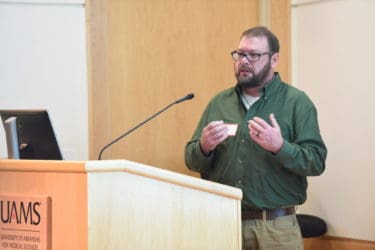
Nearly everyone in the audience raised their hand when Curtis Lowery, M.D., asked if they used their smartphones for banking or making purchases. In welcoming UAMS’ first Digital Health

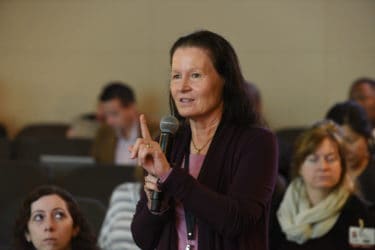
Carolyn Greene, Ph.D., asks a question during the conference

Conference on Nov. 30, he told the 80-plus attendees the health care industry has been frustratingly slower to follow the banking industry’s embrace of digital technology.

“It is unacceptable for me in women’s health to have maternal deaths that are preventable,” said Lowery, a nationally recognized pioneer and innovator in the use of telemedicine who chairs the Department of Obstetrics and Gynecology in the UAMS College of Medicine. “We can do something about it.”

The conference gave researchers and health care providers an overview of the fast evolving digital health technologies and a chance to learn more specifically about the current lag in policies and regulations, and the endless opportunities this technology brings to providers and patients.

Digital health includes interactive video (telemedicine, telehealth), wearable devices, implantable devices, smartphone applications, robotics, augmented intelligence and machine learning.

UAMS digital health researcher Carolyn Greene, Ph.D., associate professor in the College of Medicine Department of Psychiatry, said the

Anita Walden, M.S., speaks with a patient who uses digital health.

day-long conference was a valuable use of her time.

“I loved that there was an opportunity to think about research and the promise of digital health in the future, but also we got a chance to hear about all the incredible digital health work that’s happening right now across the UAMS campuses and across the state,” she said. “As a clinician, you want to know about the shiny objects – you know, the exciting stuff – but sometimes your ability to really use it depends on being able to get reimbursed for it. I thought the conference did a good job of discussing some of those practical aspects also.”

The conference’s keynote speakers were Penny Mohr from the Patient-Centered Outcomes Research Institute (PCORI), where she is senior advisor for Emerging Technology and Delivery System Innovation Research Initiatives; and Mei Wa Kwong, J.D., executive director of the Center for Connected Health Policy, the federally designated National Telehealth Policy Resource Center.

“I really enjoyed hearing Mei Wa Kwong talk,” said Sarah Rhoads, Ph.D., D.N.P., a former UAMS faculty researcher and now a professor at the University of Tennessee Health Science Center at Memphis. “She did a great job simplifying and explaining the payment for mobile health and telehealth and telemedicine and the issues surrounding remote patient monitoring. It’s very important to know what the payers are willing to pay for when it comes to implementing technology.”

John Paul Nolan, a research community advisory board member, urged UAMS to take the lead on digital health.

Rhoads also said she enjoyed Mohr’s perspective on what PCORI can and cannot fund. “It just provided a lot of clarity for me,” she said.

Health systems are behind other industries in adopting digital technologies in part because government policies haven’t kept pace with the advances, said Anita Walden, M.S., a conference organizer and instructor in the Department of Biomedical Informatics in the UAMS College of Medicine.

“Patients are looking forward to using digital technologies, and the industry companies and the payers are moving forward with trying to implement it,” Walden said. “They need the providers to catch up.”

Despite the challenges, Lowery said that UAMS, with the strong support of Chancellor Cam Patterson, M.D., MBA, will lead the state in adoption of digital health technologies.

“I think over the next few years we’re going to build the most modern, connected health care delivery system in the nation because we’re the only teaching hospital in the state and we have a lot of really rural and poor hospital systems everywhere,” he said. “I think all of us are committed to changing that.”

Linda Larson-Prior, Ph.D., asks a question during the conference.

In the next five years, he predicted, the same percentage who are banking on their phones today will be receiving health care through their mobile devices.

John Paul Nolan, a research participant and Community Advisory Board member for a UAMS research study, urged Lowery and other UAMS leaders to take the lead in digital health care. Holmes, a veteran, said an expansion of telemedicine is desperately needed in rural communities. In small towns, residents notice whose vehicle is parked at a mental health clinic. Because of the stigma, people who need help often don’t get it. If mental health services could be provided via interactive video to a veteran with post-traumatic stress disorder, for example, that scenario could be avoided.

“UAMS is poised to provide care,” Nolan said. With smartphones and other mobile devices, “In that moment of crisis, they don’t have to get out of the house. Those are the things we need to be looking at. UAMS brings a very powerful chip to the table because of its infrastructure, its national and international partners and the way that it is set up to study and to disseminate the information to make the public more aware of what’s going on.”

The Digital Health Conference was sponsored by the UAMS Office of Interprofessional Education, with support from the UAMS Center for Distance Health, the Department of Biomedical Informatics, South Central Telehealth Resource Center, and the UAMS Translational Research Institute.

Filed Under: Front, News, Newsroom Tagged With: Carolyn Greene, Curtis Lowery, digital health, digital health conference, Telehealth, Telemedicine, Translational Research Institute, UAMS, University of Arkansas for Medical Sciences

Amputation Pain Study at UAMS Enrolling Participants

People with frequent and recurring pain from an amputated leg are being enrolled in a University of Arkansas for Medical Sciences (UAMS) research study of a device designed to reduce

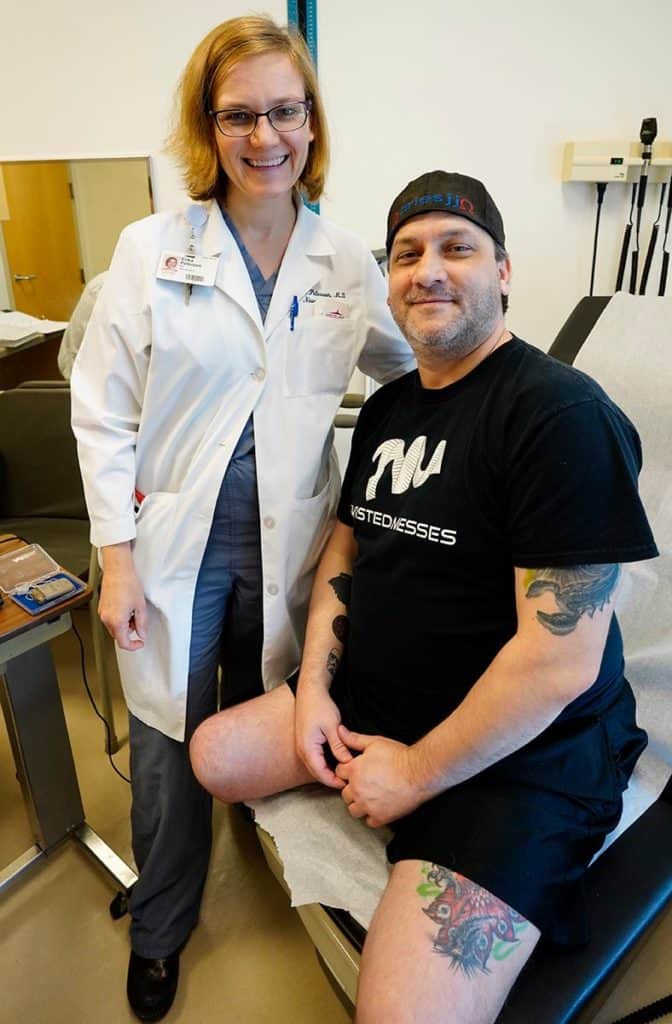
Erika Peterson, M.D., implanted the device in the thigh of Jared Jackson's amputated leg.
Erika Peterson, M.D., implanted the device in the thigh of Jared Jackson’s amputated leg.

amputation pain.

Led at UAMS by Erika Petersen, M.D., a neurosurgeon and researcher, the study is part of a clinical trial being conducted at sites across the United States.

The study is testing the safety and effectiveness of an implanted device, Altius® High Frequency Nerve Block, that is designed to block nerve signals and reduce pain in an amputated limb. The investigational device sends a high-frequency electrical signal to targeted nerves to block the nerve transmission. It was developed by Neuros Medical Inc., in Cleveland, Ohio.

Called the QUEST study (High-FreQUEncy Nerve Block for PoST-Amputation Pain, ClinicalTrials.gov Identifier: NCT02221934), it is a randomized, controlled clinical study of up to 180 patients, at up to 25 clinical study sites in the U.S.

Study participants will undergo surgery to be implanted with the device. It includes a cuff electrode, which is coiled around the nerve, and a pulse generator, which is similar to a pacemaker. Together they deliver an electrical signal to the nerve when activated. Once implanted, study participants can activate a 30-minute treatment session on demand, as needed for their pain. Participants will be followed for a year and seen in clinic once a month. They will also receive modest compensation for their time and travel.

Eligibility requirements for participating in the study include:

  • Having one amputated leg
  • Frequent and recurring amputation pain
  • 21 years of age or older

Those interested in learning if they are eligible may contact the UAMS Translational Research Institute study coordinator, 501-398-8622.

An earlier pilot study involving 10 participants demonstrated that the implant device may be safe and effective for post-amputation pain. (Soin A., Syed Shah N., Fang Z-P. 2015. High-Frequency Electrical Nerve Block for Postamputation Pain: A Pilot Study. Neuromodulation 2015; 18:197-206). DCO# 18-0030 / LB-0042 Rev. A / Effective May 23, 2018 Page 4 of 11.

The project described is supported by the Translational Research Institute (TRI), grant 1U54TR001629-01A1 through the National Center for Advancing Translational Sciences of the National Institutes of Health (NIH). The content is solely the responsibility of the authors and does not necessarily represent the official views of the NIH.

UAMS is the state’s only health sciences university, with colleges of Medicine, Nursing, Pharmacy, Health Professions and Public Health; a graduate school; hospital; northwest Arkansas regional campus; statewide network of regional centers; and six institutes: the Winthrop P. Rockefeller Cancer Institute, Jackson T. Stephens Spine & Neurosciences Institute, Harvey & Bernice Jones Eye Institute, Psychiatric Research Institute, Donald W. Reynolds Institute on Aging and Translational Research Institute. It is the only adult Level 1 trauma center in the state. UAMS has 2,834 students, 822 medical residents and six dental residents. It is the state’s largest public employer with more than 10,000 employees, including 1,200 physicians who provide care to patients at UAMS, its regional campuses throughout the state, Arkansas Children’s Hospital, the VA Medical Center and Baptist Health. Visit www.uams.edu or www.uamshealth.com. Find us on Facebook, Twitter, YouTube or Instagram.

Filed Under: Front, News, Newsroom Tagged With: amputation, clinical trial, implant, pain, Petersen, research, Translational Research Institute, TRI, UAMS, University of Arkansas for Medical Sciences

TRI Open House ‘Eye-Opening’ for Researchers

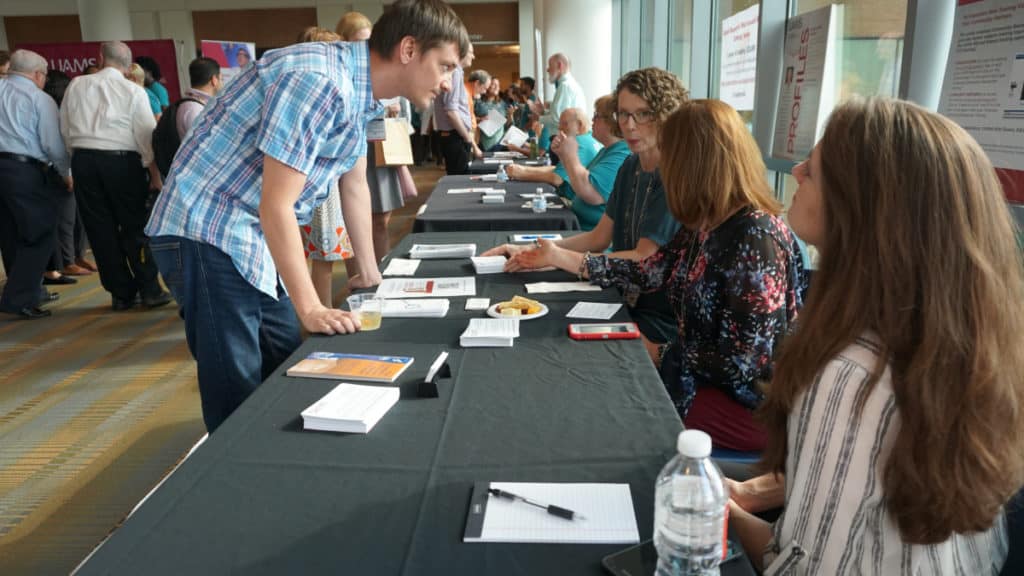
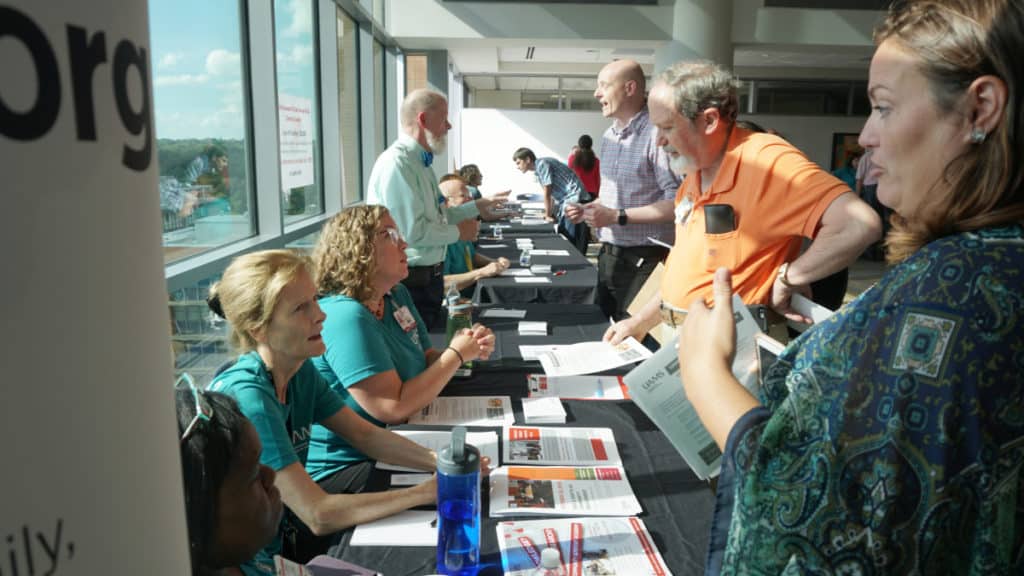
Oleg Karaduta, M.D., visits the information booths at TRI's Open House.
Oleg Karaduta, M.D., visits the Office of Research Compliance booth at TRI’s Open House.

Oleg Karaduta, M.D., made the rounds at TRI’s recent Open House, loading his bag with information cards, brochures and flyers from the 26 research services being promoted. While many are relevant to his work, the Mock Study Section/Grant Review program really caught his eye.

“I am planning to submit a grant application in a couple of months, so the Mock Study Section will be really useful for me,” said Karaduta, a post-doctoral fellow, referring to his NIH R00 Pathway to Independence application.

TRI’s Mock Study Section/Grant Review program assembles experienced NIH-funded researchers to review applications at no cost.

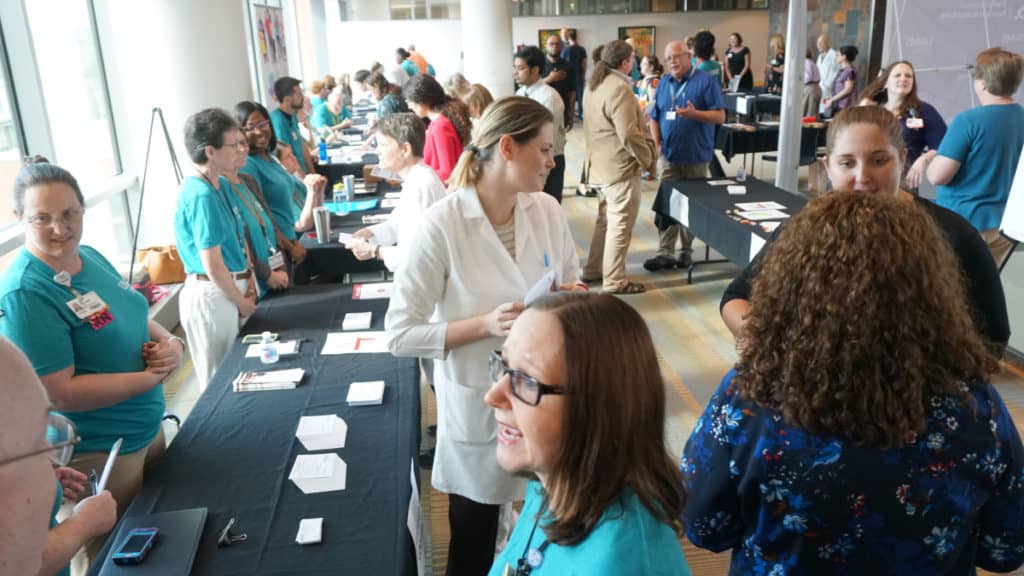
The Aug. 28 Open House, held for a second year, this time included representatives from the Central Arkansas Veterans Healthcare System, Arkansas Children’s Research Institute, UAMS IRB and Research Pharmacy.

Among the nearly 100 attendees was Jonathan Laryea, M.D., associate professor in the Department of Surgery.   “I know about some of the services, but having everything together in one place is very helpful,” Laryea said. “I think it’s eye opening.”

Kate Stewart, M.D., (left) and Rachel Hale, representing TRI's Community Engagement component, talk to visitors during the Open House.
Kate Stewart, M.D., (left) and Rachel Hale, representing TRI’s Community Engagement component, talk to visitors during the Open House.

Leah Dawson, Ph.D., said in an email she was familiar with TRI but didn’t fully appreciate its scope until the Open House.

“Visually it provided a picture of how far reaching TRI is on our campus by the sheer number of people and departments that were involved,” said Dawson, associate director of Clinical Trials at the Data Coordinating and Operations Center of the IDeA States Pediatric Network, UAMS College of Medicine. “I think TRI provides a common atmosphere for researchers to come together, which only betters the university and the research programs on campus.”

Dawson said she made it a point to talk to TRI’s Community Engagement Team to catch up on their activities. “I think they are a great asset to our university system and state,” she said.

Two breast cancer fellows, Sherry Johnson, D.O., and Michalina (Michelle) Kupsik, M.D., said the timing for the Open House couldn’t have been better. They were due to report on their research project plans the day after the Open House but still needed key information.

Helpful guidance came from the Arkansas Clinical Data Repository table with information about accessing de-identified UAMS clinical data. “We knew our clinical question but we didn’t know how we were going to get the data,” Kupsik said.

Michalina (Michelle) Kupsik, M.D., (center, white coat), and Sherry Johnson, D.O., (right) found the Open House to be helpful and timely.

“Now we know!” Johnson said.

Filed Under: News, Newsroom Tagged With: Jonathan Laryea, Oleg Karaduta, Translational Research Institute, TRI, UAMS, University of Arkansas for Medical Sciences

  • Page 1
  • Page 2
  • Next Page»
Translational Research Institute LogoTranslational Research InstituteTranslational Research Institute
Mailing Address: 4301 West Markham Street, Little Rock, AR 72205
Phone: (501) 686-7000
  • Facebook
  • X
  • Instagram
  • YouTube
  • LinkedIn
  • Pinterest
  • Disclaimer
  • Terms of Use
  • Privacy Statement
  • Legal Notices

© 2026 University of Arkansas for Medical Sciences