• Skip to primary navigation
  • Skip to main content
  • Skip to primary navigation
  • Skip to main content
Choose which site to search.
University of Arkansas for Medical Sciences Logo University of Arkansas for Medical Sciences
Translational Research Institute
  • UAMS Health
  • Jobs
  • Giving
  • About TRI
    • What We Offer
    • Leadership & Governance
    • Staff
    • Cite TRI
    • What is Translational Research?
    • Contact TRI
  • Funding Opportunities
    • Grants
      • Pilot Award Program
      • Consortium of Rural States (CORES) Multi-Institutional Pilot Award Program
      • Team Science Voucher Program
      • Winthrop P. Rockefeller Cancer Institute Rural Research Award Program
    • Scholarships
      • K12 Mentored Research Career Development Scholar Awards Program
      • HSIE (T32) Training Program
      • Implementation Science Scholar Program
      • (STARs) Program – Strategies for Training and Advancing Researchers
      • SMART Program [Master’s in Clinical and Translational Sciences (MS-CTS)]
    • Community
      • Community Based Participatory Research (CBPR) Scholars Program
      • Community Partners Educated as Arkansas Research Leaders (CPEARL) Program
    • Awardee Responsibilities
  • Services & Resources
    • Services
      • Biostatistics, Epidemiology and Research Design (BERD) Consultation
      • Clinical Data Repository (AR-CDR)
      • Comprehensive Informatics Resource Core (CIRC)
      • Mock Study Sections
      • Research Participant Recruitment
      • Research Support: Clinical Trials Innovation Unit (CTIU)
      • Implementation Science Program
      • Research Ethics Consultation
    • Resources
      • ARresearch Registry
      • Center for Health Literacy
      • Data Safety Monitoring
      • Grant Writing & Dissemination
      • UAMS Profiles
      • UAMS Rural Research Network
      • Other Resources
      • COVID-19 Research Guidelines
      • Community Partner Research Training
  • Career Development & Scholarships
    • Scholarship Opportunities
      • K12 Mentored Research Career Development Scholar Awards Program
      • HSIE (T32) Training Program
      • Data Science Scholars Program
      • Implementation Science Scholar Program
      • SMART Program
      • Translational Research Innovations and Partners (TRIP) Program
    • Training & Educational Opportunities
      • innOVATION Seminar Series
      • Path 2 K Program
      • Translational Workforce Development
      • Graduate Certificate in Implementation Science
      • SMART Program [Master’s in Clinical and Translational Sciences (MS-CTS)]
      • Good Clinical Practice Training
    • Didactic Training
  • Community
    • Community Engagement Leadership
    • Community Advisory Board
    • Community Engagement Partners
      • Community Partner Celebration
      • Faith-Academic Initiatives for Transforming Health (FAITH) Network
    • Community Engagement Services
      • Consultations and Technical Assistance
      • Community Review Boards
      • Community Partner Research Training
      • Equipment Library
    • Programs and Funding
      • Community Partners Educated as Arkansas Research Leaders (CPEARL) Program
      • Community Based Participatory Research (CBPR) Scholars Program
      • Community Scientist Academy
    • Toolkits
      • CSA Online Toolkit
      • CPEARL Toolkit
  • Events
    • Research Day
    • Clinical Trials Learning Collaborative
  • Newsroom
  1. University of Arkansas for Medical Sciences
  2. Translational Research Institute
  3. Front

Front

Read the October TRIbune

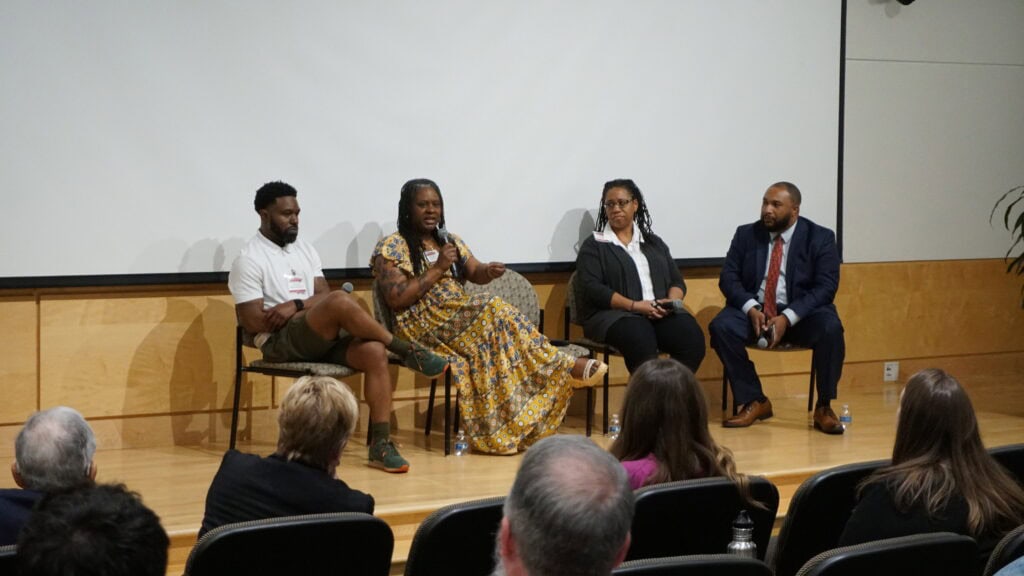
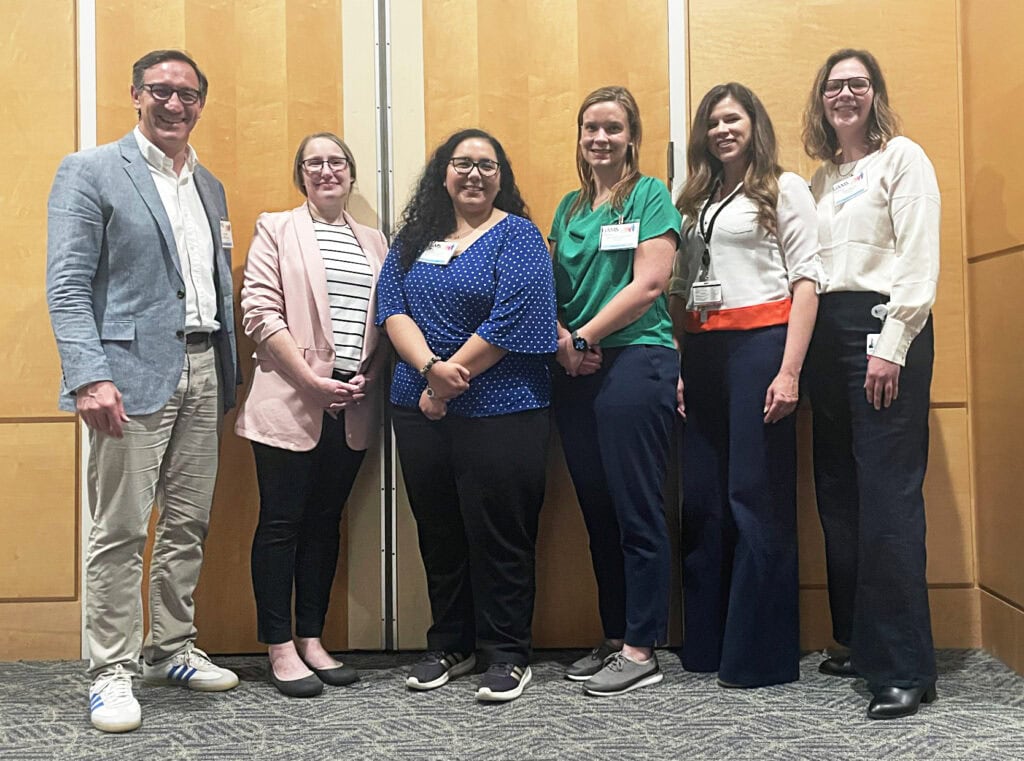
Heather Leidy, Ph.D. (center), addresses a question during a panel discussion at the Advancing Arkansas Lifespan Research Conference. Also pictured are, l-r: Laura James, M.D. (moderator), Brian Piccolo, Ph.D., Stacie Jones, M.D., Britni Ayers, Ph.D., and Colin Kay, Ph.D. (moderator).

The latest issue of The TRIbune features stories that illustrate TRI’s work across the translational science spectrum – from discovery to community engagement. Read about the Advancing Arkansas Lifespan Research Conference, where national experts Heather Leidy, Ph.D., and Sameera Talegawkar, Ph.D., discussed how nutrition influences health and resilience across the lifespan.

Also featured: Nakita Lovelady, Ph.D., MPH, whose TRI K12 experience helped lead to a $3.8 million NIH grant to prevent gun violence in Arkansas, and new graduates of TRI’s Community-Based Participatory Research (CBPR) Scholars Program expanding UAMS’ community-academic partnerships.

Read the October TRIbune (PDF).

Filed Under: Front, News, Newsroom

UAMS Lifespan Conference Highlights Nutrition’s Ability to Influence Health at Every Age

At the 2025 Advancing Arkansas Lifespan Research Conference, two nationally recognized nutrition scientists emphasized how diet quality throughout life profoundly influences long-term health and resilience.

Heather Leidy, Ph.D. (center), addresses a question during a panel discussion at the Advancing Arkansas Lifespan Research Conference. Also pictured are, l-r: Laura James, M.D. (moderator), Brian Piccolo, Ph.D., Stacie Jones, M.D., Britni Ayers, Ph.D., and Colin Kay, Ph.D. (moderator).

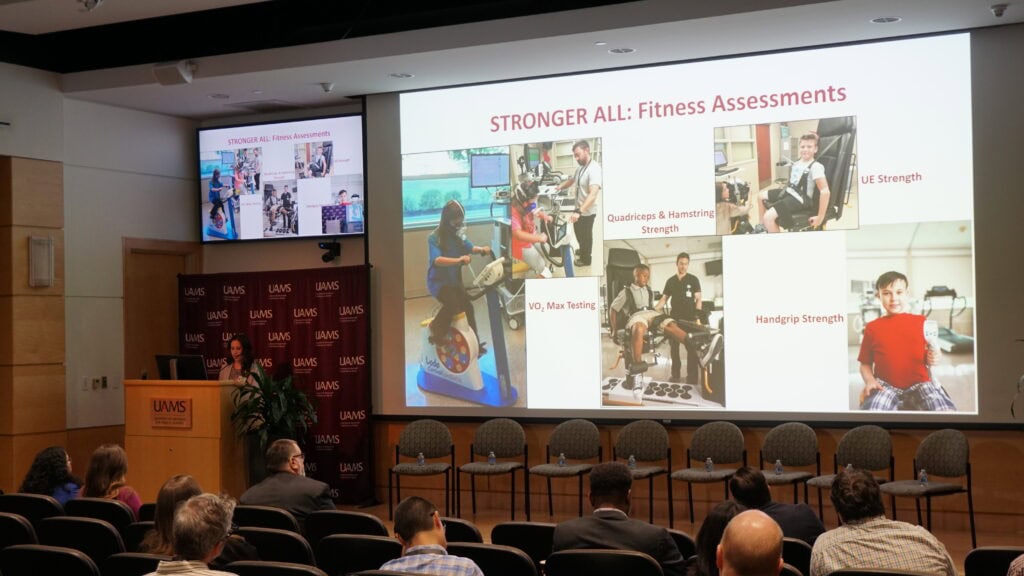
The daylong event, held Oct. 14 at the University of Arkansas for Medical Sciences (UAMS) Donald W. Reynolds Institute on Aging, brought together about 80 researchers from across UAMS and beyond to explore the conference’s theme of “Charting a Path to Lifelong Health and Resilience through Nutrition.”

Research leaders representing the conference’s sponsors are (l-r): Elisabet Børsheim, Ph.D. (director, College of Medicine Lifespan Cardiometabolic Health Creativity Hub); Colin Kay, Ph.D. (director, Arkansas Children’s Nutrition Center); Laura James, M.D. (director, TRI) and Tamara Perry, M.D. (interim president, Arkansas Children’s Research Institute).

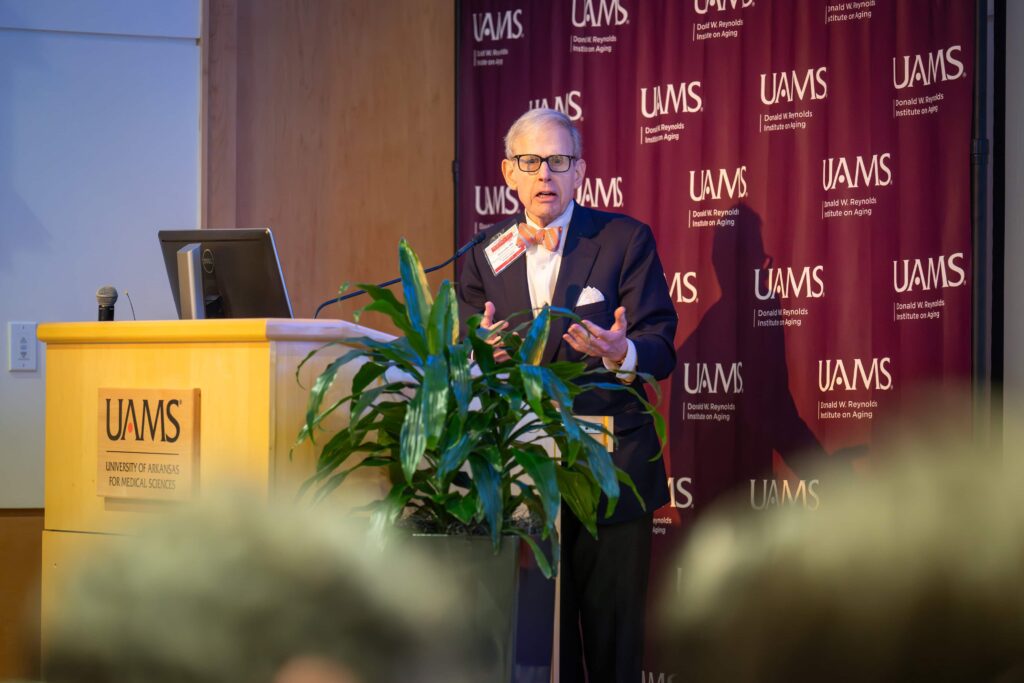
The conference featured keynote talks from Heather Leidy, Ph.D., of the University of Texas at Austin, and Sameera Talegawkar, Ph.D., of George Washington University in Washinton, D.C.

Leidy, associate professor in the departments of Nutritional Sciences and Pediatrics at the Dell Medical School, described a “perfect storm” for today’s adolescents with a combination of higher nutrient needs, poor diet quality, and rising rates of mental health challenges and obesity.

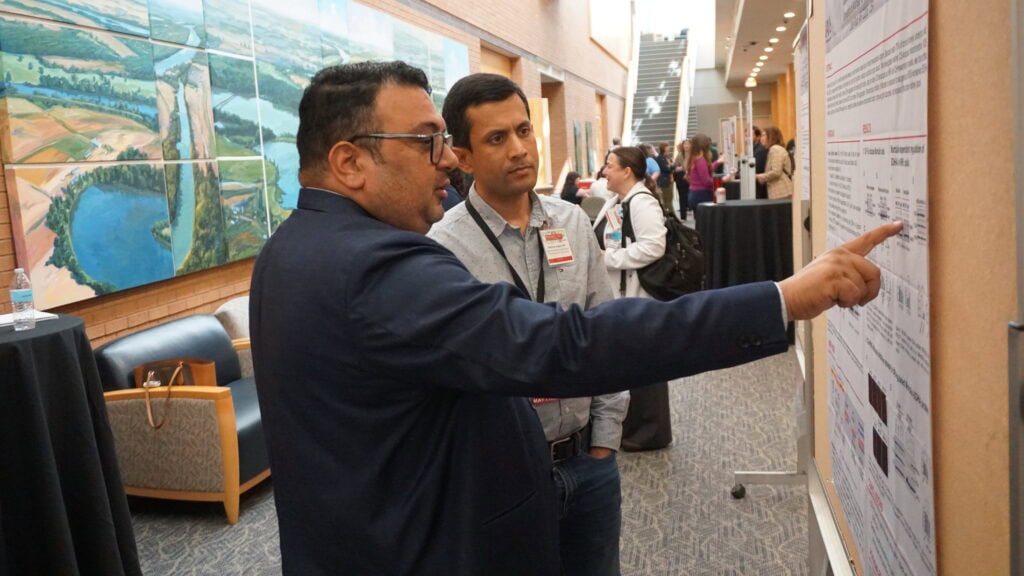
Larissa da Cruz, Ph.D., discusses her poster during the conference’s poster session.

“Adolescence is one of those underexamined, really important life stages,” Leidy said. “It’s the bridge between establishing a healthy lifestyle and preserving it as we age.”

Drawing on national data from NHANES 2017–2020, she noted that older teens, particularly females, fall short on essential nutrients such as iron, calcium, vitamin D and omega-3s. “Teenage girls have the lowest diet quality of any group,” she said. “They’re underconsuming nearly everything — calcium, vitamin D, magnesium, iron, protein — you name it.”

Her research shows that simply adding a high-protein breakfast can improve appetite control, diet quality and metabolic health. “If you provide a high-protein breakfast of about 24 to 30 grams you can change their appetite and energy balance for the entire day,” she said.

In a series of studies, Leidy’s team found that teens who ate protein-rich breakfasts reduced evening snacking, stabilized glucose levels and prevented unhealthy fat gain. Yet maintaining those habits is difficult. “We see 80-90% of teens return to skipping breakfast once the intervention ends,” she said. “It’s not a motivation issue; it’s access.”

Her “Breakfast in the Classroom” project in Kansas City replaced refined-carb foods with egg-based meals for 585 middle school students. Participation rose sharply, and students reported fewer afternoon cravings. Leidy urged family and school-based solutions: “If you make it tasty and portable, teens will eat it.”

Talegawkar, the conference’s second keynote speaker, shifted the focus to later life. A professor in the Department of Exercise and Nutrition Sciences at George Washington University’s Milken Institute School of Public Health, she described how long-term eating patterns influence cardiovascular health, mobility and frailty.

Sameera Talegawkar, Ph.D., the second keynote speaker, presents her work.
Sameera Talegawkar, Ph.D., presents her nationally-recognized research.

“There are multiple ways to achieve a healthy dietary pattern,” she said. “The emphasis should be on fruits, vegetables, legumes, fish and unsaturated fats — foods that support both physical and cognitive health.”

Her research, which draws on aging studies in Italy and the United States, shows that older adults who follow a Mediterranean-style diet experience slower physical decline and less frailty. She also found that high consumption of ultra-processed foods was linked to greater frailty, while better cardiovascular health scores, measured by the American Heart Association’s Life’s Essential 8, were associated with lower risk of dementia, disability and mortality.

“Diet is important,” she added, “but movement may be where we can make the biggest difference.”

Talegawkar is extending this work to study diet-related metabolites that may explain links between nutrition and frailty. She also co-leads a new Washington, D.C., project examining whether new urban parks and grocery access can influence physical activity and eating behaviors.

The day also included presentations by UAMS scientists covering topics such as early-childhood nutrition, gut health, collagen and connective tissue, and dietary supplements. Presenters included Taren Massey-Swindle, Ph.D.; Britni Ayers, Ph.D.; Brian Piccolo, Ph.D.; Stacie Jones, M.D.; Shiloah Kviatkovsky, Ph.D.; Igor Koturbash, M.D., Ph.D.; Nithya Neelakantan, Ph.D.; and David Church, Ph.D.

Moderators were Laura James, M.D.; Elisabet Børsheim, Ph.D.; Colin Kay, Ph.D.; and Craig Porter, Ph.D.

Filed Under: Front, News, Newsroom

UAMS Researcher Awarded $3.8 Million NIH Grant to Advance Community Violence Prevention Trial

Nakita Lovelady, Ph.D. (right), and Joyce Raynor discussed their Project Heal research program at the 2024 Community Partner Celebration sponsored by the UAMS Translational Research Institute.

University of Arkansas for Medical Sciences (UAMS) researcher Nakita Lovelady, Ph.D., MPH, has received $3.8 million from the National Institutes of Health (NIH) to lead a three-year clinical trial aimed at reducing risky firearm behaviors among assault survivors in central Arkansas.

The award from NIH’s National Institute on Minority Health and Health Disparities (NIMHD) supports the UH3 phase of Project Heal, a hospital-community partnership tailored for the region most affected by violent assault.

“This grant allows us to rigorously test strategies that can help survivors of violent assault move forward in their lives,” said Lovelady, an assistant professor in the Fay W. Boozman College of Public Health and a graduate of the UAMS Translational Research Institute’s K12 Mentored Research Career Development Award Program. “By combining the expertise of hospitals, community organizations, and people with lived experience, Project Heal is designed to create practical solutions that prevent reinjury and promote recovery.”

The UH3 builds on Lovelady’s two-year UG3 planning grant that established a 15-member community-academic coalition and conducted 10 evidence-based quality improvement sessions with 30 stakeholders to refine intervention components and implementation strategies for central Arkansas.

Lovelady leads the project with Joyce Raynor, executive director of the Center for Healing Hearts and Spirits, who serves as a multiple principal investigator with Lovelady. Raynor played a critical role in engaging community partners during the UG3 planning grant and will continue to ensure strong support services for participants during the UH3 trial phase.

The study will test different mixes of four support services to find out which work best for survivors. These include: bedside help while patients are in the hospital, ongoing peer support, case management with service vouchers, and virtual group therapy called SELF (safety, emotions, loss and future). The study will look at whether the program helps people avoid unsafe gun behaviors and whether it improves their mental health, including stress, anxiety and depression.

The project is part of NIH’s research on community level interventions for firearm and related violence, injury and mortality prevention (CLIF-VP) initiative.

The NIH’s ongoing support reflects the promise of Project Heal to make a lasting impact in Arkansas and beyond, said Laura James, M.D., director of the UAMS Translational Research Institute.

“We are extremely proud of Dr. Lovelady and her team,” said James, also UAMS associate vice chancellor for Clinical and Translational Research. “Her work is a model for community-engaged research that addresses one of our state’s most urgent health challenges.”

Funding acknowledgment: Research reported here is supported by the NIMHD at NIH under Award Number UH3MD019172. The content is solely the responsibility of the authors and does not necessarily represent the official views of the NIH.

Filed Under: Front, News, Newsroom

CORES Members Gather at UAMS for Annual Meeting

TRI Director Laura James, M.D., (standing left) moderates a Q&A with a panel of implementation scientists representing institutions in the Consortium of Rural States.

The University of Arkansas for Medical Sciences (UAMS) Translational Research Institute brought together more than 60 researchers and leaders from nine Clinical and Translational Science Award (CTSA) institutions Sept. 18–19 for the annual meeting of the Consortium of Rural States (CORES).

Over two days, attendees focused on the shared mission of improving health in rural communities, with sessions ranging from implementation science and community partnerships to dental health integration and strategies for strengthening the rural health care workforce.

The two-day gathering of nine research institutions in rural states focused on advancing rural health through collaboration, with sessions on implementation science, community partnerships, dental health integration, and strategies to strengthen the rural health care workforce.

Geoffrey Curran, Ph.D., director of the UAMS Center for Implementation Research and a pioneer in the field, opened the meeting by highlighting how implementation science can help rural communities benefit more quickly from proven health solutions.

“Implementation science is about more than proving that an intervention works, it’s about figuring out how to make it work in the real world,” said Curran, who also leads the Translational Research Institute’s Implementation Science Scholars Program.

For Philip Kern, M.D., director of the University of Kentucky Center for Clinical and Translational Science, the value of CORES lies in collaboration.

“As institutions with large rural populations, we all face many of the same challenges,” Kern said. “The CORES network gives us the chance to learn from each other and build solutions together.”

Patricia Winokur, M.D., director of the University of Iowa Institute for Clinical and Translational Science, echoed the importance of taking ideas to scale.

“We’re at the point where we need to start implementing the solutions that are working in one state and testing them in others,” she said. “That includes looking at sustainability, such as new payment models for pharmacy-based care, and innovative partnerships in areas like dental health.”

This year’s meeting also highlighted UAMS’ leadership role. For the past year, the Translational Research Institute managed all administrative oversight duties for CORES. The responsibility rotates annually among the consortium’s members; UAMS assumed it from Kentucky in 2024 and has now passed it to Iowa.

“Hosting this year’s meeting was a privilege and an opportunity to demonstrate UAMS’ strong commitment to rural health,” said Institute Director Laura James, M.D. “We are proud to have coordinated the consortium’s work over the past year, and we look forward to continuing partnerships that bring innovative health solutions to rural communities.”

The meeting also welcomed the Medical University of South Carolina Clinical and Translational Research Institute as the consortium’s newest member. With its addition, the consortium now includes nine CTSA hubs, representing states with large rural populations across the country.

Other sites are: University of Utah Health Clinical & Translational Science Institute, Southwest Center for Advancing Clinical & Translational Innovation (University of New Mexico Health Sciences Center and University of Arizona), Frontiers Clinical and Translational Science Institute at the University of Kansas, University of Kentucky Center for Clinical and Translational Science, University of Iowa Institute for Clinical and Translational Science, Dartmouth SYNERGY Clinical and Translational Science Institute and Penn State University Clinical and Translational Science Institute.

The agenda reflected the importance of CORES’ mission: exploring the sustainability of evidence-based programs, testing new models of workforce retention, and creating opportunities for decentralized clinical trials in rural communities.

As Curran emphasized, implementation science can serve as the bridge from research to practice. “By working together, we can ensure that rural patients benefit from innovations in health care more quickly and more effectively.”

Filed Under: Front, News, Newsroom

UAMS Scholars Shine in TRI Summer Writing Challenge

Park

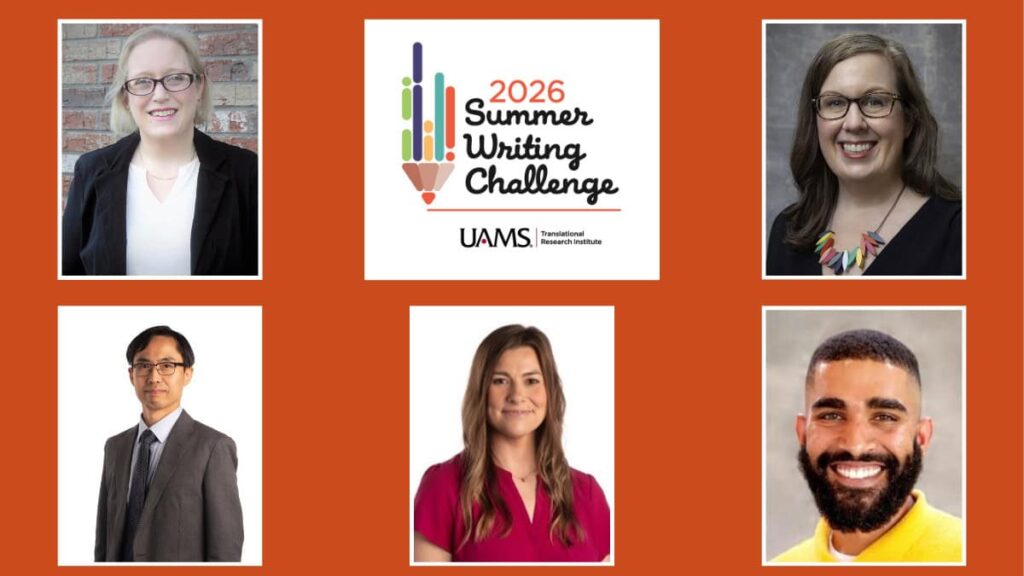
The 2025 TRI Summer Writing Challenge drew strong participation, with 24 UAMS researchers submitting 98 manuscripts.

The friendly competition to encourage publications included faculty, instructors, postdocs and staff who have received TRI support since 2019.

This year’s contributors earned awards across several categories:

Jain

Yong-Moon “Mark” Park, M.D., Ph.D., in the Fay W. Boozman College of Public Health Department of Epidemiology, received the Astounding Apprentice award for the most submissions (22) by an assistant professor.

Nishank Jain, M.D., MPH, in the College of Medicine Department of Internal Medicine, was named Wise Wordsmith with the most submissions (5) by an associate professor.

Landes

Sara Landes, Ph.D., in the College of Medicine Department of Psychiatry, earned the Sage Scribe honor, recognized for the most submissions (10) by a professor.

Adrian Williams, MS, a research program manager in the College of Pharmacy, claimed the Stupendous Scholar distinction for the most submissions (14) in the “other” category.

Adrian Williams, M.S.
Williams

“Congratulations to these honorees,” said TRI Director Laura James, M.D. “Beyond the awards, this challenge reflects TRI’s mission to support and celebrate the scholarly efforts of UAMS investigators at all career stages.”

Filed Under: Front, News, Newsroom

September TRIbune Now Available

The September TRIbune is here!

The cover story spotlights the 2025 Research Expo, where faculty and trainees explored UAMS research resources. Also featured: a recap of the Consortium of Rural States (CORES) meeting hosted by TRI, winners of the Summer Writing Challenge, and announcements of upcoming opportunities. These include the Oct. 14 Advancing Arkansas Lifespan Research Conference, K12 Career Development Award information sessions, and TRI pilot funding call for applications.

Read The TRIbune.

Filed Under: Front, News, Newsroom

Research Expo and New Faculty Orientation Draw 128 Attendees

When Stephanie M. Lopez-Neyman, Ph.D., MPH, RD, spotted a poster at UAMS for Research Expo 2025, she scanned the QR code and registered. A new faculty member in the College of Health Professions, she saw the event as a chance to discover the resources that could help launch her research career.

Stephanie M. Lopez-Neyman, Ph.D., MPH, RD, said the event helped her discover resources that will help launch her research career. (Photo by Evan Lewis)

“It was a good opportunity to find out what’s available,” said Lopez-Neyman, an assistant professor in the college’s Department of Dietetics and Nutrition. “There are quite a few things I didn’t know about that will be helpful as I develop my research program.”

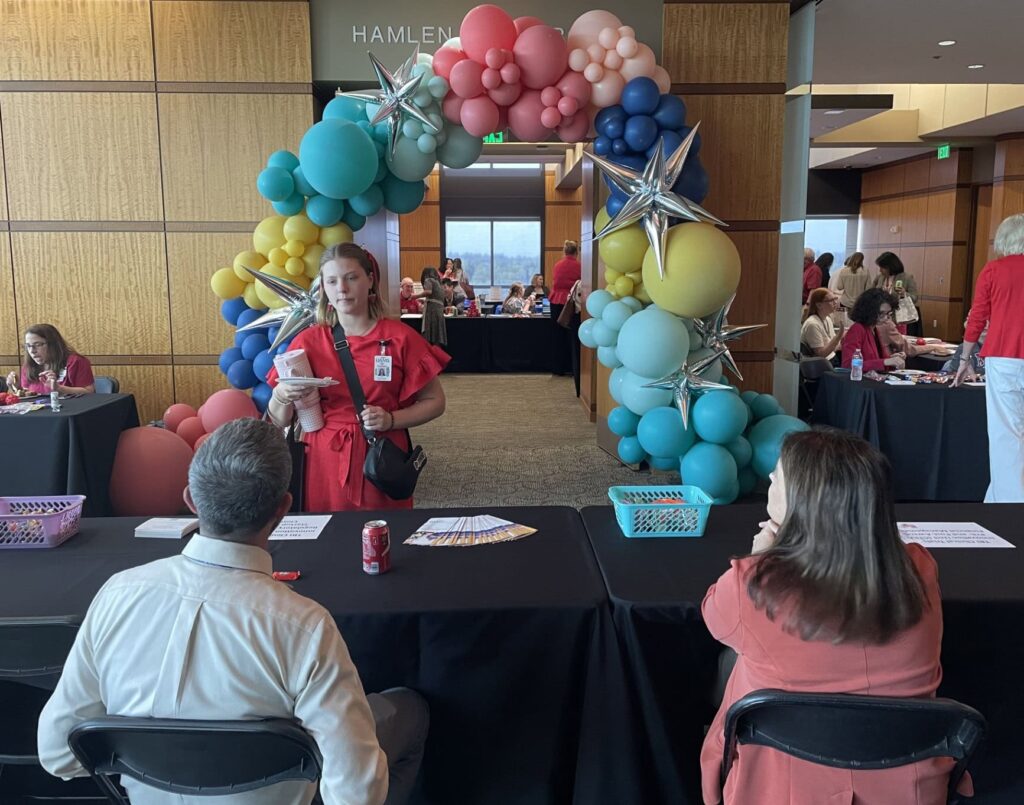
Lopez-Neyman was one of 128 faculty, staff and trainees who attended the Expo and the UAMS Research and Innovation New Research Faculty Orientation on Sept. 10 at the Donald W. Reynolds Institute on Aging.

The afternoon began with the orientation, where leaders from across UAMS gave brief overviews of the many research services available to faculty. TRI Director Laura James, M.D., concluded the orientation with a brief summary of key TRI training and funding opportunities, and she announced the winners of TRI’s Summer Writing Challenge (story below). The Expo then offered attendees a chance to meet one-on-one with representatives from nearly every research support program at UAMS. The event included food and drinks, giving participants a chance to visit in a relaxed setting.

James said the back-to-back events provided an efficient way for faculty to learn about research resources, network with colleagues, and connect with the experts who can support their work.

“It was wonderful to see so much energy in the room,” she said. “Everyone seemed to enjoy the chance to network and walk away with resources to help their research.”

Johnny Rider, Ph.D., visits with TRI Community Engagement research program managers Nicki Spencer, MHA, and Jinger Morgan.

Johnny Rider, Ph.D., associate professor of occupational therapy in the College of Health Professions, made the trip from the UAMS Northwest Campus in Fayetteville to Little Rock. He said the event delivered exactly what he was hoping for.

“Totally worth it,” said Rider, who joined UAMS this year from Touro University in Nevada. “As a researcher, it’s overwhelming in a good way to see how many services are available and to learn about the different programs for grants, such as the (TRI) K12 (Mentored Research Career Development Scholars) program. It was also helpful to hear the presentations and then immediately talk with everyone at the Expo.”

Lopez-Neyman said she left the Expo with new connections to the TRI STARs research training program for early-career faculty, the TRI Clinical and Translational Science Pilot Awards program, and the Rural Research Network. She also shared ideas with BioVentures LLC and the Institute for Digital Health Innovation representatives.

Clay Jackson-Litteken, Ph.D., MPH, assistant professor in the College of Medicine Department of Microbiology, said he left with plans to attend an upcoming information session for the TRI K12 Scholars program.

College of Public Health doctoral students Wilberforce Twinamatsiko and Melissa Walker said they came to learn more about implementation science opportunities and to meet peers outside the classroom.

Tamer Kaoud, Ph.D., a new assistant professor in the College of Pharmacy, described the Expo as “everything we need in one place.”

Filed Under: Front, News, Newsroom

The TRIbune Is Here!

The August issue of The TRIbune takes you from Little Rock to Bangkok, where UAMS postdoctoral fellow Henry Palfrey, Ph.D., and his PulseArk Technologies team earned international recognition for a device designed for the early detection of internal bleeding. The story showcases how TRI’s T32 Health Sciences Innovation and Entrepreneurship (HSIE) Program, in partnership with the University of Arkansas Sam M. Walton College of Business, is teaching researchers like Palfrey to translate discoveries into tangible health benefits.

Henry Palfrey, Ph.D., speaks during the competition.
Henry Palfrey, Ph.D., credits TRI’s T32 Health Sciences Innovation and Entrepreneurship training program for helping his team secure an invitation to the Bangkok competition.

This month’s Study of the Month spotlights a clinical trial led by Harmeen Goraya, M.D., testing an investigational drug (Auxora) to reduce kidney–lung “crosstalk” in acute kidney injury. TRI is providing full research support, from regulatory guidance to clinical coordination.

You’ll also find details on the upcoming Research Expo and New Research Faculty Orientation (Sept. 10) and the Advancing Arkansas Lifespan Research Conference (Oct. 14).

Read the August TRIbune (PDF).

Filed Under: Front, News, Newsroom

Consortium of Rural States Announces Pilot Awardees

This map shows the locations of the nine Consortium of Rural States institutions across the U.S.

The Consortium of Rural States (CORES) Multi-Institutional Pilot Program has awarded funding for four one-year projects beginning July 1, 2025. Each project involves at least two of the nine consortium member sites.

The CORES institutions are funded by the Clinical and Translational Science Award (CTSA) program of the National Center for Advancing Translational Sciences (NCATS). The sites are:

  • University of Utah Health Clinical & Translational Science Institute
  • University of New Mexico (UNM) Health Sciences Center Clinical and Translational Science Center
  • Frontiers Clinical and Translational Science Institute at the University of Kansas (KUMC)
  • University of Kentucky (UK) Center for Clinical and Translational Science
  • University of Arkansas for Medical Sciences (UAMS) Translational Research Institute
  • University of Iowa Institute for Clinical and Translational Science
  • Dartmouth SYNERGY Clinical and Translational Science Institute
  • Penn State University Clinical and Translational Science Institute
  • Medical University of South Carolina (MUSC) Clinical and Translational Research Institute

MUSC was welcomed to the consortium in June – after the deadline for this year’s CORES pilot grant applications.

The CORES pilots support translational science projects aimed at identifying and overcoming barriers to conducting research in rural settings. Each collaborating site funds up to $25,000 to support the project.

The awarded collaborations are:  

Dartmouth (lead), Penn State, Iowa and Utah

  • Project title: Enabling Self-Care for Pessary Users in Rural Settings
  • Contact Principal Investigator (PI): Kris Strohbehn, M.D., professor of obstetrics and gynecology, Dartmouth
  • Site PIs: Jaime Long, M.D., associate professor of obstetrics and gynecology, Penn State; Catherine Bradley, M.D., professor, obstetrics and gynecology, urology and epidemiology, Iowa; Carolyn Swenson, M.D., associate professor of obstetrics and gynecology, Utah

Utah (lead) and UAMS

  • Project title: From Heat Maps to OR Outcomes: Leveraging Privacy-Preserving Geospatial Methods to Assess Extreme Heat Impacts on Surgical Complications
  • Contact PI: John F. Pearson, M.D., associate professor, Department of Anesthesiology, Utah
  • Site PI: Jill Mhyre, M.D., chair, Department of Anesthesiology, UAMS

UK (lead) and Penn State

  • Project title: Development of a Virtual Nutrition Lab and Educational Experience: Piloting Immersive Virtual Reality (iVR) with Adolescents Living in Rural Communities
  • Contact PI: Sara Maksi, Ph.D., assistant professor of nutritional sciences, UK
  • Co-PI: Courtney Luecking, Ph.D., assistant professor and extension specialist for early childhood nutrition, UK
  • Site PI: Travis Masterson, Ph.D., assistant professor of nutritional sciences, Penn State

Utah (lead), Dartmouth, Iowa, UNM,

  • Project title: The “PlatfoRm clinICal trIal of patientS on ECMO usIng electrONic health record harvested data” (PRECISION)
  • Contact PI: Joseph Tonna, M.D., associate professor, Department of Surgery, Utah
  • Site PIs: Todd D. Morrell, M.D., assistant professor of emergency medicine, Dartmouth; Elizabeth Moore, RN, BSN, associate director of Clinical Operations, University of Iowa Heart and Vascular Center; Jonathan Marinaro, M.D., professor and chief of Center for Adult Critical Care at UNM. He is founder and director of the Adult ECMO Program and medical director of the Cardiothoracic Vascular ECMO ICU and Sandoval Regional ICU.

Filed Under: Front, News, Newsroom

CORES Pilot Supports UAMS and Utah Study of Surgery Risks During Extreme Heat

Jill Mhyre, M.D., is the UAMS site principal investigator on the Consortium of Rural States pilot award.

Researchers at UAMS and the University of Utah have been selected for pilot funding from the Consortium of Rural States (CORES) to study the risks posed by extreme heat to patients recovering from surgery, particularly in rural areas where such health risks are understudied.

The University of Utah is the lead site with John F. Pearson, M.D., as principal investigator. Jill Mhyre, M.D., serves as the UAMS principal investigator.

Pearson is an associate professor of anesthesiology and a researcher in climate health and environmental epidemiology. His work focuses on the impact of air pollution on perioperative health outcomes.

Mhyre is the Dola S. Thompson Professor and Chair of Anesthesiology. Her research focuses on obstetric quality and safety.

The project is one of four recently announced by CORES. Each collaborating site, supported by Clinical and Translational Science Awards (CTSAs) from the National Center for Advancing Translational Sciences (NCATS), receives up to $25,000 to support their one-year projects.

Extreme heat events threaten public health nationwide, but privacy protections have made it difficult to link local weather data with patient outcomes in large surgical registries. The collaboration is developing privacy-preserving methods to safely combine environmental exposure data with surgical records, addressing a key translational science barrier.

NCATS, which funds about 60 CTSA institutions nationwide, is dedicated to applying translational science to overcome barriers to the research pipeline. The approach developed by the UAMS and Utah researchers aims to better understand and protect patients at risk during heat waves. Their findings could inform national health policy.

Filed Under: Front, News, Newsroom

  • Page 1
  • Page 2
  • Page 3
  • Interim pages omitted …
  • Page 35
  • Next Page»
Translational Research Institute LogoTranslational Research InstituteTranslational Research Institute
Mailing Address: 4301 West Markham Street, Little Rock, AR 72205
Phone: (501) 686-7000
  • Facebook
  • X
  • Instagram
  • YouTube
  • LinkedIn
  • Pinterest
  • Disclaimer
  • Terms of Use
  • Privacy Statement
  • Legal Notices

© 2025 University of Arkansas for Medical Sciences