• Skip to primary navigation
  • Skip to main content
  • Skip to primary navigation
  • Skip to main content
Choose which site to search.
University of Arkansas for Medical Sciences Logo University of Arkansas for Medical Sciences
Translational Research Institute
  • UAMS Health
  • Jobs
  • Giving
  • About TRI
    • What We Offer
    • Leadership & Governance
    • Staff
    • Cite TRI
    • What is Translational Research?
    • Contact TRI
  • Funding Opportunities
    • Grants
      • Pilot Award Program
      • Consortium of Rural States (CORES) Multi-Institutional Pilot Award Program
      • Team Science Voucher Program
      • Winthrop P. Rockefeller Cancer Institute Rural Research Award Program
    • Scholarships
      • K12 Mentored Research Career Development Scholar Awards Program
      • Health Sciences Innovation and Entrepreneurship Postdoctoral Training Program
      • Implementation Science Scholar Program
      • (STARs) Program – Strategies for Training and Advancing Researchers
      • SMART Program [Master’s in Clinical and Translational Sciences (MS-CTS)]
    • Community
      • Community Based Participatory Research (CBPR) Scholars Program
      • Community Partners Educated as Arkansas Research Leaders (CPEARL) Program
    • Awardee Responsibilities
  • Services & Resources
    • Services
      • Biostatistics, Epidemiology and Research Design (BERD) Consultation
      • Clinical Data Repository (AR-CDR)
      • Comprehensive Informatics Resource Core
      • Mock Study Sections
      • Research Participant Recruitment
      • Research Support: Clinical Trials Innovation Unit (CTIU)
      • Implementation Science Program
      • Research Ethics Consultation
    • Resources
      • ARresearch Registry
      • Center for Health Literacy
      • Data Safety Monitoring
      • Grant Writing & Dissemination
      • UAMS Profiles
      • UAMS Rural Research Network
      • Other Resources
      • COVID-19 Research Guidelines
      • Community Partner Research Training
  • Career Development & Scholarships
    • Scholarship Opportunities
      • K12 Mentored Research Career Development Scholar Awards Program
      • Health Sciences Innovation and Entrepreneurship Postdoctoral Training Program
      • Data Science Scholars Program
      • Implementation Science Scholar Program
      • SMART Program
      • Translational Research Innovations and Partners (TRIP) Program
    • Training & Educational Opportunities
      • innOVATION Seminar Series
      • Path 2 K Program
      • Translational Workforce Development
      • Graduate Certificate in Implementation Science
      • SMART Program [Master’s in Clinical and Translational Sciences (MS-CTS)]
      • Good Clinical Practice Training
    • Didactic Training
  • Community
    • Community Engagement Leadership
    • Community Advisory Board
    • Community Engagement Partners
      • Community Partner Celebration
      • Faith-Academic Initiatives for Transforming Health (FAITH) Network
    • Community Engagement Services
      • Consultations and Technical Assistance
      • Community Review Boards
      • Community Partner Research Training
      • Equipment Library
    • Programs and Funding
      • Community Partners Educated as Arkansas Research Leaders (CPEARL) Program
      • Community Based Participatory Research (CBPR) Scholars Program
      • Community Scientist Academy
    • Toolkits
      • CSA Online Toolkit
      • CPEARL Toolkit
  • Events
    • Research Day
    • Clinical Trials Learning Collaborative
  • Newsroom
  1. University of Arkansas for Medical Sciences
  2. Translational Research Institute
  3. Front
  4. Page 33

Front

Serious About Service

TRI Embraces ‘Lean’ Concepts to Improve Efficiency

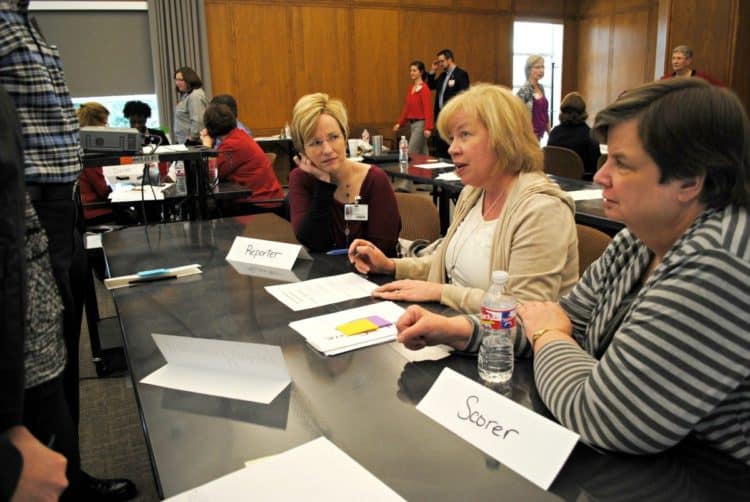
TRI Director Laura James, M.D., and TRI Leadership Council members Mary Aitken, M.D., and Paula Roberson, Ph.D., discuss an exercise during Lean training.

At UAMS, translational research starts with TRI. Inherent in the term translational is TRI’s duty to provide researchers efficient access to an array of research services.

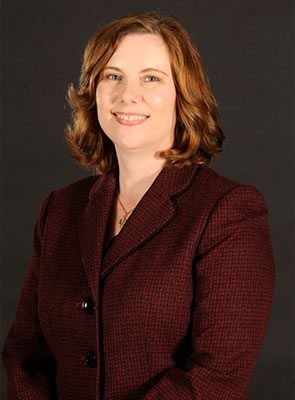
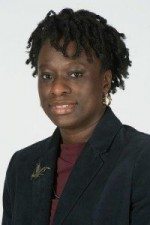
Boateng
Boateng

Two years ago, TRI introduced TRIservices@uams.edu, an email address for researchers to send requests for UAMS’ research services. This services portal system was streamlined in 2015 with the addition of a Request Services form, available on TRI’s website, TRI.uams.edu. The services portal was further streamlined just this month with a new form and increased automation.

Sparking the ideas for these new processes was TRI’s participation in trainings offered by the UAMS Performance Improvement Department. A condensed version of the Introduction to Lean training was provided to the TRI Leadership Council and program managers on Feb. 29. The program teaches methods for eliminating waste and promoting efficiency by identifying bottlenecks in processes, removing non-value added steps and adjusting processes to improve flow of services.

“The TRI services portal is a great example of how TRI is applying Lean on behalf of researchers,” said Beatrice Boateng, Ph.D., who leads TRI’s Evaluation and Continuous Quality Improvement program.

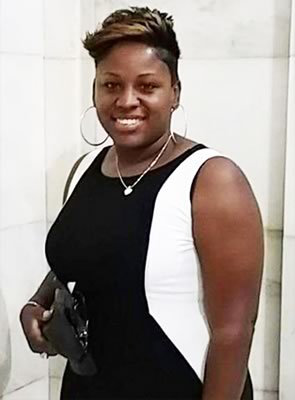
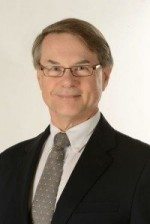
Prior
Prior

Prior to the services portal update this month, all requests went to Amy Jo Jenkins, a TRI project leader, who manually entered the requests into a database and routed it to the appropriate person to perform the service requested.

TRI utilized Lean principles to review the research services request processes and eliminated waste to improve the response time. “Now it is all automated,” Boateng said. “When a request comes in, it will automatically route to the person or service area.  It frees up Amy Jo to focus on other issues.”

The training was familiar but still helpful to Department of Biomedical Informatics Chair Fred Prior, Ph.D., who brings both industry and academic backgrounds to his role.  He envisions applying the principles of Lean to improve response times for research queries against UAMS’ research information repositories.

“I would like to make that happen as an example of how to apply it in research,” he said.

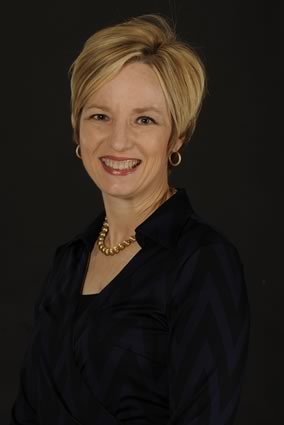
Hutchins
Hutchins

The Lean training also including aspects of change management. Laura Hutchins, M.D., who oversees TRI’s Clinical Trial Innovation Unit and serves as the liaison for the CTSA consortium’s clinical trial initiatives, referenced a key tenet of Lean – the value of teamwork and inclusiveness.

“Teamwork is important. Everyone’s input is valuable,” Hutchins said. “Small changes may result in large improvements in outcome.”

Boateng noted that Introduction to Lean trainings typically last a week, while the Leadership Council’s training was condensed and tailored for that group.

“I think the introduction we received was just enough to get us (TRI)  thinking about what to change to make us more efficient,” she said.

Filed Under: Front, News, Newsroom

NIH Health Literacy Grant Has Roots in TRI Support

UAMS’ Kristie Hadden, Ph.D., learned this month that she is receiving a four-year, $2.9 million grant from the National Institutes of Health (NIH). Starting in April, she will use the funds to test a diabetes education and health literacy program in patient-centered medical homes at UAMS regional centers across Arkansas.

Hadden, director of the UAMS Center for Health Literacy and an early-career investigator, said her first NIH grant has roots in TRI support that dates to 2013. Early that year she pitched the idea of inviting a “dream team” of national level health literacy researchers to UAMS as part of a seminar series.

“I said we need to be doing health literacy research at UAMS because it is so relevant to translational research,” Hadden said. “As we develop and implement new interventions, if we fall short in communicating about this research and treatment options, we’re not going to benefit like we should, and communities won’t benefit.”

After receiving her formal proposal, TRI sponsored the seminar series featuring five prominent health literacy researchers from across the U.S. Throughout the series, Hadden developed strong, unofficial mentoring relationships with the speakers. When the Center for Health Literacy was established in 2014, two of the speakers, Michael Wolf of Northwestern University and Terry Davis of Louisiana State University Health Sciences Center in Shreveport, agreed to become formal advisers to Hadden for one year.

Wolf and Davis, now co-investigators on Hadden’s study, identified the UAMS Regional Programs’ Patient-Centered Medical Homes around the state as the ideal platform for testing a diabetes education/health literacy intervention. The two also suggested that she pursue the NIH grant.

“It all started from those visits in 2013 and 2014,” she said. “If the Translational Research Institute hadn’t made the lecture series possible, I really don’t believe I would have been able to establish those relationships this early in my research career.”

Filed Under: Front, News, Newsroom

Nationally Acclaimed Implementation Science Expert to Lecture at UAMS

Harvard Medical School’s Mark Bauer, M.D., a national leader in research design and facilitating models of implementation, will be the visiting lecturer April 11, 12:30 – 1:30 p.m., COPH, 8/240. His presentation is “Applying Implementation Science Concepts in Real-World Studies.”

Filed Under: Front, News, Newsroom

March TRIbune Features ‘Lean’ Endeavor on Behalf of Researchers

The March TRIbune newsletter features TRI’s embrace of Lean training to achieve more efficiency in the services it provides to researchers. The TRI Leadership Council participated in a day-long workshop on the key concepts of Lean. Also in this issue, read how TRI-support helped Kristie Hadden, Ph.D., land her first NIH grant for a health literacy/diabetes education study; TRI Director Laura James, M.D., writes about TRI’s plans for the year and recent progress; Pedro Delgado, M.D., is our TRI & Me feature; and see recent publication citations by TRI-supported  researchers.

It’s all in The TRIbune.

Filed Under: Front, News, Newsroom

Profiles Training and Troubleshooting, April 26

UAMS Profiles is offering hands-on training and  troubleshooting April 26 for those who want to enhance their profile page as well as those with technical issues to resolve. In addition, the training is open to any staff who may be assisting faculty with their profiles.

Filed Under: Front, News, Newsroom

TRI’s Shawna Owens Receives Bonny Hope Wallace Award

Feb. 16, 2016 | The UAMS Translational Research Institute’s (TRI) Shawna Owens, C.R.A., C.C.R.P.,

Sandy Annis (left) presented the Bonny Hope Wallace Award to TRI's Shawna Owens.
Sandy Annis (left) presented the Bonny Hope Wallace Award to TRI’s Shawna Owens.

C.R.S., has received the 2015 Bonny Hope Wallace Award for her outstanding work with research participants.

Owens is TRI’s research coordinator unit manager and has been at UAMS for 20 years, starting in pediatrics, then the Winthrop P. Rockefeller Cancer Institute prior to joining TRI.

The Bonny Hope Wallace Award goes to a UAMS certified research specialist selected by their peers. Wallace worked in research at UAMS for more than 30 years before her death in 2004. The award in her name was presented at the conclusion of the Feb. 12 Certified Research Specialist (CRS) Awards Ceremony, sponsored by the UAMS Office of Research Compliance.

Owens’ nomination letter states that “Shawna is one of the most dedicated research coordinators at UAMS. She works tirelessly to provide the best possible experience for her participants and upholds the highest standards for research integrity in her interactions with both subjects and investigators. Her colleagues find her knowledgeable and helpful in all things related to human subjects research and rely on her wisdom and experience for guidance on a regular basis. Shawna is an expert in campus research policies and processes and is eager to help others navigate the system.”

Wallace was an instructor in surgery and laboratory director for surgical research at the Department of Surgery at UAMS as well as clinical coordinator of research at the Arkansas Children’s Hospital (ACH) Burn Unit. She was instrumental in pioneering ACH’s Burn Unit. Her efforts were focused on cutting-edge research to promote women’s health. She is remembered for her respectful treatment of research participants and her commitment to research integrity.

Owens said she was among those lucky enough to know “Miss Bonny” personally. “She was one of those amazing people that truly loved people and was completely dedicated to her work. It’s an honor to win an award named for her.”

When presenting the award to Owens, Sandy Annis, director of the Clinical Trials Office at the Cancer Institute, acknowledged the work of UAMS’ 104 certified research specialists. “Over this past year, research became personal for me as my mother was diagnosed with breast cancer and was treated on a research protocol,” she said. “I saw everything we all do in a completely different way. I want to thank all of you for what you are a part of and for the dedication and sacrifice that all of you make so that everyone will gain advancements in medical care and so that all our families and friends will get the care they deserve.”

Annis noted that constantly changing regulations and increasing complexity of clinical research challenge those in the field. Of Owens, she said, “She is highly respected among her peers and has continued to grow and show dedication to the reason we are all a part of this complex chaos.”

Filed Under: Front, News, Newsroom

Certifications Awarded for UAMS Research Staff

Feb. 16, 2016 | Fourteen University of Arkansas for Medical Sciences (UAMS) employees have earned Certified Research Specialist (CRS) certificates. The recipients were announced at a Feb. 12 ceremony.

The certification program, administered by the UAMS Office of Research Compliance, ensures an understanding of, and respect for, the principles of research integrity and the protection of those who participate in research. Although the certification is not required by all departments, UAMS research employees routinely complete the 26 hours of coursework and the comprehensive CRS proficiency exam.

The recipients are:

  • Kathryn Allen, Cancer Clinical Trials Office
  • Michael Bailey, Translational Research Institute
  • Scott Crump, COM Research and Evaluation Division
  • Barbara Curtis, Central Arkansas Veterans Health System
  • Leanna Delhey, COM Pediatrics Neurology Research
  • Jessica Gann, Myeloma Institute
  • Audrie Johnston, Arkansas Children’s Hospital Quality Improvement
  • Jami Jones, Cancer Clinical Trials Office
  • Jennifer McCluskey, Office of Research Compliance
  • Leila Montague, Regional Programs and Grants Administration
  • Shemeka Randle, Arkansas Children’s Hospital
  • Jenika Sanchez, Otolaryngology Clinical Support
  • Robert Smith, Myeloma Institute
  • Ty Stacey, Myeloma Institute

In addition, 90 UAMS employees were acknowledged for maintaining their CRS certification, which requires that they remain current on Collaborative Institutional Training Initiative (CITI) Human Subject Protection training and complete six hours of continuing education each calendar year.

Filed Under: Front, News, Newsroom

UAMS’ Efforts Getting Experimental Drug for Patient ‘Unheard of’

Their dedication to patient care meant putting their Christmas holiday on hold. (l-r) Suzanne Alstadt, Jennifer Holland, Dori Wong-Scoggins, Sandy Annis, Jennifer Roberts and Yogesh Jethava, M.D.

Jan. 27, 2016 | It was Christmas night and Yogesh Jethava, M.D., was worried.

Working the holiday at UAMS Medical Center, he had just diagnosed a leukemia patient’s rare, life-threatening liver disease. The only known treatment was a drug awaiting U.S. Food & Drug Administration approval and not available at most medical centers.

What he thought would be a straightforward emergency-use request to the pharmaceutical company that developed the drug, turned into a near impossible hurdle when he was told that UAMS would have to go through the complex process of opening a clinical trial to receive the drug.

That’s when an extraordinary effort by dedicated UAMS employees from multiple offices began to unfold.

Opening a clinical trial typically takes months, and UAMS’ research support offices were closed for the long holiday weekend. Although Jethava had alerted the appropriate people, he wasn’t expecting what happened next.

While most people were busy sampling leftover pie Christmas night, UAMS’ Sandy Annis and Jennifer Roberts were at their home computers catching up on work.

Annis, who leads the Clinical Trials Office for the Winthrop P. Rockefeller Cancer Institute, saw Jethava’s request in an email from Roberts, director of the Research Pharmacy.

“Jennifer and I have worked together for so long she knew who to contact,” Annis said. “Luckily Jennifer included several of the appropriate people on campus and had already talked to the company.”

The following day Annis completed work on about 30 documents for the drug company. She also drafted an emergency-use informed consent document for the patient to sign. Any hope of getting the clinical trial approved quickly would also require involvement and approval from other UAMS officials, including Suzanne Alstadt, director of the Office of Research and Sponsored Programs, Dori Wong-Scoggins, senior contracts attorney, and Jennifer Holland, director of the Institutional Review Board office.

“In my 12 years in this office, this is the first time we’ve ever attempted to get something like this accomplished on a holiday or a weekend,” Annis said. “Amazingly everybody was on email and they were responsive. The drug company was, too.”

They worked by email and text, often using their smart phones. Wong-Scoggins was traveling in California that Saturday after Christmas. She used a smartphone to negotiate and edit the agreement with the drug company.

“I was a passenger in the car going up to Napa with my family,” Wong-Scoggins said. “Editing on a smartphone app is doable, but it’s harder. I was getting car sick.”

Holland, who was driving home from Tennessee the same day, counted more than 60 emails and text messages. When her UAMS email inbox reached capacity on her phone, she switched to her gmail account.

“Talk to text was a lifesaver,” Holland said. “I processed the IRB acknowledgement letter at a gas station parking lot somewhere between Nashville and Memphis.”

The biggest challenge, Holland said, was working through the drug company’s requirements.

“I’ve worked on several of these types of emergency-use situations in the past 15 years, and this is the first time we’ve ever been asked to fully execute a clinical trial agreement,” she said. Despite the obstacles, the clinical trial agreement was approved and the drug, Defibrotide, was at UAMS three days later.

Jethava said he was amazed at the extraordinary efforts of so many research staff. “This is the most remarkable thing that can happen,” Jethava said. “It is unheard of.”

Annis attributed the accomplishment to the group’s many years of working together, dedication to UAMS, and trust in each other.

“I don’t think this would have worked if even one person wasn’t a player,” she said. “It took everybody.”

She said there was no consideration of waiting until the following Monday to work on the request.

“It never crossed our minds,” she said. “We knew this patient was in a bad situation and there wasn’t any other alternative medically. We would expect the same if it had been our own family.”

Filed Under: Front, News, Newsroom

NCATS Invites Two TRI-Supported Collaborative Proposals

When the call went out in 2015 for innovative collaboration ideas involving the Clinical and Translational Science Award (CTSA) consortium, UAMS researchers joined their CTSA colleagues to offer six proposals.

map

Two of those proposals are moving to the next phase; full UO1 applications were recently invited by the NIH National Center for Advancing Translational Sciences (NCATS). The two are led locally by UAMS Translational Research Institute (TRI)-supported researchers Mary Aitken, M.D., M.P.H., and Mathias Brochhausen, Ph.D.  “I am very proud of all the researchers who submitted proposals, and I am excited by the two selected to go forward,” said Laura James, M.D., TRI director. “This new NCATS initiative has provided a great opportunity to showcase our expertise in translational research and our ability to work effectively in a collaborative national network.”


Linking Biobank Data

Brochhausen, principal investigator for the UAMS site, views his U01 collaboration with four other CTSA institutions as an opportunity to achieve the nationally elusive dream of making biobank data from multiple institutions available to researchers across the United States.

Brochhausen_Mathias_142

“We think now we have the right group of people to actually address the issue,” said Brochhausen, an assistant professor in the Department of Biomedical Informatics.

Other collaborating sites are Duke University, Medical University of South Carolina, University of Michigan, and University of Pennsylvania.

Biobanks  include collections of biospecimens  and data from electronic health records . Access to multiple sources of biobank data is expected to be a strong driver of biomarker discovery, hypothesis generation and new therapeutics. The biggest hurdle has been the lack of standard terminology among biobanks, Brochhausen said. To address the challenge, the collaborative developed an “integrative semantic framework,” with a common language for biobank data. Its proposal also integrates local informed consent procedures for donor specimens.

“For translational research, that is really significant because our proposal  will allow researchers to query multiple databases from multiple sites,” Brochhausen said. “With informed consent as part of this program, we’ll reduce delays by weeding out query results that researchers can’t use.”

Educating Translational Researchers
Aitken is the UAMS site principal investigator collaborating with researchers at six other institutions to develop and improve upon educational curricula and tools supporting the training of translational scientists. The collaborating sites are the University of Utah, Ohio State University, Tufts University, University of California, Irvine, University of New Mexico, and Vanderbilt University.

“Our preliminary proposal was well received,” said Aitken, co-director of TRI’s KL2 Mentored Research Career Development Scholar Award program. “The full proposal will allow more detail about the courses to be offered across the consortium.”

Aitken_Mary

The proposal, which targets KL2, TL1 and other trainees, calls for further developing the best education programs at each institution. It includes TRI-supported implementation science, regulatory science and community engagement as areas of training that UAMS could offer to other institutions.

“The idea is to provide courses lasting up to fivedays that trainees could travel to,” said Aitken, a professor in the Department of Pediatrics. “Telemedicine and online options are also likely.”

The collaborative’s proposal also calls for the development of preconference short courses that could be offered in conjunction with the annual Association for Clinical and Translational Sciences (ACTS) meeting each April.

Aitken is working closely with other UAMS research and education leaders on the project, including Geoffrey Curran, Ph.D., Jay Gandy, Ph.D., Laura James, M.D., Robert E. McGehee, Ph.D., Nancy Rusch, Ph.D., and Kate Stewart, M.D., M.P.H.

If approved, each research program will receive up to $500,000 a year for five years.

Filed Under: Front, News

January 2016 TRIbune

The January TRIbune newsletter features two TRI-supported collaborations with multiple institutions across the country. The collaborations led at UAMS by Mary Aitken, M.D., M.P.H., and Mathias Brochhausen, Ph.D., were invited to submit full applications in February by the NIH National Center for Advancing Translational Sciences (NCATS).

Also in this issue, TRI Director Laura James, M.D., writes about ARresearch.org, a TRI-sponsored participant recruitment website. A key feature of the website is a registry for people to sign up as potential research participants. You’ll also read about a BioVentures startup with TRI connections, PinPoint Testing LLC; new KL2 Scholars Bryce Marquis, Ph.D., and Shona Ray-Griffith, M.D.; a TRI perspective from Jean McSweeney, Ph.D., R.N.; and recent publications of TRI-supported researchers. It’s all in The TRIbune.

Download Newsletter | Newsletter Archive

TRIbune January 2016-300

Filed Under: Front, News, Newsroom

  • «Previous Page
  • Page 1
  • Interim pages omitted …
  • Page 31
  • Page 32
  • Page 33
  • Page 34
  • Page 35
  • Next Page»
Translational Research Institute LogoTranslational Research InstituteTranslational Research Institute
Mailing Address: 4301 West Markham Street, Little Rock, AR 72205
Phone: (501) 686-7000
  • Facebook
  • X
  • Instagram
  • YouTube
  • LinkedIn
  • Pinterest
  • Disclaimer
  • Terms of Use
  • Privacy Statement
  • Legal Notices

© 2026 University of Arkansas for Medical Sciences