• Skip to primary navigation
  • Skip to main content
  • Skip to primary navigation
  • Skip to main content
Choose which site to search.
University of Arkansas for Medical Sciences Logo University of Arkansas for Medical Sciences
Translational Research Institute
  • UAMS Health
  • Jobs
  • Giving
  • About TRI
    • What We Offer
    • Leadership & Governance
    • Staff
    • Citing Translational Research Institute CTSA Support
    • What is Translational Research?
    • Contact TRI
  • Funding Opportunities
    • Grants
      • Pilot Award Program
      • Consortium of Rural States (CORES) Multi-Institutional Pilot Award Program
      • Team Science Voucher Program
      • Winthrop P. Rockefeller Cancer Institute Rural Research Award Program
    • Scholarships
      • K12 Mentored Research Career Development Scholar Awards Program
      • Health Sciences Innovation and Entrepreneurship Postdoctoral Training Program
      • Implementation Science Scholar Program
      • (STARs) Program – Strategies for Training and Advancing Researchers
      • SMART Program [Master’s in Clinical and Translational Sciences (MS-CTS)]
    • Community
      • Community Based Participatory Research (CBPR) Scholars Program
      • Community Partners Educated as Arkansas Research Leaders (CPEARL) Program
    • Awardee Responsibilities
  • Services & Resources
    • Services
      • Biostatistics, Epidemiology and Research Design (BERD) Consultation
      • Clinical Data Repository (AR-CDR)
      • Comprehensive Informatics Resource Core
      • Mock Study Sections
      • Research Participant Recruitment
      • Research Support: Clinical Trials Innovation Unit (CTIU)
      • Implementation Science Program
      • Research Ethics Consultation
    • Resources
      • ARresearch Registry
      • Center for Health Literacy
      • Data Safety Monitoring
      • Grant Writing & Dissemination
      • UAMS Profiles
      • UAMS Rural Research Network
      • Other Resources
      • COVID-19 Research Guidelines
      • Community Partner Research Training
  • Career Development & Scholarships
    • Scholarship Opportunities
      • K12 Mentored Research Career Development Scholar Awards Program
      • Health Sciences Innovation and Entrepreneurship Postdoctoral Training Program
      • Data Science Scholars Program
      • Implementation Science Scholar Program
      • SMART Program
      • Translational Research Innovations and Partners (TRIP) Program
    • Training & Educational Opportunities
      • innOVATION Seminar Series
      • Path 2 K Program
      • Translational Workforce Development
      • Graduate Certificate in Implementation Science
      • SMART Program [Master’s in Clinical and Translational Sciences (MS-CTS)]
      • Good Clinical Practice Training
    • Didactic Training
  • Community
    • Community Engagement Leadership
    • Community Advisory Board
    • Community Engagement Partners
      • Community Partner Celebration
      • Faith-Academic Initiatives for Transforming Health (FAITH) Network
    • Community Engagement Services
      • Consultations and Technical Assistance
      • Community Review Boards
      • Community Partner Research Training
      • Equipment Library
    • Programs and Funding
      • Community Partners Educated as Arkansas Research Leaders (CPEARL) Program
      • Community Based Participatory Research (CBPR) Scholars Program
      • Community Scientist Academy
    • Toolkits
      • CSA Online Toolkit
      • CPEARL Toolkit
  • Events
    • Research Day
    • Clinical Trials Learning Collaborative
  • Newsroom
  1. University of Arkansas for Medical Sciences
  2. Translational Research Institute
  3. Front
  4. Page 35

Front

Request a Mock Study Section by Dec. 4 for February Proposals

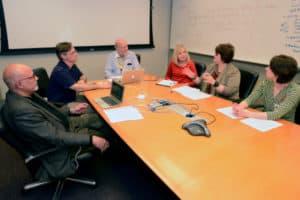
TRI is pleased to be able to offer Mock Study Sections for any researcher seeking review of an external grant application. Reviews are available for laboratory, animal and human

TRI Mock Study Section

participant study proposals. New submissions and resubmissions will be considered. Interested researchers can request a Mock Study Section through the TRI Portal (TRIServices@uams.edu) and should submit draft copies of their proposal, budget, and biosketch, as well as comments from a previous submission (if applicable).  The request deadline for review of February proposals is Dec. 4, 2015.

Mock Study Sections are intended to be learning experiences and investigators should plan to be present. Collaborators are also encouraged to attend. Participating investigators will be expected to provide TRI with follow-up information on grant submission outcomes, scores and funding awards.

Filed Under: Front, News, Newsroom

UAMS Staff Expertise Helps Researcher Make History

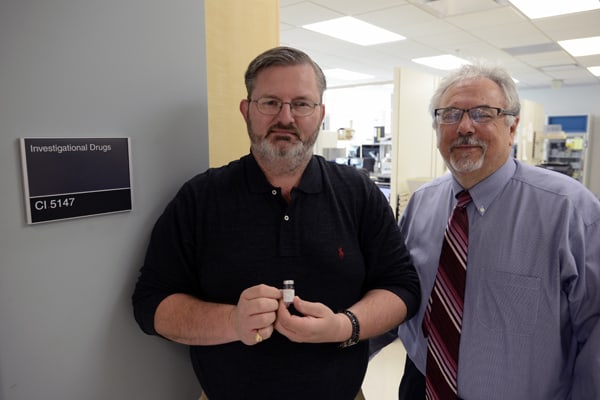
Larry Parker (left) in the UAMS Office of Research Regulatory Affairs, with Thomas Kieber-Emmons, Ph.D., in the UAMS Research Pharmacy. Parker has been a mainstay in the years-long effort to bring Kieber-Emmons’ breast cancer vaccine to clinical trial.

Oct. 22, 2015 | Behind the headlines of his breast cancer vaccine, now in a phase II clinical trial, UAMS’ Thomas Kieber-Emmons, Ph.D., tells a back story that inspires him and even draws applause from colleagues.

Kieber-Emmons peppers the story with some significant numbers: 1, 6, 28, 1,500, 4,000. The story begins in 2005 with 1, meaning  Kieber-Emmons’ first-in-man, computer-designed vaccine. No researcher at UAMS had developed such a vaccine or attempted the mammoth effort to deliver a synthesized product that could be safely tested in humans.

“This is not for the faint of heart,” he said.

In addition to required preclinical safety/toxicity studies mandated by the FDA, which were firsts in their own right at UAMS, requiring a rethinking of how the institution viewed such studies, Kieber-Emmons sought assistance within UAMS to prepare his investigational new drug (IND) application for the FDA.  A meeting was arranged with the then-Research Support Center, now the Office of Research Regulatory Affairs.

“There were 28 people there,” he recalled, shaking his head in amazement. “My first thought was, ‘why 28?’ So many people were part of this story, and it turns out they all had a meaningful role to play. It really did take a village.”

Having joined UAMS from the University of Pennsylvania, which has a much larger biomedical research enterprise, Kieber-Emmons was astonished that UAMS had such expertise. His previous employer would have had to hire a contract firm to handle what UAMS did by itself, he said. “It’s just phenomenal. The resources that UAMS brought to this is big-time.”

UAMS Office of Research Regulatory Affairs Manager Lyndsey Avery and Quality Assurance Unit Manager Larry Parker with reports compiled by their office to help launch human studies of a new breast cancer vaccine.

Still, getting his vaccine discovery into a form that could be tested in humans tested the limits of UAMS’ research resources, said Larry Parker, a mainstay on the project as Quality Assurance Unit manager for the Office of Research Regulatory Affairs.

“We were stretched to pull it off,” he said. “There are a lot of wheels and gears that have to be moving in the right direction to do this kind of stuff.”

Other key staff included Carole Hamon, Regulatory Affairs Unit Manager (retired, 2014), and Raymond Anderson, Quality Assurance Unit manager (retired, 2009).

In addition to numerous meetings with FDA staff, there were weekly meetings involving Kieber-Emmons and UAMS staff as they worked to meet the agency’s extensive safety requirements. Their work included writing 97 standard operating procedures (SOPs) that required the agency’s approval.

The IND application, submitted in 2011, was more than 1,500 pages, the largest IND application ever submitted by UAMS. Of all the numbers in Kieber-Emmons’ story, six may be his most prized; that’s how many questions the FDA posed after its review of the application.

“I’m almost more proud of that than the results of the vaccine, which is doing very well,” Kieber-Emmons said. “Other investigators are just amazed when I tell them there were only six questions; people clap.”

The FDA’s questions were received by Kieber-Emmons late on a Friday, and he and staff went to work that weekend drafting their responses, which went in the mail on Monday.

The experience speaks to the quality of people at the Office of Research Regulatory Affairs, he said.

“Our research support people know what they’re doing and they are very careful, so I love them, and I think they’re just the best,” he said.

The vaccine proved to be safe in a phase I trial. The phase II trial is examining if the vaccine improves the efficacy of preoperative chemotherapy. The trial includes women who are newly diagnosed with breast cancer to determine if the combination of vaccine and standard chemotherapy improves the benefit from preoperative therapy.

The heavy workload on Kieber-Emmons’ project continues for the UAMS Office of Research Regulatory Affairs. Annual reports, adverse event reporting and annual product stability testing are all part of the project’s management. Parker’s work, Kieber-Emmons said, includes working closely with the company that manufactures the vaccine, another company that tests the manufacturing process and a third company that is putting the vaccine into vials.

In his quality assurance/project management role, Parker has been the UAMS contact with these three companies. His job has included planning of testing protocols, manufacturing/testing timelines, review and approval of batch records, product labels, and testing reports. He organizes all the product information from the companies into a format required by FDA for submission.

Parker notes that he has more than 4,000 emails specific to the project dating to March 2006, and several people in his office have in excess of 1,000 emails for the project.

“We’re in the process of filing the fifth complete version of the Chemistry Manufacturing and Control (CMC) section of the IND,” Parker said. “Each of these versions has been in excess of 450 pages, and the current revision is in excess of 600 pages. This doesn’t include the filing of all protocol amendments and annual progress reports to the IND.  Needless to say, we’ve killed a few trees to keep this IND up to date with FDA.”

The Office of Research Regulatory Affairs currently manages 15 active INDs that include 20 current clinical trials and 15 investigational device exemptions (IDEs). Parker urges researchers to call his office if they are planning regulated research such as for new drugs or devices.

“Call us sooner rather than later,” he said. “The later we’re involved, the more work the researcher has to redo.”

The Office of Research Regulatory Affairs can be reached at 501-526-6876.

Filed Under: Front, News, Newsroom

TRI KL2 Recipient Ling Gao, M.D., Ph.D., Published in NEJM

Oct. 15, 2015 | Identifying a patient’s genetic mutation led University of Arkansas for Medical Sciences (UAMS) physician-researcher Ling Gao, M.D., Ph.D., to an existing drug that eliminated the patient’s stage IV Merkel-cell carcinoma. Gao’s findings, made in collaboration with two other UAMS researchers, were published today in The New England Journal of Medicine.

Gao is a recipient of the UAMS Translational Research Institute’s (TRI) KL2 Mentored Research Career Development Scholar Award, which provided two years of research funding and translational research training.

Gao_Ling600
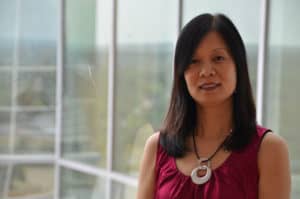
Ling Gao, M.D., Ph.D.

Metastatic Merkel-cell carcinoma is often fatal and there is no effective treatment. Gao’s 86-year-old female patient was diagnosed in 2013 with stage IIIB Merkel-cell carcinoma of the right temple. She had surgery and received radiation therapy in May 2013 and additional surgery in July 2014. In November 2014, doctors confirmed that the cancer had metastasized.

Gao, a dermatologist who treats Merkel-cell carcinoma patients from Arkansas and surrounding states, performed genetics tests on the tumor that revealed multiple mutations, including PI3Kδ.

Gao was aware that the drug idelalisib is a novel PI3K pathway inhibitor approved by the Food and Drug Administration (FDA) for treatment of B-cell lymphoma, a cancer of the blood. She was also aware of recent studies showing that disruption of the PI3Kδ mutation allows the body to mount an effective antitumor immune response.

On the basis of her laboratory work and knowledge of idelalisb, Gao began treatment of the patient with the drug on Feb. 6, 2015.

Three months after administering the idelalisib, there was no sign of the tumor in the patient’s liver, Gao said. Her findings were published in the Journal in a letter to the editor.

Based on what she’s learned, Gao said the case can be made for further study of PI3Kδ inhibitors like idelalisib in solid tumors, not just blood cancers.

“The efficacy of idelalisib in our patient provides initial clinical evidence that the targeting of PI3Kδ in Merkel-cell carcinoma is warranted,” Gao said in the letter, which  was also signed by UAMS’ Fade Mahmoud, M.D., and Mallory B. Shiver, M.D.

Gao also credits support she received from Peter Emanuel, M.D., director of the UAMS Winthrop P. Rockefeller Cancer Institute, and James Suen, M.D., chair of the Department of Otolaryngology-Head and Neck Surgery in the UAMS College of Medicine.

View the article and accompanying PET-CT findings here.

Gao’s research has been supported by the UAMS Translational Research Institute through the National Institutes of Health National Center for Advancing Translational Sciences, the Department of Dermatology in the UAMS College of Medicine, UAMS Winthrop P. Rockefeller Cancer Institute, and the Arkansas Biosciences Institute.

Filed Under: Front, News, Newsroom

‘Guinea Pig’ at TRI Research Forum Lands Genentech Stroke Award

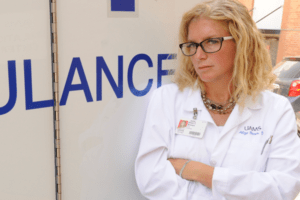
UAMS’ Aliza Brown, Ph.D., recently received a nearly $200,000 Genentech stroke research award after she incorporated ideas in her application from the first TRI Research Forum in June 2014.

The grant was one of only three community stroke pilots funded by Genentech in the United States. The study will enable Brown to determine paramedics’ recognition of stroke and whether stroke patients are being taken to stroke-ready hospitals.  In addition, she is developing an educational video for paramedics in partnership with the UAMS-led Arkansas SAVES (Stroke Assistance through Virtual Emergency Support) telestroke program and the Arkansas Department of Health’s Arkansas Stroke Registry.

Her hope is that the study will provide data to support state sanctioned stroke guidelines and practices for emergency medical services.

“The Department of Health is very interested in this project because this will help promote legislation for the stroke guidelines and to create a stroke dashboard to guide EMS agencies to the appropriate hospitals,” Brown said.

Brown, an assistant professor of radiology, joked that she was TRI’s first Research Forum “guinea pig.” The forums include established researchers and biostatisticians who provide feedback on investigators’ grant applications.

“The forum panel was excited about the application and said it was very translational,” Brown said. “They gave me some great advice. I learned a lot and I got a pretty good grant out of it.”

A key recommendation came from Jean McSweeney, Ph.D., R.N., professor and interim dean of the College of Nursing. “Dr. McSweeney suggested that the study include utilization of the Simulation Center and an educational intervention, so I did that,” Brown said.

Her study will validate the educational intervention – a training video – by measuring Pulaski County paramedics’ stroke recognition rates following training. Garland County EMS will serve as the control, where EMS workers will not receive the training video and whose stroke recognition rates will be followed concurrently.

“I hope that this study can provide data the state needs to make these stroke guidelines a reality,” Brown said.

To date, TRI has hosted nine Research Forums. To request a forum, email TRIservices@uams.edu.

Filed Under: Front, News, Newsroom

‘Spirit of Teamwork’ Led to Strong CTSA Grant Renewal Submission

Submitted on Sept. 25, TRI’s 1,263-page renewal application for a Clinical and Translational Science Award (CTSA) was made possible thanks to the dedication of faculty and staff across UAMS and its affiliated institutions, said TRI Director Laura James, M.D.

“Faculty reviewers and writers from across all colleges tackled this project in a spirit of teamwork that allowed us to develop the strongest possible application,” James said. “This was a cross-college, cross-department, cross-institution effort that involved basic scientists, clinical researchers, community engagement researchers, etc.”

Reviewers were Larry Cornett, Ph.D., Charlotte Hobbs, M.D., Ph.D., Donald Mock, M.D. Ph.D., Mike Owens, Ph.D., Paula Roberson, Ph.D., and Nancy Rusch, Ph.D. This group’s work included nine two-hour meetings. Other major contributors to the review group were DeAnn Hubberd and Peggy Brenner from the UAMS Office of Grants and Scientific Publications (OGSP).

Meanwhile, Mary Aitken, M.D., Pedro Delgado, M.D., and Rusch spent countless hours writing the application’s two training components, James said.

Other primary writers were Beatrice Boateng, Ph.D., Barry Brady, Mathias Brochhausen, Ph.D., Cornett, Geoff Curran, Ph.D., Gloria Richard-Davis, M.D., Ellen Fischer, Ph.D., Kristie Hadden, Ph.D., Hobbs, Laura Hutchins, M.D., Greg Kearns, Pharm.D., Ph.D., Brad Martin, Pharm.D., Ph.D., Pearl McElfish, Ph.D., Jean McSweeney, Ph.D., R.N., Mock, Pope L. Moseley, M.D., Alison Oliveto, Ph.D., Owens, Tamara Perry, M.D., Fred Prior, Ph.D., James Raczynski, Ph.D., Paula Roberson, Ph.D., Kate Stewart, M.D., M.P.H., Dennis Sullivan, M.D., Billy Thomas, M.D., and Pam Williams, Ph.D.

Valuable expertise was contributed by Hari Eswaran, Ph.D., as well as Barry Brady and Phaedra Yount from the Arkansas Children’s Research Institute (ACRI), and OGSP staff. TRI’s staff was critical to the process, James said, including Pamela Christie, Amy Jo Jenkins, Donna Mattingly, Anthony McGuire, and Laura Wilson, and many others who provided information for the grant.

If the application is successful, UAMS will receive about $24.4 million over five years. The CTSA Award is funded by the National Institutes of Health (NIH) National Center for Advancing Translational Sciences (NCATS).

Filed Under: Front, News, Newsroom

Dean Emphasizes Academic Mission at Research Town Hall

While the launch of the Integrated Clinical Enterprise is a focus point for UAMS this year, Dean Pope L. Moseley, M.D., assured faculty researchers at a Sept. 15 Town Hall meeting that a key objective of the service lines, and his top priority, is strengthening research and education programs.

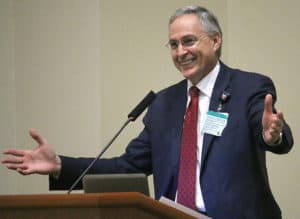
College of Medicine Dean Pope Moseley, M.D., discusses his vision for strengthening research.

“My goal is to make us better as an academic enterprise,” said Moseley, who is internationally known for his laboratory research in cellular adaptations to exercise and his expertise in biomedical informatics. He became dean in July after chairing the Department of Internal Medicine at the University of New Mexico School of Medicine for 14 years.

The forum, co-hosted by pediatrics Professor and Executive Associate Dean for Research Charlotte Hobbs, M.D., Ph.D., was well received by faculty members.

Stavros Manolagas, M.D., Ph.D., lauded Moseley’s arrival and strong support for the research enterprise as well as the commitment of UAMS leaders to support research with greater funding resources that are anticipated to be generated through the new clinical service lines.

“This is the most exciting news, I believe, at this institution in the 20 years that I have been here,” said Manolagas, a distinguished professor and director of the Division of Endocrinology and the internationally recognized UAMS Center for Osteoporosis and Metabolic Bone Diseases. “I want to wish you the best of luck,” he said, drawing a round of applause for Moseley.

Moseley noted that research and education are not self-supporting and that clinical revenue is by far the largest funding source for UAMS. “Research and education need fuel from the clinical engine,” he said.

An institution could hypothetically optimize the clinical delivery system at the expense of everything else, Moseley said.

“But that’s not who we are,” he said. “We didn’t come here to be a multi-specialty practice group. We came here to be a community of scholars. We are here to develop new knowledge and to train the next generation of scientists and clinicians.”

Moseley said he came to UAMS because he was impressed that an academic medical center had “the will” to completely change the clinical delivery model and system for managing the flow of its revenue in an effort to improve patient care while also generating new revenue for strategically planned research and education initiatives. “What we are all trying to do is to find that balance point,” he said.

Moseley outlined priorities for enhancing the research environment, including working with chairs to recruit outstanding researchers at all levels and in key areas that support research. He cited the recent recruitment of Fred Prior, Ph.D., from Washington University in St. Louis as the inaugural chair of the Department of Biomedical Informatics.

He said the college will work to support successful, established research programs and develop a systematic, central approach to bridge funding for successful investigators who experience lapses in extramural funding. Additionally, Moseley said he will work with research leaders to “lower the activation energy” required for successful research by addressing any barriers in areas such as human subject and animal care review.

Emphasizing the importance of chairs in determining how funds are allocated for research, he said a research-focused strategic retreat is being planned. Investigators can have input in the process through their chairs, he added.

An immediate priority is obtaining renewal of the Clinical and Translational Science Award (CTSA) from the National Institutes of Health National Center for Advancing Translational Sciences, which Moseley said is a “defining grant of an academic medical center.”

The UAMS Translational Research Institute (TRI), under the leadership of pediatrics Professor and TRI Director Laura James, M.D., has been preparing the CTSA renewal application to meet the Sept. 25 deadline. Moseley urged faculty members to support the final efforts that were underway.

Longer-range major institutional initiatives include building the biomedical informatics program under Prior’s leadership and preparing the Winthrop P. Rockefeller Cancer Institute’s application for National Cancer Institute designation in a couple of years, Moseley said.

The majority of the meeting was devoted to questions and comments about research priorities and needs. Recommendations from faculty members included developing an inpatient clinical research unit, improving access to research core services, and working more closely with the Central Arkansas Veterans Healthcare System (CAVHS) and leveraging VA grant opportunities for both basic and clinical researchers.

“Compared to other institutions that have VA facilities next door, we tend to underutilize their Career Development Program and the VA Merit Review Program,” said Curt Hagedorn, M.D., a Professor in the Division of Gastroenterology and Hepatology who serves as vice chair for VA Affairs in the Department of Internal Medicine and chief of Medicine at CAVHS.

Michael Jennings, Ph.D., professor and chair of the Department of Physiology and Biophysics and executive associate dean for Basic Sciences, said there is a misconception that VA awards aren’t available for basic scientists and lack of understanding about how to get into the VA system. “But this is something we can really take advantage of,” he said.

Moseley and faculty members spoke about the importance of growing the numbers of physician-scientists through recruitment, mentoring, training programs and other means.

John Arthur, M.D., Ph.D., director of the Division of Nephrology, used a football analogy in advocating for maximizing training grant opportunities, such as the NIH’s career development K awards.

“If you really want, over the long term, to have a team that can compete for the SEC championship year after year, you really have to grow it from the bottom up,” Arthur said.

The meeting opened with a presentation by Hobbs on new services for researchers, including improvements to the COM research website and the UAMS Grant Repository, which will provide junior faculty researchers with examples of submitted grant applications as a training resource to help them to improve their applications and chance of funding.

Hobbs showed a graph reflecting the downturn in NIH funding over the past five years. “We are really focused on turning that around,” she said.

Moseley also referred to the downturn in his remarks. “That is behind us,” he said. “It is our job to change course, and I am excited because we are going to do that.”

For more of Moseley’s thoughts on the importance of research and the academic mission, read his Executive Blog posts on the Inside UAMS intranet.

Learn More:

For information about eligibility and applying for VA grants, contact Sue Theus, Ph.D., deputy associate chief of staff/research, CAVHS, at (501) 257-4841 or Sue.theus@VA.gov.

Editor’s note: A version of this article also appears in the September COMmunication newsletter.

Filed Under: Front, News, Newsroom

Collaboration Station

Discover Your Next Collaborator With UAMS Profiles

profiles

Finding collaborators doesn’t have to be a scavenger hunt. UAMS Profiles, a new online research networking tool, eliminates the mystery and the miles separating researchers from potential collaborators.

Created at Harvard University, Profiles was obtained and customized for use at UAMS by the Translational Research Institute (TRI), the Winthrop P. Rockefeller Cancer Institute and the Department of Biomedical Informatics. Through its service to researchers, UAMS Profiles delivers on a key team science objective of the NIH National Center for Advancing Translational Sciences (NCATS), which oversees 62 Clinical and Translational Science Award (CTSA) institutions across the United States, including TRI.

Profiles (TRI.uams.edu/Profiles) combines a key-word directory with illuminating interactive visualizations that show each faculty member’s collaborations or networks with other researchers, and it shows how those networks have evolved over time.

UAMS faculty information is currently shared within the UAMS network and may be viewed by Profiles members at the main UAMS campus, Arkansas Children’s Hospital and its Research Institute (ACRI), the UAMS Northwest Arkansas campus, and by faculty at the Central Arkansas Veterans Healthcare System. In 2016, UAMS Profiles will be linked nationally with other research institutions that use Profiles or similar networking programs.

Profiles accounts were automatically established for all UAMS faculty with information imported from UAMS FacFacts (Faculty Facts), TRACKS and PubMed. Each faculty member’s Profile Page includes biographical information, contact information and their researcher networks. A researcher’s network may be viewed on the website as:

Filed Under: Front, News, Newsroom

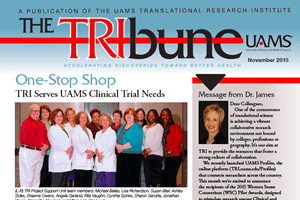
September TRIbune

You’ll want to check out the September TRIbune, which features UAMS Profiles, the exciting new platform for finding collaborators.  This issue also highlights a TRI-supported stroke researcher who received a Genentech grant, as well as TRI-cited publications by your colleagues.

TRIbuneSeptember2015

Download PDF | View Newsletter Archive

Filed Under: Front, News, Newsroom

UAMS BioVentures Director to Researchers: ‘Call Me’

Nancy Gray, Ph.D., has spent her first six months as UAMS BioVentures director focused on getting to know researchers and staff. She’s met with researchers interested in generating intellectual property, those who have generated intellectual property, and some who aren’t sure if they have.

“What I’ve found is that most researchers are so involved in the day-to-day of their programs that, generally, they aren’t thinking about whether they have invented something,” she said. “I believe there’s a lot more intellectual property here that we can capture.”

Gray’s outreach so far as generated an increasing number of researcher phone calls and emails, but she would like to receive more.

“If you have a question, call BioVentures,” she said. “Even if we don’t have an answer, we’ll find an answer. I would like to see BioVentures viewed as a resource as people think about their research work and what it might lead to in terms of commercialization.”

Gray has encountered a few misconceptions here, as well, such as that intellectual property relates only to patents, while in reality it may also involve copyright material and know-how.

BioVentures’ role includes finding licensees for a researcher’s intellectual property if the researcher chooses not to create a spin-off company. Gray has also focused on finding partners for UAMS researchers either through licensing of intellectual property or for sponsored research. While BioVentures does not manage sponsored research agreements, she said, there are opportunities for corporate sponsorships to develop early stage intellectual property through sponsored research or product licenses.

“If a researcher knows a certain company might be interested in their work, I would encourage them to reach out to BioVentures,” she said.

Another misconception Gray noted is that BioVentures offers a source of funding, as implied by its name. Although it doesn’t provide funding, Gray is in a position to help with that too.

“We’re not a venture group, per se, but we have the expertise here,” she said, noting BioVentures staff with business and financial backgrounds and her more than 30 years in biomedical industries, including medicinal chemistry research, management of pharmaceutical research and development, and business operations. Her experience and professional connections allow Gray to direct researchers to the right people.

“Each piece of intellectual property might have a different audience,” she said. “If it’s diagnostic based, the audience of companies would be much different than if it’s a therapeutic or vaccine or device.”

Gray’s experience also includes that of researcher and product developer. She is the inventor on 31 issued U.S. patents and the author of 23 publications. Her research on central nervous system diseases resulted in three products being accepted for clinical development in five years. She was also instrumental in the development of two marketed second generation antihistamines, Allegra and Xyxal.

UAMS Translational Research Institute (TRI) Director Laura James, M.D., noted that BioVentures is important to UAMS’ mission to improve its translation of new knowledge and discoveries into better health and health care. Gray participated in TRI’s strategic planning retreat just weeks after she arrived in March and is working with TRI on a program to reach a broader audience of researchers with an introduction to the concepts of intellectual property and the importance of protecting inventions.

Gray came to UAMS from the Southern Research Institute in Birmingham, Alabama, where she was vice president for corporate development. There, she led corporate development opportunities, including mergers and acquisitions, strategic alliances, joint ventures, minority investments, technology licenses and divestitures for the life sciences, engineering, and environment and energy business. Gray completed one joint venture agreement, 30 license agreements and 37 collaboration agreements.

Prior to her time at the Southern Research Institute, Gray worked in various executive roles at Beijing Med-Pharm Corporation, Vaxinnate Corportation and Elan Corporation.  She received her bachelor’s degree in chemistry from Bucknell University and her doctorate in medicinal chemistry from the University of Illinois.

Gray can be reached at nmgray@uams.edu or (501) 686-6696.

Filed Under: Front, News, Newsroom

Slide 2

Filed Under: Front, News

  • «Previous Page
  • Page 1
  • Interim pages omitted …
  • Page 33
  • Page 34
  • Page 35
  • Page 36
  • Next Page»
Translational Research Institute LogoTranslational Research InstituteTranslational Research Institute
Mailing Address: 4301 West Markham Street, Little Rock, AR 72205
Phone: (501) 686-7000
  • Facebook
  • X
  • Instagram
  • YouTube
  • LinkedIn
  • Pinterest
  • Disclaimer
  • Terms of Use
  • Privacy Statement
  • Legal Notices

© 2026 University of Arkansas for Medical Sciences