• Skip to primary navigation
  • Skip to main content
  • Skip to primary navigation
  • Skip to main content
Choose which site to search.
University of Arkansas for Medical Sciences Logo University of Arkansas for Medical Sciences
Translational Research Institute
  • UAMS Health
  • Jobs
  • Giving
  • About TRI
    • What We Offer
    • Leadership & Governance
    • Staff
    • Citing Translational Research Institute CTSA Support
    • What is Translational Research?
    • Contact TRI
  • Funding Opportunities
    • Grants
      • Pilot Award Program
      • Consortium of Rural States (CORES) Multi-Institutional Pilot Award Program
      • Team Science Voucher Program
      • Winthrop P. Rockefeller Cancer Institute Rural Research Award Program
    • Scholarships
      • K12 Mentored Research Career Development Scholar Awards Program
      • Health Sciences Innovation and Entrepreneurship Postdoctoral Training Program
      • Implementation Science Scholar Program
      • (STARs) Program – Strategies for Training and Advancing Researchers
      • SMART Program [Master’s in Clinical and Translational Sciences (MS-CTS)]
    • Community
      • Community Based Participatory Research (CBPR) Scholars Program
      • Community Partners Educated as Arkansas Research Leaders (CPEARL) Program
    • Awardee Responsibilities
  • Services & Resources
    • Services
      • Biostatistics, Epidemiology and Research Design (BERD) Consultation
      • Clinical Data Repository (AR-CDR)
      • Comprehensive Informatics Resource Core
      • Mock Study Sections
      • Research Participant Recruitment
      • Research Support: Clinical Trials Innovation Unit (CTIU)
      • Implementation Science Program
      • Research Ethics Consultation
    • Resources
      • ARresearch Registry
      • Center for Health Literacy
      • Data Safety Monitoring
      • Grant Writing & Dissemination
      • UAMS Profiles
      • UAMS Rural Research Network
      • Other Resources
      • COVID-19 Research Guidelines
      • Community Partner Research Training
  • Career Development & Scholarships
    • Scholarship Opportunities
      • K12 Mentored Research Career Development Scholar Awards Program
      • Health Sciences Innovation and Entrepreneurship Postdoctoral Training Program
      • Data Science Scholars Program
      • Implementation Science Scholar Program
      • SMART Program
      • Translational Research Innovations and Partners (TRIP) Program
    • Training & Educational Opportunities
      • innOVATION Seminar Series
      • Path 2 K Program
      • Translational Workforce Development
      • Graduate Certificate in Implementation Science
      • SMART Program [Master’s in Clinical and Translational Sciences (MS-CTS)]
      • Good Clinical Practice Training
    • Didactic Training
  • Community
    • Community Engagement Leadership
    • Community Advisory Board
    • Community Engagement Partners
      • Community Partner Celebration
      • Faith-Academic Initiatives for Transforming Health (FAITH) Network
    • Community Engagement Services
      • Consultations and Technical Assistance
      • Community Review Boards
      • Community Partner Research Training
      • Equipment Library
    • Programs and Funding
      • Community Partners Educated as Arkansas Research Leaders (CPEARL) Program
      • Community Based Participatory Research (CBPR) Scholars Program
      • Community Scientist Academy
    • Toolkits
      • CSA Online Toolkit
      • CPEARL Toolkit
  • Events
    • Research Day
    • Clinical Trials Learning Collaborative
  • Newsroom
  1. University of Arkansas for Medical Sciences
  2. Translational Research Institute
  3. Author: uamsonline
  4. Page 8

uamsonline

New Pilot Awards Available for CTSA Inter-institutional Studies

The Western States Consortium, which includes the UAMS Translational Research Institute (TRI) and four other Clinical and Translational Science Award (CTSA) institutions, has issued the call to all faculty for pilot award applications.

The purpose of the pilot awards is to promote inter-institutional collaboration by funding innovative, translational research projects that involve two or more of the four Western States Consortium members. Awards of up to $25,000 will be provided by each participating institution.

In addition to TRI, the Western States Consortium members are the University of Kentucky, University of New Mexico, University of Kansas Medical Center, and University of Utah, all part of the national CTSA consortium supported by the National Center for Advancing Translational Sciences (NCATS) at the National Institutes of Health (NIH).

Applications are due August 10, 2018, at 5 p.m. (CT). Each proposal’s lead principal investigator will submit one combined proposal via an online application system.

For additional details, view the Request for Applications (RFA) document.

If you have any questions, please contact Nia Indelicato at NLIndelicato@uams.edu or 501-614-2287.

Key Dates:

  • Application Release Date: June 15, 2018
  • IRB Submission Deadline: July 13, 2018
  • Application Deadline: Aug. 10, 2018, 5 p.m. Central Time
  • Notice of intent to fund at each CTSA: Aug. 24, 2018
  • Just-In-Time Period: Aug. 24, 2018 – Aug. 31, 2018
  • Submission to NIH for Prior Approval of Human Subjects: Sept. 21, 2018
  • Funding Cycle: Nov. 1, 2018, through Oct. 31, 2019
Filed Under: Front, News, Newsroom Tagged With: pilot, request for applications, RFA, Translational Research Institute, TRI, UAMS, University of Arkansas for Medical Sciences, Western States Consortium

New Course for Research Community Partners Replaces CITI Training

A new human subjects training video is now available for community members working in partnership with UAMS faculty researchers.

The online Arkansas Community Researcher Training (ArCRT) is a community-friendly course that was produced as an alternative to CITI training. Human subjects training is required by the UAMS IRB and federal research funding agencies.

The UAMS Translational Research Institute and Office of Research Compliance worked with a community focus group to create the course.

“We took an existing face-to-face community partner training program and modified it for this online learning tool that can be used throughout the state,” said TRI Executive Director Amy Jo Jenkins. “We also added some local flavor with eight research staff from TRI, the Compliance Office and the Myeloma Institute conducting the training. It was a lot of fun!”

UAMS Communications and Marketing produced the videos, while the final product, including the instructors’ narrations and avatars were produced by the UAMS Office of Educational Development.

Researchers can view the training via UAMS Blackboard. Sign in with your UAMS login and click on “My Communities.” In the search field, type “Arkansas Community Researcher Training.”

Community partners can access the training at uams.gosignmeup.com.

Click on “Create Account” and fill out the form. In the search field, type “Arkansas Community Researcher Training.”

[button text=”View Illustrated Instructions” url=”https://tri.uams.edu/wp-content/uploads/sites/80/2018/06/ArCRT_Registration_Instructions.pdf” target=”_blank” type=”btn-play” /]

For questions or assistance, contact Kim Givens, KGivens@uams.edu, 501-686-6879.

ArCRT was funded in part by TRI and its Clinical and Translational Science Award from the NIH National Center for Advancing Translational Sciences.

Filed Under: Front, News, Newsroom

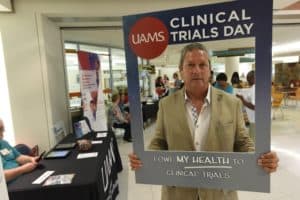
UAMS Clinical Trials Day Punctuated by Success Stories

In May 2006, Harold “Hap” Peterson was advised to get his affairs in order by UAMS cancer specialist Laura Hutchins, M.D. He had late-stage melanoma, a type of skin cancer, with tumors spreading throughout his body.

He was shocked to hear he had only three to six months to live. “I said, ‘I don’t feel sick at all,’” he recalled while attending the May 21 UAMS Clinical Trials Day celebration.

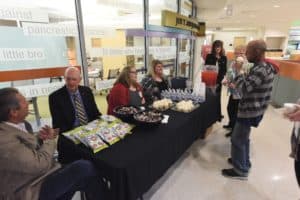
Patients and other visitors to the Cancer Institute were treated to snacks and punch as part of the UAMS Clinical Trials Day celebration.

In addition to radiation treatments, Hutchins, a hematologist oncologist and associate director of clinical research at the UAMS Winthrop P. Rockefeller Cancer Institute, prescribed Dacarbazine, a chemotherapy medication. It worked, but for just two years. There were no other approved medications available to help him. Hutchins suggested a compassionate use clinical trial that was testing an experimental melanoma drug called Ipilimumab.

He jumped at the chance, and it saved his life.

After about five years on the drug, he was cured.

“If I could speak to people who are questioning whether to go on a clinical trial, I would just be thrilled to tell them about my experience,” said Peterson, of Hot Springs Village.

Ipilimumab was approved by the U.S. Food and Drug Administration in 2011.

“There was no cure for this, and I’m sitting here 12 years later,” the retired airline pilot said. “I play golf four times a week, I travel, I do anything I want to do – I feel like a 21-year-old.”

A clinical trial is medical research that requires the participation of people. Clinical trials study such things as new medications, medical devices (such as a knee replacement), and even diets, to find out if they are safe and effective. Many clinical trials test new treatments to learn if they are more effective and/or have less harmful side effects than the standard treatment.

Homer Paul recently completed participation in a Parkinson’s disease clinical trial at the Translational Research Institute.

Another clinical trial participant at UAMS Clinical Trials Day, Homer Paul of Conway, recently helped test an experimental Parkinson’s disease drug. Existing drugs have helped Paul manage his disease, and agreed to volunteer to participate in the study testing an extended-release drug. The trial required him to spend 12 hours at a time for multiple blood draws and neurological tests at the UAMS Translational Research Institute.

During one visit, a fire alarm required evacuation of the building. Only two hours into his regimen, the study team walked Paul outside and found a secluded spot nearby to continue his neurological and blood tests until they were allowed back inside.

“They were pretty adamant about getting blood samples exactly on time,” he said. “It was kind of funny because I thought, ‘these nurses are relentless.’ I started calling them the A-Team.”

While Paul has managed his condition with existing drugs over the last 10 years, he said the extended release drug could help even out the highs and lows of today’s medications.

“I’m glad to be a part of it,” he said. “It’s my way to contribute to the cause and to the cure. At the end of the day, you want the quality of life for people to improve.”

Clinical Trials Day is celebrated around the world on or near May 20 each year in memory of the first randomized clinical trial, May 20, 1747, which discovered that citrus fruit could prevent scurvy in sailors.

“Clinical trials not only look at new drugs but also help pave the way toward examining new sensitive methods for determining patients’ response to treatment,” said Faith Davies, M.D., deputy director of the UAMS Myeloma Institute and director of the Phase I Clinical Trials Program for the Cancer Institute and Myeloma Institute. “Bringing new drugs which attack the cancer cells in different ways to our patients is really important and will hopefully improve response and survival rates and decrease side effects.”

“Clinical trials are an important foundation of biomedical research, advancing medicine and saving untold lives with the development of treatments that so many of us take for granted,” said Laura James, M.D., director of the UAMS Translational Research Institute and associate vice chancellor for clinical and translational research. “Clinical Trials Day honors the work of the professionals who develop and conduct clinical trials and all individuals who have previously participated in clinical trials. Their past participation made it possible for current patients to benefit from new innovations to advance health outcomes.”

The Clinical Trials Day celebration was sponsored by UAMS’ Translational Research Institute, Winthrop P. Rockefeller Cancer Institute, Myeloma Institute and Research Compliance Office.

Filed Under: Front, News, Newsroom

TRI’s Amy Jo Jenkins to Lead International Society of Clinical Research Professionals Board

Amy Jo Jenkins

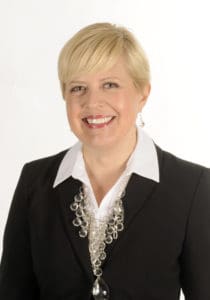
Amy Jo Jenkins, M.S., C.C.R.P., executive director of the UAMS Translational Research Institute, has been named president-elect of the Society of Clinical Research Associates (SOCRA) Board of Directors.

SOCRA, a nonprofit, charitable and educational membership organization, provides an internationally recognized certification program for clinical research professionals (CCRP®).

Jenkins founded the Arkansas SOCRA chapter in 2011. It has been recognized a record six consecutive years by the international association for providing the most continuing education hours of any of its 63 chapters. She was elected to the SOCRA Board of Directors in 2016 and will become president in 2019.

“I believe education empowers people to be outstanding in both their personal lives and professional careers,” said Jenkins, also an instructor in the UAMS colleges of Public Health and Pharmacy. “As president, I will work with the Board of Directors to further establish SOCRA as the global leader in clinical research education and professional certification. It will be a privilege to serve the diverse and robust clinical research workforce that makes up SOCRA’s membership.”

Clinical research professionals certified by SOCRA work with volunteer participants in studies at UAMS’ main campus in Little Rock and clinics across the state, including its eight regional campuses, Arkansas Children’s Research Institute, and the Central Arkansas Veterans Healthcare System.

“The continuing education we provide ultimately improves the quality of research in our state,” Jenkins said. “This will be evident for anyone who volunteers as a research participant.”

Filed Under: Front, News, Newsroom

BioVentures fastPace Course Helps Researchers Grasp Business Basics

Even a classroom full of experienced researchers with Ph.D. and medical degrees still found useful things to learn about business during the fastPace course organized by BioVentures.

“We enrolled in the class because we thought we had a good idea, but we didn’t really know how to take it to the next step,” said Marie Burdine, Ph.D. “We didn’t know the channels to take, what the patent process was like or if this was even a good idea. That’s why we took the course, to get more information about the process. We learned how to do market research and got great feedback on how to target more people to generate more revenue.”

Burdine is an assistant professor in the Division of Surgical Research in the UAMS College of Medicine’s Department of Surgery.

FastPace was developed by FastForward Medical Innovations at the University of Michigan and is designed for the busy medical academician with an early-stage project. It blends in-person and online education to help faculty researchers and clinicians learn the basic components of biomedical commercialization and prepare a successful business case for funding and developing partnerships.

FastPace is one of the newest courses offered by BioVentures and the researchers and clinicians who enrolled was the first class at UAMS to complete the course. Course sessions for the four-week course in biomedical commercialization started in late March.

Burdine teamed up with her husband, Lyle Burdine, M.D., an assistant professor in the College of Medicine’s Department of Surgery and a transplant surgeon, to develop a nanoparticle for treating clostridium difficile, a bacterial infection of the colon commonly referred to as C. diff. The nanoparticle binds to toxins caused by C. diff and removes them from the colon.

On April 27, there were 10 teams that finished the fastPace course.  Five were in the device/diagnostic track, three were in the therapeutics track and two were in the health information technology track. Seven teams were from the College of Medicine, two from hospital staff and one from University of Arkansas, Little Rock.  Nancy Gray, Ph.D., head of BioVentures, served as site director and lead instructor for fastPace. Curtis Lowery, M.D., Nancy Rusch, Ph.D., and Hari Eswaran, Ph.D., served as co-instructors.

Lowery chairs the College of Medicine Department of Obstetrics and Gynecology, and Eswaran is a professor in the same department. Rusch chairs the College of Medicine Department of Pharmacology and Toxicology and leads the educational efforts of the UAMS Translational Research Institute.

“The fastPace course was designed to teach members of the biomedical community how to develop a business case to secure funding, determine commercial viability of an innovation, build a business network and instill confidence in making a business presentation,” Gray said. I think it achieved all those things and a fuller understanding of what’s needed to take something from the lab to the market.”

Robert Griffin, Ph.D., professor in the College of Medicine’s Department of Radiation Oncology, was part of the Wild Parsnip team with Samir Jenkins, Ph.D., a postdoctoral fellow in the same department. The team’s product is a cancer therapy based on one of the chemicals in wild parsnip that is activated by ultraviolet light to be toxic to cancer cells. The treatment is designed for patients with cancer that is recurrent, in an anatomical position that’s not conducive to surgery or where a residual tumor is still present in the patient.

“I have a little bit of background working with other small companies, but fastPace is more in-depth and focused,” Griffin said. “We were pushed to get a lot of stuff done in a month. It usually takes a year to do this sort of thing.  The most valuable part of the course was the understanding we gained about the different stakeholders that you have to convince and what is the value at each stage of development. With cancer, you think of the patient first, but there are a lot of steps before that. That was useful.”

By Ben Boulden

Filed Under: Front, News, Newsroom

Public Invited to Attend UAMS Community Scientist Academy

Arkansans interested in having a voice in research programs at the University of Arkansas for Medical Sciences (UAMS) or simply learning how research is done are invited to participate in UAMS’ Summer 2018 Community Scientist Academy.

Sponsored by the UAMS Translational Research Institute, the Community Scientist Academy will be on Tuesdays each week May 22 through June 26, from 5:30 – 7:30 p.m. on the UAMS campus in Little Rock.

For questions and to register, contact Nicki Spencer, ndspencer@uams.edu, or (501) 526-6629. The training is being offered at no cost to participants.

Participants in the Community Scientist Academy will interact with UAMS researchers and community members involved in research in small roundtable discussions and other interactive sessions. They will learn:

  • How researchers decide what health issues to study
  • The research process
  • The benefits of individual and community organizations’ involvement in research

Graduates of the Community Scientist Academy will become more knowledgeable volunteers with additional opportunities to help influence UAMS research decisions on behalf of their communities. Examples include serving on:

  • Standing community advisory boards
  • One-time community boards created to advise researchers on specific studies
  • Panels that decide what research grants get funded

For graduates who are leading community organizations, there may also be opportunities to partner with UAMS on community-based research projects.

“The Community Scientist Academy will provide the basic knowledge to strengthen the public’s voice on research steering committees, mentoring committees, review committees, research projects, and in other leadership capacities,” said Kate Stewart, M.D., M.P.H., who leads the Translational Research Institute’s Community Engagement program. “We want our fellow Arkansans to understand what we do because their input makes a big difference in our efforts to improve health.”

UAMS researchers conduct clinical studies and community-based studies. Its clinical studies are conducted in UAMS’ hospital and clinics across the state, including at its main campus in Little Rock, its eight regional campuses, Arkansas Children’s Research Institute, and the Central Arkansas Veterans Healthcare System.

Filed Under: Front, News, Newsroom Tagged With: Community Scientist Academy, Kate Stewart, Nicki Spencer, Translational Research Institute, UAMS, University of Arkansas for Medical Sciences

TRI Helps Center for Health Literacy Make National Impact

Kristie Hadden, Ph.D., and her team at the Center for Health Literacy have been busy collecting national and international awards, grants and attention for their research-based tools and interventions.  And for good reason – their products are becoming models for addressing a key barrier to health improvement and human subjects research.

Hadden attributes much of the center’s success to support from the UAMS Translational Research Institute (TRI), which began in 2013 with co-sponsorship of the Health Literacy Research Grand Rounds.

“The grand rounds really got the ball rolling,” Hadden said.

She invited luminaries in the health literacy field from across the country, and during their visits she consulted with them on potential research opportunities in Arkansas. Two of the researchers became Hadden’s collaborators on a $2.9 million National Institutes of Health (NIH) grant. The five-year grant is testing a diabetes education and health literacy program in patient-centered medical homes at UAMS Regional Centers across Arkansas.

“If TRI hadn’t made the lecture series possible, I don’t believe I would have been able to establish those relationships so early in my research career,” she said.

TRI Director Laura James, M.D., said it is exciting to see the Center for Health Literacy using innovative translational research approaches to tackle such a significant barrier to health improvement.

“In a relatively short time, Dr. Hadden and her team have produced strategic evidence-based interventions that will move the needle for health improvement and have an impact on human subjects research by making complex documents easier for research participants to understand,” said James, UAMS associate vice chancellor for clinical and translational research.

Low health literacy is thought to impact as many as 37 percent of Arkansans and is known to influence a number of health-related outcomes, such as adherence to treatment plans.

In just the last year, the Center for Health Literacy has:

Made UAMS home to the largest known set of patient health literacy screening data in the U.S. This feat stems from piloting a health literacy screening question in the UAMS electronic health record Epic. In October 2017, the pilot results earned Best Poster from more than 200 entries at the International Conference on Communication in Healthcare/Health Literacy Annual Research Conference. Hadden, in collaboration UAMS’ Fred Prior, Ph.D., and Ahmad Baghal, M.D., also submitted a manuscript about the screening to the Journal of the International Medical Informatics Association. Prior chairs the Department of Biomedical Informatics and Baghal is director of the Arkansas Clinical Data Repository.

“We have a lot of momentum behind this screening,” Hadden said. “It’s pretty exciting – more than 100,000 patients have been screened and we have yet to implement it across the entire clinical enterprise.”

The resulting data could be used in an array of population health studies, she said.

Established the largest known collaborative of health literacy researchers in the U.S. The Center for Health Literacy Affiliate Faculty Group includes about 30 faculty from UAMS and across the U.S. committed to collaborative health literacy research. Since it was created in 2017, the multidisciplinary group has produced more than 20 publications.

“We’re a very productive group,” Hadden said. “I don’t know of another group like it out there.”

Shared the center’s plain-language informed consent template nationally via IRB Advisors Inc. The template created by the center in 2016 dropped mean readability of UAMS informed consents to an 8th grade level. Already available to UAMS researchers, IRB Advisors, an online medium, recently asked to share the template with its national audience.

“We’re hoping it will be widely used by investigators across the U.S.,” Hadden said.

Recently applied for a NIH grant to further study the plain language informed consent template’s impact. The next step for the template is to compare it to traditional informed consent approaches in a large, multicenter clinical trial. Hadden leveraged a special grant opportunity available to Clinical and Translational Science Awards (CTSA) Program sites to develop a partnership with the CTSA at the University of Alabama at Birmingham. The informed consent study will be nested within a $19.3 million multi-site study examining the effects of pharmacotherapy for mild hypertension in pregnancy among 4,700 to 5,700 patients.

If funded, the study will determine whether the plain language template improves comprehension for participants; whether subjects are more or less likely to enroll; and if they are more or less likely to stay in a study.

Researched a Spanish-language health literacy screening tool. Validated screening questions were adapted and tested using a 2017 TRI Pilot Award. Hadden said she is close to releasing study results.

“We’ve got some great findings that will help guide practitioners on how to best identify Spanish speaking patients who need resources and interventions,” Hadden said.

Joined national health literacy policy leadership. Chris Trudeau, J.D., a Center for Health Literacy faculty member, was appointed to the Institute of Medicine/National Academy of Science Roundtable on Health Literacy, which meets quarterly in Washington, D.C. “It’s an incredible honor to be at the table with such high-level leadership,” Hadden said.

Developed a new set of patient opioid education tools.  As part of a targeted intervention for orthopaedic surgery patients at UAMS, the tools are being shared across UAMS, with other health systems, and with national medical associations and societies.

They can be found at: healthliteracy.uams.edu.

Won a national award for Spanish-language tool. The center received the ClearMark Award of Distinction from the Center for Plain Language for How to Talk to Your Doctor HANDbook – Spanish. The center also received the Spanish Grand ClearMark Award, the highest honor for all 2017 Spanish nominations.

Filed Under: Front, News, Newsroom

March/April TRIbune 

March April Tribune

This issue of the TRIbune highlights the vital work of the UAMS Center for Health Literacy, which is garnering national attention as it tackles a key barrier to human subjects research and health improvement. Led by Kristie Hadden, Ph.D., the center and TRI have established fruitful translational research partnerships since 2013. We also celebrate the great work of our Community Engagement program, which has translated to the innovative use of community members as study section reviewers of our Pilot Award Program grants. TRI Executive Director Amy Jo Jenkins, M.S., is the subject of our TRI & Me feature, and we include the latest publications citing TRI’s support.

[button text=”Download March/April TRIbune” url=”https://tri.uams.edu/wp-content/uploads/sites/80/2018/04/TRIbune-MAR-APR_2018_WEB.pdf” type=”btn-pdf” /]

Filed Under: Education, Front, News

New Opioid Studies Led by UAMS Researchers and Collaborating Sites

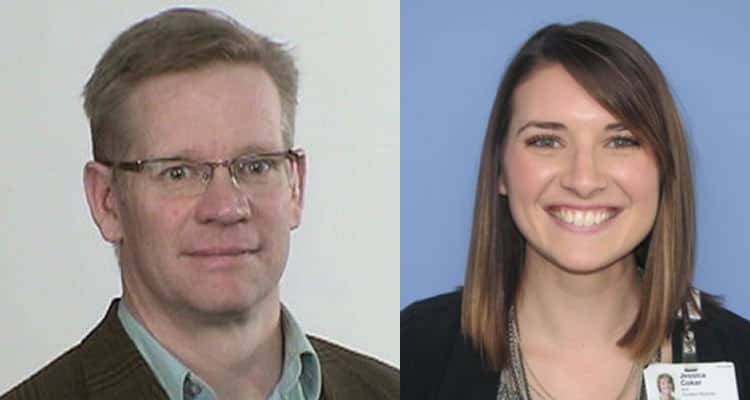
Inter-institutional studies on opioid abuse will be led at UAMS by Jessica Coker, M.D., and Bradley Martin, Pharm.D., Ph.D.

Funding for two inter-institutional pilot studies looking at opioid abuse was announced today by the UAMS Translational Research Institute.

One study seeks to address opioid use disorders in pregnant women.

“The study will harmonize data collection utilizing an iPad-based data collection tool with input from providers and patients,” said Jessica L. Coker, M.D., who will lead the study at UAMS in collaboration with researchers at the University of Kentucky, University of New Mexico Health Sciences Center, and University of Utah. “This initial work will benefit future studies that compare interventions.”

Coker’s project aims to demonstrate best practices for coordinating multi-site studies and leveraging CTSA resources, such as REDCap, to create a unified database management system.

“The primary goal of this project is to develop and test the feasibility of protocols for standardized data collection across multiple sites that provide care for pregnant women with opioid use disorders,” the pilot study application states. “We will identify key metrics for comparing interventions to reduce the negative effects of opioid use disorders among this population and demonstrate the effectiveness of an innovative iPad-based patient-centered data collection tool that can be easily used within a clinic setting.”

The pilot data will be used to seek outside funding for a large prospective study comparing models of care for pregnant women with opioid use disorders across the four sites.

Up to $25,000 is available to the researchers at each institution.

The other study will use existing patient data to look at the early care decisions and the risk of long-term opioid use in patients with low back pain. Bradley C. Martin, Pharm.D., Ph.D., will lead the study at UAMS in collaboration with researchers at the University of Utah.

“Our study brings together researchers from Utah and UAMS interested in leveraging big data to better understand the opioid epidemic,” said Martin, a professor in the UAMS College of Pharmacy. “We can then translate the lessons learned to improved decision-making by health care providers to reduce the risks associated with opioid prescribing.”

The study is utilizing the All-Payer Claims Databases available in each state. The databases provide de-identified records of publicly and privately insured patients who seek medical service. The pilot study findings will be used in applications seeking funding for larger-scale studies of the opioid issue.

The collaborating institutions in both studies are members of the Western States Consortium, which includes Clinical and Translational Science Awards (CTSA) Program institutions. The CTSA Program is supported by the National Center for Advancing Translational Sciences at the National Institutes of Health. The Western States Consortium also includes the University of Kansas Medical Center.

Filed Under: Front, News, Newsroom

UAMS Researchers Seeking More than 1,000 Completed Medical Marijuana Surveys

A first-of-its-kind survey is being circulated in Arkansas by UAMS researchers interested in Arkansans’ attitudes and perceptions about cannabis (marijuana) as state officials prepare to make it available for medical use.

Of the 28 other states with medical marijuana, none have conducted surveys prior to its legalization that document public attitudes about marijuana as a medical treatment. Nalin Payakachat, Ph.D., who is leading the study, said she hopes to gather more than 1,000 completed surveys from across the state.

“This is a unique opportunity for Arkansas if we can get a large dataset before the product hits the market,” said Payakachat, an associate professor in the UAMS College of Pharmacy. “This will be valuable information, especially as we conduct follow-up surveys over time.”

The survey is available HERE.

Arkansans voted in 2016 to allow marijuana use with a doctor’s prescription for 18 medical conditions, including cancer, glaucoma, arthritis, Alzheimer’s, seizures and intractable pain.

Supported by the UAMS Translational Research Institute (TRI), the survey is open to those who live in Arkansas and are 18 and older, regardless of whether they plan to use medical marijuana. In addition to questions about attitudes toward marijuana, the survey, which takes about 30 minutes to complete, covers quality of life and health conditions. Follow-up surveys will be given at six months, one year, 18 months, then yearly over five years.

Over the study period, the surveys will reflect any changes in people’s attitudes and perceptions about medical cannabis. The responses from survey takers will also shed light on the health benefits and harms of marijuana when used for their specific health conditions.

Unlike with other prescription medications, physicians can’t tell patients what type of marijuana to buy, or dosage, said William Fantegrossi, Ph.D., co-investigator on the study.

“People will just buy what they want, so there will be sort of a natural experiment going on, and that’s information that will be important to understand,” said Fantegrossi, associate professor in the College of Medicine Department of Pharmacology and Toxicology. “Eventually we may also have a better idea of what’s most effective – smoking it, eating it, or using it as an oil on the skin.”

Payakachat also noted the survey includes questions about the role of pharmacists who will be on staff at medical marijuana dispensaries.

“Pharmacists will be at the front gate and should be able to provide some guidance in terms selecting the appropriate products for patients’ conditions,” Payakachat said. “In our follow-up surveys, participants will tell us not only what they are buying, but also what they perceive of the pharmacists’ roles in the dispensaries.”

Payakachat and Fantegrossi have been assisted in their work on the survey by Lauren Russell, a Ph.D. candidate in the Department of Pharmacology and Toxicology.

To protect confidentiality, the survey contains no information that identifies participants except for an email address and phone number for follow-up surveys. Survey information is also protected using a federal confidentiality law for people who participate in research. The law has been applied in this survey through a “Certificate of Confidentiality” from the National Institutes of Health (NIH).

The idea for the study grew out of conversations with researchers from other research institutions, including Johns Hopkins, Harvard and McGill universities. They took the idea to 7-Hybrid Cultivation, a group that had expressed an interest in conducting research to augment its application for a state medical cannabis cultivation license. 7-Hybrid awarded $30,000 to support the study. It was not, however, among the five firms to receive a cultivation license. As part of the agreement, the results of the study belong to UAMS and will be open to the public.

The support provided by TRI is made possible by grant 1U54TR001629-01A1 through the National Center for Advancing Translational Sciences of the NIH.

Filed Under: Front, News, Newsroom

  • «Previous Page
  • Page 1
  • Interim pages omitted …
  • Page 6
  • Page 7
  • Page 8
  • Page 9
  • Page 10
  • Interim pages omitted …
  • Page 29
  • Next Page»
Translational Research Institute LogoTranslational Research InstituteTranslational Research Institute
Mailing Address: 4301 West Markham Street, Little Rock, AR 72205
Phone: (501) 686-7000
  • Facebook
  • X
  • Instagram
  • YouTube
  • LinkedIn
  • Pinterest
  • Disclaimer
  • Terms of Use
  • Privacy Statement
  • Legal Notices

© 2026 University of Arkansas for Medical Sciences