• Skip to primary navigation
  • Skip to main content
  • Skip to primary navigation
  • Skip to main content
Choose which site to search.
University of Arkansas for Medical Sciences Logo University of Arkansas for Medical Sciences
Translational Research Institute
  • UAMS Health
  • Jobs
  • Giving
  • About TRI
    • What We Offer
    • Leadership & Governance
    • Staff
    • Cite TRI
    • What is Translational Research?
    • Contact TRI
  • Funding Opportunities
    • Grants
      • Pilot Award Program
      • Consortium of Rural States (CORES) Multi-Institutional Pilot Award Program
      • Team Science Voucher Program
      • Winthrop P. Rockefeller Cancer Institute Rural Research Award Program
    • Scholarships
      • K12 Mentored Research Career Development Scholar Awards Program
      • Health Sciences Innovation and Entrepreneurship Postdoctoral Training Program
      • Implementation Science Scholar Program
      • (STARs) Program – Strategies for Training and Advancing Researchers
      • SMART Program [Master’s in Clinical and Translational Sciences (MS-CTS)]
    • Community
      • Community Based Participatory Research (CBPR) Scholars Program
      • Community Partners Educated as Arkansas Research Leaders (CPEARL) Program
    • Awardee Responsibilities
  • Services & Resources
    • Services
      • Biostatistics, Epidemiology and Research Design (BERD) Consultation
      • Clinical Data Repository (AR-CDR)
      • Comprehensive Informatics Resource Core (CIRC)
      • Mock Study Sections
      • Research Participant Recruitment
      • Research Support: Clinical Trials Innovation Unit (CTIU)
      • Implementation Science Program
      • Research Ethics Consultation
    • Resources
      • ARresearch Registry
      • Center for Health Literacy
      • Data Safety Monitoring
      • Grant Writing & Dissemination
      • UAMS Profiles
      • UAMS Rural Research Network
      • Other Resources
      • COVID-19 Research Guidelines
      • Community Partner Research Training
  • Career Development & Scholarships
    • Scholarship Opportunities
      • K12 Mentored Research Career Development Scholar Awards Program
      • Health Sciences Innovation and Entrepreneurship Postdoctoral Training Program
      • Data Science Scholars Program
      • Implementation Science Scholar Program
      • SMART Program
      • Translational Research Innovations and Partners (TRIP) Program
    • Training & Educational Opportunities
      • innOVATION Seminar Series
      • Path 2 K Program
      • Translational Workforce Development
      • Graduate Certificate in Implementation Science
      • SMART Program [Master’s in Clinical and Translational Sciences (MS-CTS)]
      • Good Clinical Practice Training
    • Didactic Training
  • Community
    • Community Engagement Leadership
    • Community Advisory Board
    • Community Engagement Partners
      • Community Partner Celebration
      • Faith-Academic Initiatives for Transforming Health (FAITH) Network
    • Community Engagement Services
      • Consultations and Technical Assistance
      • Community Review Boards
      • Community Partner Research Training
      • Equipment Library
    • Programs and Funding
      • Community Partners Educated as Arkansas Research Leaders (CPEARL) Program
      • Community Based Participatory Research (CBPR) Scholars Program
      • Community Scientist Academy
    • Toolkits
      • CSA Online Toolkit
      • CPEARL Toolkit
  • Events
    • Research Day
    • Clinical Trials Learning Collaborative
  • Newsroom
  1. University of Arkansas for Medical Sciences
  2. Translational Research Institute
  3. UAMS
  4. Page 4

UAMS

Public Invited to Attend UAMS Community Scientist Academy

Arkansans interested in having a voice in research programs at the University of Arkansas for Medical Sciences (UAMS) or simply learning how research is done are invited to participate in UAMS’ Summer 2018 Community Scientist Academy.

Sponsored by the UAMS Translational Research Institute, the Community Scientist Academy will be on Tuesdays each week May 22 through June 26, from 5:30 – 7:30 p.m. on the UAMS campus in Little Rock.

For questions and to register, contact Nicki Spencer, ndspencer@uams.edu, or (501) 526-6629. The training is being offered at no cost to participants.

Participants in the Community Scientist Academy will interact with UAMS researchers and community members involved in research in small roundtable discussions and other interactive sessions. They will learn:

  • How researchers decide what health issues to study
  • The research process
  • The benefits of individual and community organizations’ involvement in research

Graduates of the Community Scientist Academy will become more knowledgeable volunteers with additional opportunities to help influence UAMS research decisions on behalf of their communities. Examples include serving on:

  • Standing community advisory boards
  • One-time community boards created to advise researchers on specific studies
  • Panels that decide what research grants get funded

For graduates who are leading community organizations, there may also be opportunities to partner with UAMS on community-based research projects.

“The Community Scientist Academy will provide the basic knowledge to strengthen the public’s voice on research steering committees, mentoring committees, review committees, research projects, and in other leadership capacities,” said Kate Stewart, M.D., M.P.H., who leads the Translational Research Institute’s Community Engagement program. “We want our fellow Arkansans to understand what we do because their input makes a big difference in our efforts to improve health.”

UAMS researchers conduct clinical studies and community-based studies. Its clinical studies are conducted in UAMS’ hospital and clinics across the state, including at its main campus in Little Rock, its eight regional campuses, Arkansas Children’s Research Institute, and the Central Arkansas Veterans Healthcare System.
Filed Under: Front, News, Newsroom Tagged With: Community Scientist Academy, Kate Stewart, Nicki Spencer, Translational Research Institute, UAMS, University of Arkansas for Medical Sciences

UAMS, TRI Honor Community Partners at 2017 Celebration

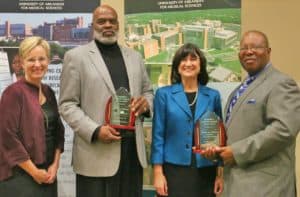
Pastors Johnny Smith and Jerome Turner accepted the Chancellor’s Community Research Partner Award for the Phillips and Jefferson Counties Faith Task Forces

The UAMS Translational Research Institute honored UAMS’ many Arkansas community partners Nov. 17 with its fifth annual Community Partner Celebration.

During the event at the Centre at University Park in Little Rock, the Phillips and Jefferson Counties Faith Task Force, led by pastors Johnny Smith and Jerome Turner, received the Chancellor’s Community Research Partner Award. The task force is using a faith-based intervention study with UAMS to prevent depression and promote emotional wellness in the Arkansas Delta.

The award, which focuses on partnerships that involve research, was presented by interim UAMS Chancellor Stephanie Gardner, Pharm.D., Ed.D.

Nominees for the Chancellor’s Award also included Ashley County Cares and the Arkansas Birthing Project.

“I enjoyed reading the applications for these,” Gardner said during her keynote address to about 150 attendees at the Centre at University Park in Little Rock. “In my book they were all winners.”

Other awards/winners:

  • The Community Based Organization of the Year: Samaritan Community Center

    The center aids underserved populations in the Rogers area through community garden development, pantries, community meal programs, snack pack program, resale shops, and social and dental services.
  • Community Advisory Board of the Year: Northwest Arkansas Marshallese Community Health Advisory Board

    The board provides significant direction and consultation to the UAMS Office of Community Health and Research via active involvement with community based participatory approaches related to diabetes self-management education, diabetes prevention programs, physical activity, medication adherence, and the translation of health materials and health survey instruments.
  • Community Partnership Student: Steven Keller

    Keller devoted his time to a student project working with a research team to develop home exercise programs for Marshallese community health workers. This project allowed the community health workers to teach exercise to the Marshallese population.
  • Institutional Health Partner Award: University of Arkansas Clinton School of Public Service

    Since 2010, the Clinton School has awarded five practicum teams, groups of students who spend two semesters completing a project directly related to the work of an organization, to the Access to Healthy Foods Research Group at the Arkansas Children’s Research Institute. The students completed work and provided the research group with deliverables that the team would not have had time to do.

“It’s just a joy to know so many people across our state are engaged in this effort of trying to make our communities healthier,” Gardner said. “It’s a celebration of the extraordinary service that non-UAMS organizations provide to UAMS.”

More photos

Watch the Video

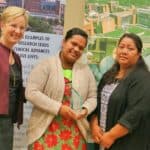
Marshallese Community Health Advisory Board members Rumina Lakmis and Rotha Mejbon-Samuel.
Hilary Trudell of the Clinton School of Public Service
Steven Keller

Filed Under: Front, Newsroom Tagged With: Awards, Community Engagement, community partners, Stephanie Gardner, Translational Research Institute, UAMS

Speed Collaborating Event Creates New Research Opportunities

UAMS’ first Speed Collaborating event was so productive for at least one researcher that she joked she now has too many collaboration options.

The two-hour gathering Oct. 5 drew 34 UAMS faculty. Researchers were paired based on their top five research interests and were given 5-10 minutes to discuss potential collaborations. After each brief session, they were paired with another researcher.

Participants who filled out an evaluation form following the event all rated it as either excellent or good. A sampling of their comments include:

  • “This was so good now I have too many collaboration options lol”
  • “The best thing about the event was meeting folks from across campus and hearing about different lines of research going on all over UAMS.”
  • “Thank you very much for the organization. This was something new and exciting I’ve never seen done before. I enjoyed meeting new people!”
  • “What a wonderful networking opportunity, thank you!”

The event was led by the Women’s Faculty Development Caucus Research Committee with support from the UAMS Faculty Center, the Translational Research Institute (TRI) and Office of Interprofessional Education.

Filed Under: Front, News Tagged With: Collaboration, Lisa Brents, research, Robert Reis, Translational Research Institute, UAMS

UAMS Synthetic ‘Marijuana’ Researcher Presents Findings at National Meeting

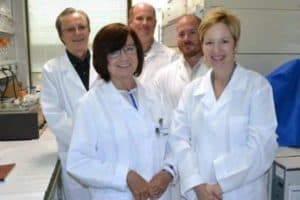
Anna Radominska-Pandya, Ph.D., (left front) with UAMS synthetic “marijuana” research team members, including Laura James, M.D., (right), and (back, l-r) Principal Investigator Paul Prather, Ph.D., Jeff Moran, Ph.D., and William Fantegrossi, Ph.D.

LITTLE ROCK — Some people who use so-called synthetic marijuana, known by names such as K2 and Spice, may be unable to metabolize the drug, leading them to experience its most harmful effects, a UAMS researcher said at the recent national Experimental Biology 2017 meeting in Chicago.

Anna Radominska-Pandya, Ph.D., part of a UAMS research team examining how the body processes the man-made cannabinoids, presented the team’s findings on the harmful effects of synthetic marijuana at the American Society for Pharmacology and Experimental Therapeutics annual meeting, which was held during Experimental Biology, a meeting that draws thousands.

Synthetic “marijuana” is a growing group of man-made cannabinoids marketed as alternatives to marijuana. Although the man-made drugs activate the same receptors in the brain as natural marijuana, they are known to have volatile effects that can lead to severe injury and death.

Radominska-Pandya is a professor in the UAMS College of Medicine Departments of Biochemistry and Molecular Biology and Medicine. Her work could identify genetic risk factors that make some people susceptible to the synthetic cannabinoids’ most harmful consequences, potentially leading to antidotes that counteract the worst effects.

Radominska-Pandya and her colleagues have found that some people are unable to metabolize and excrete synthetic cannabinoids. They now hypothesize that a person’s genetic makeup could produce the metabolism defects that cause the most harmful effects from the drug. Future genetics tests could potentially identify those people.

“It is important to understand the underlying causes and toxicity of synthetic cannabinoids so that effective treatments and antidotes can be developed,” Radominska-Pandya said.

UAMS has been a national leader of synthetic cannabinoid research since the UAMS Translational Research Institute funded the team’s work in 2011 with a $100,000 pilot award. In 2016, the team, led by Paul Prather, Ph.D., a professor in the Department of Pharmacology and Toxicology, received a five-year, $2.7 million National Institute of Drug Abuse grant that builds on the work of the pilot study.

Synthetic cannabinoids come in more than 150 chemical forms and the list is growing. As new synthetic cannabinoids appear on the market, the UAMS research team will study their properties and how the body’s metabolism may contribute to their harmful effects.

Experimental Biology is an annual meeting comprised of more than 14,000 scientists and exhibitors from six host societies and multiple guest societies. With a mission to share the newest scientific concepts and research findings shaping clinical advances, the meeting offers an unparalleled opportunity for exchange among scientists from across the United States and the world who represent dozens of scientific areas, from laboratory to translational to clinical research.

Filed Under: Front, News Tagged With: Anna Radominska-Pandya, Experimental Biology, genetics, k2, spice, synthetic marijuana, Translational Research Institute, UAMS

TRI Part of NIH Milestone to Accelerate Multisite Clinical Studies

CTSA Program paves way for nationwide single IRB model.

Developing new treatments for diseases often requires large numbers of clinical research participants enrolled in the same study at numerous geographical sites. These multisite clinical trials are well-positioned to discover whether a promising therapeutic is safe and effective, and may provide medical professionals with the information needed for treating their patients. However, the initiation of such studies may be delayed because each site typically relies on its own Institutional Review Boards (IRBs) to provide ethics reviews of the risks and benefits of the proposed research.

Christopher P. Austin, M.D.

The National Institutes of Health (NIH) is leading policy and programmatic initiatives to streamline this overly cumbersome process. NIH’s National Center for Advancing Translational Sciences (NCATS) announced today that all Clinical and Translational Science Awards (CTSA) Program sites (including the UAMS Translational Research Institute) have signed on to the NCATS Streamlined, Multisite, Accelerated Resources for Trials (SMART) IRB authorization agreement. This agreement — which now includes a total of more than 150 top medical research institutions — will enable all participating study sites to rely on the ethics review of one IRB for each study, making it possible to initiate multisite studies within weeks instead of months. For patients waiting to enroll in a study, this could make a life-saving difference.

The SMART IRB authorization agreement serves as a model to help investigators adhere to the NIH’s policy on single IRB use for multisite studies. This policy was designed to improve IRB efficiencies while ensuring the protection of research participants so that research can proceed expeditiously.

The authorization agreement effort was led by Harvard Catalyst, University of Wisconsin-Madison Institute for Clinical and Translational Research, and Dartmouth Synergy. Through these institutions, a team of NCATS-supported SMART IRB ambassadors facilitated and provided critical guidance and support to assist institutions in joining and implementing the SMART IRB authorization agreement.

“This milestone is a giant step toward a nationwide model for greater efficiency in IRB review, which is critical to getting more treatments to more patients more quickly,” said NCATS Director Christopher P. Austin, M.D. “It was made possible by the teamwork of hundreds of experts across the country who worked together to achieve what was thought to be impossible even a few years ago.”

In addition, the SMART IRB authorization agreement will provide the foundation for NCATS’ Trial Innovation Network central IRBs. The Trial Innovation Network is a collaborative CTSA Program initiative designed to address critical roadblocks in clinical research, and to optimize and streamline the clinical trial and studies process.

Next steps for the NCATS SMART IRB Platform include the development of education, training and harmonization of best practices for a single IRB review. Learn more at https://ncats.nih.gov/expertise/clinical/smartirb and https://smartirb.org (link is external).

About the National Center for Advancing Translational Sciences (NCATS): To get more treatments to more patients more quickly, NCATS incorporates the power of data, new technologies and strategic collaborations to develop, demonstrate and disseminate innovations in translational science. Rather than targeting a particular disease or fundamental science, NCATS focuses on what is common across all diseases and the translational process. Learn more at https://ncats.nih.gov.

About the National Institutes of Health (NIH): NIH, the nation’s medical research agency, includes 27 Institutes and Centers and is a component of the U.S. Department of Health and Human Services. NIH is the primary federal agency conducting and supporting basic, clinical, and translational medical research, and is investigating the causes, treatments, and cures for both common and rare diseases. For more information about NIH and its programs, visit www.nih.gov.

Filed Under: Front, News, Newsroom Tagged With: Christopher P. Austin, CTSA, IRB, NCATS, NIH, SMART IRB, Translational Research Institute, UAMS

TRI Seeks Early-Career Researchers Interested in Becoming Grant Reviewers

TRI is looking for early-career investigators at UAMS/ACRI/CAVHS who are interested in participating in mentored grant reviews.

This learning opportunity will include mentored reviews of TRI-sponsored pilot awards and KL2 Scholar awards along with independent training utilizing NIH resources.

If you are interested, please submit this brief form. After collecting names through the end of the year, TRI will contact registrants about next steps.  

Filed Under: Front, News, Newsroom Tagged With: early career, grant reviewer, researchers, Translational Research Institute, UAMS

‘Dos & Don’ts of Community Engagement’ Workshop for Researchers

A new workshop on the Dos and Don’ts of Community Engagement is being offered to researchers, students and staff, Oct. 18, 1 – 5 p.m., College of Public Health, G232.

The workshop was developed by the Translational Research Institute, College of Public Health and UAMS’ community partners. The workshop will include simulation and role reversal, video testimonials, and group reflection and debriefing.  The objective is to increase researchers’ knowledge of the dos and don’ts of community engaged research in the research domains of entering the community; the realities and constraints of community-based organizations; and dissemination.

The workshop is supported by the Arkansas Prevention Research Center and the Arkansas Center for Health Disparities.

For more information, contact jcoffey@uams.edu.

Filed Under: Front, News, Newsroom Tagged With: Community Engagement, Dos and Don'ts, research, Translational Research Institute, TRI, UAMS, University of Arkansas for Medical Sciences

  • «Previous Page
  • Page 1
  • Page 2
  • Page 3
  • Page 4
Translational Research Institute LogoTranslational Research InstituteTranslational Research Institute
Mailing Address: 4301 West Markham Street, Little Rock, AR 72205
Phone: (501) 686-7000
  • Facebook
  • X
  • Instagram
  • YouTube
  • LinkedIn
  • Pinterest
  • Disclaimer
  • Terms of Use
  • Privacy Statement
  • Legal Notices

© 2026 University of Arkansas for Medical Sciences