• Skip to primary navigation
  • Skip to main content
  • Skip to primary navigation
  • Skip to main content
Choose which site to search.
University of Arkansas for Medical Sciences Logo University of Arkansas for Medical Sciences
Translational Research Institute
  • UAMS Health
  • Jobs
  • Giving
  • About TRI
    • What We Offer
    • Leadership & Governance
    • Staff
    • Citing Translational Research Institute CTSA Support
    • What is Translational Research?
    • Contact TRI
  • Funding Opportunities
    • Grants
      • Pilot Award Program
      • Consortium of Rural States (CORES) Multi-Institutional Pilot Award Program
      • Team Science Voucher Program
      • Winthrop P. Rockefeller Cancer Institute Rural Research Award Program
    • Scholarships
      • K12 Mentored Research Career Development Scholar Awards Program
      • Health Sciences Innovation and Entrepreneurship Postdoctoral Training Program
      • Implementation Science Scholar Program
      • (STARs) Program – Strategies for Training and Advancing Researchers
      • SMART Program [Master’s in Clinical and Translational Sciences (MS-CTS)]
    • Community
      • Community Based Participatory Research (CBPR) Scholars Program
      • Community Partners Educated as Arkansas Research Leaders (CPEARL) Program
    • Awardee Responsibilities
  • Services & Resources
    • Services
      • Biostatistics, Epidemiology and Research Design (BERD) Consultation
      • Clinical Data Repository (AR-CDR)
      • Comprehensive Informatics Resource Core
      • Mock Study Sections
      • Research Participant Recruitment
      • Research Support: Clinical Trials Innovation Unit (CTIU)
      • Implementation Science Program
      • Research Ethics Consultation
    • Resources
      • ARresearch Registry
      • Center for Health Literacy
      • Data Safety Monitoring
      • Grant Writing & Dissemination
      • UAMS Profiles
      • UAMS Rural Research Network
      • Other Resources
      • COVID-19 Research Guidelines
      • Community Partner Research Training
  • Career Development & Scholarships
    • Scholarship Opportunities
      • K12 Mentored Research Career Development Scholar Awards Program
      • Health Sciences Innovation and Entrepreneurship Postdoctoral Training Program
      • Data Science Scholars Program
      • Implementation Science Scholar Program
      • SMART Program
      • Translational Research Innovations and Partners (TRIP) Program
    • Training & Educational Opportunities
      • innOVATION Seminar Series
      • Path 2 K Program
      • Translational Workforce Development
      • Graduate Certificate in Implementation Science
      • SMART Program [Master’s in Clinical and Translational Sciences (MS-CTS)]
      • Good Clinical Practice Training
    • Didactic Training
  • Community
    • Community Engagement Leadership
    • Community Advisory Board
    • Community Engagement Partners
      • Community Partner Celebration
      • Faith-Academic Initiatives for Transforming Health (FAITH) Network
    • Community Engagement Services
      • Consultations and Technical Assistance
      • Community Review Boards
      • Community Partner Research Training
      • Equipment Library
    • Programs and Funding
      • Community Partners Educated as Arkansas Research Leaders (CPEARL) Program
      • Community Based Participatory Research (CBPR) Scholars Program
      • Community Scientist Academy
    • Toolkits
      • CSA Online Toolkit
      • CPEARL Toolkit
  • Events
    • Research Day
    • Clinical Trials Learning Collaborative
  • Newsroom
  1. University of Arkansas for Medical Sciences
  2. Translational Research Institute
  3. News
  4. Page 5

News

KL2 Scholar Jure Baloh, Ph.D., Receives $657,000 NIH Grant to Test Addiction Treatment Supervision Strategy

Jure Baloh, Ph.D., MHA

Jure Baloh, Ph.D., MHA, a 2022 graduate of the UAMS Translational Research Institute’s (TRI) KL2 Mentored Research Career Development Scholar Award Program, is using a recent National Institutes of Health (NIH) grant to support his work related to addiction treatment.

Baloh, an assistant professor in the UAMS Fay W. Boozman College of Public Health’s Department of Health Policy and Management, is developing and piloting a supervision strategy to support management and staff of addiction treatment programs.

The project is funded by a three-year, $657,103 R34 grant from the NIH National Institute on Drug Abuse. Baloh said there is a straight line from his KL2 (now K12) award to the R34.

“My KL2 experience was foundational for the success of my NIH application,” he said. “The mentorship, training, preliminary research and protected time over those two years allowed me to focus on this project and develop a truly competitive application.”

The study will provide the foundation for a future large-scale test of the supervision strategy.

“We’re trying to develop a system for addiction treatment facility supervisors to help support their counselors,” Baloh said. “That way, supervisors and staff can feel empowered and have the tools to help them do their jobs well. We think this approach can also help reduce the rates of burnout. We want to solve those issues.”

Previous studies suggest that treatment facility jobs can be highly demanding with low pay and long hours. That results in low morale and staff shortages, ultimately undermining the quality of services. The level of assistance a program can provide factors heavily into a person’s ability to recover from a substance use disorder, Baloh added.

“People receiving treatment need ongoing support from an attentive workforce to lead them,” he said. “Quality services are a key component to a successful recovery.

“Therefore, this study is focusing on the counselors, not so much the treatment. We’re focused on people having access to high quality treatment, to help them recover.”

This planning study will also emphasize the need for an increase in the use of evidence-based practices that provide support for the staff and supervisors.

“We’re trying out some components to see if we can do this at different levels,” Baloh said. “We’ll survey and interview supervisors and counselors to get an idea if they like the intervention, if it’s helpful, if it’s not too burdensome. If we’re successful in doing all that, they should be better supported to provide evidence-based treatments.”

In the U.S., addiction to opioids, methamphetamines and alcohol harm almost 50 million people annually. For supervisors of substance abuse centers to properly support counselors, they need evidence-based supervision strategies. According to Baloh, it’s common for supervisors of the programs to receive limited support.

That’s a major reason why developing and refining a supervision strategy and piloting it in treatment programs is important.

“The study is a small piece in a larger picture to improving the issues that the workforce experiences, which can help ensure access to high quality treatment,” Baloh said. “This study will provide information to inform planning and design of a future study to assess the effectiveness of the new supervision strategy in a large sample of substance use disorder programs.”

Assisting programs with methods for upgrading team morale and reducing turnover is important for Arkansans.

“The individuals working in the treatment field are our neighbors, family members, church members and friends,” Baloh said. “We hope that what we learn from this study — and future studies — is that we’ll be able to show that supervision strategies can support the workforce and increase the quality of care provided.”

“If the workforce does not receive good support, they’re unlikely to do quality work,” he said. “It’s an immediate problem to address.”

The information can also help future health professionals create methods to help supervisors and staff at other types of facilities.

“If it all proves effective, perhaps it’s something we can teach in our college’s Master of Health Administration program or other leadership trainings,” he said.

TRI is funded by the National Center for Advancing Translational Sciences of the NIH, Clinical and Translational Science Award numbers UM1 TR004909, K12 TR004924, and T32 TR004918.

Filed Under: Front, News, Newsroom

Why Is Asthma More Challenging for Arkansas Children? ACRI/UAMS Researcher Aims to Find Out with NIH Funding

Akilah Jefferson, M.D., received funding from the National Institutes of Health to explore why asthma is uniquely troublesome for Arkansas children.
Akilah Jefferson, M.D., will use the NIH funding to explore why asthma is uniquely troublesome for Arkansas children.

Children who grow up in Arkansas have a harder time with asthma than their peers elsewhere, and a scientist at Arkansas Children’s Research Institute (ACRI) and the University of Arkansas for Medical Sciences (UAMS) hopes to discover why.

Akilah Jefferson, M.D., an early career researcher at ACRI, will use a $662,000 four-year award from the National Institutes of Health (NIH) to explore why asthma is uniquely troublesome for Arkansas children. Jefferson, a recent graduate of the UAMS Translational Research Institute’s two-year KL2 (now K12) Mentored Research Career Development Award Program, is also an assistant professor in the College of Medicine Department of Pediatrics in the Division of Allergy and Immunology. She treats children with allergies and immune conditions at Arkansas Children’s Hospital (ACH) and Arkansas Children’s Northwest (ACNW).

Asthma is among the most common childhood conditions and can be especially daunting for children in underresourced and rural areas. In Arkansas, children living in rural communities often face higher rates of asthma, especially those from low-income families. They are also much more likely to have complications from asthma that put their lives at risk.

Jefferson and her research team will explore factors like a child’s home environment, access to health care and the quality of care they receive. They will also examine how different communities and health care providers might contribute to these challenges.

“A child’s zip code should have nothing to do with how easy it is for them to breathe. Arkansas children need our help to determine why asthma is so challenging in our state and to create new ways to help them,” Jefferson said. “Our goal is to ensure that every child, regardless of where they live, has the chance to breathe easy and thrive.”

By learning more about these factors, Jefferson hopes to develop targeted interventions that can improve asthma outcomes for children in rural Arkansas. This could include providing better education about asthma management, increasing access to health care, or addressing environmental factors that can trigger asthma attacks.

The funds are awarded through NIH’s Mentored Patient-Oriented Research Career Development (K23) program, designed to provide protected time for clinically trained researchers to receive intensive, supervised research training in biomedical research. The award supports a period of supervised research and research career development to prepare the candidate to successfully seek an NIH R01 or equivalent major research grant by the end of the award period. Tamara Perry, M.D., chief of Allergy and Immunology at Arkansas Children’s and a professor of Pediatrics in the UAMS College of Medicine, serves as Jefferson’s mentor on the project.

This work was supported by the UAMS Translational Research Institute, which is funded by the National Center for Advancing Translational Sciences at the National Institutes of Health, grant award Kl2 TR003108.

Filed Under: Front, News, Newsroom

UAMS Faculty Join TRI Leadership Team

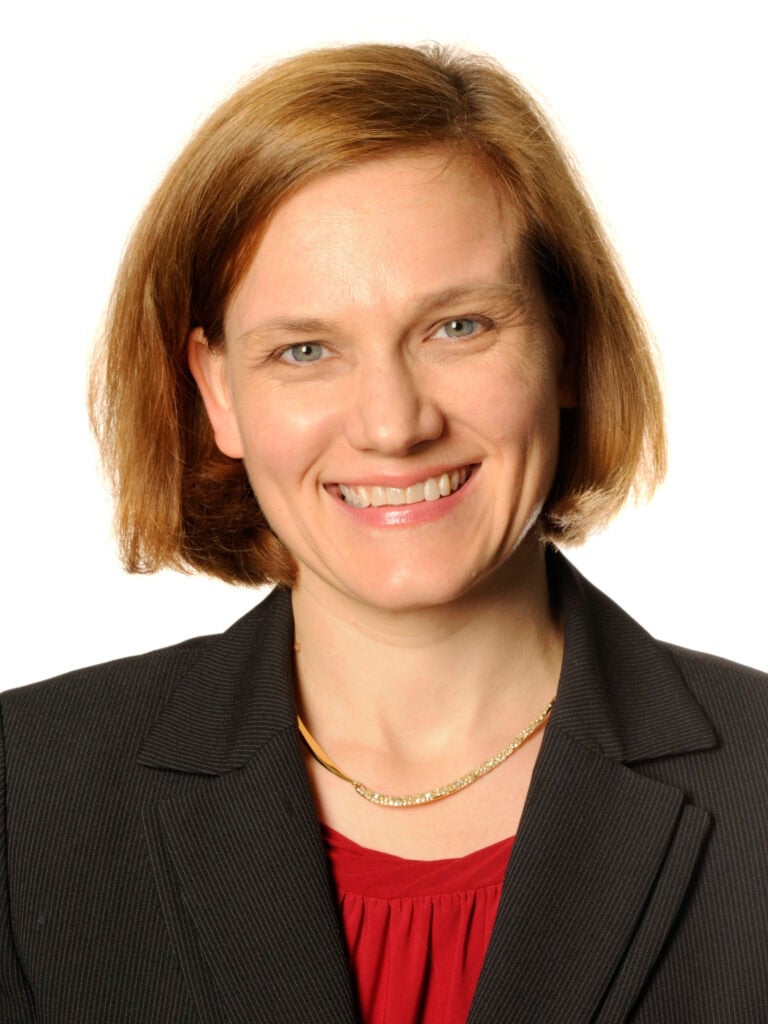
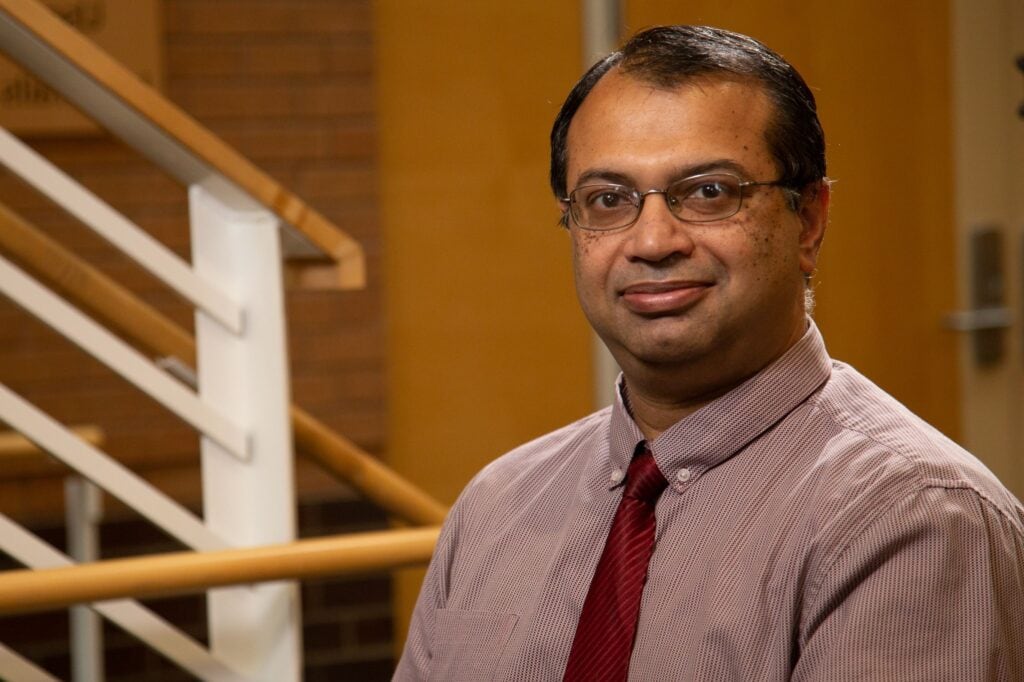
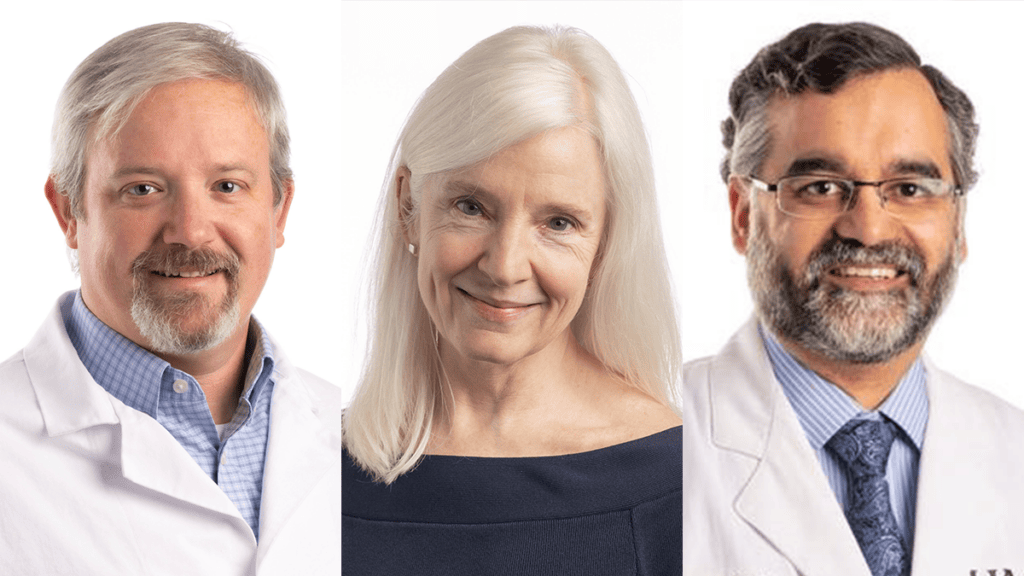
(L-R) Jason E. Farrar, M.D., Melody Greer, Ph.D., and Tuhin Virmani, M.D., Ph.D., are new members of TRI’s faculty leadership team.

The UAMS Translational Research Institute (TRI) recently welcomed three UAMS faculty members to its leadership team, with Jason E. Farrar, M.D., Melody Greer, Ph.D., and Tuhin Virmani, M.D., Ph.D., providing oversight of key programs and serving on the TRI Leadership Council.

Farrar is co-director and a multiple principal investigator of the K12 Mentored Research Career Development Award Program, joining co-directors/MPIs John Arthur, M.D., Ph.D., and Mario Schootman, Ph.D. Farrar is an associate professor of pediatric hematology/oncology and director of the Arkansas Children’s Research Institute Genomic Core Laboratory. He is also co-director of the Arkansas Children’s Hospital Leukemia and Lymphoma Program.

Greer is co-director of the T32 Health Sciences Innovation and Entrepreneurship (HSIE) Training Program for postdoctoral fellows, joining co-director/principal investigator John Imig, Ph.D. Greer is an assistant professor in the College of Medicine Department of Biomedical Informatics and a graduate of the HSIE program.

Virmani is co-director of Translational Workforce Development, joining Schootman. Virmani will also lead new initiatives in clinical trials education through the Clinical Trials Learning Collaborative, scheduled to launch in 2025. He is an associate professor in the College of Medicine Departments of Neurology and Biomedical Informatics. He is also vice chair for Education and chief of the Neurodegenerative Disorders Division in the Department of Neurology. In addition, he is director of the Mission MSA Center of Excellence, the Huntington’s Disease Society of America’s Center of Excellence, and co-director of CurePSP Center of Care.

TRI Director Laura James, M.D., said she is excited to have them on the team.

“Each of these faculty leaders brings unique experience and expertise to TRI,” she said. “They are each committed to helping our programs thrive, and I am thrilled that they are here.”

Filed Under: Front, News, Newsroom

75 Years after Accident, UAMS Surgeons, I³R Researchers Restore Greenwood Pastor’s Sense of Touch, Ability to Grip

As Dewey Hickey took apart and reassembled a bait casting reel using an experimental prosthetic hand system, he marveled at the revolutionary technology that made it possible.

Dewey Hickey demonstrates how he used his prosthetic hand system to help repair his bait casting reel.

“It amazes me,” said Hickey, who in January 2023 became the first Arkansan and only the second person in the world to receive the device, which restored his sense of touch and grip force. “This has even enhanced the science fiction buff in me.”

A retired pastor, Hickey, 85, said he was skeptical when he first heard about the innovative device, which is part of a research collaboration between the system’s inventors at the Institute for Integrative and Innovative Research (I³R) at the University of Arkansas at Fayetteville and the University of Arkansas for Medical Sciences (UAMS).

“I told them upfront I didn’t think it was going to work on me because I haven’t had use of my hand for 75 years,” said Hickey, whose amputation stemmed from a bicycle accident when he was 10.

Before agreeing to receive the experimental prosthesis, he met with the I³R inventors and then the UAMS surgery team, led by neurosurgeon Erika Petersen, M.D.

In his first meeting with the I³R team, James Abbas, Ph.D., who co-leads the team, gripped his left arm above the amputation and asked Hickey to move his nonexistent thumb. He hesitated, telling Abbas that it seemed impossible, but Abbas encouraged him to try his right thumb first, then to think about having a left thumb. Hickey focused on the muscles that would have moved the thumb, then did the same to make a fist.

“I feel it,” he recalled Abbas telling him. “You’ve got everything we need to work with.”

L-R) Ranu Jung, Ph.D., James Abbas, Ph.D., and Erika Petersen, M.D., chat with Dewey Hickey prior to his historic surgery.
(L-R) Ranu Jung, Ph.D., James Abbas, Ph.D., and Erika Petersen, M.D., chat with Dewey Hickey prior to his historic surgery.

Abbas, who has a joint appointment with UAMS in the College of Medicine Department of Neurosurgery, led the discussions that brought the team of UAMS surgeons, Snell Prosthetics and Orthotics and health technology companies together with I³R’s Adaptive Neural Systems Group (ANS). The UAMS Translational Research Institute also facilitated collaboration on the study.

Next, Hickey met with Petersen, director of the Section of Functional and Restorative Neurosurgery in the College of Medicine Department of Neurosurgery who has a courtesy appointment with I³R, and UAMS orthopaedic hand and nerve specialists John Bracey, M.D., and Mark Tait, M.D., both in the Department of Orthopaedic Surgery.

“Dr. Petersen is who I primarily spoke with, and she is very personable,” he said. “I met with them for over an hour, and finally Dr. Petersen turned to Dr. Abbas and said, ‘Look, I know this man’s about to be 84 years old, but his body is not, and his mind is certainly not.’”

The December meeting concluded with Hickey agreeing to the Jan. 9, 2023, surgery, with hopes that his participation will someday help soldiers and others who have lost limbs.

“By that time, they had given me a complete understanding of what the program was about, and I said, ‘Yes, I’m willing to do the research — whatever you want me to do,’” he said.

The ongoing clinical trial is titled, “Neural Enabled Prosthesis for Upper Limb Amputees,” and has been approved as an investigational device by the Food and Drug Administration. The project is supported by the U.S. Department of Defense, National Institute of Biomedical Imaging and Bioengineering of the National Institutes of Health, and the UAMS Translational Research Institute.

‘A promise of what’s to come’

The UAMS surgeons used their complementary expertise to implant electrodes and other components that are part of the device, and which enable communication from the prosthetic hand system to the brain through the arm’s median and ulnar nerves.

Erika Petersen, M.D. (center), with Ranu Jung, Ph.D. (left), and (foreground) Mark Tait, M.D., and John Bracey, M.D., during preparation for the surgery.
Erika Petersen, M.D. (center), with Ranu Jung, Ph.D. (left), and (foreground) Mark Tait, M.D., and John Bracey, M.D., during preparations for the surgery.

Bracey and Tait had the delicate task of implanting the thinner-than-human-hair filament wires into Hickey’s nerves.

Petersen, whose expertise is helping expand the use of new and evolving technologies that can alter a patient’s nerve activity, known as neuromodulation, ensured that the neurostimulator portion of the device was placed appropriately in Hickey’s arm.

Petersen’s leadership of clinical trials testing implantable electrical devices since 2015 has produced profound outcomes for patients with intractable pain and movement disorders. She continues to lead studies of potential new procedures for Parkinson’s disease, chronic migraines, stroke and spinal cord injuries.

The prosthesis technology, Petersen said, significantly advances the ability to harness the power of the human nervous system.

“Mr. Hickey’s case is an exciting promise of what’s to come for people with amputations around the globe,” she said.

The neurostimulator in Hickey’s upper arm receives commands from the prosthesis-mounted components and produces electrical pulses that get conveyed to his nervous system, enabling the sense of touch. During his surgery, the I³R team observed and occasionally consulted with the surgeons.

Bracey and Tait work with many individuals with amputated limbs, and they have dreamed about such a breakthrough.

“The idea of enabling someone to feel with their prosthesis is pretty meaningful, and we’re excited to be part of this groundbreaking project with the I³R team,” Tait said.

A Eureka Moment

Only about a week out of surgery, Hickey began working with the I³R team two days a week in Fayetteville. During his three-hour sessions, the team helped him acclimate to the device and fine-tuned its settings as he worked on activating and recognizing the sensations in his long-latent nerves.

About 12 weeks post-surgery, Hickey had a eureka moment as he was watching television with his wife. His prosthesis was off, and he began to recognize the phantom sensations of his missing fingers.

“I was sitting there, and I said, ‘Oh my gosh, that’s my index finger; that’s my middle finger; that’s my ring finger; that’s my little finger.’ I identified my fingers for the first time. They have never been there before, well, since I was 10 years old.”

“Now, when I shake hands with somebody, I really can feel their hand with the prosthesis,” he said.

Dewey Hickey shows the experimental prosthetic system to the UAMS Translational Research Institute's David Avery, senior director of Clinical Research Operations, and Laura James, M.D., director. Avery and James helped facilitate the research collaboration between UAMS and the University of Arkansas' I³R team.
Dewey Hickey shows the experimental prosthetic system to the UAMS Translational Research Institute’s David Avery, senior director of Clinical Research Operations, and Laura James, M.D., director. Avery and James helped facilitate the research collaboration between UAMS and the University of Arkansas’ I³R team.

Throughout the intensive sessions with the I³R team, Hickey said he developed a bond with Abbas, Ranu Jung, Ph.D., who co-leads the program, and others on the team.

“They are just some of the most compassionate people I’ve ever been around,” he said. “You get the sense they really care.”

The clinical trial is open and recruiting participants with amputations below the elbow. Visit ans.uark.edu to learn more. For questions about the study, contact anslab@uark.edu or 479-718-2390.

This research is supported by the U.S. National Institute of Biomedical Imaging and Bioengineering (NIBIB; R01 EB023261) and U.S. Army Joint Warfighter Medical Research Program (W81WXH1910839). Abbas and Jung are the principal investigators.

The Translational Research Institute is supported by a Clinical and Translational Science Award from the NIH National Center for Advancing Translational Sciences (grant UM1 TR004909).

Filed Under: Front, News, Newsroom

UAMS Researchers Invited to Apply for Multi-institutional Pilot Awards; LOI Deadline Extended to Jan. 21

The Consortium of Rural States (CORES) Research Collaborative, which includes UAMS, recently released its multi-institutional pilot award Request for Applications (RFA), with up to $25,000 available per award per participating institution.

All UAMS-affiliated faculty are invited to apply, including those based at Arkansas Children’s Research Institute and the Central Arkansas Veterans Healthcare System.

Letters of intent are due Tuesday, Jan. 21, 2025.

The multi-institutional pilot awards involve eight institutions with Clinical and Translational Science Awards (CTSA). In addition to UAMS, the consortium includes Dartmouth SYNERGY Clinical and Translational Science Institute at Dartmouth College; Penn State Clinical and Translational Science Institute at Penn State University; the Clinical & Translational Science Center at University of New Mexico Health Sciences; Frontiers Clinical and Translational Science Institute at the University of Kansas; University of Kentucky Center for Clinical and Translational Science; The Institute for Clinical and Translational Science at the University of Iowa; and the Clinical and Translational Science Institute at the University of Utah Health.

The RFA requires the participation of at least two CORES institutions on each pilot application.

Read the Request for Applications.

If you have any questions, please contact Hailey Rogers, HRogers@uams.edu. 

Filed Under: Front, News, Newsroom

UAMS’ Chenghui Li, Ph.D., Publishes 33 Papers after NCATS Re-Entry Grant

Chenghui Li, Ph.D., said the NCATS re-entry grant helped restart her research career.

Unplanned life events sidelined UAMS researcher Chenghui Li, Ph.D., for two years, but since returning in 2020 she has authored or co-authored 33 published papers, thanks largely to a National Center for Advancing Translational Sciences (NCATS) re-entry grant.

The NCATS re-entry grants support researchers trying to resume their careers after time away.

Li received the two-year $221,000 grant to support her research into if and why many breast cancer patients in Arkansas are not receiving or adhering to a potentially life-saving hormone treatment known as endocrine therapy.

“I am very thankful for the NCATS supplement. It really helped me restart my career,” said Li, an associate professor in the College of Pharmacy Division of Pharmaceutical Evaluation and Policy, and a member of the UAMS Winthrop P. Rockefeller Cancer Institute’s Cancer Prevention and Population Services program.

Li applied for the grant with support from UAMS Translational Research Institute (TRI) Director Laura James, M.D., and her mentor, Laura Hutchins, M.D., professor emerita.

“Dr. Hutchins and I saw Dr. Li as an ideal candidate for the NCATS re-entry award, and she has exceeded our expectations,” James said. “Her remarkable talent and dedication have not only advanced her research but have also contributed meaningfully to her field. Dr. Li has a promising future, and we are excited to see the far-reaching impact of her work.”

TRI is funded by a CTSA (UM1 TR004909) from NCATS, a program of the National Institutes of Health.

Of Li’s 33 published papers, 22 cite NCATS and TRI support. Of those, she was lead author on six papers and corresponding or senior author on 12.

Her research has involved use the Arkansas All Payer Claims Database and Arkansas Cancer Registry database to assess endocrine therapy use for Arkansas women with stage 0-3 estrogen responsive tumors. Patients and providers were also interviewed to determine barriers to endocrine therapy.

Li also received a $220,000 American Cancer Society grant in 2023, which is supporting her assessment of patient challenges in endocrine therapy use after the ACA, which was enacted in 2010 but fully implemented in 2014.

Greater access to health insurance through the ACA, along with price reductions for aromatase inhibitors, may have increased breast cancer patients’ use of the life-saving treatments, she said.

Filed Under: Front, News, Newsroom

TRI-Supported Researcher Megha Sharma, M.D., Published in Pediatrics

Megha Sharma, M.D., poses with a poster about her work.
Megha Sharma, M.D., poses with a poster about her Implementation Science project.

A successful effort at UAMS to reduce the amount of blood taken for lab tests from premature infants has been published in the journal Pediatrics.

The project was led by Megha Sharma, M.D., a neonatologist and associate professor in the College of Medicine Department of Pediatrics. Her work was conducted in the UAMS Neonatal Intensive Care Unit (NICU) over two years as part of the UAMS Translational Research Institute’s Implementation Science Scholars Program. Her paper, “Reducing Iatrogenic Blood Losses in Premature Infants,” was published in September.

Research has shown that blood loss from repetitive lab testing is a significant contributor to anemia in very low birth weight infants (less than 3.3 pounds). The blood lost from lab tests in the first few weeks of life often equals or exceeds the amount of an infant’s total blood volume, which is only 2-3 ounces. It can lead to a range of poor health outcomes.

“I was excited to see that we were able to achieve an 18% reduction in lab tests and blood loss,” Sharma said. “It has the potential over time to reduce the number of blood transfusions and the risk of anemia for our preterm babies.”

A key implementation strategy was revising automated patient care instructions in the electronic health record known as order sets that are used by NICU doctors.

“We had to take some of those defaults out of the computer-generated order sets so that our NICU physicians would be empowered to consider whether a blood test is actually needed,” Sharma said.

Helping physicians find the right balance of testing for such infants also involved resident education and an awareness campaign for all NICU care providers. Sharma used a travel-size 2-ounce bottle of hand sanitizer to demonstrate just how little blood the infants have available to give.

“An important aspect of this project was seeking qualitative input from physicians to thoroughly assess the NICU’s practices and culture so that we could tailor the interventions and deploy the most effective implementation strategies possible,” she said.

Resident physicians who rotate through the NICU monthly received laminated pocket cards stating the amount of blood needed for the 15 common lab tests in the NICU as well as the charges for those tests. This information also was provided in the electronic health record when entering lab orders.

Other implementation tactics included requiring documentation of the amount of blood drawn from each infant.

The project involved 354 infants and resulted in an 18.5% reduction in lab tests in the first three postnatal weeks, a 17% decrease in blood taken, and a $290,328 reduction in lab charges.

“There were fewer painful blood draw procedures and fewer invasive (central line) catheters placed as a result of this initiative,” Sharma said. The reduction in lab tests ordered also had no adverse health effects for the infants during the implementation science project.

In addition to her excitement about these results, Sharma said the implementation science project demonstrated how improvements can be made in other areas of a hospital.

“This work is generalizable,” she said. “Our methods can be adopted to reduce other unnecessary and wasteful practices, especially in an ICU setting. It involves modifying our way of thinking and embracing ‘less is more’ such that it is more respectful not only of patients but also of our economic and environmental resources.

The Implementation Science Scholars Program, led by Geoffrey Curran, Ph.D., made her project possible.

“I had identified a need for de-adopting a nonevidence-based practice, which is always a challenge. The Implementation Science program gave me a scientific and systematic way to approach it,” she said. “Dr. Curran was always present whenever I ran into barriers or needed help, and he and Dr. Sara Landes [Ph.D.] were instrumental in the success of this project. I am grateful for our biostatistician, the late Trey Spencer, for his incredible work in analyzing the effects of our interventions so we could disseminate our results to a wide community of physicians and researchers.”

Sharma said the knowledge gained in the Implementation Science program, which began in 2020, has informed her work as a student in the Clinical and Translational Science Master of Science program, supported by the Translational Research Institute, and as a current scholar in the institute’s K12 Mentored Research Career Development Program. The K12 program offers two years of translational research training, salary support and seed funding for a research project.

TRI is supported by the National Center for Advancing Translational Sciences at the National Institutes of Health, Clinical and Translational Science Award UM1 TR004909.

Filed Under: Front, News, Newsroom

The TRIbune Is Here!

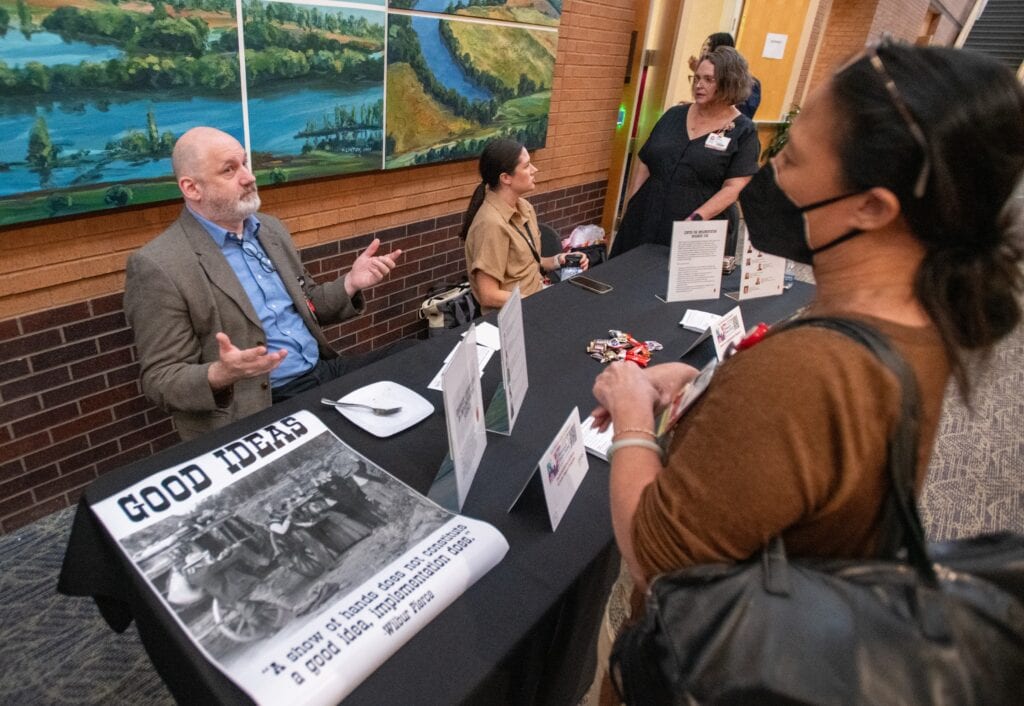
Kristen Muller, Ph.D. (right), speaks with Angie Brock, CRA, assistant director of Research Programs for the Office of Sponsored Programs Administrative Network (OSPAN).
Kristen Muller, Ph.D. (right), speaks with Angie Brock, CRA, assistant director of Research Programs for the Office of Sponsored Programs Administrative Network (OSPAN) at Research Expo 2024.

In the October issue of The TRIbune, we feature one of TRI’s biggest co-sponsored events of the year, Research Expo 2024, coupled this year with the UAMS Division of Research and Innovation New Research Faculty Orientation. 

We also announce three new faculty leaders for TRI: Jason E. Farrar, M.D., Melody Greer, Ph.D., and Tuhin Virmani, M.D., Ph.D.

This issue also includes a story about Megha Sharma, M.D., whose project in TRI’s Implementation Science Scholars Program was published in the journal Pediatrics.

A story about ARresearch reveals what a rich resource it has become with nearly 11,000 registrants available to help UAMS-affiliated investigators reach their participant enrollment goals.

Read The TRIbune.

Filed Under: Front, News, Newsroom

Research Faculty, Students Discover Benefits of Research Expo 2024 and Faculty Orientation

Kristen Muller, Ph.D. (right), speaks with Angie Brock, CRA, assistant director of the Office of Sponsored Programs Administrative Network (OSPAN).
Kristen Muller, Ph.D. (right), speaks with Angie Brock, CRA, assistant director of the Office of Sponsored Programs Administrative Network (OSPAN). (Photo by Bryan Clifton)

As a new faculty member at UAMS, Kristen Muller, Ph.D., said attending Research Expo 2024 and the New Research Faculty Orientation was a perfect way to start the year as a researcher.

“Being brand new, it’s really helpful learning all about the university, the processes, and putting faces with names,” said Muller, an assistant professor in the College of Health Professions Department of Audiology and Speech Pathology. “I’ve poked around the website a bit looking at the resources that UAMS has, but actually having it all laid out here and getting to meet the people and hear from them what they do and what’s available here is really helpful.”

Muller, who is conducting research in the autism community, said she was especially pleased to visit with the Translational Research Institute’s (TRI) community engagement team as well as the UAMS Division of Research and Innovation’s Office of Sponsored Programs Administrative Network (OSPAN) and the Science Communication Group.

This year’s Research Expo on Sept. 12, which drew 117 attendees, was linked for the first time with the UAMS Research & Innovation New Research Faculty Orientation at the Reynolds Institute on Aging Building.

During the orientation, which preceded the expo, TRI Director Laura James, M.D., thanked Dan Voth, Ph.D., vice chancellor for Research and Innovation, for combining the two annual events.

“I like this format, and I hope you’ll let us come back and do it again,” she said. “This is a great way to acquaint people with all the many wonderful resources that we have here at UAMS.”

Laura Adkins, MAP, CCRP, CCRA, CRS, AdvCRS, director of the UAMS Office of Research Regulatory Affairs, provided an overview of the department during the orientation. (Photo by Bryan Clifton)

Voth thanked his department leaders after they each gave brief presentations and emphasized to researchers in the audience that his division’s primary purpose is to help researchers.

“Science is hard, and you’re pursuing all this cool research, so we want to make it as easy on the administrative side as possible,” Voth said. “That’s our entire goal.”

Members of TRI’s Community Engagement team, Nicki Spencer, MHA, and Sarah Fountain, provided information about the program during the expo. (Photo by Bryan Clifton)

The Research Expo included more than 40 tables and more than 50 research services available at UAMS, Arkansas Children’s Research Institute (ACRI) and the Central Arkansas Veterans Healthcare System.

Geoffrey Curran, Ph.D., discusses TRI’s Implementation Science Scholars Program, which he leads. (Photo by Bryan Clifton)

Lisa Brents, Ph.D., underscored the value of the expo for all researchers, including those who are more seasoned.

“Even for investigators like me who are not new to UAMS, the expo is a great way to get a refresher on many of the infrastructural resources UAMS offers to support and enrich research,” said Brents, an assistant professor in the College of Medicine Department of Pharmacology and Toxicology. “It’s also a great opportunity to learn about changes and to interact in person with colleagues I haven’t seen in a while.”

Stefanie Kennon-McGill, Ph.D. (left), senior program manager at BioVentures LLC, speaks with Alexa Escapita, Ph.D., a postdoctoral fellow. (Photo by Bryan Clifton)

Alexa Escapita, Ph.D., a postdoctoral fellow, was pleased that the Research Expo was the catalyst for meeting a potential collaborator.

“It was nice to meet a fellow postdoc who does research in kind of the same field, so we connected and we’re going to reach out for collaboration,” said Escapita, who is in the College of Medicine Department of Obstetrics and Gynecology.

Jasmine Stewart, M.S., visits with Pam Kahler, program manager for TRI’s Health Science Innovation and Entrepreneurship Training Program for postdoctoral fellows. (Photo by Bryan Clifton)

Jasmine Stewart, M.S., a fourth-year medical student who is spending the year as part of a UAMS research team, said the expo will give her a leg up. 

“There’s a lot that I’m not familiar with, so the fact that this exists is extremely helpful,” said Stewart, a research associate at the College of Medicine Center for Hearing Health Equity.  “When I have writing assignments, or manuscripts to review, or data to analyze, instead of going to Google or Chat GPT to look up how to do something, now I’ve made contact here and I can shoot them a quick Teams message or send them an email.”

Lexus Brettell, a third-year occupational therapy doctoral candidate based at the UAMS Northwest Regional Campus, said she was impressed by the number of available resources.

“We came down from Northwest Arkansas today just to be part of this,” she said. “There are so many resources here that I didn’t know were available. There’s a lot of opportunity for funding, and funding that’s matched with mentorship. I found myself picking up so many cards, thinking that my peers or my research primary investigator may need them someday.”

Ripa Jamal, Ph.D.

Ripa Jamal, Ph.D., said she was amazed by the many resources and services offered at the expo.

“It was indeed a wonderful cross-platform for greeting and meeting with resourceful researchers and opportunities,” said Jamal, a postdoctoral fellow in the Section of Pediatric Nephrology in the College of Medicine Department of Pediatrics. “This platform gave us a chance to meet collaborators with the same interests. What stood out most for me was how involved I felt with everyone who attended. It was time well spent.”

Jamal also won a UAMS-branded cutting board during the door prize drawings, which she said was a “nice touch.” 

“Sometimes small tokens like that can serve as a pleasant reminder of the positive experiences and connections made at such events. I am looking forward to attending similar events in the near future.”

Filed Under: Front, News, Newsroom

The TRIbune Is Here! 

Neal Halfon, M.D., MPH, speaks to attendees of the Advancing
Arkansas Lifespan Research Conference.
Neal Halfon, M.D., MPH, speaks to attendees of the Advancing
Arkansas Lifespan Research Conference.

In this issue of The TRIbune, we highlight the recent Advancing Arkansas Lifespan Research Conference, which featured Neal Halfon, M.D., as the keynote speaker. The day-long event also included a diverse range of topics presented by eight UAMS-affiliated researchers, including those from Arkansas Children’s Research Institute and the Central Arkansas Veterans Healthcare System.

This issue also includes a story about TRI’s Community Engagement Core, which has joined a multisite study funded by the Patient-Centered Outcomes Research Institute (PCORI). The collaboration involves seven other community engagement teams across the U.S. with the aim of promoting and strengthening institutional support for community-based research and patient/community leadership in research.

In addition, we recognize our Summer Writing Challenge winners and highlight our K12 Mentored Research Career Development Scholars Program, which has two upcoming information sessions ahead of its letter of application deadline.

Read The TRIbune.   

Filed Under: Front, News, Newsroom

  • «Previous Page
  • Page 1
  • Interim pages omitted …
  • Page 3
  • Page 4
  • Page 5
  • Page 6
  • Page 7
  • Interim pages omitted …
  • Page 48
  • Next Page»
Translational Research Institute LogoTranslational Research InstituteTranslational Research Institute
Mailing Address: 4301 West Markham Street, Little Rock, AR 72205
Phone: (501) 686-7000
  • Facebook
  • X
  • Instagram
  • YouTube
  • LinkedIn
  • Pinterest
  • Disclaimer
  • Terms of Use
  • Privacy Statement
  • Legal Notices

© 2026 University of Arkansas for Medical Sciences