• Skip to primary navigation
  • Skip to main content
  • Skip to primary navigation
  • Skip to main content
Choose which site to search.
University of Arkansas for Medical Sciences Logo University of Arkansas for Medical Sciences
Translational Research Institute
  • UAMS Health
  • Jobs
  • Giving
  • About TRI
    • What We Offer
    • Leadership & Governance
    • Staff
    • Citing Translational Research Institute CTSA Support
    • What is Translational Research?
    • Contact TRI
  • Funding Opportunities
    • Grants
      • Pilot Award Program
      • ARLife Small Grants Program
      • Team Science Voucher Program
      • Consortium of Rural States (CORES) Multi-Institutional Pilot Award Program
      • Winthrop P. Rockefeller Cancer Institute Rural Research Award Program
    • Scholarships
      • K12 Mentored Research Career Development Scholar Awards Program
      • Health Sciences Innovation and Entrepreneurship Postdoctoral Training Program
      • Implementation Science Scholar Program
      • Strategies for Training and Advancing Researchers (STARs) Program
      • Scholars in Mentored Applied Research & Translational Science (SMART) Program
    • Community
      • Community Based Participatory Research (CBPR) Scholars Program
      • Community Partners Educated as Arkansas Research Leaders (CPEARL) Program
    • Awardee Responsibilities
  • Services & Resources
    • Services
      • Biostatistics, Epidemiology and Research Design (BERD) Consultation
      • Clinical Data Repository (AR-CDR)
      • Comprehensive Informatics Resource Core
      • Mock Study Sections
      • Research Participant Recruitment
      • Research Support: Clinical Trials Innovation Unit (CTIU)
      • Implementation Science Program
      • Research Ethics Consultation
    • Resources
      • ARresearch Registry
      • Center for Health Literacy
      • Data Safety Monitoring
      • Grant Writing & Dissemination
      • UAMS Profiles
      • UAMS Rural Research Network
      • Other Resources
      • COVID-19 Research Guidelines
      • Community Partner Research Training
  • Career Development & Scholarships
    • Scholarship Opportunities
      • K12 Mentored Research Career Development Scholar Awards Program
      • Health Sciences Innovation and Entrepreneurship Postdoctoral Training Program
      • Data Science Scholars Program
      • Implementation Science Scholar Program
      • SMART Program
      • Translational Research Innovations and Partners (TRIP) Program
    • Training & Educational Opportunities
      • innOVATION Seminar Series
      • Path 2 K Program
      • Translational Workforce Development
      • Graduate Certificate in Implementation Science
      • SMART Program [Master’s in Clinical and Translational Sciences (MS-CTS)]
      • Good Clinical Practice Training
    • Didactic Training
  • Community
    • Community Engagement Leadership
    • Community Advisory Board
    • Community Engagement Partners
      • Community Partner Celebration
      • Faith-Academic Initiatives for Transforming Health (FAITH) Network
    • Community Engagement Services
      • Consultations and Technical Assistance
      • Community Review Boards
      • Community Partner Research Training
      • Equipment Library
    • Programs and Funding
      • Community Partners Educated as Arkansas Research Leaders (CPEARL) Program
      • Community Based Participatory Research (CBPR) Scholars Program
      • Community Scientist Academy
    • Toolkits
      • CSA Online Toolkit
  • Events
    • Research Day
    • Clinical Trials Learning Collaborative
  • Newsroom
  • TRI Talks Translational Science
  1. University of Arkansas for Medical Sciences
  2. Translational Research Institute
  3. Newsroom
  4. Page 10

Newsroom

Investigators Soak in Research Expo 2023’s Abundant Resources, Services

Alberto Ramirez, Ph.D., was excited to attend Research Expo 2023, with its 50 research services and resources on display.

“As an early-career researcher, the event proved to be remarkably valuable as it allowed me to gain insight into the numerous resources offered by UAMS, including TRI, Research & Innovation, and more, which have the potential to greatly support my nascent research journey,” said Ramirez, a postdoctoral fellow in the College of Medicine Department of Obstetrics and Gynecology.

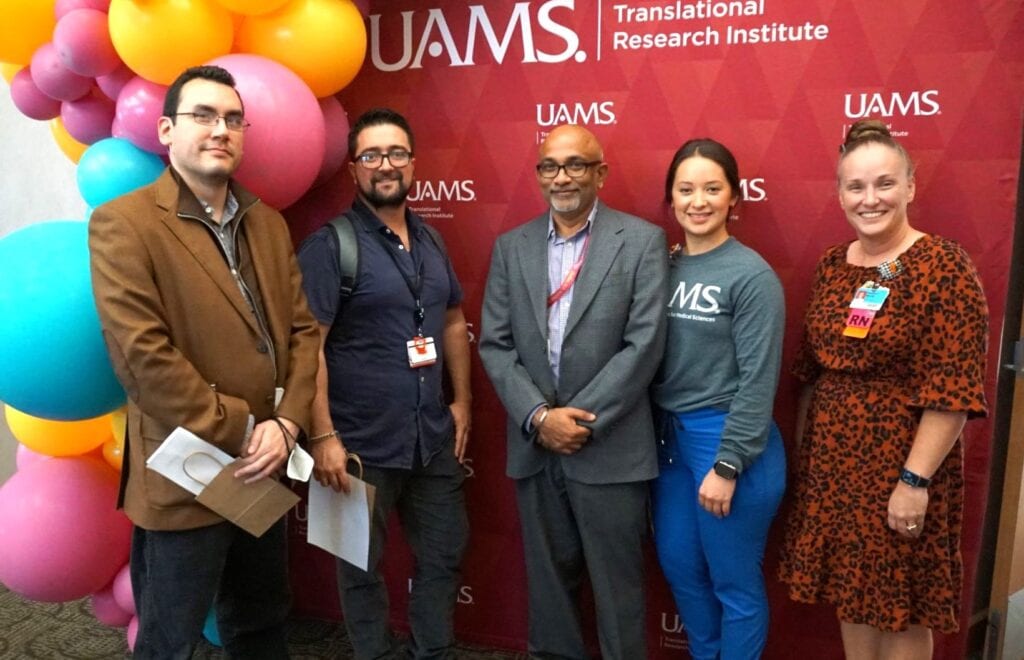
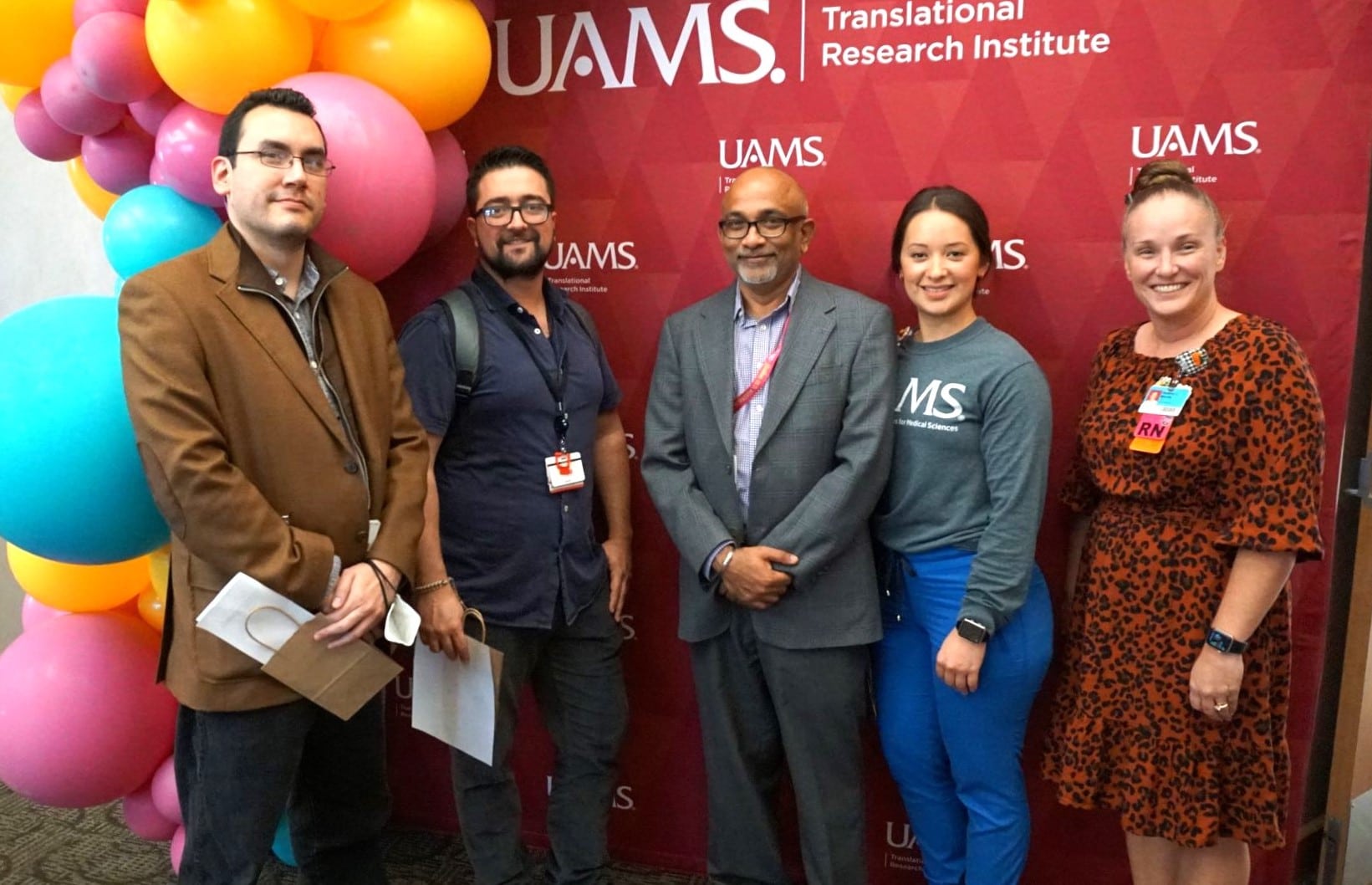
Alberto Ramirez, Ph.D., (second from left), is a member of a research team led by Hari Eswaran, Ph.D., (center). Other members are (from left): Luis Mercado, Ph.D. post-doctoral fellow, Karina Leal, B.S.N., RNC-MNN, research nurse, and Heather Moody, RN, CRS, research nurse.

Sponsored by the Translational Research Institute (TRI), the Oct. 11 event at the UAMS Jackson T. Stephens Spine & Neurosciences Institute building drew 114 attendees who got to visit with leaders of all the key research services at UAMS, Arkansas Children’s Research Institute (ACRI) and Central Arkansas Veterans Healthcare System (CAVHS).

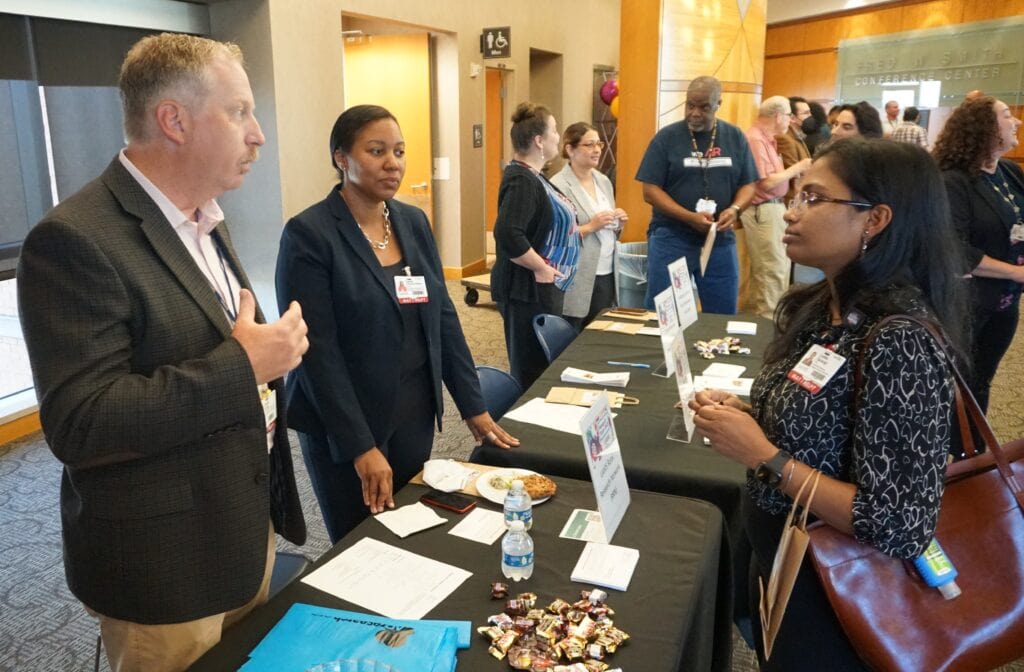
TRI's David Avery and Carrie Cochran-Raglon talk with Lipika Sarangi, Ph.D. (right).
TRI’s David Avery, senior director of Clinical Research Operations, and Carrie Cochran-Raglon, director of the UAMS Rural Research Network, talk with Lipika Sarangi, Ph.D. (right).

“This expo is great for new faculty members like me who are conducting research,” said Lipika Sarangi, Ph.D., an assistant professor in the College of Health Professions Department of Audiology & Speech Pathology. “It’s wonderful to have an event where you can meet new people, build your network, and find exactly the information that might be useful for your research today or in the future.”

For example, she was able to learn how to access potential research volunteers in the ARresearch database established by TRI. The database includes more than 9,000 Arkansans who have agreed to be contacted for research studies.

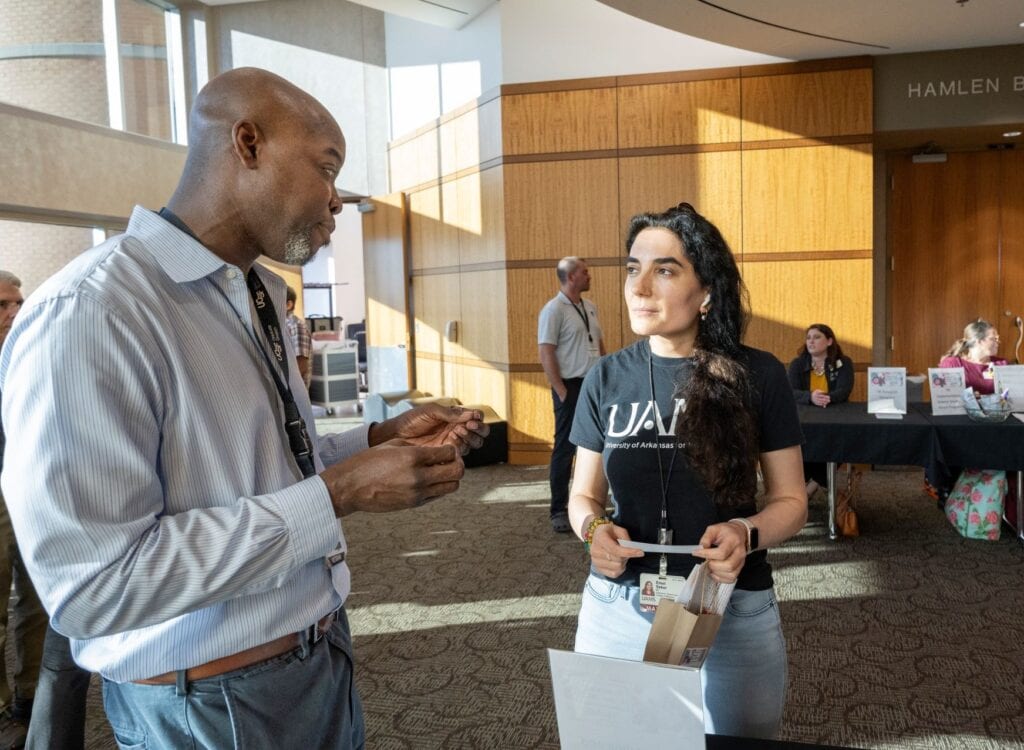
TRI’s Antiño Allen, Ph.D., speaks with Emel Seker.
TRI’s Antiño Allen, Ph.D., associate director of Diversity Initiatives, speaks with Emel Seker.

“They told me the process, and I will definitely use ARresearch in the future,” she said. “The resources I have found here will be very helpful for participant recruitment, grant writing and manuscript writing. I am looking forward to using these resources for my independent and collaborative research.”

Emel Seker, M.S., an applications system analyst in the College of Medicine, said the expo provided a unique opportunity to discover cutting-edge resources and connect with individuals who share a passion for research.

“The expo was an invaluable experience for me, underscoring the significance of collaborative platforms in research,” Seker said. “I was particularly impressed by the number of representatives from various research services. Meeting like-minded professionals who are not only knowledgeable but also open to collaboration was a highlight. I believe these connections have the potential to lead to meaningful collaborations in the future.”

Ramirez said he was particularly interested in the opportunities available to assist with the grant-writing process and the potential benefits of the TRI Community Engagement Program. “I am definitely planning to establish connections with these resources.”

In addition, he said, “the event emphasized the importance of networking, facilitating connections among all the stakeholders involved in the research process, from the initial spark of an

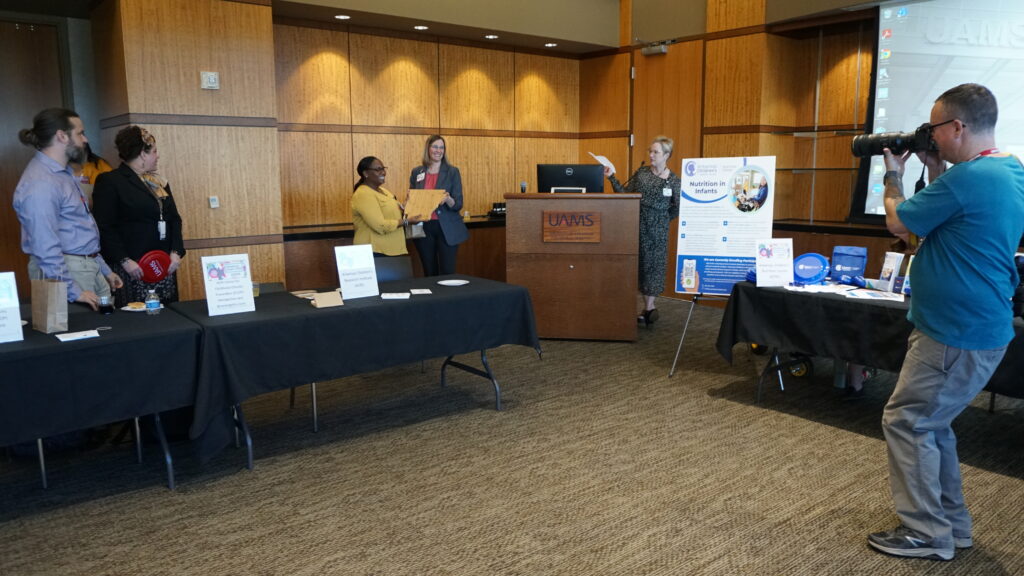
TRI Director Laura James, M.D., right, and Executive Director Christi Madden, MPA,  award a cutting board as a door prize.
TRI Director Laura James, M.D., right, and Executive Director Christi Madden, MPA, award one of three cutting boards as a door prize to Crystal Smith.

idea in the researcher’s mind to the practical implementation of results, all aimed at making a positive impact on the community.”

TRI is supported by the National Center for Advancing Translational Sciences at the National Institutes of Health, Clinical and Translational Science Award number UL1 TR003107.

Filed Under: Front, News, Newsroom

TRI Study of the Month

Sanjeeva Onteddu, M.D. (left), consults on the study with TRI’s Faryal Jalbani, M.D., MSPH, regulatory specialist II.

UAMS Principal Investigator: Sanjeeva Onteddu, M.D., is an associate professor in the College of Medicine Department of Neurology.

Summary: The “Zeit Alert for Stroke at Home (ZASH)” study is a multi-center clinical trial evaluating the Halo Alert System to determine if the device can be used to detect strokes. The device, worn as a headband, is designed for patients who return home from hospitalization after stroke and are at high risk for future strokes.

Significance: If the current study determines the device can effectively and safely detect stroke, a future study would test its ability to provide alerts at the onset of a stroke, potentially life-saving warnings for patients and their families.

TRI Services: Medicare coverage analysis, study budget development, administration of Clinical Trial Management System, clinical research coordinator support, and post-award financial management.

Sponsor: Zeit Medical

Filed Under: Newsroom

TRI Study of the Month

Ashley Stone, B.S. (left), a TRI research coordinator for the Rural Research Network, is assisting on the study led by Laura Hays, Ph.D., APRN, with Jordan Weaver, M.D., medical director of the UAMS North Central Family Medical Center in Batesville.

UAMS Principal Investigator: Laura Hays, Ph.D., APRN, CPNP-PC, FAHA, assistant professor, College of Nursing

Summary: “Arkansas – Making History,” is a pilot study at the UAMS North Central Family Medical Center in Batesville. It is implementing a family health history tool called MeTree and integrating it with the Arkansas Department of Health’s AR SHARE network, a statewide health information exchange that makes medical history information available to more than 2,500 medical practices across the state. 

Significance: Arkansas is ranked among the states with the highest prevalence of multiple genetically-influenced chronic conditions, so implementation of the program statewide could have significant implications for the improved health and wellness of Arkansans, and if successful, it could be implemented nationwide.

TRI Services: Research coordinator support through the TRI-supported UAMS Rural Research Network.

Sponsor: TRI Pilot Award Program

Filed Under: Newsroom

TRI Study of the Month

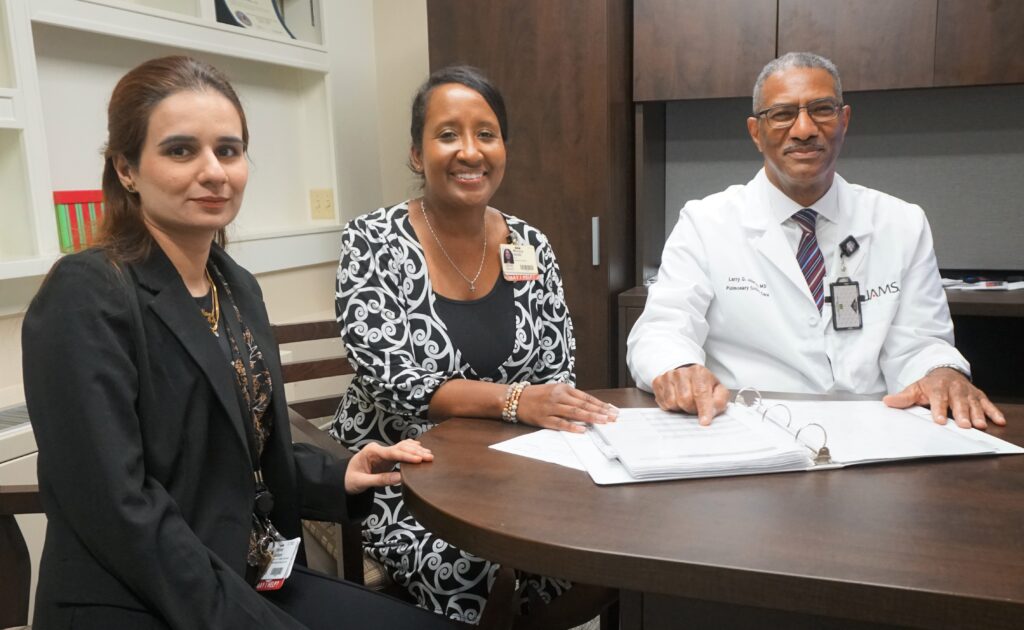
Larry Johnson, M.D. (right), is assisted on the study by TRI’s Faryal Jalbani, M.D., MSPH, regulatory affairs specialist II (left) and Monica Smith, B.A., CRS, TRI Regulatory Affairs manager.

UAMS Principal Investigator: Larry Johnson, M.D., professor, College of Medicine Department of Internal Medicine; director, Division of Pulmonary and Critical Care Medicine; director, Adult Cystic Fibrosis Program

Summary: A Phase 1b/2a, multicenter study to evaluate nebulized bacteriophage treatment for adults with cystic fibrosis with chronic pseudomonas aeruginosa (PsA) pulmonary infection. The study will determine if the new drug candidate, BX004-A, which contains three bacteriophages, is safe to inhale.

Significance: BX004-A could potentially help patients with chronic PsA lung infections by reducing the amount of PsA in the lung.

TRI Services: Medicare coverage analysis, study budget development, regulatory support, administration of Clinical Trial Management System, and post-award financial management.

Sponsor: BiomX Inc.

Filed Under: Newsroom

TRI Study of the Month

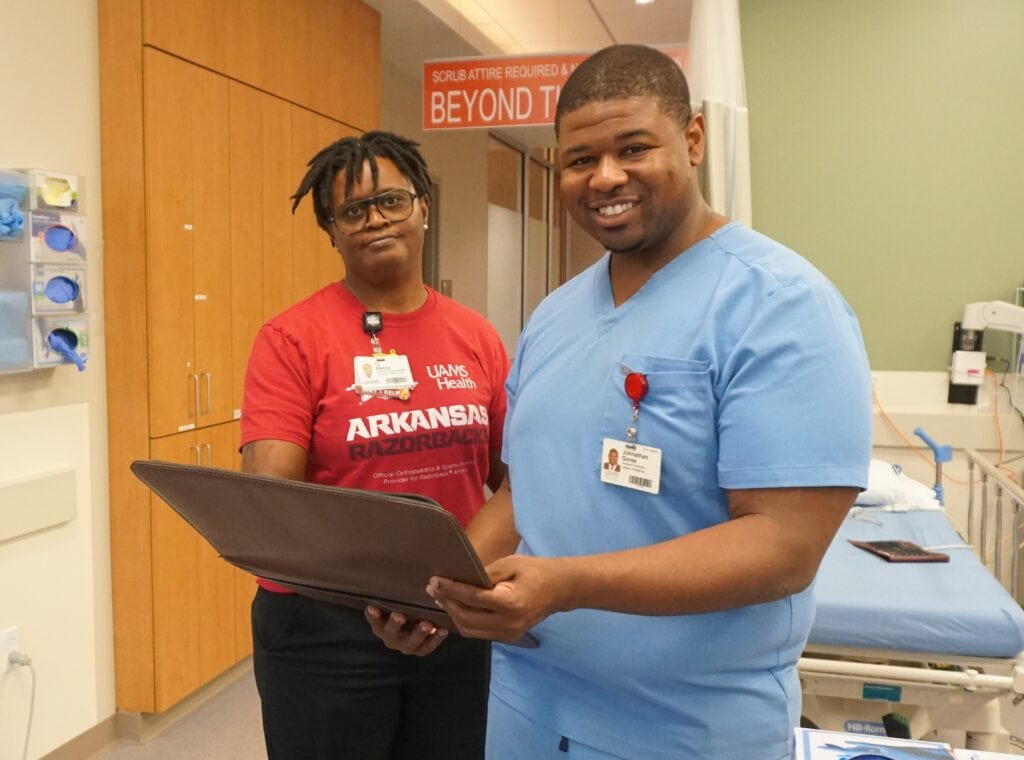
Clinical Research Financial Analyst Ty Stacey, B.A., CRS, CCRP (left), is assisting Johnathan Goree, M.D., on the study’s budget development

UAMS Principal Investigator: Johnathan Goree, M.D., associate professor and director, Division of Chronic Pain, College of Medicine Department of Anesthesiology.

Summary: The Sequenced Strategy for Improving Outcomes in People with Knee Osteoarthritis (SKOAP) Study is a two-phase multi-site clinical trial comparing non-opioid pain management strategies. Phase 1 compares non-surgical treatments, including best practices, web-based pain-coping skills, and the use of duloxetine, an FDA-approved drug for joint pain. Phase 2 compares joint injections, nerve blocks and nerve ablations to treat participants’ knee osteoarthritis.

Significance: Researchers hope the study of non-surgical, non-opioid pain treatments will reveal the best way to reduce knee osteoarthritis pain and improve function.

TRI Services: Medicare coverage analysis, study budget development, administration of Clinical Trial Management System, clinical research coordinator support, and post-award financial management.

Sponsor: Johns Hopkins University; funding by the Helping to End Addiction Long-term® (HEAL) Initiative; administered by the CTSA Trial Innovation Network.

Filed Under: Newsroom

Arkansas Lifespan Research Conference Reveals Opportunities

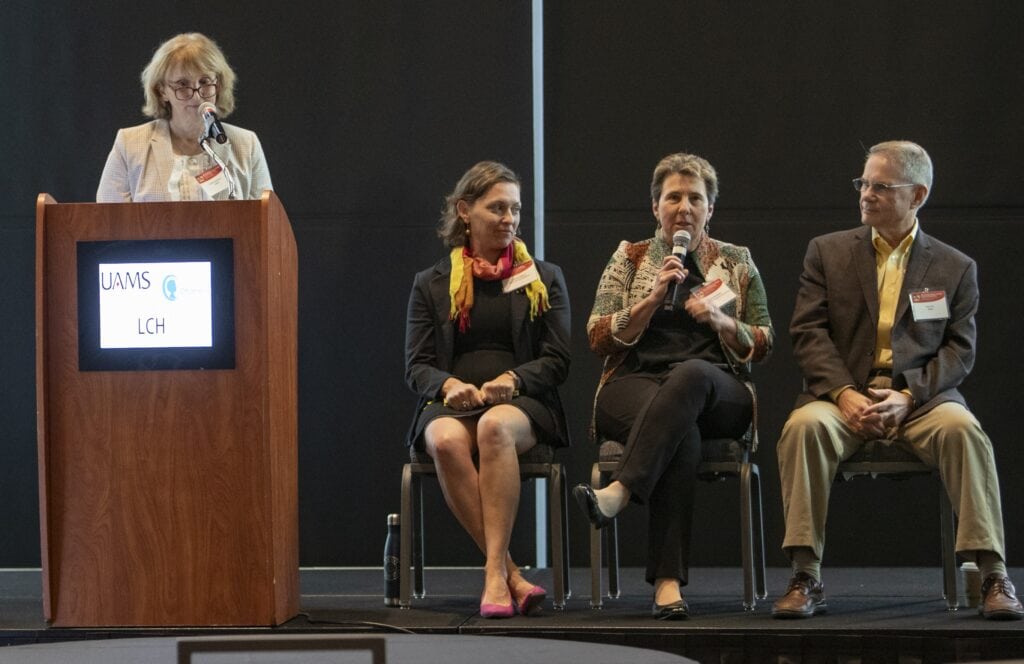
Rosalind Wright, M.D., MPH, speaks during a panel discussion with (l-r) Elisabet Borsheim, Ph.D., (standing), Amanda Dettmer, Ph.D., and Fred Prior, Ph.D.

Before the terms “life-course” and “lifespan” research became more commonplace, Rosalind Wright, M.D., MPH, began studying how early-life experiences were contributing to the conditions she was seeing in her adult pulmonary patients.

Wright, a research leader at the Icahn School of Medicine at Mount Sinai, was a keynote speaker for the inaugural Advancing Arkansas Lifespan Research Conference in September, sponsored by TRI, Arkansas Children’s Research Institute (ACRI), and the Lifespan Cardiometabolic Health Creativity Hub in the College of Medicine.

To help make her case for lifespan research, she invoked the quote, “It’s easier to build strong children than to repair broken men.” 

“When I’m taking care of patients in their 40s, 50s and 60s and they’ve already got multiple comorbidities and their lungs are shot, there’s only so much I can do,” she told a diverse audience of UAMS-affiliated researchers at the Robinson Center in Little Rock. “But if we pursue this life-course perspective, we have a real opportunity to make a difference.”

Wright is dean for Translational Biomedical Sciences and holds the Horace W. Goldsmith Professorship in Children’s Health Research at Mount Sinai Kravis Children’s Hospital and principal investigator for the Institute for Clinical and Translational Sciences at the Icahn School of Medicine. She is a developmental epidemiologist with transdisciplinary training in environmental health and stress mechanisms.

Wright gave one of three keynote presentations during the Sept. 13, 14 conference.

Other keynote speakers were Fred Prior, Ph.D., distinguished professor and chair of the UAMS College of Medicine Department of Biomedical Informatics, and Amanda Dettmer, Ph.D., a research scientist at the Child Study Center, Yale School of Medicine.

Elisabet Borsheim, Ph.D., Laura James, M.D., and Peter Mourani, M.D., served as the event’s moderators. 

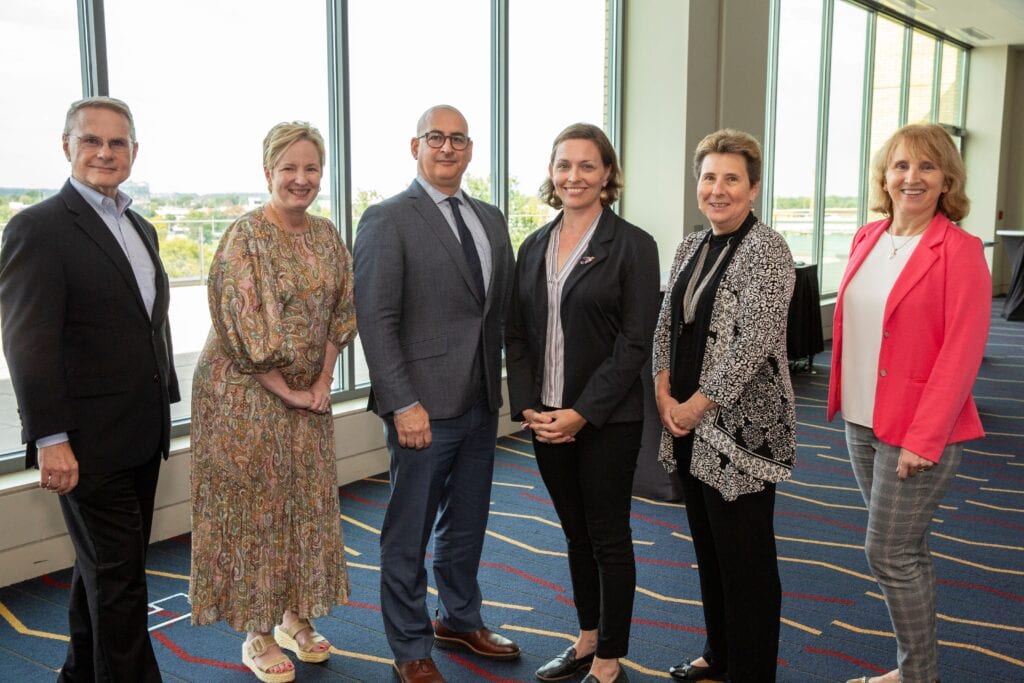
The conference moderators and keynote speakers were (l-r), Fred Prior, Laura James, Peter Mourani, Amanda Dettmer, Rosalind Wright and Elisabet Borsheim.

Borsheim, a professor in the College of Medicine departments of Pediatrics and Geriatrics, leads the Cardiometabolic Health Creativity Hub.

James is TRI director and UAMS associate vice chancellor for Clinical and Translational Research.

Mourani is president of ACRI and senior vice president and chief research officer for Arkansas Children’s.

Life-course research is a key part of ACRI’s strategic plan and it is advocated by the NIH and its National Center for Advancing Translational Sciences (NCATS) to strategically promote health and combat diseases as they progress across the lifespan.

ARLife

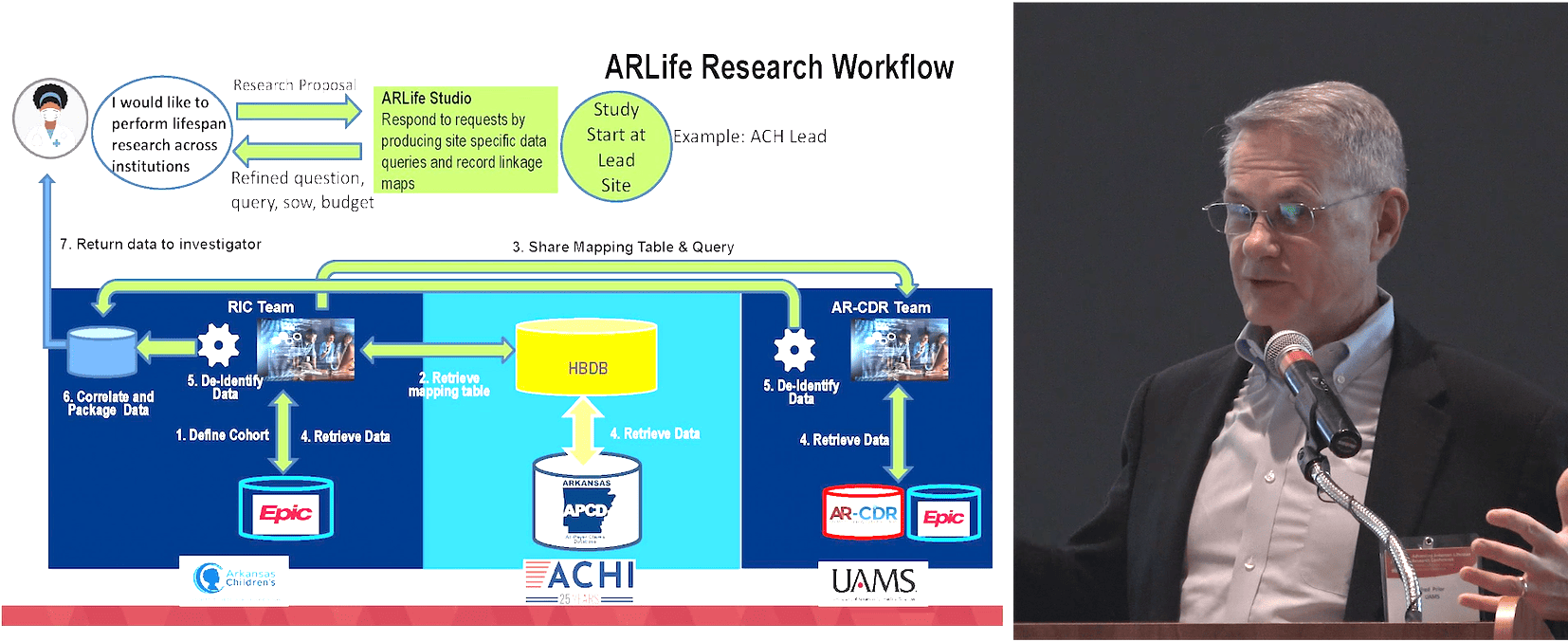
Fred Prior, Ph.D., introduced ARLife during his keynote presentation.

Prior’s presentation introduced an exciting new data integration system called ARLife that will be key to lifespan research for UAMS-affiliated researchers.

“ARLife is the first baby step toward building an informatics and data management resource that allows us to really do lifespan research effectively here in Arkansas, to be able to track all of our people across their lifespan,” he said.

It will be pilot tested as part of a new life-course research grant opportunity announced during the conference. The one-year $100,000 award is being offered by ACRI with funds from the Arkansas Biosciences Institute.  

Prior and his team have expertise in data integration having led development of similar tools and processes nationally and internationally.

“We’re using what we’ve learned to crosslink databases in a privacy-preserving way,” Prior said.

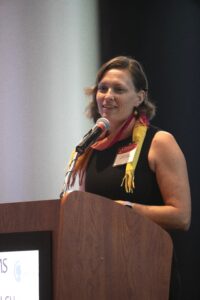
Amanda Dettmer, Ph.D.

ARLife can link and harmonize electronic health records data from UAMS, Arkansas Children’s Hospital, and the UAMS Arkansas Center for Health Improvement, which maintains the Arkansas All-Payer Claims Database.

Dettmer said the CTSA-funded Yale Center for Clinical Investigation (YCCI) is working to harmonize datasets and find collaborating institutions as part of the effort.

“We’re really keen to foster collaborations with other CTSAs so that we can show NCATS that we’re collaborating across CTSAs to really leverage existing resources to spawn and launch lifespan research,” she said.

Primate Studies

The YCCI lifespan initiative emphasizes critical developmental periods and how early-life stress may impact typical biological development and lifelong health.

One of the challenges studying humans, Dettmer said, is that much of the work necessarily relies on retrospective accounts, and if the studies are prospective it takes decades to get age-related health outcomes.

Long-term research at Yale with rhesus monkeys, which have about a 30-year lifespan, can be an important complement to human lifespan studies, she said.

“Rhesus monkeys are an extremely valuable comparative and causal model for lifespan health,” she said.

Andrew Brown, Ph.D., presents his poster during the conference.

Conference attendee and poster presenter Andrew Brown, Ph.D., was excited to see UAMS and ACRI-based researchers come together with wide-ranging expertise for conducting lifespan research.

“The conference was an inspiring collaboration between ACRI and TRI that really walked the talk of needing to work across disciplinary silos if we want to improve the lives of Arkansans,” said Brown, associate professor in the Department of Biostatistics and a biostatistics core director for the Center for Childhood Obesity Prevention at ACRI.

He said the announcement of the $100,000 grant demonstrates the commitment to lifespan research.

The conference also included a poster session as well as oral presentations from Keshari Thakali, Ph.D., Steven Barger, Ph.D., Jamie I. Baum, Ph.D., Ashley Acheson, Ph.D., Tatiana Wolfe, Ph.D., and Craig Porter, Ph.D.

Filed Under: Front, News, Newsroom

The TRIbune Is Here!

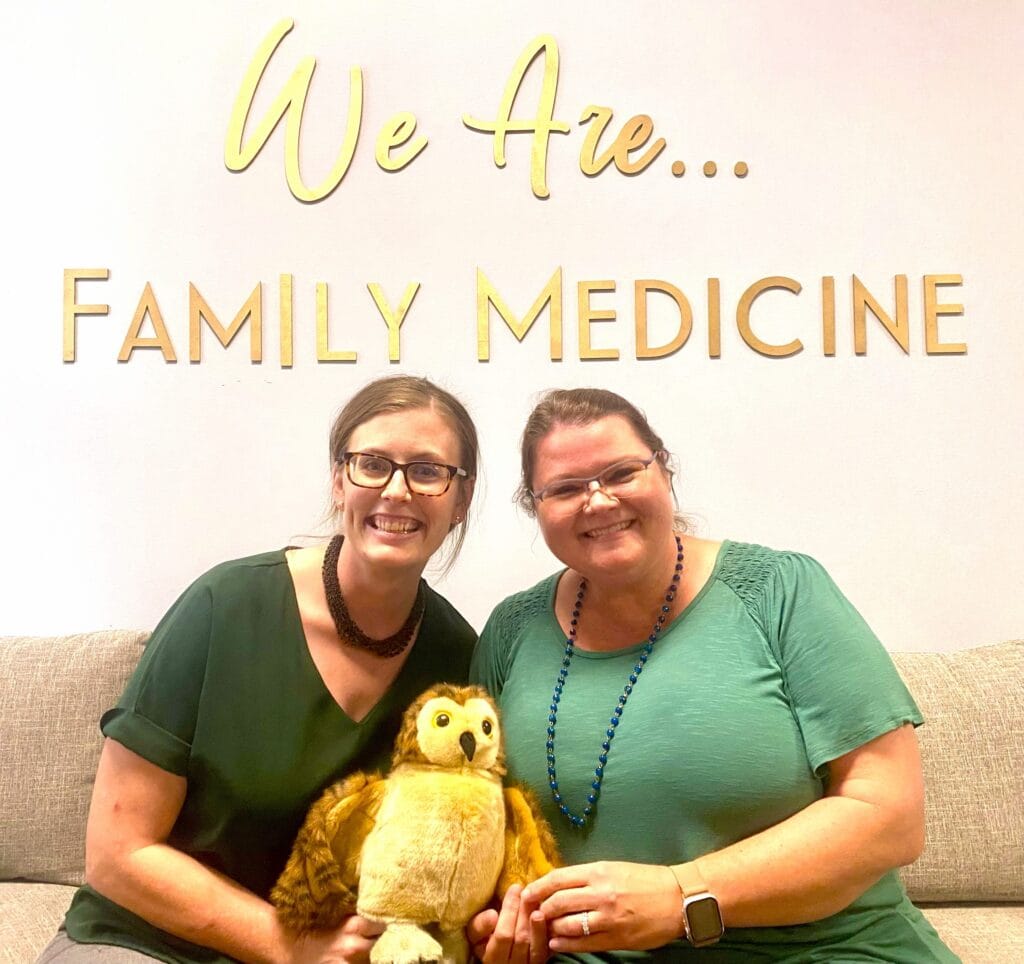
Taren Swindle, Ph.D., (left), with Lorraine McKelvey, Ph.D., and Windy WISE, the puppet owl.

In this issue of The TRIbune, we feature a research project co-led by one of our KL2 scholar graduates, Taren Swindle, Ph.D., that is utilizing the resources of the UAMS Rural Research Network. Swindle and Lorraine McKelvey, Ph.D., are using the network to study an expansion of their innovative nutrition education program, Together, We Inspire Smart Eating (WISE).

This issue also includes our Study of the Month, featuring a multi-site stroke study led at UAMS by Sanjeeva Onteddu, M.D., with research services provided by TRI.  

We also highlight the results of our Summer Writing Challenge 2023, which concluded with an ice cream celebration and award ceremony.

Read The TRIbune. 

Filed Under: Front, News, Newsroom

The TRIbune Is Here!

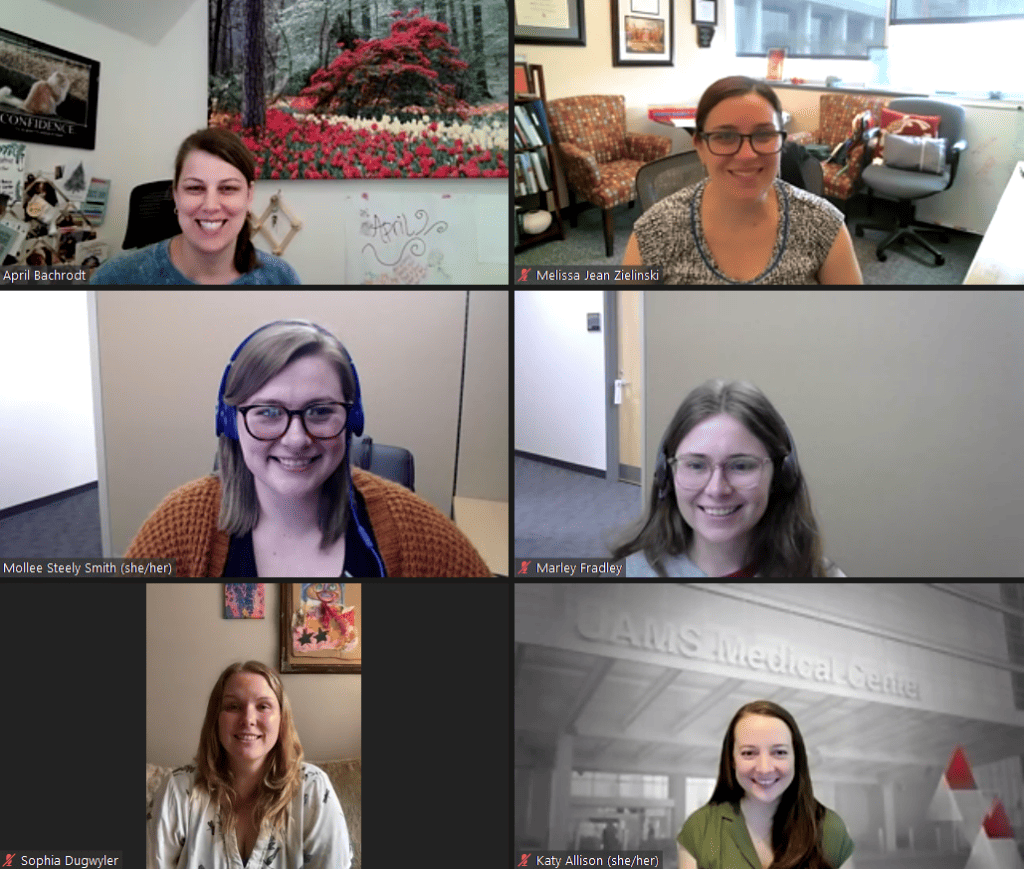
Members of the research team are (clockwise from top): April Bachrodt, Melissa Zielinski, Marley Fradley, Katy Allison, Sophia Dugwyler, and Mollee Steely Smith.

Our latest TRIbune newsletter features a UAMS academic-community partnership recently funded by the Patient-Centered Outcomes Research Institute (PCORI) that was informed and inspired by TRI’s Community-Based Participatory Research Scholars Program. 

The team led by Melissa Zielinski, Ph.D., is using a $250,000 PCORI award to address health issues among women involved in the justice system. 

Our TRI Study of the Month features Laura Hays, Ph.D., and her UAMS Rural Research Network-supported study in collaboration with the UAMS North Central Family Medical Center in Batesville. 

We also highlight our two new Health Sciences Innovation and Entrepreneurship (HSIE) trainees, postdoctoral fellows who will receive two years of support as they learn how to commercialize their ideas. 

Read The TRIbune.

Filed Under: Front, News, Newsroom

KL2 Scholar Akilah Jefferson, M.D., Published in Pediatrics

Akilah Jefferson, M.D., M.Sc., a TRI KL2 Mentored Research Career Development Award scholar, has been published in the journal Pediatrics, with an article titled, “Asthma Quality Measurement and Adverse Outcomes in Medicaid-Enrolled Children.”

Akilah Jefferson, M.D.
Akilah Jefferson, M.D., M.Sc.

Jefferson and her coauthors found that a key tool used to evaluate pediatric risk of asthma-related adverse events may be a poor method for guiding pediatric population health management programs across diverse settings. The findings related to the tool, called the asthma medication ratio (AMR), were based on analyses using the Arkansas All-Payer Claims Database to identify Medicaid-enrolled children.

“AMR performed poorly in identifying risk of adverse outcomes among Medicaid-enrolled children with asthma,” the article concluded, noting that new population health frameworks are needed to accurately identify children with asthma and improve asthma management and outcomes.

Jefferson is an assistant professor in the College of Medicine Department of Pediatrics, Division of Allergy and Immunology.

The TRI KL2 Scholars Program provides promising young clinical and translational investigators the training, mentoring and protected time to develop an independent research program. Learn more about the program here.

Filed Under: Front, News, Newsroom

Two Postdocs Selected for TRI Entrepreneurship Training Program

Henry A. Palfrey, Ph.D.

The UAMS Translational Research Institute Health Sciences Innovation and Entrepreneurship (HSIE) Postdoctoral Training Program has named two postdoctoral scholars for its class of 2023. The scholars, selected in a competitive application process, will receive two years of mentored entrepreneurship training.

The HSIE postdoctoral trainees, their research goals and mentors are:

Henry A. Palfrey, Ph.D., is a postdoctoral fellow in the College of Pharmacy Department of Pharmaceutical Sciences. His research goal is to conduct studies to screen a library of compounds and determine the ability of novel epoxylipid drugs to provide protection against radiation-induced kidney and cardiovascular injury

Mentor: John D. Imig, Ph.D., professor and chair, Department of Pharmaceutical Sciences; and vice president for therapeutics at BioVentures LLC. 

Ashley Pike, Ph.D.
Ashley Pike, Ph.D.

Ashley Pike, Ph.D., a postdoctoral fellow in the Brain Imaging Research Center of the Psychiatric Research Institute (PRI). Her primary research goal is to implement advanced neuroimaging techniques for clinical problem solving in multiple sclerosis (MS). Mentor: Tatiana Wolfe, Ph.D., assistant professor, medical imaging physicist, PRI, College of Medicine Department of Psychiatry

Filed Under: Front, News, Newsroom

  • «Previous Page
  • Page 1
  • Interim pages omitted …
  • Page 8
  • Page 9
  • Page 10
  • Page 11
  • Page 12
  • Interim pages omitted …
  • Page 38
  • Next Page»
Translational Research Institute LogoTranslational Research InstituteTranslational Research Institute
Mailing Address: 4301 West Markham Street, Little Rock, AR 72205
Phone: (501) 686-7000
  • Facebook
  • X
  • Instagram
  • YouTube
  • LinkedIn
  • Pinterest
  • Disclaimer
  • Terms of Use
  • Privacy Statement
  • Legal Notices

© 2026 University of Arkansas for Medical Sciences