• Skip to primary navigation
  • Skip to main content
  • Skip to primary navigation
  • Skip to main content
Choose which site to search.
University of Arkansas for Medical Sciences Logo University of Arkansas for Medical Sciences
Translational Research Institute
  • UAMS Health
  • Jobs
  • Giving
  • About TRI
    • What We Offer
    • Leadership & Governance
    • Staff
    • Citing Translational Research Institute CTSA Support
    • What is Translational Research?
    • Contact TRI
  • Funding Opportunities
    • Grants
      • Pilot Award Program
      • ARLife Small Grants Program
      • Team Science Voucher Program
      • Consortium of Rural States (CORES) Multi-Institutional Pilot Award Program
      • Winthrop P. Rockefeller Cancer Institute Rural Research Award Program
    • Scholarships
      • K12 Mentored Research Career Development Scholar Awards Program
      • Health Sciences Innovation and Entrepreneurship Postdoctoral Training Program
      • Implementation Science Scholar Program
      • Strategies for Training and Advancing Researchers (STARs) Program
      • Scholars in Mentored Applied Research & Translational Science (SMART) Program
    • Community
      • Community Based Participatory Research (CBPR) Scholars Program
      • Community Partners Educated as Arkansas Research Leaders (CPEARL) Program
    • Awardee Responsibilities
  • Services & Resources
    • Services
      • Biostatistics, Epidemiology and Research Design (BERD) Consultation
      • Clinical Data Repository (AR-CDR)
      • Comprehensive Informatics Resource Core
      • Mock Study Sections
      • Research Participant Recruitment
      • Research Support: Clinical Trials Innovation Unit (CTIU)
      • Implementation Science Program
      • Research Ethics Consultation
    • Resources
      • ARresearch Registry
      • Center for Health Literacy
      • Data Safety Monitoring
      • Grant Writing & Dissemination
      • UAMS Profiles
      • UAMS Rural Research Network
      • Other Resources
      • COVID-19 Research Guidelines
      • Community Partner Research Training
  • Career Development & Scholarships
    • Scholarship Opportunities
      • K12 Mentored Research Career Development Scholar Awards Program
      • Health Sciences Innovation and Entrepreneurship Postdoctoral Training Program
      • Data Science Scholars Program
      • Implementation Science Scholar Program
      • SMART Program
      • Translational Research Innovations and Partners (TRIP) Program
    • Training & Educational Opportunities
      • innOVATION Seminar Series
      • Path 2 K Program
      • Translational Workforce Development
      • Graduate Certificate in Implementation Science
      • SMART Program [Master’s in Clinical and Translational Sciences (MS-CTS)]
      • Good Clinical Practice Training
    • Didactic Training
  • Community
    • Community Engagement Leadership
    • Community Advisory Board
    • Community Engagement Partners
      • Community Partner Celebration
      • Faith-Academic Initiatives for Transforming Health (FAITH) Network
    • Community Engagement Services
      • Consultations and Technical Assistance
      • Community Review Boards
      • Community Partner Research Training
      • Equipment Library
    • Programs and Funding
      • Community Partners Educated as Arkansas Research Leaders (CPEARL) Program
      • Community Based Participatory Research (CBPR) Scholars Program
      • Community Scientist Academy
      • Correctional Research Translational and Clinical Science Network (CR TRACS)
    • Toolkits
      • CSA Online Toolkit
  • Events
    • Research Day
    • Clinical Trials Learning Collaborative
  • Newsroom
  • TRI Talks Translational Science
  1. University of Arkansas for Medical Sciences
  2. Translational Research Institute
  3. News
  4. Page 28

News

TRI Helps Center for Health Literacy Make National Impact

Kristie Hadden, Ph.D., and her team at the Center for Health Literacy have been busy collecting national and international awards, grants and attention for their research-based tools and interventions.  And for good reason – their products are becoming models for addressing a key barrier to health improvement and human subjects research.

Hadden attributes much of the center’s success to support from the UAMS Translational Research Institute (TRI), which began in 2013 with co-sponsorship of the Health Literacy Research Grand Rounds.

“The grand rounds really got the ball rolling,” Hadden said.

She invited luminaries in the health literacy field from across the country, and during their visits she consulted with them on potential research opportunities in Arkansas. Two of the researchers became Hadden’s collaborators on a $2.9 million National Institutes of Health (NIH) grant. The five-year grant is testing a diabetes education and health literacy program in patient-centered medical homes at UAMS Regional Centers across Arkansas.

“If TRI hadn’t made the lecture series possible, I don’t believe I would have been able to establish those relationships so early in my research career,” she said.

TRI Director Laura James, M.D., said it is exciting to see the Center for Health Literacy using innovative translational research approaches to tackle such a significant barrier to health improvement.

“In a relatively short time, Dr. Hadden and her team have produced strategic evidence-based interventions that will move the needle for health improvement and have an impact on human subjects research by making complex documents easier for research participants to understand,” said James, UAMS associate vice chancellor for clinical and translational research.

Low health literacy is thought to impact as many as 37 percent of Arkansans and is known to influence a number of health-related outcomes, such as adherence to treatment plans.

In just the last year, the Center for Health Literacy has:

Made UAMS home to the largest known set of patient health literacy screening data in the U.S. This feat stems from piloting a health literacy screening question in the UAMS electronic health record Epic. In October 2017, the pilot results earned Best Poster from more than 200 entries at the International Conference on Communication in Healthcare/Health Literacy Annual Research Conference. Hadden, in collaboration UAMS’ Fred Prior, Ph.D., and Ahmad Baghal, M.D., also submitted a manuscript about the screening to the Journal of the International Medical Informatics Association. Prior chairs the Department of Biomedical Informatics and Baghal is director of the Arkansas Clinical Data Repository.

“We have a lot of momentum behind this screening,” Hadden said. “It’s pretty exciting – more than 100,000 patients have been screened and we have yet to implement it across the entire clinical enterprise.”

The resulting data could be used in an array of population health studies, she said.

Established the largest known collaborative of health literacy researchers in the U.S. The Center for Health Literacy Affiliate Faculty Group includes about 30 faculty from UAMS and across the U.S. committed to collaborative health literacy research. Since it was created in 2017, the multidisciplinary group has produced more than 20 publications.

“We’re a very productive group,” Hadden said. “I don’t know of another group like it out there.”

Shared the center’s plain-language informed consent template nationally via IRB Advisors Inc. The template created by the center in 2016 dropped mean readability of UAMS informed consents to an 8th grade level. Already available to UAMS researchers, IRB Advisors, an online medium, recently asked to share the template with its national audience.

“We’re hoping it will be widely used by investigators across the U.S.,” Hadden said.

Recently applied for a NIH grant to further study the plain language informed consent template’s impact. The next step for the template is to compare it to traditional informed consent approaches in a large, multicenter clinical trial. Hadden leveraged a special grant opportunity available to Clinical and Translational Science Awards (CTSA) Program sites to develop a partnership with the CTSA at the University of Alabama at Birmingham. The informed consent study will be nested within a $19.3 million multi-site study examining the effects of pharmacotherapy for mild hypertension in pregnancy among 4,700 to 5,700 patients.

If funded, the study will determine whether the plain language template improves comprehension for participants; whether subjects are more or less likely to enroll; and if they are more or less likely to stay in a study.

Researched a Spanish-language health literacy screening tool. Validated screening questions were adapted and tested using a 2017 TRI Pilot Award. Hadden said she is close to releasing study results.

“We’ve got some great findings that will help guide practitioners on how to best identify Spanish speaking patients who need resources and interventions,” Hadden said.

Joined national health literacy policy leadership. Chris Trudeau, J.D., a Center for Health Literacy faculty member, was appointed to the Institute of Medicine/National Academy of Science Roundtable on Health Literacy, which meets quarterly in Washington, D.C. “It’s an incredible honor to be at the table with such high-level leadership,” Hadden said.

Developed a new set of patient opioid education tools.  As part of a targeted intervention for orthopaedic surgery patients at UAMS, the tools are being shared across UAMS, with other health systems, and with national medical associations and societies.

They can be found at: healthliteracy.uams.edu.

Won a national award for Spanish-language tool. The center received the ClearMark Award of Distinction from the Center for Plain Language for How to Talk to Your Doctor HANDbook – Spanish. The center also received the Spanish Grand ClearMark Award, the highest honor for all 2017 Spanish nominations.

Filed Under: Front, News, Newsroom

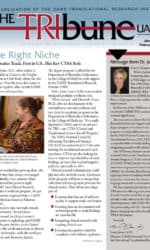
March/April TRIbune 

March April Tribune

This issue of the TRIbune highlights the vital work of the UAMS Center for Health Literacy, which is garnering national attention as it tackles a key barrier to human subjects research and health improvement. Led by Kristie Hadden, Ph.D., the center and TRI have established fruitful translational research partnerships since 2013. We also celebrate the great work of our Community Engagement program, which has translated to the innovative use of community members as study section reviewers of our Pilot Award Program grants. TRI Executive Director Amy Jo Jenkins, M.S., is the subject of our TRI & Me feature, and we include the latest publications citing TRI’s support.

[button text=”Download March/April TRIbune” url=”https://tri.uams.edu/wp-content/uploads/sites/80/2018/04/TRIbune-MAR-APR_2018_WEB.pdf” type=”btn-pdf” /]

Filed Under: Education, Front, News

New Opioid Studies Led by UAMS Researchers and Collaborating Sites

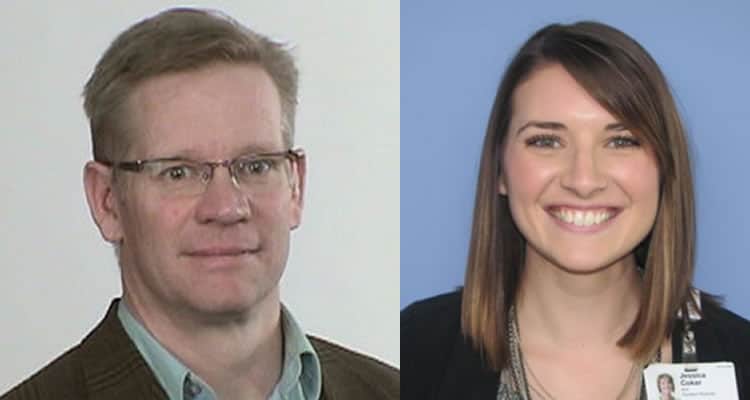
Inter-institutional studies on opioid abuse will be led at UAMS by Jessica Coker, M.D., and Bradley Martin, Pharm.D., Ph.D.

Funding for two inter-institutional pilot studies looking at opioid abuse was announced today by the UAMS Translational Research Institute.

One study seeks to address opioid use disorders in pregnant women.

“The study will harmonize data collection utilizing an iPad-based data collection tool with input from providers and patients,” said Jessica L. Coker, M.D., who will lead the study at UAMS in collaboration with researchers at the University of Kentucky, University of New Mexico Health Sciences Center, and University of Utah. “This initial work will benefit future studies that compare interventions.”

Coker’s project aims to demonstrate best practices for coordinating multi-site studies and leveraging CTSA resources, such as REDCap, to create a unified database management system.

“The primary goal of this project is to develop and test the feasibility of protocols for standardized data collection across multiple sites that provide care for pregnant women with opioid use disorders,” the pilot study application states. “We will identify key metrics for comparing interventions to reduce the negative effects of opioid use disorders among this population and demonstrate the effectiveness of an innovative iPad-based patient-centered data collection tool that can be easily used within a clinic setting.”

The pilot data will be used to seek outside funding for a large prospective study comparing models of care for pregnant women with opioid use disorders across the four sites.

Up to $25,000 is available to the researchers at each institution.

The other study will use existing patient data to look at the early care decisions and the risk of long-term opioid use in patients with low back pain. Bradley C. Martin, Pharm.D., Ph.D., will lead the study at UAMS in collaboration with researchers at the University of Utah.

“Our study brings together researchers from Utah and UAMS interested in leveraging big data to better understand the opioid epidemic,” said Martin, a professor in the UAMS College of Pharmacy. “We can then translate the lessons learned to improved decision-making by health care providers to reduce the risks associated with opioid prescribing.”

The study is utilizing the All-Payer Claims Databases available in each state. The databases provide de-identified records of publicly and privately insured patients who seek medical service. The pilot study findings will be used in applications seeking funding for larger-scale studies of the opioid issue.

The collaborating institutions in both studies are members of the Western States Consortium, which includes Clinical and Translational Science Awards (CTSA) Program institutions. The CTSA Program is supported by the National Center for Advancing Translational Sciences at the National Institutes of Health. The Western States Consortium also includes the University of Kansas Medical Center.

Filed Under: Front, News, Newsroom

UAMS Researchers Seeking More than 1,000 Completed Medical Marijuana Surveys

A first-of-its-kind survey is being circulated in Arkansas by UAMS researchers interested in Arkansans’ attitudes and perceptions about cannabis (marijuana) as state officials prepare to make it available for medical use.

Of the 28 other states with medical marijuana, none have conducted surveys prior to its legalization that document public attitudes about marijuana as a medical treatment. Nalin Payakachat, Ph.D., who is leading the study, said she hopes to gather more than 1,000 completed surveys from across the state.

“This is a unique opportunity for Arkansas if we can get a large dataset before the product hits the market,” said Payakachat, an associate professor in the UAMS College of Pharmacy. “This will be valuable information, especially as we conduct follow-up surveys over time.”

The survey is available HERE.

Arkansans voted in 2016 to allow marijuana use with a doctor’s prescription for 18 medical conditions, including cancer, glaucoma, arthritis, Alzheimer’s, seizures and intractable pain.

Supported by the UAMS Translational Research Institute (TRI), the survey is open to those who live in Arkansas and are 18 and older, regardless of whether they plan to use medical marijuana. In addition to questions about attitudes toward marijuana, the survey, which takes about 30 minutes to complete, covers quality of life and health conditions. Follow-up surveys will be given at six months, one year, 18 months, then yearly over five years.

Over the study period, the surveys will reflect any changes in people’s attitudes and perceptions about medical cannabis. The responses from survey takers will also shed light on the health benefits and harms of marijuana when used for their specific health conditions.

Unlike with other prescription medications, physicians can’t tell patients what type of marijuana to buy, or dosage, said William Fantegrossi, Ph.D., co-investigator on the study.

“People will just buy what they want, so there will be sort of a natural experiment going on, and that’s information that will be important to understand,” said Fantegrossi, associate professor in the College of Medicine Department of Pharmacology and Toxicology. “Eventually we may also have a better idea of what’s most effective – smoking it, eating it, or using it as an oil on the skin.”

Payakachat also noted the survey includes questions about the role of pharmacists who will be on staff at medical marijuana dispensaries.

“Pharmacists will be at the front gate and should be able to provide some guidance in terms selecting the appropriate products for patients’ conditions,” Payakachat said. “In our follow-up surveys, participants will tell us not only what they are buying, but also what they perceive of the pharmacists’ roles in the dispensaries.”

Payakachat and Fantegrossi have been assisted in their work on the survey by Lauren Russell, a Ph.D. candidate in the Department of Pharmacology and Toxicology.

To protect confidentiality, the survey contains no information that identifies participants except for an email address and phone number for follow-up surveys. Survey information is also protected using a federal confidentiality law for people who participate in research. The law has been applied in this survey through a “Certificate of Confidentiality” from the National Institutes of Health (NIH).

The idea for the study grew out of conversations with researchers from other research institutions, including Johns Hopkins, Harvard and McGill universities. They took the idea to 7-Hybrid Cultivation, a group that had expressed an interest in conducting research to augment its application for a state medical cannabis cultivation license. 7-Hybrid awarded $30,000 to support the study. It was not, however, among the five firms to receive a cultivation license. As part of the agreement, the results of the study belong to UAMS and will be open to the public.

The support provided by TRI is made possible by grant 1U54TR001629-01A1 through the National Center for Advancing Translational Sciences of the NIH.

Filed Under: Front, News, Newsroom

TRI Co-Sponsored CTSA Workshop Using AI to Mine Research Data

As an ontologist, UAMS’ Mathias Brochhausen, Ph.D., teaches computers the meaning of words. He takes a term, such as “informed consent,” and writes a definition in language the computer can interpret.

“Here’s something about ontologies that is very cool: Ontologies are actually an artificial intelligence product,” he said.

Brochhausen’s expertise and enthusiasm for ontology/AI solutions will be in play Feb. 26 and 27. He will be hosting and collaborating with a national group of researchers to create semantically-enabled products that support access to more data across research institutions.

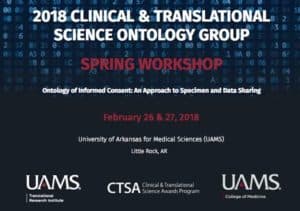
The work will be performed during the 2018 Clinical and Translational Science Ontology Group Spring Workshop, “Ontology of Informed Consent: An Approach to Specimen and Data Sharing.”

The workshop is supported by Department of Biomedical Informatics, where Brochhausen is an associate professor, the UAMS Translational Research Institute (TRI), and the NIH National Center for Advancing Translational Sciences (NCATS) Clinical and Translational Science Awards (CTSA) Program.

As a piece of code or software, an ontology can use logical inferences to bypass barriers caused by the absence of agreement in biomedical data representation. For example, Brochhausen said, consider the wide variation in informed consent language that tells researchers whether they may re-contact participants.

“Using ontologies, we can define re-contacting, and everything that falls under that definition the computer will automatically sort into re-contacting,” he said.

The field of ontology has strong roots at UAMS and the Department of Biomedical Informatics. The discipline has also continued to grow along with the department; Brochhausen now oversees the research group Biomedical Ontologies Arkansas (BOAR).

“It’s an exciting time for UAMS to host this workshop,” he said. “The spirit of collaboration with clinical scientists, which is so strongly emphasized by the TRI, really makes UAMS stand out.”

Filed Under: Front, News, Newsroom

Jan/Feb TRIbune 

Jan/Feb TRIbune 
View Newsletter Archive

This issue of the TRIbune highlights nationally significant TRI partnerships with the Department of Biomedical Informatics (DBMI) in the UAMS College of Medicine. Our main story is about the first-of-its-kind Clinical Research Informatics track in the U.S. being offered by DBMI. This program, supported by TRI, helps address a national concern about study reproducibility and the integration of clinical care with research. Our TRIbutary features a national Clinical and Translational Science Awards (CTSA) Program workshop being hosted at UAMS by DBMI’s Mathias Brochhausen, Ph.D. During the two-day workshop, participants will be producing artificial intelligence products known as ontologies. This is a significant undertaking because it will help researchers overcome the absence of standardized biomedical language across institutions. Our TRI & Me feature highlights a fruitful partnership with DBMI’s Ahmad Baghal, M.D., who directs the Arkansas Clinical Data Repository.

[button text=”Download Jan/Feb TRIbune” url=”https://tri.uams.edu/wp-content/uploads/sites/80/2018/02/TRIbune-JANFEB-2018.pdf” type=”btn-pdf” /]

Filed Under: Front, News

Faculty Invited to National CTSA Workshop at UAMS: ‘Ontology of Informed Consent’ Feb. 26, 27

CTSOG

Faculty with an interest in informed consent are invited to attend a national, multidisciplinary workshop at UAMS on Feb. 26 and 27. Titled, “Ontology of Informed Consent: An Approach to Specimen and Data Sharing,” the workshop will be held at the Reynolds Institute on Aging, Room 1180.

The Clinical and Translational Science Ontology Group Spring Workshop is sponsored by the UAMS Translational Research Institute, the Department of Biomedical Informatics, and the Clinical and Translational Science Awards (CTSA) Program.

Register Now.            Learn More.

Contact: Mathias Brochhausen, Ph.D., MBrochhausen@uams.edu

Filed Under: News

Mobile Health Gathering Draws a Crowd, Sparks Potential Collaborations

Tamara Perry, M.D., spoke about her work developing an asthma management app for adolescents.

Tamara Perry, M.D., an early adopter of mobile health technology in research, was excited to see more than 35 other like-minded professionals at the first UAMS Mobile Health and Wearable Innovations Mingle in November.

“The mHealth Mingle provided investigators an opportunity to learn about exciting research at UAMS,” said Perry, who developed a mobile app to help adolescents manage their asthma. “I was surprised to see so many of my colleagues who were interested in advancing mHealth projects at UAMS and hope that events like this will lead to future collaborations.”

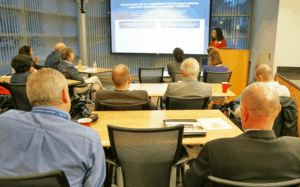
Held at BioVentures on the UAMS campus, the event brought together clinicians, researchers, technology companies and anyone else interested in developing or using mobile and wearable devices for health care and research. It was organized by Anita Walden, an instructor in the Department of Biomedical Informatics, College of Medicine, and Aaron Kemp, a research program manager in the Department of Psychiatry, College of Medicine. Event sponsors were the Willow Agency and Metova. The event hosts/co-sponsors were the Department of Biomedical Informatics, the Translational Research Institute and BioVentures.

For those with a BOX account, view slides here.

The first part of the event featured “rapid blitz presentations” followed by an informal session of discussion among attendees.

The gathering sparked interest between Sarah Rhoads, Ph.D., D.N.P., at the UAMS Center for Distance Health, and Christopher Harris, the digital inclusion coordinator at the Little Rock Metropolitan Housing Alliance.

“I was very interested in Mr. Harris’ presentation because I think there’s potential for research collaborations and the use of telehealth at the Housing Alliance,” Rhoads said.

Harris, a public policy doctoral student at the University of Arkansas, Fayetteville, agreed.

“The meeting was absolutely beneficial to the Metropolitan Housing Alliance,” he said. “We’re trying to help our residents address a number of chronic health conditions, and I believe there’s a lot of low-hanging fruit from a research perspective. Technology has to be part of the equation.”

Harris is one of 28 digital inclusion coordinators across the U.S. funded by AmeriCorps, the corporation for national and community service. The goal is to advance digital inclusion in low income communities.

Others at the meeting included representatives of Arkansas Innovation Hub, University of Arkansas at Little Rock, Dextera, Central Arkansas Veterans Healthcare System, BMR Management Resources, Elder Stay at Home, MKP Inspired, and the Arkansas Small Business and Technology Development Center.

“We thought that having this event would not only identify interested parties but to bring together people to form relationships and collaborations that could potentially lead to new research, applications or devices,” Walden said. “It was also a forum to learn about existing resources that can be utilized to support initiatives.”

She said such events can also generate ideas that can result in breakthroughs and identify problems that need solutions.

“Ultimately, we hope to expand the use of mHealth in Arkansas to improve health care and research methods,” she said. “We hope to have more of these types of events during the year which may have different focuses all related to mHealth.

Filed Under: Front, News, Newsroom

November/December TRIbune

The Translational Research Institute (TRI) is wrapping up 2017 with good tidings!

The November/December TRIbune features some helpful new developments with clinical trials: Trails Today, a CTSA initiative that makes it easier for the public to find clinical trials of interest; TriNetX, which is matching UAMS investigators with industry sponsored Clinical Trials; and ClinCard, a new more efficient way of compensating research participants. You’ll also read about our latest pilot awardees – the first time we’ve offered pilots in implementation science. Our TRI & Me features Geoffrey Curran, Ph.D., who leads TRI’s implementation science efforts and directs the UAMS’ Center for Implementation Research. You’ll also find the latest TRI-supported publications cited by your colleagues.

Download PDF

Newsletter Archive

Filed Under: Front, News, Newsroom

TRI Names Four Implementation Science Pilot Awardees

The UAMS Translational Research Institute (TRI) has approved research pilot study awards for four researchers totaling $200,000.

The annual awards of up to $50,000 each are made to projects with the strongest likelihood of leading to improved health and health care. This is the first year TRI has offered awards for pilots focused on implementation science projects.

Implementation science is the study of methods to promote the systematic uptake of research findings and other evidence-based practices into routine practice to improve the quality and effectiveness of health services.

Awardees were selected using a Study Section modeled after an NIH review panel, with internal, external and community reviewers. The awardees are:

Pearl McElfish, Ph.D., MBA, Associate Vice Chancellor, Northwest Regional Campus, Director of the Office of Community Health and Research, Co-Director of the Center for Pacific Islander Health, Assistant Professor, Internal Medicine
Pilot project: Implementation of Family Model DSME in an Underserved Marshallese Population in a Clinical Setting

Benjamin Teeter, Ph.D., Assistant Professor, Pharmacy Practice, Center for Implementation Research
Pilot project: Testing Implementation Strategies to Support Community Pharmacist-Initiated Prescription and Distribution of Naloxone to Reduce Overdose by Opioids

Jeremy Thomas, Pharm.D., Associate Professor, Department of Pharmacy Practice
Pilot project: Implementation of Clinical Pharmacy Services Delivered via Telehealth to Federally Qualified Healthcare Centers

Kristin Zorn, M.D., Associate Professor, Gynecology Oncology and Genetics
Pilot project: An Implementation Strategy to Increase Appropriate Referrals for Genetic Counseling and Testing Among Patients at High Risk for Hereditary Cancer Syndromes

Filed Under: Front, News, Newsroom

  • «Previous Page
  • Page 1
  • Interim pages omitted …
  • Page 26
  • Page 27
  • Page 28
  • Page 29
  • Page 30
  • Interim pages omitted …
  • Page 48
  • Next Page»
Translational Research Institute LogoTranslational Research InstituteTranslational Research Institute
Mailing Address: 4301 West Markham Street, Little Rock, AR 72205
Phone: (501) 686-7000
  • Facebook
  • X
  • Instagram
  • YouTube
  • LinkedIn
  • Pinterest
  • Disclaimer
  • Terms of Use
  • Privacy Statement
  • Legal Notices

© 2026 University of Arkansas for Medical Sciences