• Skip to primary navigation
  • Skip to main content
  • Skip to primary navigation
  • Skip to main content
Choose which site to search.
University of Arkansas for Medical Sciences Logo University of Arkansas for Medical Sciences
Translational Research Institute
  • UAMS Health
  • Jobs
  • Giving
  • About TRI
    • What We Offer
    • Leadership & Governance
    • Staff
    • Citing Translational Research Institute CTSA Support
    • What is Translational Research?
    • Contact TRI
  • Funding Opportunities
    • Grants
      • Pilot Award Program
      • Consortium of Rural States (CORES) Multi-Institutional Pilot Award Program
      • Team Science Voucher Program
      • Winthrop P. Rockefeller Cancer Institute Rural Research Award Program
    • Scholarships
      • K12 Mentored Research Career Development Scholar Awards Program
      • Health Sciences Innovation and Entrepreneurship Postdoctoral Training Program
      • Implementation Science Scholar Program
      • (STARs) Program – Strategies for Training and Advancing Researchers
      • SMART Program [Master’s in Clinical and Translational Sciences (MS-CTS)]
    • Community
      • Community Based Participatory Research (CBPR) Scholars Program
      • Community Partners Educated as Arkansas Research Leaders (CPEARL) Program
    • Awardee Responsibilities
  • Services & Resources
    • Services
      • Biostatistics, Epidemiology and Research Design (BERD) Consultation
      • Clinical Data Repository (AR-CDR)
      • Comprehensive Informatics Resource Core
      • Mock Study Sections
      • Research Participant Recruitment
      • Research Support: Clinical Trials Innovation Unit (CTIU)
      • Implementation Science Program
      • Research Ethics Consultation
    • Resources
      • ARresearch Registry
      • Center for Health Literacy
      • Data Safety Monitoring
      • Grant Writing & Dissemination
      • UAMS Profiles
      • UAMS Rural Research Network
      • Other Resources
      • COVID-19 Research Guidelines
      • Community Partner Research Training
  • Career Development & Scholarships
    • Scholarship Opportunities
      • K12 Mentored Research Career Development Scholar Awards Program
      • Health Sciences Innovation and Entrepreneurship Postdoctoral Training Program
      • Data Science Scholars Program
      • Implementation Science Scholar Program
      • SMART Program
      • Translational Research Innovations and Partners (TRIP) Program
    • Training & Educational Opportunities
      • innOVATION Seminar Series
      • Path 2 K Program
      • Translational Workforce Development
      • Graduate Certificate in Implementation Science
      • SMART Program [Master’s in Clinical and Translational Sciences (MS-CTS)]
      • Good Clinical Practice Training
    • Didactic Training
  • Community
    • Community Engagement Leadership
    • Community Advisory Board
    • Community Engagement Partners
      • Community Partner Celebration
      • Faith-Academic Initiatives for Transforming Health (FAITH) Network
    • Community Engagement Services
      • Consultations and Technical Assistance
      • Community Review Boards
      • Community Partner Research Training
      • Equipment Library
    • Programs and Funding
      • Community Partners Educated as Arkansas Research Leaders (CPEARL) Program
      • Community Based Participatory Research (CBPR) Scholars Program
      • Community Scientist Academy
    • Toolkits
      • CSA Online Toolkit
      • CPEARL Toolkit
  • Events
    • Research Day
    • Clinical Trials Learning Collaborative
  • Newsroom
  1. University of Arkansas for Medical Sciences
  2. Translational Research Institute
  3. Author: David Robinson
  4. Page 8

David Robinson

TRI innOVATION Seminar to Discuss Translational Science vs. Translational Research

J. Rob Singleton, M.D.

All are invited to hear J. Rob Singleton, M.D., from the University of Utah, present, “Translational Science: Understand and Embrace the Discipline as a Part of Your Research Portfolio,” Tuesday, Feb. 13, 1 – 2 p.m., via Zoom.

This important TRI innOVATION Seminar will help you understand the difference between translational science and translational research, plus the benefits of incorporating translational science elements into your research activities. The CME presentation will include examples of translational science across the translational research spectrum.

Since 2010, Singleton has directed the Clinical Trial Services Foundation (CTSF) at the Utah Clinical and Translational Science Award (CTSA) site where he oversees the 70+ protocols currently using the CTSF. He is a professor and vice chair in the University of Utah Department of Neurology and site principal investigator for the NIH National Institute of Neurological Disorders and Stroke NeuroNEXT clinical trials consortium. 

Register here.

CME Information:

Speaker: Rob Singleton, M.D.

Topic: Translational Science: Understand and Embrace the Discipline as a Part of Your Research Portfolio

Objectives:  At the conclusion of this activity, the participant will be able to:

1. Understand the difference between Translational Research and Translational Science

2. Learn examples of Translational Science across the translational research spectrum

3. Understand the benefits of incorporating Translation Science elements into their research activities

Date/Time:    Tuesday February 13th/1:00 PM                  

Location: Zoom Register here

Accreditation: In support of improving patient care, this activity has been planned and implemented by University of Arkansas for Medical Sciences. University of Arkansas for Medical Sciences is jointly accredited by the Accreditation Council for Continuing Medical Education (ACCME), the Accreditation Council for Pharmacy Education (ACPE), and the American Nurses Credentialing Center (ANCC), to provide continuing education for the healthcare team.

AMA Credit Designation:  The University of Arkansas for Medical Sciences designates this live activity for a maximum of 1 AMA PRA Category 1 Credit(s)™. Physicians should claim only the credit commensurate with the extent of their participation in the activity.

ANCC Credit Designation: The University of Arkansas for Medical Sciences designates this live activity for a maximum of 1 ANCC contact hour(s).  Nurses must attend the entire session In order to receive credit.

ACPE Credit Designation: These knowledge based activities will provide pharmacists up to 1 contact hour(s) or .10 CEU.  Credit will be uploaded to CPE Monitor within 60 days of the session. JA0000298-0000-23-070-L01-P/T

Disclosure of Financial Relationships:

The planners of this RSS, Martha Rojo, RN and Corey Hayes have no relevant financial relationships with ineligible companies to disclose.

The following planners and moderators of this RSS have financial relationship(s) with ineligible companies to disclose:

Jessica Snowden, M.D., Pfizer, Consulting Fee

All relevant financial relationships have been mitigated.

The speaker of this RSS has no relevant financial relationships with ineligible companies to disclose.

The accreditation compliance reviewers of this RSS, Brandie Jones, Sara Hale, and Courtney Bryant, have no relevant financial relationships with ineligible companies to disclose.
Filed Under: Front, News, Newsroom

Teenage Researcher Leads TRI-Supported Parkinson’s Study Published in Scientific Reports

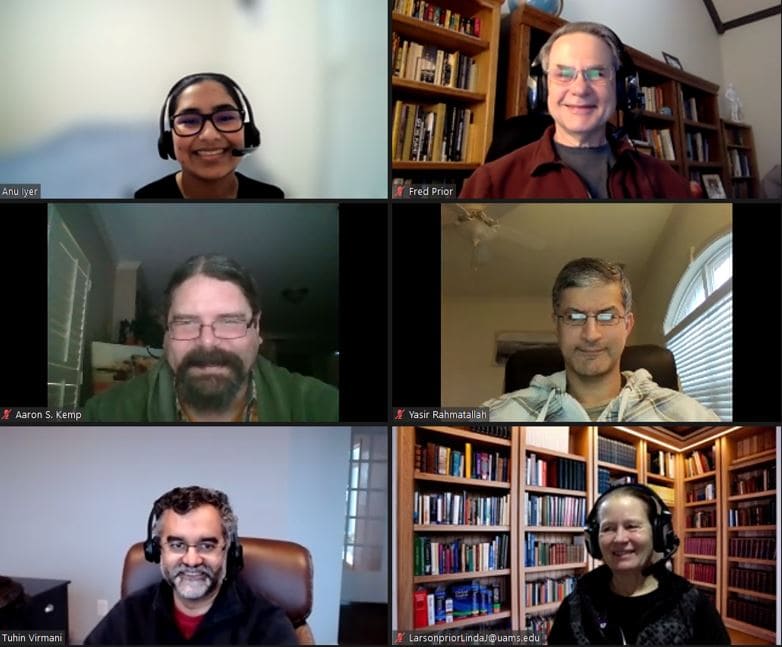
Anu Iyer, top left, meets with the UAMS research team: Fred Prior, Ph.D., (top right); middle: Aaron Kemp, MBA, and Yasir Rahmatallah, Ph.D.; and bottom row: Tuhin Virmani, M.D., Ph.D., and Linda Larson-Prior, Ph.D.

Eighteen-year-old Anu Iyer, the recent Little Rock Central High School graduate and machine-learning sensation collaborating with a University of Arkansas for Medical Sciences (UAMS) research team, is the lead author on a publication in Scientific Reports, part of the Nature portfolio journals.

She was joined as co-first author by UAMS’ Aaron Kemp, MBA, a Ph.D. student in the College of Medicine Department of Biomedical Informatics.

The publication stems from Iyer’s work with Kemp and other UAMS researchers using machine learning to detect Parkinson’s disease on a project supported by a UAMS Translational Research Institute (TRI) Team Science Champion Award.

Now a student at Georgia Tech, Iyer has been mentored since high school by UAMS’ Fred Prior, Ph.D., distinguished professor and chair of the Department of Biomedical Informatics.

“Anu is exceptionally talented, and we are proud that she is part of our team,” Prior said. “Her work demonstrates the immense potential of machine learning and artificial intelligence for advancing medical diagnoses and treatment.”

He knew in 2022 that the then-high school student would be an ideal fit for the research team led by UAMS neurologist Tuhin Virmani, M.D., Ph.D., which was testing digital health innovations that may benefit rural patients with movement disorders such as Parkinson’s disease.

Virmani directs the UAMS Movement Disorders Clinic and the Huntington’s Disease Society of America Center of Excellence at UAMS.

Iyer was able to confirm the reliability of telephone voice recordings to detect Parkinson’s. The UAMS study team collected telephone voice samples from 50 people diagnosed with Parkinson’s and 50 healthy control participants, then applied machine learning classification with voice features related to phonation.

“We show the superiority of our deep learning model for the task of classifying people with Parkinson’s disease as distinct from healthy controls,” the paper concludes.

Iyer is conducting similar research at Georgia Tech and Emory University and will continue her UAMS collaborations. “I plan to continue working with UAMS and Dr. Prior and Dr. Virmani’s team, specifically with applying bioinformatics approaches to Parkinson’s,” she said.

In addition to Kemp, Prior and Virmani, the paper’s co-authors are:

  • Aliyah Glover, research technician
  • Lakshmi Pillai, M.S., research program manager, College of Medicine Department of Neurology
  • Linda Larson-Prior, Ph.D., professor, College of Medicine Department of Neurobiology and Developmental Sciences and Department of Psychiatry
  • Yasir Rahmatallah, Ph.D., assistant professor, Department of Biomedical Informatics

Rahmatallah also secured additional grants to support work on the project. These include a National Science Foundation EPSCoR grant (OIA-1946391) of $100,919 administered through the Data Analytics that are Robust and Trusted (DART) program; and a $25,000 Barton Intramural Grant from the UAMS College of Medicine.  

TRI’s support for the project is made possible by a Clinical and Translational Science Award (CTSA) from the National Center for Advancing Translational Sciences at the National Institutes of Health, award UL1 TR003107.

Filed Under: Front, News, Newsroom

TRI Study of the Month

TRI’s Allyson Cheatham, B.S.N., RN, lead study coordinator, consults with Whit Hall, M.D., the study’s UAMS principal investigator.

UAMS Principal Investigator: Whit Hall, M.D., professor, neonatologist, UAMS College of Medicine, Department of Pediatrics

Summary: A phase 3 multi-site clinical trial comparing a symptoms-based drug treatment approach for neonatal opioid withdrawal syndrome (NOWS) with a scheduled tapering treatment.

Significance: Called OPTimize NOW, the study should determine the optimal treatment approach for newborns.

TRI Services: Regulatory and research coordinator services

Sponsor: HELP for NOWS Consortium

Filed Under: Newsroom

The TRIbune Is Here!

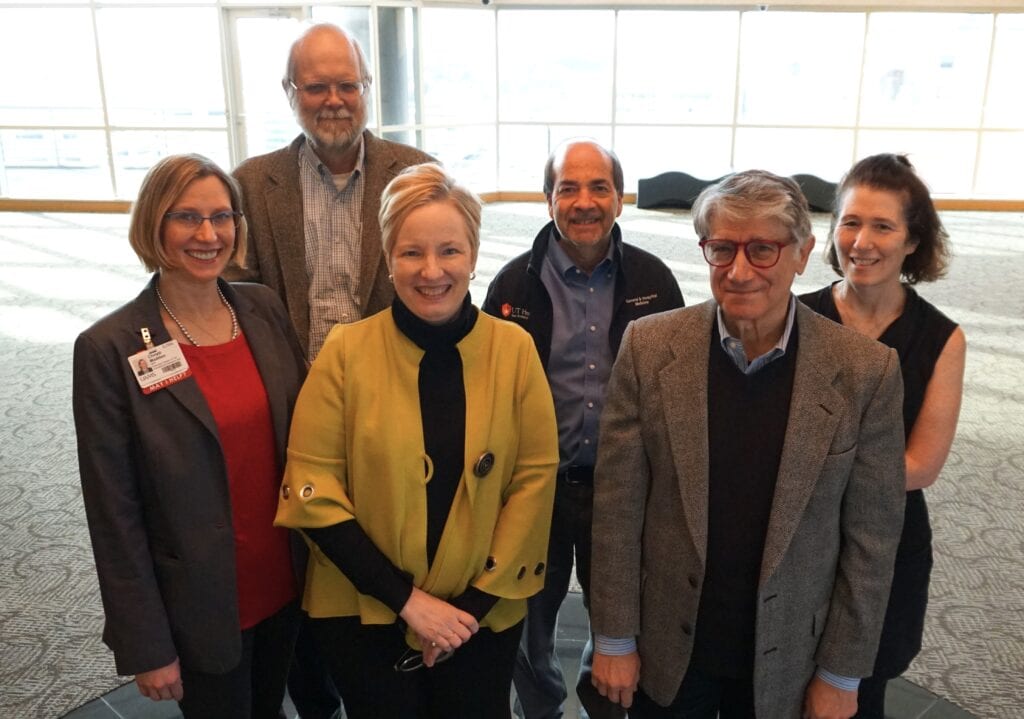
Members of TRI’s External Advisory Board pose for a photo with (front l-r) TRI Executive Director Christi Madden, MPA, and TRI Director Laura James, M.D. The EAB members include (front, right) Julian Solway, M.D., (chair) from the University of Chicago; and (back, l-r) W. Robert Taylor, M.D., Ph.D., Emory University; Joel Tsevat, M.D., MPH, University of Texas Health San Antonio; and Rachel Hess, M.D., M.S., University of Utah. Not pictured: EAB members who attended the meeting remotely are Sergio Aguilar-Gaxiola, M.D., University of California – Davis Health; and Sean D. Mooney, Ph.D., University of Washington.

In this issue of The TRIbune we highlight the honorees of the recent TRI Community Partner Celebration, which recognizes the vital role played by grassroots community groups in the improvement of UAMS’ research, education and health care service missions.

We also report on the positive final assessment of our External Advisory Board as we close out our five-year Clinical and Translational Science Award (CTSA) funding cycle this year.

Our TRI Study of the Month features an NIH-funded artificial intelligence-based heart study led by Subhi Al’Aref, M.D. Read The TRIbune.

Filed Under: Front, News, Newsroom

UAMS Translational Research Institute Honors Community Partners

For Joyce Raynor, winning the Chancellor’s Community Engaged Research Partner of the Year Award affirmed many years of hard work.

“This award means that we’re on the right track,” said Raynor, founder and executive director of the Center for Healing Hearts & Spirits, which helps victims of violence. “It means that our partnership with UAMS is working, and it’s good.”

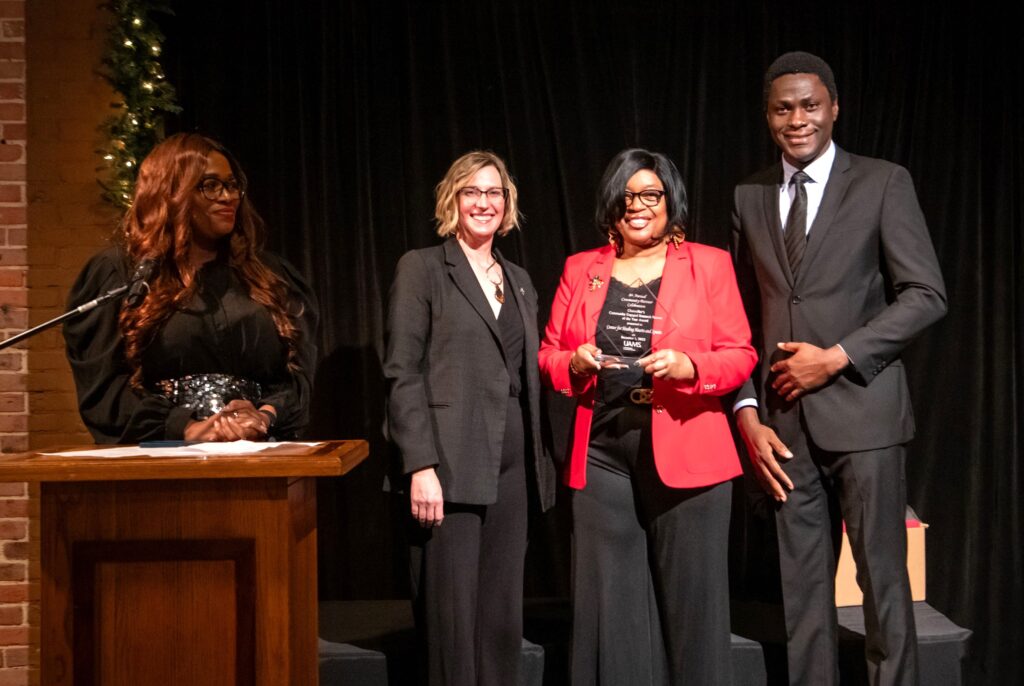
Joyce Raynor, center, executive director of the Center for Healing Hearts & Spirits, receives the Chancellor's Community Engaged Research Partner of the Year Award. She is joined by TRI's (l-r) Tiffany Haynes, Ph.D., and Christi Madden, MPA, and Darlynton Adegor of Healing Hearts & Spirits. (Photo by Bryan Clifton)
Joyce Raynor, center, executive director of the Center for Healing Hearts & Spirits, receives the Chancellor’s Community Engaged Research Partner of the Year Award. She is joined by TRI’s (l-r) Tiffany Haynes, Ph.D., and Christi Madden, MPA, and Darlynton Adegor of Healing Hearts & Spirits. (photos by Bryan Clifton)

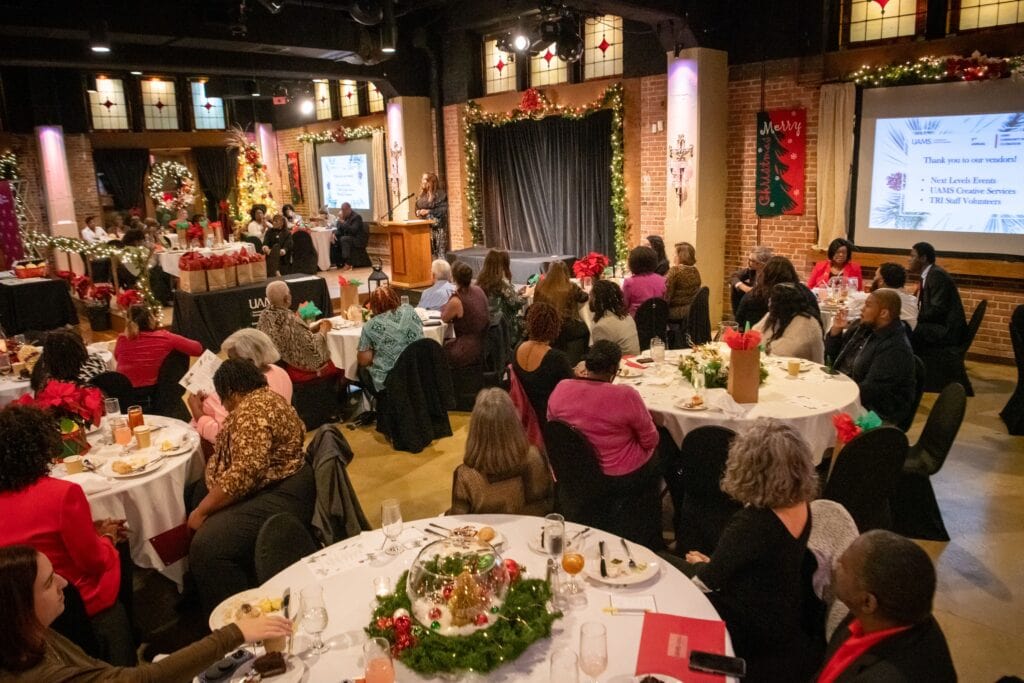
The UAMS Translational Research Institute (TRI) recognized some of UAMS’ many community partners at the recent 2023 Community Partner Celebration. The Dec. 1 dinner and awards ceremony drew 78 community partners, researchers and research staff who are working together to tackle health-related issues in communities across Arkansas. 

Nakita Lovelady, Ph.D. (center), received the M. Kate Stewart Community Engaged Researcher of the Year Award from TRI Executive Director Christi Madden, MPA (left), and Keneshia Bryant-Moore, Ph.D., APRN, FNP-BC.

In addition to Raynor’s organization, the award winners are:

  • Community Engaged Student/Trainee of the Year: Alice Gardner, a health promotion and prevention research doctoral student in the UAMS Fay W. Boozman College of Public Health.
  • Community Advisory Board of the Year Award: Arkansas Community Engagement Alliance (CEAL) Coalition
  • Community Engaged Research Staff Member of the Year: Elizabeth Taylor, College of Public Health
  • M. Kate Stewart Community Engaged Researcher of the Year: Nakita Lovelady, Ph.D., assistant professor, College of Public Health
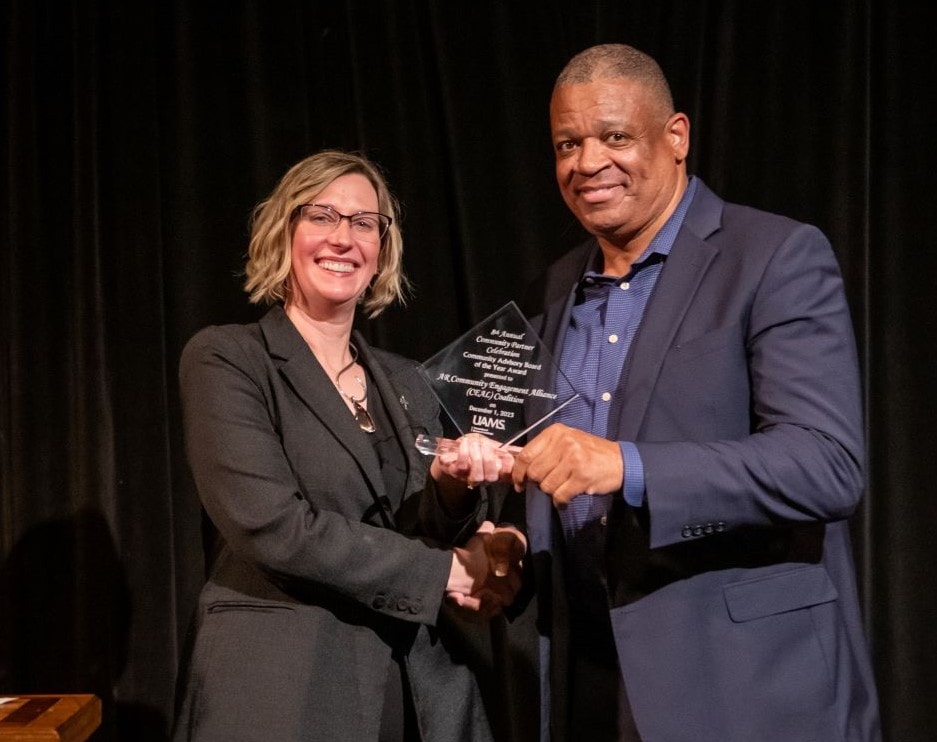
The Arkansas Community Engagement Alliance (CEAL) Coalition won the Community Advisory Board of the Year Award, received by Pastor Fred Harris.

Raynor founded the Center for Healing Hearts & Spirits in Little Rock after her son was killed by gun violence in 2001. The center has worked with UAMS on multiple research and service projects, including with Lovelady, who nominated Raynor for the award.

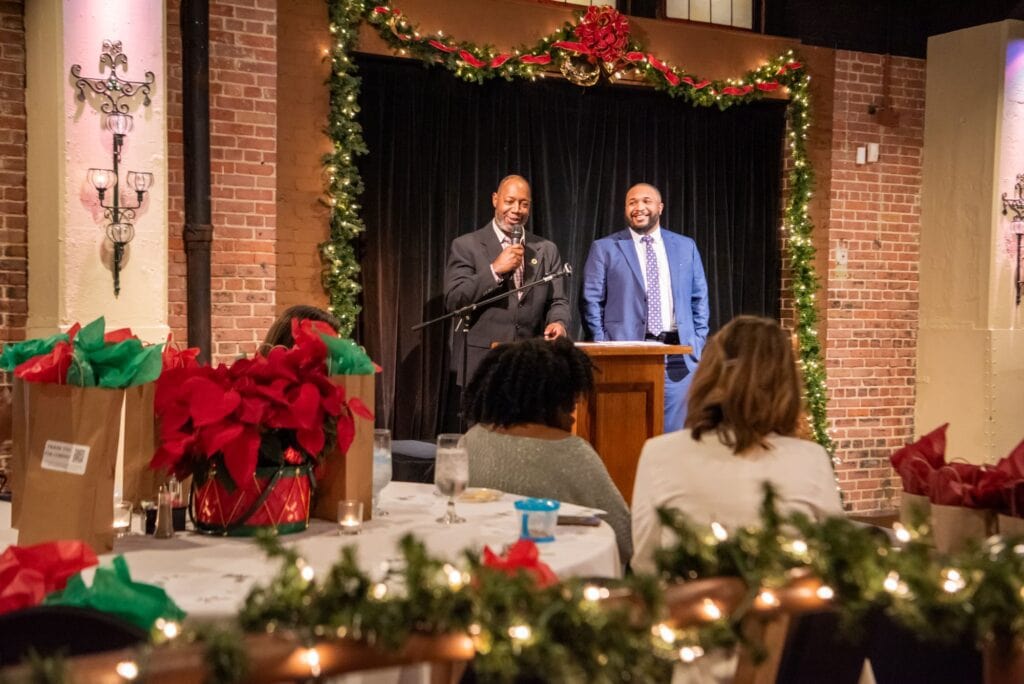
Co-chairs of the TRI Community Advisory Board, Pastor Gregory Nettles (left) and Kent Broughton II, speak during the event.

“The Center for Healing Hearts & Spirits works closely with frontline workers to connect violent assault survivors with critical social services to optimize recovery and prevent subsequent violence,” Lovelady said. “The center provides a range of victim services to violent assault survivors enrolled in the studies. Joyce has an intricate understanding of the issue of violence and survivorship. This affords her an exceptional ability to lead and reach survivors in ways that words can’t begin to explain.”

Lovelady, a K12 Mentored Research Career Development Award Scholar, received the inaugural M. Kate Stewart Community Engaged Researcher of the Year Award. She and her mentor, Nickolas Zaller, Ph.D., recently received a $1.4 million grant from the National Institutes of Health to support a community-engaged violence prevention program.

“Dr. Lovelady truly understands the factors that contribute to community violence in Arkansas, and she works very hard to find innovative solutions to address those issues and meet people where they are,” said Raynor, who nominated Lovelady for the inaugural award honoring Stewart, who retired this year as director of TRI’s Community Engagement Program. 

Lovelady was excited to receive the award, noting Stewart’s strong legacy and influence on the next generation of community engagement researchers.

“It is such an honor to win this award!” she said. “It’s extra special to receive an award in honor of my great mentor and friend Dr. Kate Stewart. She introduced to me to community-engaged research more than a decade ago and served as one of the best examples of a community engaged researcher.”

Stewart joined the College of Public Health when it was founded in 2001 and led TRI’s Community Engagement Program since it was established in 2009. She created and oversaw numerous innovative programs that have elevated the status of community-engaged research in Arkansas and across the United States.

TRI Community Engagement Director Tiffany Haynes, Ph.D., speaks during the Dec. 1 dinner and awards ceremony, which drew 78 community partners, researchers and research staff. Bryan Clifton photo
TRI Community Engagement Director Tiffany Haynes, Ph.D., speaks during the Dec. 1 dinner and awards ceremony, which drew 78 community partners, researchers and research staff.

UAMS researcher Keneshia Bryant-Moore, Ph.D., APRN, FNC-BC, also received an Honorary M. Kate Stewart Award to recognize her many significant contributions to community-engaged research at UAMS over the last decade. She is a professor in the College of Public Health and graduate of the TRI KL2 (now K12) Scholar Award Program. Her many achievements include establishing the Arkansas FAITH Network, a robust group of church leaders from across the state who have become important partners in community-engaged research.

Filed Under: Front, News, Newsroom

The TRIbune Is Here!

Representing TRI at the annual Consortium of Rural States meeting were (l-r): Jessica Presley, MPP, Laura James, M.D., Pearl McElfish, Ph.D., MBA, and Paul Duguid, MPH.
Representing TRI at the annual Consortium of Rural States meeting were (l-r): Jessica Presley, MPP, Laura James, M.D., Pearl McElfish, Ph.D., MBA, and Paul Duguid, MPH. 

In this issue of The TRIbune, we highlight our important collaboration with Clinical and Translational Science Award (CTSA) institutions to address health in rural populations. TRI leaders were among the participants at the Consortium of Rural States (CORES) Fall Meeting in advance of the consortium’s recent request for applications for interinstitutional collaborations.

We also feature TRI KL2 Scholar Nakita Lovelady, Ph.D., and her recent grant for a violence prevention project with her mentor, Nickolas Zaller, Ph.D. In addition, we spotlight TRI’s recent Community Partner Dinner, which drew representatives of more than 30 community groups, researchers and staff.

Our Study of the Month features a multi-site phase 3 neonatal opioid withdrawal syndrome (NOWS) clinical trial led at UAMS by Whit Hall, M.D.Read The TRIbune.

Filed Under: Front, News, Newsroom

New Funding Opportunity! Early-Career Researchers Invited to Apply for TRI K12 Scholar Awards

The Translational Research Institute (TRI) is pleased to invite applications for its K12 (formerly KL2) Mentored Research Career Development Scholar Award Program.

K12 scholars receive two years of didactic and mentored research training, including 75% salary support (up to $100,000) and $25,000 each year for research related expenses such as supplies, travel, etc.

The overall goal of the program is to increase the number and quality of independently funded clinical and translational science investigators.

Letters of Intent are due Feb. 1, 2024.

Early-career researchers are encouraged to attend the K12 Program information session on Wednesday, Dec. 13, 2-3 p.m., via Zoom. 

During the session, K12 program leaders John Arthur, M.D., Ph.D., Elisabet Borsheim, Ph.D., and Mario Schootman, Ph.D., will provide an overview and answer questions about this prestigious translational research training program.

Register here for the information session.

Read the 2024 K12 RFA here.

Contact: Nik Berardi, NDBerardi@uams.edu

Filed Under: Front, News, Newsroom

Investigators Soak in Research Expo 2023’s Abundant Resources, Services

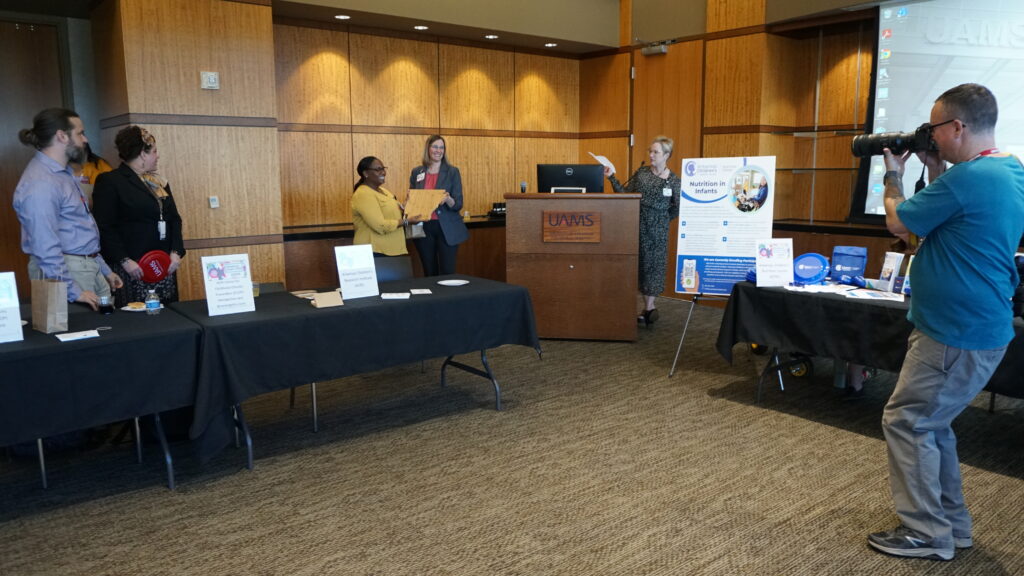
Alberto Ramirez, Ph.D., was excited to attend Research Expo 2023, with its 50 research services and resources on display.

“As an early-career researcher, the event proved to be remarkably valuable as it allowed me to gain insight into the numerous resources offered by UAMS, including TRI, Research & Innovation, and more, which have the potential to greatly support my nascent research journey,” said Ramirez, a postdoctoral fellow in the College of Medicine Department of Obstetrics and Gynecology.

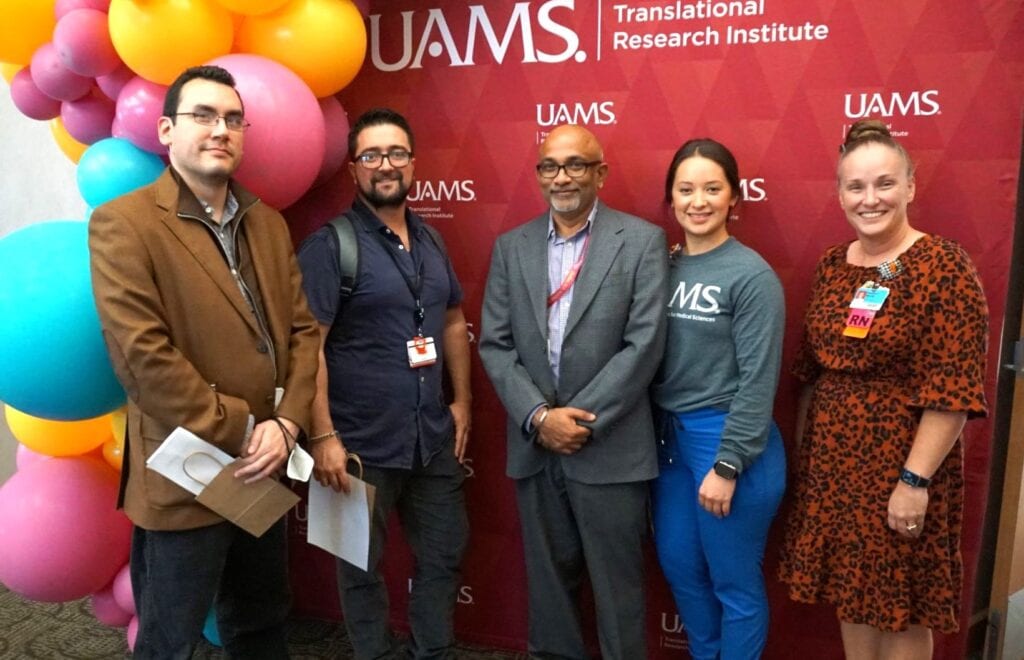
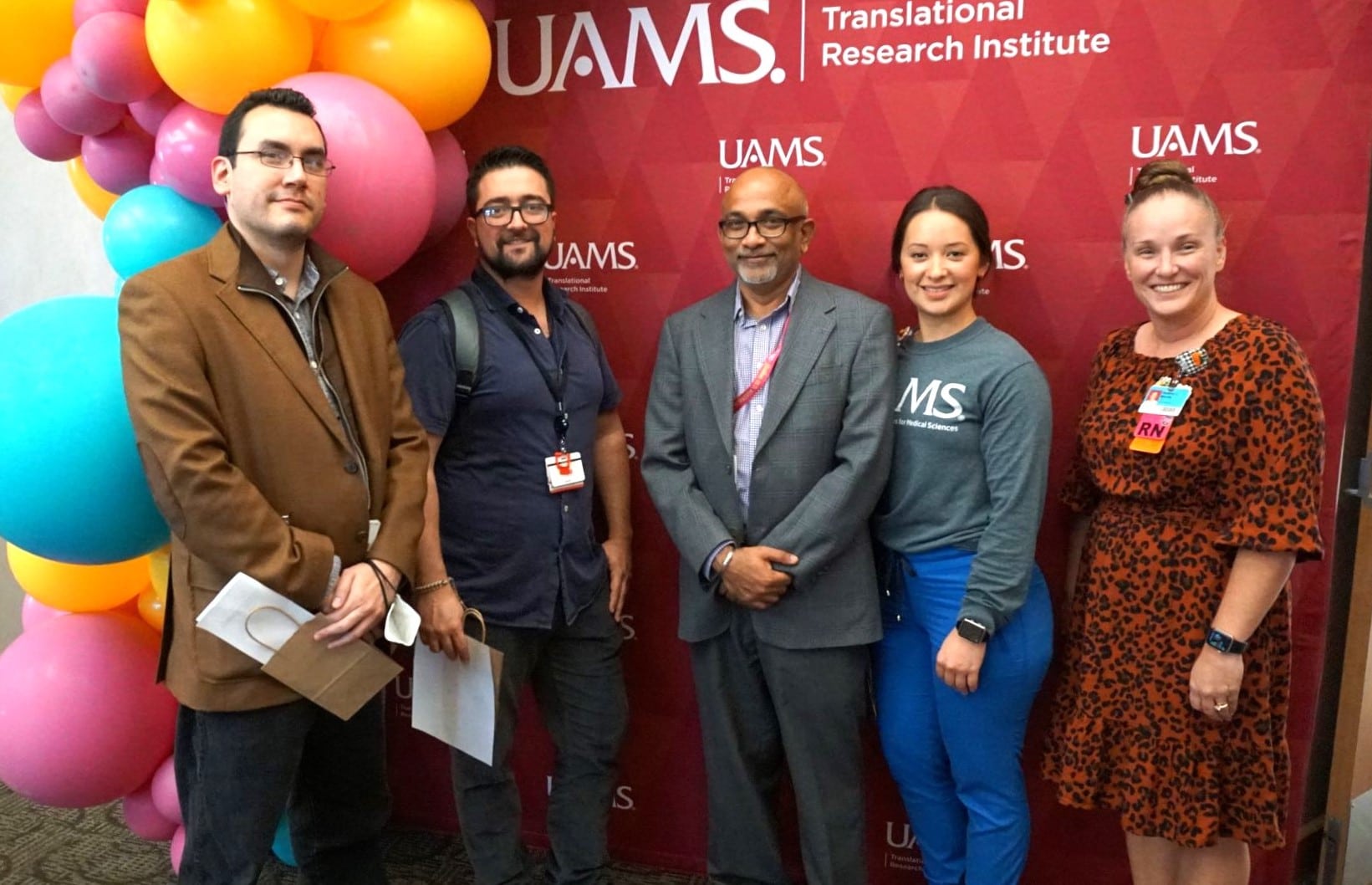
Alberto Ramirez, Ph.D., (second from left), is a member of a research team led by Hari Eswaran, Ph.D., (center). Other members are (from left): Luis Mercado, Ph.D. post-doctoral fellow, Karina Leal, B.S.N., RNC-MNN, research nurse, and Heather Moody, RN, CRS, research nurse.

Sponsored by the Translational Research Institute (TRI), the Oct. 11 event at the UAMS Jackson T. Stephens Spine & Neurosciences Institute building drew 114 attendees who got to visit with leaders of all the key research services at UAMS, Arkansas Children’s Research Institute (ACRI) and Central Arkansas Veterans Healthcare System (CAVHS).

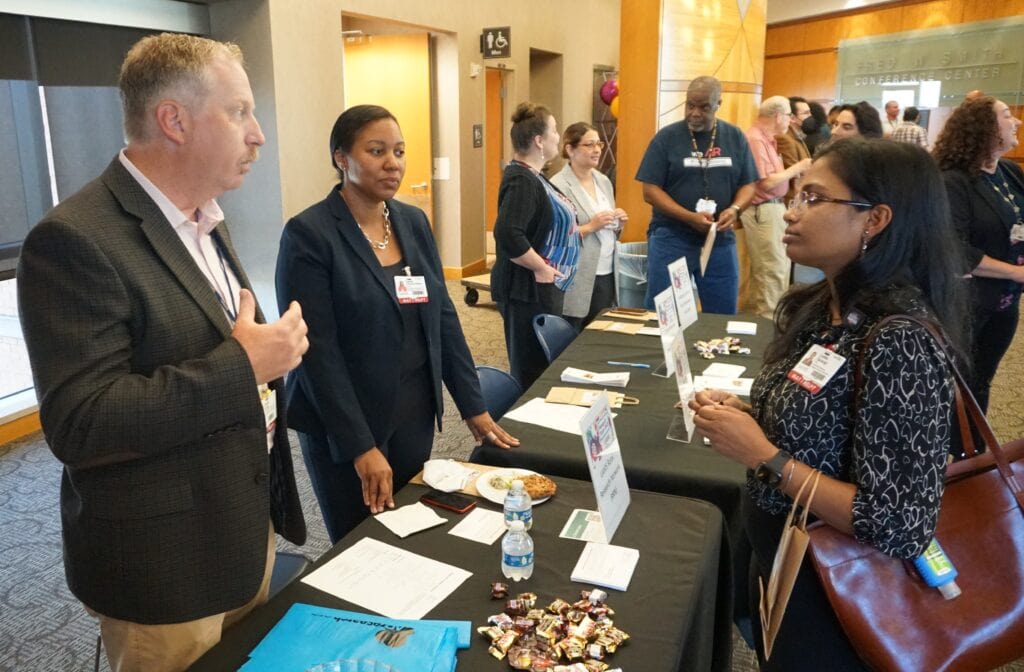
TRI's David Avery and Carrie Cochran-Raglon talk with Lipika Sarangi, Ph.D. (right).
TRI’s David Avery, senior director of Clinical Research Operations, and Carrie Cochran-Raglon, director of the UAMS Rural Research Network, talk with Lipika Sarangi, Ph.D. (right).

“This expo is great for new faculty members like me who are conducting research,” said Lipika Sarangi, Ph.D., an assistant professor in the College of Health Professions Department of Audiology & Speech Pathology. “It’s wonderful to have an event where you can meet new people, build your network, and find exactly the information that might be useful for your research today or in the future.”

For example, she was able to learn how to access potential research volunteers in the ARresearch database established by TRI. The database includes more than 9,000 Arkansans who have agreed to be contacted for research studies.

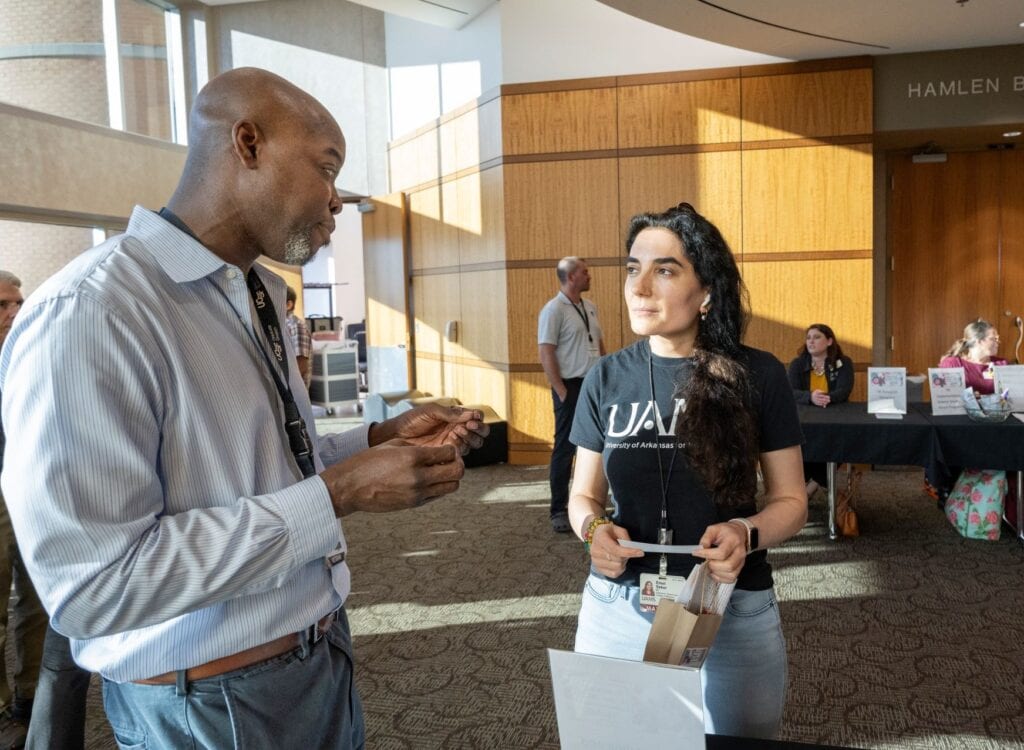
TRI’s Antiño Allen, Ph.D., speaks with Emel Seker.
TRI’s Antiño Allen, Ph.D., associate director of Diversity Initiatives, speaks with Emel Seker.

“They told me the process, and I will definitely use ARresearch in the future,” she said. “The resources I have found here will be very helpful for participant recruitment, grant writing and manuscript writing. I am looking forward to using these resources for my independent and collaborative research.”

Emel Seker, M.S., an applications system analyst in the College of Medicine, said the expo provided a unique opportunity to discover cutting-edge resources and connect with individuals who share a passion for research.

“The expo was an invaluable experience for me, underscoring the significance of collaborative platforms in research,” Seker said. “I was particularly impressed by the number of representatives from various research services. Meeting like-minded professionals who are not only knowledgeable but also open to collaboration was a highlight. I believe these connections have the potential to lead to meaningful collaborations in the future.”

Ramirez said he was particularly interested in the opportunities available to assist with the grant-writing process and the potential benefits of the TRI Community Engagement Program. “I am definitely planning to establish connections with these resources.”

In addition, he said, “the event emphasized the importance of networking, facilitating connections among all the stakeholders involved in the research process, from the initial spark of an

TRI Director Laura James, M.D., right, and Executive Director Christi Madden, MPA,  award a cutting board as a door prize.
TRI Director Laura James, M.D., right, and Executive Director Christi Madden, MPA, award one of three cutting boards as a door prize to Crystal Smith.

idea in the researcher’s mind to the practical implementation of results, all aimed at making a positive impact on the community.”

TRI is supported by the National Center for Advancing Translational Sciences at the National Institutes of Health, Clinical and Translational Science Award number UL1 TR003107.

Filed Under: Front, News, Newsroom

TRI Study of the Month

Sanjeeva Onteddu, M.D. (left), consults on the study with TRI’s Faryal Jalbani, M.D., MSPH, regulatory specialist II.

UAMS Principal Investigator: Sanjeeva Onteddu, M.D., is an associate professor in the College of Medicine Department of Neurology.

Summary: The “Zeit Alert for Stroke at Home (ZASH)” study is a multi-center clinical trial evaluating the Halo Alert System to determine if the device can be used to detect strokes. The device, worn as a headband, is designed for patients who return home from hospitalization after stroke and are at high risk for future strokes.

Significance: If the current study determines the device can effectively and safely detect stroke, a future study would test its ability to provide alerts at the onset of a stroke, potentially life-saving warnings for patients and their families.

TRI Services: Medicare coverage analysis, study budget development, administration of Clinical Trial Management System, clinical research coordinator support, and post-award financial management.

Sponsor: Zeit Medical

Filed Under: Newsroom

TRI Study of the Month

Ashley Stone, B.S. (left), a TRI research coordinator for the Rural Research Network, is assisting on the study led by Laura Hays, Ph.D., APRN, with Jordan Weaver, M.D., medical director of the UAMS North Central Family Medical Center in Batesville.

UAMS Principal Investigator: Laura Hays, Ph.D., APRN, CPNP-PC, FAHA, assistant professor, College of Nursing

Summary: “Arkansas – Making History,” is a pilot study at the UAMS North Central Family Medical Center in Batesville. It is implementing a family health history tool called MeTree and integrating it with the Arkansas Department of Health’s AR SHARE network, a statewide health information exchange that makes medical history information available to more than 2,500 medical practices across the state. 

Significance: Arkansas is ranked among the states with the highest prevalence of multiple genetically-influenced chronic conditions, so implementation of the program statewide could have significant implications for the improved health and wellness of Arkansans, and if successful, it could be implemented nationwide.

TRI Services: Research coordinator support through the TRI-supported UAMS Rural Research Network.

Sponsor: TRI Pilot Award Program

Filed Under: Newsroom

  • «Previous Page
  • Page 1
  • Interim pages omitted …
  • Page 6
  • Page 7
  • Page 8
  • Page 9
  • Page 10
  • Interim pages omitted …
  • Page 19
  • Next Page»
Translational Research Institute LogoTranslational Research InstituteTranslational Research Institute
Mailing Address: 4301 West Markham Street, Little Rock, AR 72205
Phone: (501) 686-7000
  • Facebook
  • X
  • Instagram
  • YouTube
  • LinkedIn
  • Pinterest
  • Disclaimer
  • Terms of Use
  • Privacy Statement
  • Legal Notices

© 2026 University of Arkansas for Medical Sciences