• Skip to primary navigation
  • Skip to main content
  • Skip to primary navigation
  • Skip to main content
Choose which site to search.
University of Arkansas for Medical Sciences Logo University of Arkansas for Medical Sciences
Translational Research Institute
  • UAMS Health
  • Jobs
  • Giving
  • About TRI
    • What We Offer
    • Leadership & Governance
    • Staff
    • Citing Translational Research Institute CTSA Support
    • What is Translational Research?
    • Contact TRI
  • Funding Opportunities
    • Grants
      • Pilot Award Program
      • Consortium of Rural States (CORES) Multi-Institutional Pilot Award Program
      • Team Science Voucher Program
      • Winthrop P. Rockefeller Cancer Institute Rural Research Award Program
    • Scholarships
      • K12 Mentored Research Career Development Scholar Awards Program
      • Health Sciences Innovation and Entrepreneurship Postdoctoral Training Program
      • Implementation Science Scholar Program
      • (STARs) Program – Strategies for Training and Advancing Researchers
      • SMART Program [Master’s in Clinical and Translational Sciences (MS-CTS)]
    • Community
      • Community Based Participatory Research (CBPR) Scholars Program
      • Community Partners Educated as Arkansas Research Leaders (CPEARL) Program
    • Awardee Responsibilities
  • Services & Resources
    • Services
      • Biostatistics, Epidemiology and Research Design (BERD) Consultation
      • Clinical Data Repository (AR-CDR)
      • Comprehensive Informatics Resource Core
      • Mock Study Sections
      • Research Participant Recruitment
      • Research Support: Clinical Trials Innovation Unit (CTIU)
      • Implementation Science Program
      • Research Ethics Consultation
    • Resources
      • ARresearch Registry
      • Center for Health Literacy
      • Data Safety Monitoring
      • Grant Writing & Dissemination
      • UAMS Profiles
      • UAMS Rural Research Network
      • Other Resources
      • COVID-19 Research Guidelines
      • Community Partner Research Training
  • Career Development & Scholarships
    • Scholarship Opportunities
      • K12 Mentored Research Career Development Scholar Awards Program
      • Health Sciences Innovation and Entrepreneurship Postdoctoral Training Program
      • Data Science Scholars Program
      • Implementation Science Scholar Program
      • SMART Program
      • Translational Research Innovations and Partners (TRIP) Program
    • Training & Educational Opportunities
      • innOVATION Seminar Series
      • Path 2 K Program
      • Translational Workforce Development
      • Graduate Certificate in Implementation Science
      • SMART Program [Master’s in Clinical and Translational Sciences (MS-CTS)]
      • Good Clinical Practice Training
    • Didactic Training
  • Community
    • Community Engagement Leadership
    • Community Advisory Board
    • Community Engagement Partners
      • Community Partner Celebration
      • Faith-Academic Initiatives for Transforming Health (FAITH) Network
    • Community Engagement Services
      • Consultations and Technical Assistance
      • Community Review Boards
      • Community Partner Research Training
      • Equipment Library
    • Programs and Funding
      • Community Partners Educated as Arkansas Research Leaders (CPEARL) Program
      • Community Based Participatory Research (CBPR) Scholars Program
      • Community Scientist Academy
    • Toolkits
      • CSA Online Toolkit
      • CPEARL Toolkit
  • Events
    • Research Day
    • Clinical Trials Learning Collaborative
  • Newsroom
  1. University of Arkansas for Medical Sciences
  2. Translational Research Institute
  3. Author: David Robinson
  4. Page 11

David Robinson

UAMS’ Laura James, M.D., Re-Elected to National Science Board

LITTLE ROCK — Laura James, M.D., director of the UAMS Translational Research Institute, has been elected to a second term on the national Association for Clinical and Translational Science (ACTS) Board of Directors.
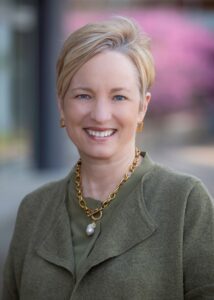
Laura James, M.D.
Laura James, M.D.

She joins 13 other directors at large from National Institutes of Health (NIH)-funded Clinical and Translational Science Awards (CTSA) Program institutions across the United States. She was first elected to the board in 2020.

James has been director of the Translational Research Institute since 2014 and is UAMS associate vice chancellor for Clinical and Translational Research. She has a 28-year history of translational research in clinical pharmacology and toxicology at UAMS and Arkansas Children’s Hospital. As a clinician-scientist and founder of the startup company Acetaminophen Toxicity Diagnostics LLC, she is leading development of a rapid diagnostic test for acetaminophen liver injury. In 2014 she was named an inaugural fellow of the Arkansas Research Alliance (ARA).

The role of the ACTS board is to govern, establish policy and make strategic decisions about the future of the organization. ACTS supports research that continually improves team science, integrating multiple disciplines across the translational science spectrum. It is also the academic home for translational research education and career development, and is an advocate for translational science.

“It has been a pleasure over the last three years working with the ACTS board and staff to create new programs and maximize investments that support the professional development of translational researchers,” James said. “I am excited to continue this work building productive collaborations across the association and with other relevant organizations.”

Translational research is the process of taking findings and discoveries (new medicines, health interventions, etc.) and “translating” or applying them to everyday practices that improve health.

The CTSA Program is administered by the National Center for Advancing Translational Sciences (NCATS) at the NIH. TRI received a five-year, $24.2 million CTSA, grant UL1 TR003107 in July 2019 and is one of more than 60 CTSA-supported institutions nationally.

Filed Under: Front, News, Newsroom

Join Us April 4 for TRI’s Second Annual Research Day!

Come see how we’re translating research into health practice at TRI Research Day 2023 on Tuesday, April 4, from 10 a.m. to 4 p.m. at Heifer International headquarters in Little Rock.

Duane Mitchell, M.D., Ph.D.

Our keynote speaker (11:10 a.m. – noon) is Duane Mitchell, M.D., Ph.D., professor of neurosurgery and director of the University of Florida Clinical Translational Science Institute (CTSI). He is also assistant vice president for research and associate dean for Clinical and Translational Sciences at the UF College of Medicine.

The event will showcase TRI-supported researchers with oral presentations from TRI’s KL2 Mentored Research Career Development scholars, Implementation Science scholars, TL1 Health Science Innovation and Entrepreneurship trainees, and Pilot Award Program awardees.

A poster session, awards and networking are from 2:50 – 4 p.m., and will include the full array of TRI-supported projects across its funding and training programs.

Register here.

Contact: Chaz England, CEngland@uams.edu

Filed Under: Front, News, Newsroom

TRI Study of the Month

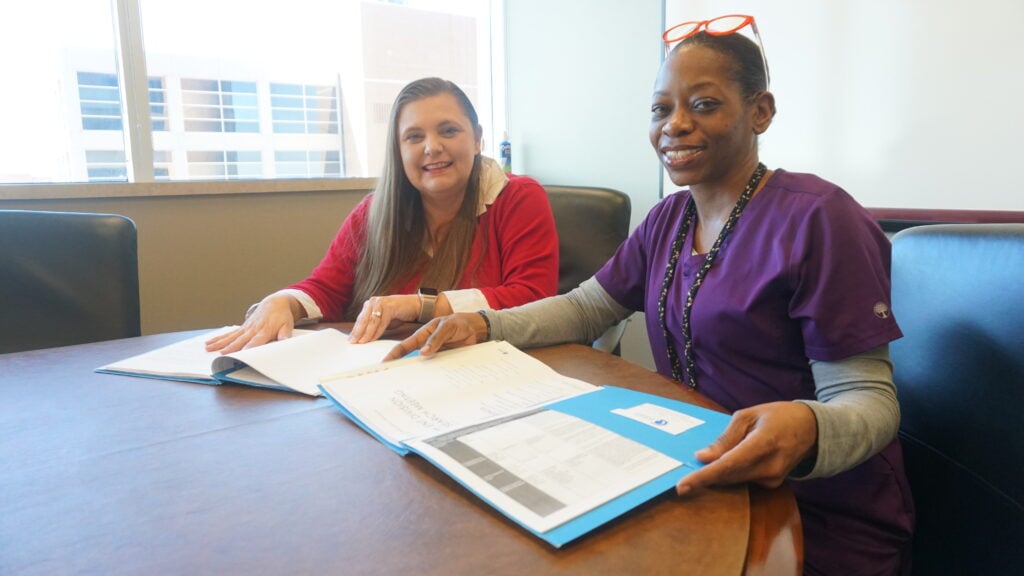
Deanne King, M.D., Ph.D., (left) meets with TRI’s Kennetha Newman, the study’s lead research coordinator.

UAMS Principal Investigator: Deanne L. King, M.D., Ph.D., assistant professor and director of Clinical Research, College of Medicine Department of Otolaryngology – Head & Neck Surgery

Summary: A phase 3 multi-center trial will evaluate the safety and efficacy of a new drug candidate for Meniere’s disease.

Significance: There are few treatment options available for Meniere’s disease, a common inner ear disease whose symptoms include hearing loss, dizziness/vertigo and tinnitus. The anti-inflammatory drug candidate has shown promise as a treatment in smaller studies.

TRI Services: Medicare coverage analysis, study budget development, regulatory and nurse/clinical coordinator support, administration of Clinical Trial Management System, and post-award financial management.

Sponsor: Sound Pharmaceuticals Inc.

Filed Under: Front, News, Newsroom

TRI Advances Computer-Guided Study Consent Forms

Members of the Informed Consent Navigator team include (front, l-r) Mathias Brochhausen, Ph.D., Nicki Spencer, M.H.A., Alison Caballero, MPH, CHES, and Jonathan Bona, Ph.D.; (back row) Justin Whorton, Sarah Fountain, MPH, CPH, CHES, Jennifer Gan-Kemp, MBA, CRS, and Aaron Kemp, MBA. Image by Bryan Clifton

A new software tool developed at the University of Arkansas for Medical Sciences (UAMS) will help researchers quickly create consent documents in plain language for their prospective study volunteers.

Laura James, M.D.
Laura James, M.D.

Called the Informed Consent Navigator, the web-based tool breaks new ground with its ability to guide researchers through the creation of plain-language informed consent forms at an eighth-grade reading level or below. The Journal of Clinical and Translational Science published the Translational Research Institute team’s work in December, drawing immediate interest from several research institutions across the United States.

“This is a big achievement for UAMS,” said co-author Mathias Brochhausen, Ph.D., a professor in the College of Medicine Department of Biomedical Informatics.

Interdisciplinary Research
First-author Jonathan Bona, Ph.D., led creation of the computer-guided navigation as part of an interdisciplinary research team that includes biomedical informaticists, software developers, research ethicists, and experts in community engagement, health literacy, health education, plain-language writing, clinical trials and informed consent.

“What has been really novel and beneficial is working with folks from across UAMS to make this the best possible tool for researchers and the community,” said Bona, an assistant professor in the College of Medicine’s Department of Biomedical Informatics.

The team was assembled and supported by UAMS Translational Research Institute Director Laura James, M.D., a co-author.

“This project truly played to UAMS’ strengths and is a testament to multidisciplinary team science and the vital support of the Translational Research Institute,” said Brochhausen. “In addition to the institute’s financial support, Dr. James and her team have been with us in the trenches, attending our meetings and helping connect us to key resources.”

Ensuring Readability
Consent forms are often long, detailed, and introduce new concepts, said co-author Alison Caballero, MPH, CHES, director of the Center for Health Literacy. The forms can be a barrier to conducting research, especially in populations with limited health literacy.

“Using language that is readable, understandable and actionable is a challenge, but it is essential for truly informed consents and ensuring our research includes a genuine cross-section of the population,” said Caballero, an associate professor.

While other institutions across the U.S. have been working on similar automated consent processes, UAMS appears to be first with its automated plain-language consents, Brochhausen said.

The Informed Consent Navigator builds on years of work by a collaborative team including the UAMS Center for Health Literacy, which created a plain-language consent form template and made it available to all researchers. Plain-language experts at the center created a large bank of text that is approved by the UAMS Institutional Review Board and covers a broad range of research. Now part of the navigator, the text is automatically populated in the informed consent form based on the user’s answers to questions presented by the navigator.

Where researchers must write original text about their specific studies, the navigator provides instructional text, content examples and real-time feedback with readability scores and suggestions to improve readability.

The navigator also uses survey logic that helps tailor what researchers see as they are guided through the process, reducing the difficulty and eliminating errors often made when using print-based templates.

“The goal for this is not just to make it easier for researchers to build forms, but to do so in a way that checks and encourages — and in some cases enforces — that the forms are readable,” Bona said.

Next Steps
The team plans to pilot the Informed Consent Navigator with clinical research studies at UAMS and other institutions. Prior to that, the latest version of the navigator will be presented to a Community Review Board made up of community representatives recruited by the Translational Research Institute’s Community Engagement team.

“Having community reviewers tell us what is clear and what is not clear is very useful,” Bona said, noting that the community board has given its feedback twice before. “We’ve had great communication with the board and their input has already led to improvements in the navigator.”

Longer term, the team will establish an electronic consenting platform (e-consent). It will also work toward artificial intelligence-powered management of consents to expand the navigator’s functionality.

Bona said the team ultimately hopes to see the navigator deployed at research institutions across the U.S. and beyond with the ability to query the network’s data.

Filed Under: Front, News, Newsroom

Read the Latest TRIbune

Antiño Allen, Ph.D., (right) was among five UAMS research leaders who completed mentorship facilitator training at the University of Wisconsin-Madison.

In this month’s issue of The TRIbune, we feature some significant new efforts in mentorship training for researchers. TRI-supported research leaders have received mentorship facilitator training and will be conducting regular, evidence-based mentor training courses for UAMS-affiliated faculty. TRI’s mentorship training efforts reflect a priority of the National Center for Advancing Translational Sciences (NCATS) at the NIH.

The TRI Study of the Month features Jill Mhyre, M.D., professor and chair, College of Medicine Department of Anesthesiology, who is collaborating with Ronda Henry-Tillman, M.D., chief of Breast Surgical Oncology. 

Read The TRIbune.

Filed Under: Front, News, Newsroom

TRI Seeking Letters of Intent from Prospective KL2 Scholar Award Applicants

KL2 Program logo-art

The Translational Research Institute (TRI) is pleased to invite Letters of Intent (LOIs) for the 2023 KL2 Mentored Research Career Development Scholar Awards.

The TRI Mentored Research Career Development Scholars Program provides support for early-career UAMS faculty with a professional degree (M.D., Ph.D., Pharm.D., D.N.P., Dr.PH., D.O., etc.) who are committed to an academic career in multidisciplinary clinical or translational research.

Successful applicants will begin the two-year program July 1, 2023. The KL2 program combines an innovative educational program with mentored clinical/translational science research. KL2 Scholars receive:

Salary support/stipend of up to $95,000 (including fringe) per year.

Up to $25,000 of non-salary support per year, which can be used for research, tuition, travel expenses, educational materials and other costs related to the scholar’s research.

The deadline for submitting LOIs is Friday, Jan. 27, 2023, 5 p.m. (CT).

See attached LOI Cover Page.

View the Request for Applications.

The KL2 program is supported by the Clinical and Translational Science Awards (CTSA) Program of the NIH National Center for Advancing Translational Sciences. Contact: Chaz England, CEngland@uams.edu.

Filed Under: Front, News, Newsroom

SAVE THE DATE: Join Us April 4 for TRI Research Day!

Image art includes the words, Research Day and Translational Research Institute

All are invited to TRI Research Day on Tuesday, April 4, from 10 a.m. to 4 p.m. at Heifer International in Little Rock.

Our keynote speaker is Duane Mitchell, M.D., Ph.D., professor of neurosurgery and director of the University of Florida Clinical Translational Science Institute (CTSI). He is also assistant vice president for Research and associate dean for Clinical and Translational Sciences at the UF College of Medicine.

The event will showcase TRI-supported research with oral presentations from select TRI-supported investigators. A poster session (with prizes!) will include an array of TRI-supported projects across its range of funding and training programs.

Please mark your calendars and stay tuned for registration and other details.

Contact: Robin Liston, rliston@uams.edu.

Filed Under: Front, News, Newsroom

Researchers, Community Organizations Invited to Apply for CBPR Scholars Program

Image of text at top of information flyer stating: New Free Partnered Research Training PRogram with Pilot Funding Opportunities; Community-Based Participatory Research (CBPR) Scholars Program Begins March 2023; TRI is looking for researchers and community organizations interested in partnering, training and working on a research project.

TRI’s Community Engagement Program is seeking researchers and community organizations interested in partnering, training and working on a funded research project.

The Community-Based Participatory Research (CBPR) Scholars Program will provide successful applicants up to $25,000 or up to $50,000 in pilot funding. Applications are due Feb. 1, 2023, and the program begins in March 2023.

If interested, please email the TRI Community Engagement team at triceteam@uams.edu, or call/text 501-291-7301.

More information is available here.

View the flyer.

Filed Under: Front, News, Newsroom

TRI Study of the Month

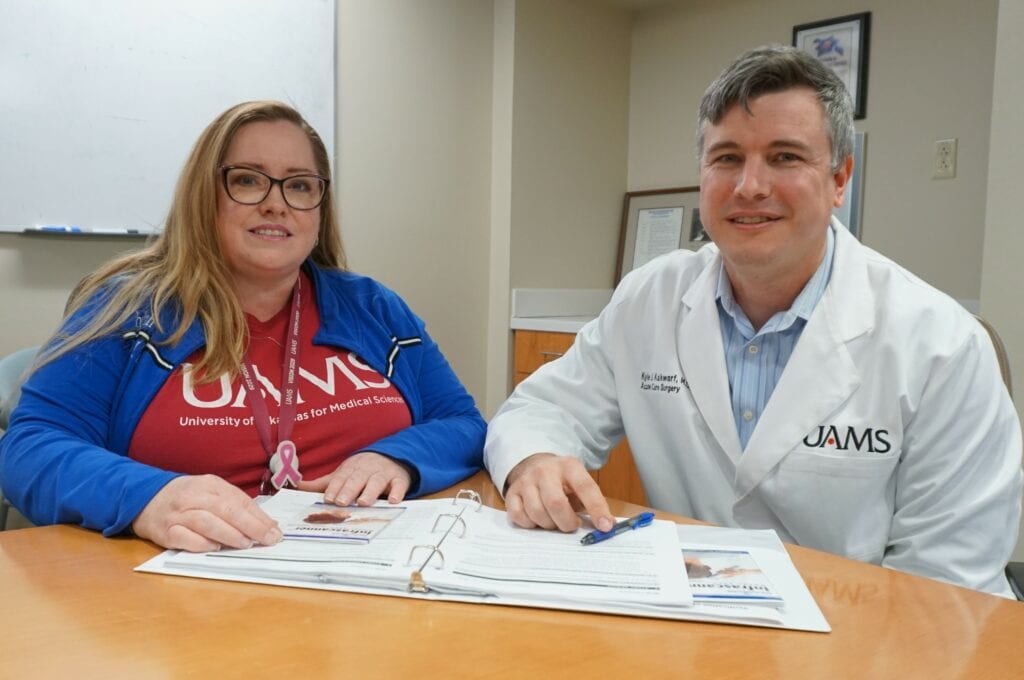
Kyle Kalkwarf, M.D., is assisted on the trial by TRI’s Shellah Rogers, B.S.N., RN, CMSRN, the study’s lead clinical research coordinator.
Kyle Kalkwarf, M.D., is assisted on the trial by TRI’s Shellah Rogers, B.S.N., RN, CMSRN, the study’s lead clinical research coordinator.  

UAMS Principal Investigator: Kyle Kalkwarf, M.D., assistant professor, College of Medicine Department of Surgery, Division of Trauma and Acute Care Surgery

Summary: This multi-site clinical trial involving hospitalized traumatic brain injury patients will test the effectiveness of a non-invasive device (Infrascanner) for detecting the growth of intracranial hematomas.

Significance: The study of this FDA-approved device, which uses near-infrared light to detect bleeding, may lead to earlier diagnosis and improved treatments for traumatic brain injury patients, especially in areas with limited resources, such as rural America or on military deployments

TRI Services: Medicare coverage analysis, study budget development, regulatory and nurse/clinical coordinator support, administration of Clinical Trial Management System, and post-award financial management

Sponsor: University of Alabama at Birmingham

Funding: U.S. Department of Defense

Filed Under: Front, News, Newsroom

The TRIbune Is Here

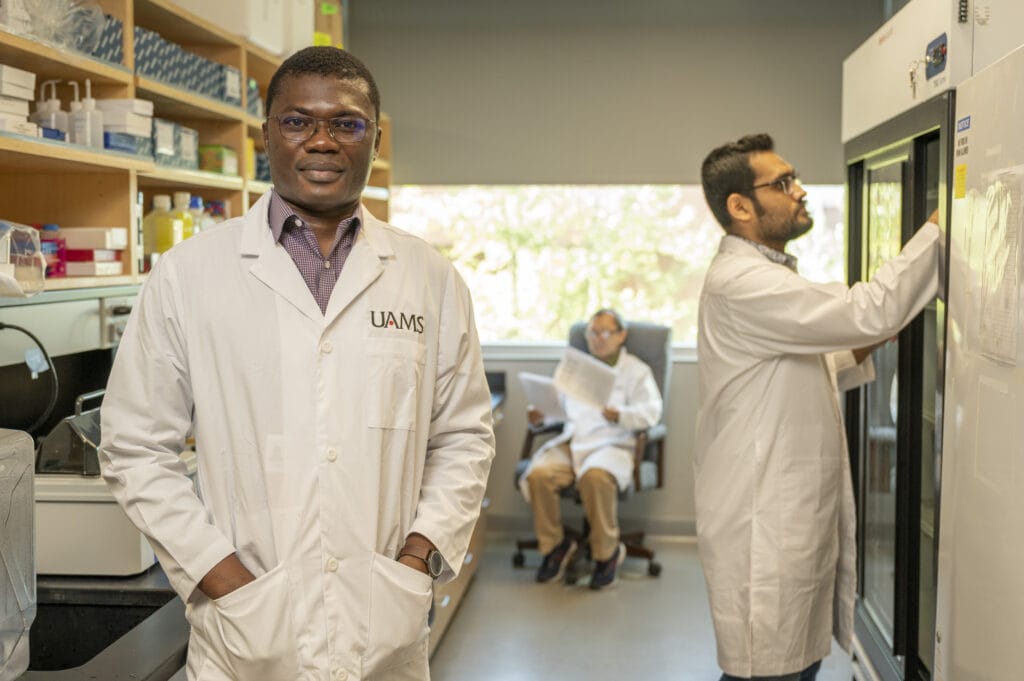
STARs participant Bolni “Marius” Nagalo, Ph.D., here in his lab at the UAMS Winthrop P. Rockefeller Cancer Institute, said the grant-writing program was a “fantastic” experience. Photo by Evan Lewis

In this issue of The TRIbune, we feature the achievements of researchers who participated in our Strategies for Training and Advancing Researchers (STARs) program in fall 2021. Participants described the program as “invaluable” and “fantastic” and have since secured career development awards, supplemental grants and internal funding. In addition:

We highlight Britni Ayers, Ph.D., a former TRI KL2 scholar, who received a $420,750 NIH grant for her research involving pregnant Marshallese women.

We introduce the four community groups selected to TRI’s Community Partners Educated as Arkansas Research Leaders (CPEARL) Program.

And our TRI Study of the Month features Kyle Kalkwarf, M.D., a TRI Implementation Science Scholars Program awardee, for his leadership on a clinical trial involving traumatic brain injury patients.

Read The TRIbune.

Filed Under: Front, News, Newsroom

  • «Previous Page
  • Page 1
  • Interim pages omitted …
  • Page 9
  • Page 10
  • Page 11
  • Page 12
  • Page 13
  • Interim pages omitted …
  • Page 19
  • Next Page»
Translational Research Institute LogoTranslational Research InstituteTranslational Research Institute
Mailing Address: 4301 West Markham Street, Little Rock, AR 72205
Phone: (501) 686-7000
  • Facebook
  • X
  • Instagram
  • YouTube
  • LinkedIn
  • Pinterest
  • Disclaimer
  • Terms of Use
  • Privacy Statement
  • Legal Notices

© 2026 University of Arkansas for Medical Sciences