• Skip to primary navigation
  • Skip to main content
  • Skip to primary navigation
  • Skip to main content
Choose which site to search.
University of Arkansas for Medical Sciences Logo University of Arkansas for Medical Sciences
Translational Research Institute
  • UAMS Health
  • Jobs
  • Giving
  • About TRI
    • What We Offer
    • Leadership & Governance
    • Staff
    • Cite TRI
    • What is Translational Research?
    • Contact TRI
  • Funding Opportunities
    • Grants
      • Pilot Award Program
      • Consortium of Rural States (CORES) Multi-Institutional Pilot Award Program
      • Team Science Voucher Program
      • Winthrop P. Rockefeller Cancer Institute Rural Research Award Program
    • Scholarships
      • K12 Mentored Research Career Development Scholar Awards Program
      • Health Sciences Innovation and Entrepreneurship Postdoctoral Training Program
      • Implementation Science Scholar Program
      • (STARs) Program – Strategies for Training and Advancing Researchers
      • SMART Program [Master’s in Clinical and Translational Sciences (MS-CTS)]
    • Community
      • Community Based Participatory Research (CBPR) Scholars Program
      • Community Partners Educated as Arkansas Research Leaders (CPEARL) Program
    • Awardee Responsibilities
  • Services & Resources
    • Services
      • Biostatistics, Epidemiology and Research Design (BERD) Consultation
      • Clinical Data Repository (AR-CDR)
      • Comprehensive Informatics Resource Core (CIRC)
      • Mock Study Sections
      • Research Participant Recruitment
      • Research Support: Clinical Trials Innovation Unit (CTIU)
      • Implementation Science Program
      • Research Ethics Consultation
    • Resources
      • ARresearch Registry
      • Center for Health Literacy
      • Data Safety Monitoring
      • Grant Writing & Dissemination
      • UAMS Profiles
      • UAMS Rural Research Network
      • Other Resources
      • COVID-19 Research Guidelines
      • Community Partner Research Training
  • Career Development & Scholarships
    • Scholarship Opportunities
      • K12 Mentored Research Career Development Scholar Awards Program
      • Health Sciences Innovation and Entrepreneurship Postdoctoral Training Program
      • Data Science Scholars Program
      • Implementation Science Scholar Program
      • SMART Program
      • Translational Research Innovations and Partners (TRIP) Program
    • Training & Educational Opportunities
      • innOVATION Seminar Series
      • Path 2 K Program
      • Translational Workforce Development
      • Graduate Certificate in Implementation Science
      • SMART Program [Master’s in Clinical and Translational Sciences (MS-CTS)]
      • Good Clinical Practice Training
    • Didactic Training
  • Community
    • Community Engagement Leadership
    • Community Advisory Board
    • Community Engagement Partners
      • Community Partner Celebration
      • Faith-Academic Initiatives for Transforming Health (FAITH) Network
    • Community Engagement Services
      • Consultations and Technical Assistance
      • Community Review Boards
      • Community Partner Research Training
      • Equipment Library
    • Programs and Funding
      • Community Partners Educated as Arkansas Research Leaders (CPEARL) Program
      • Community Based Participatory Research (CBPR) Scholars Program
      • Community Scientist Academy
    • Toolkits
      • CSA Online Toolkit
      • CPEARL Toolkit
  • Events
    • Research Day
    • Clinical Trials Learning Collaborative
  • Newsroom
  1. University of Arkansas for Medical Sciences
  2. Translational Research Institute
  3. TRI KL2 Graduate, Pilot Awardee Receives $3 Million NIH Grant to Address Feeding Practices at Early Child Care Sites

TRI KL2 Graduate, Pilot Awardee Receives $3 Million NIH Grant to Address Feeding Practices at Early Child Care Sites

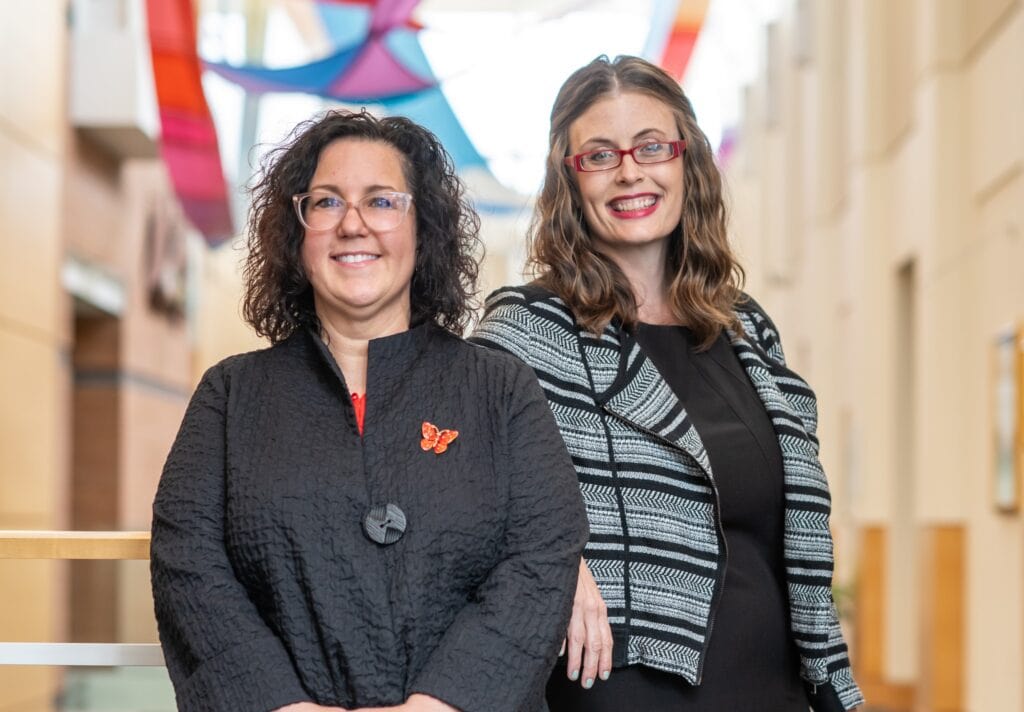
UAMS' Taren Massey-Swindle, Ph.D. (right), with her collaborator, Julie Rutledge, Ph.D., from Louisiana Tech University.
UAMS’ Taren Massey-Swindle, Ph.D. (right), with her collaborator, Julie Rutledge, Ph.D., from Louisiana Tech University.

University of Arkansas for Medical Sciences (UAMS) researcher Taren Massey-Swindle, Ph.D., and a Louisiana Tech University collaborator have secured a $3 million grant from the National Institutes of Health (NIH) to address feeding practices at 80 early childhood care and education sites in Arkansas and Louisiana.

Massey-Swindle and Julie Rutledge, Ph.D., from Louisiana Tech University in Ruston, found in prior studies that early childhood care and education settings frequently use inappropriate feeding practices such as hurrying children and encouraging them to eat more. Such practices contribute to eating less healthy foods, overeating and long-term food rejections.

A big part of the five-year, $3,043,419 grant from the NIH National Institute of Diabetes and Digestive and Kidney Diseases is its “de-implementation” plans for eliminating inappropriate feeding practices. 

While early childhood teachers and caregivers may mean well, their words and actions can undermine long-term healthy eating habits, Massey-Swindle and Rutledge said.

“We have no negative judgment for these teachers,” said Massey-Swindle, a former early-childhood educator and now associate professor in the College of Medicine departments of Pediatrics and Family and Preventive Medicine. “When I was a child care provider myself, I told children to clean their plates and make a happy plate. I had no training in how to support children around positive feeding practices at mealtime.”

The issue is significant, she said, because children will eat more than 500 meals a year with the adults in their early care and education classrooms.

“It’s really an opportunity to support those adults in this setting with training that they otherwise don’t get,” Massey-Swindle said.

The 80 sites are in the Little Rock and Russellville areas in Arkansas and in Ruston and New Orleans areas in Louisiana.

By the end of the five-year study, the researchers expect to have determined the effectiveness of a package of strategies that can be applied and tailored for early care and education settings across the United States. They also expect that by removing inappropriate feeding practices, their results will show a positive impact on children’s dietary behaviors. They will track children’s willingness to try different foods, fear of new foods, and how many fruits and vegetables they eat.

“Finding ways to impact the health of children in our communities is really my passion,” said Massey-Swindle, who recently became director of the Arkansas Children’s Research Institute (ACRI) Link, a core of services focusing on community-engaged dissemination and implementation science. “From a scientific perspective, we’re going to be answering some really compelling questions about whether de-implementation effects can be sustained over time.”

To help secure the NIH award, Massey-Swindle used a pilot grant from the UAMS Translational Research Institute to get preliminary data on the effectiveness of a virtual communication approach to reducing inappropriate feeding practices. Rutledge also received pilot funding from the Lincoln Health Foundation in Louisiana to test in-person approaches to reducing inappropriate feeding practices. Ultimately, they developed an effective hybrid model using in-person and virtual approaches.

“We really work hard to get robust preliminary data to support our R01-level NIH applications,” Massey-Swindle said. “Without funding like the Translational Research Institute provides, there’s no way for researchers to do that. I think it strengthened our application a great deal.”

She is also a graduate of the Translational Research Institute’s KL2 (now K12) Mentored Research Career Development Scholars Program, which provides two years of mentored research support, salary support and seed funding.

In addition, Massey-Swindle said the Arkansas Children’s Nutrition Center (ACNC) provided funding and support for her to attend an intensive grant development workshop with one-on-one writing, coaching and detailed feedback that helped her submit a competitive grant application. The ACNC is supported by Arkansas Children’s, UAMS and the USDA Agricultural Research Service.

The Translational Research Institute is supported by the NIH National Center for Advancing Translational Sciences, Clinical and Translational Science Award #UM1 TR004909.

Posted by David Robinson on September 3, 2024

Filed Under: Front, News, Newsroom

Translational Research Institute LogoTranslational Research InstituteTranslational Research Institute
Mailing Address: 4301 West Markham Street, Little Rock, AR 72205
Phone: (501) 686-7000
  • Facebook
  • X
  • Instagram
  • YouTube
  • LinkedIn
  • Pinterest
  • Disclaimer
  • Terms of Use
  • Privacy Statement
  • Legal Notices

© 2026 University of Arkansas for Medical Sciences