• Skip to primary navigation
  • Skip to main content
  • Skip to primary navigation
  • Skip to main content
Choose which site to search.
University of Arkansas for Medical Sciences Logo University of Arkansas for Medical Sciences
Translational Research Institute
  • UAMS Health
  • Jobs
  • Giving
  • About TRI
    • What We Offer
    • Leadership & Governance
    • Staff
    • Citing Translational Research Institute CTSA Support
    • What is Translational Research?
    • Contact TRI
  • Funding Opportunities
    • Grants
      • Pilot Award Program
      • Consortium of Rural States (CORES) Multi-Institutional Pilot Award Program
      • Team Science Voucher Program
      • Winthrop P. Rockefeller Cancer Institute Rural Research Award Program
    • Scholarships
      • K12 Mentored Research Career Development Scholar Awards Program
      • Health Sciences Innovation and Entrepreneurship Postdoctoral Training Program
      • Implementation Science Scholar Program
      • (STARs) Program – Strategies for Training and Advancing Researchers
      • SMART Program [Master’s in Clinical and Translational Sciences (MS-CTS)]
    • Community
      • Community Based Participatory Research (CBPR) Scholars Program
      • Community Partners Educated as Arkansas Research Leaders (CPEARL) Program
    • Awardee Responsibilities
  • Services & Resources
    • Services
      • Biostatistics, Epidemiology and Research Design (BERD) Consultation
      • Clinical Data Repository (AR-CDR)
      • Comprehensive Informatics Resource Core
      • Mock Study Sections
      • Research Participant Recruitment
      • Research Support: Clinical Trials Innovation Unit (CTIU)
      • Implementation Science Program
      • Research Ethics Consultation
    • Resources
      • ARresearch Registry
      • Center for Health Literacy
      • Data Safety Monitoring
      • Grant Writing & Dissemination
      • UAMS Profiles
      • UAMS Rural Research Network
      • Other Resources
      • COVID-19 Research Guidelines
      • Community Partner Research Training
  • Career Development & Scholarships
    • Scholarship Opportunities
      • K12 Mentored Research Career Development Scholar Awards Program
      • Health Sciences Innovation and Entrepreneurship Postdoctoral Training Program
      • Data Science Scholars Program
      • Implementation Science Scholar Program
      • SMART Program
      • Translational Research Innovations and Partners (TRIP) Program
    • Training & Educational Opportunities
      • innOVATION Seminar Series
      • Path 2 K Program
      • Translational Workforce Development
      • Graduate Certificate in Implementation Science
      • SMART Program [Master’s in Clinical and Translational Sciences (MS-CTS)]
      • Good Clinical Practice Training
    • Didactic Training
  • Community
    • Community Engagement Leadership
    • Community Advisory Board
    • Community Engagement Partners
      • Community Partner Celebration
      • Faith-Academic Initiatives for Transforming Health (FAITH) Network
    • Community Engagement Services
      • Consultations and Technical Assistance
      • Community Review Boards
      • Community Partner Research Training
      • Equipment Library
    • Programs and Funding
      • Community Partners Educated as Arkansas Research Leaders (CPEARL) Program
      • Community Based Participatory Research (CBPR) Scholars Program
      • Community Scientist Academy
    • Toolkits
      • CSA Online Toolkit
      • CPEARL Toolkit
  • Events
    • Research Day
    • Clinical Trials Learning Collaborative
  • Newsroom
  1. University of Arkansas for Medical Sciences
  2. Translational Research Institute
  3. News
  4. Page 19

News

NCATS Supports UAMS Telehealth Study to Improve Mortality Rate Among Rural Pregnant Women

LITTLE ROCK – Researchers at the University of Arkansas for Medical Sciences (UAMS) will use a $228,000 federal grant to test telehealth as a way to improve Arkansas’ death rate among pregnant women, which ranks fifth nationally.

Led by UAMS’ Hari Eswaran, Ph.D., the research team will focus on remote health monitoring of pregnant women in rural areas with few health providers or resources. The goal is to determine if remote health monitoring can improve care for rural pregnant women with high blood pressure.

The one-year grant is funded by the National Institutes of Health (NIH) National Center for Advancing Translational Sciences (NCATS). The funding was awarded as a supplement to UAMS’ NCATS-funded Clinical and Translational Science Award (CTSA).

Laura James, M.D., is principal investigator of the CTSA and director of the UAMS Translational Research Institute, whose work is supported by the five-year, $24.2 million award UL1 TR003107.

Statistics show that Arkansas has 44.5 maternal deaths per 100,000 live births annually. The national average is 29.6 deaths.

The team will recruit 50 pregnant women to test whether patient care can be improved using the combined systems of:

  • Telemedicine via interactive video with UAMS maternal-fetal specialists
  • Remote health monitoring (for example, blood pressure rates shared electronically from participants’ homes)
  • The UAMS Institute for Digital Health & Innovation Call Center. The study’s remote patient monitoring system will become part of the institute’s existing rural telemedicine clinic and call center model for monitoring blood pressure in pregnancy.

“This is a critical health issue for us,” said Eswaran, a professor in the College of Medicine Department of Obstetrics and Gynecology. “No other developed countries have maternal mortality rates as high as Arkansas, and we know that lack of access to care is a significant factor.”

In the United States, severe maternal illness is on the rise, affecting about 52,000 pregnant women at delivery every year. According to a CDC report, the severe maternal illness rate during delivery increased almost 200% from 1993 to 2014. This increase is caused by increased rates of blood transfusion, acute renal (kidney) failure, respiratory (breathing) distress syndrome and cardiac (heart) disease.

Severe maternal illnesses are expected to continue to grow because women are becoming pregnant later in life, increasing pre-pregnancy obesity, pre-existing chronic medical conditions and cesarean deliveries, Eswaran said. Rates are also much higher among women from rural areas. Likewise, maternal death rates are higher for lower income populations.

“By identifying these women early in their pregnancy, we can potentially help provide timely medical care using telehealth technology,” Eswaran said. “This would help prevent illness and death, shorten hospital stays and reduce health care costs.”

Filed Under: Front, News, Newsroom

Early UAMS Study Results Show 3.5% of Arkansans Infected by Coronavirus

LITTLE ROCK – Early results from a University of Arkansas for Medical Sciences (UAMS)-led COVID-19 antibody study show that 3.5% of Arkansans have been infected with the novel coronavirus through August.

UAMS researcher Joshua Kennedy, M.D., revealed the initial findings of the Arkansas Coronavirus Antibodies Seroprevalence Survey during a presentation Oct. 21 with Laura James, M.D., director of the UAMS Translational Research Institute.

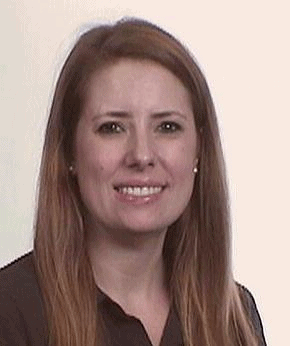
Laura James, M.D.

Laura James, M.D.

The Arkansas Research Alliance (ARA)-sponsored talk focusing on UAMS’ COVID-19 research efforts featured James, an ARA fellow, Kennedy and John Arthur, M.D., Ph.D., also a UAMS COVID-19 researcher. UAMS has eight other studies testing new therapies for COVID-19 either active or in startup.

Kennedy, associate professor in the College of Medicine Department of Pediatrics, along with Craig Forrest, Ph.D., and Karl Boehme, Ph.D., associate professors in the College of Medicine Department of Microbiology and Immunology, have spearheaded an effort to analyze blood samples from Arkansans.

One aspect of the study involved using remnant blood samples from patients who visit UAMS clinics, including three Regional Campus clinics, and have their blood drawn for health reasons other than COVID-19. The samples, which would be discarded otherwise, are being collected and shipped to UAMS from across the state for the antibody test, which was developed in the laboratories of Boehme and Forrest.

Of 1,220 adult blood samples tested so far, 43 were positive, or 3.5%. From this analysis, samples were collected in July and August, 2020. While low overall, Kennedy said, there are noteworthy differences across populations.

“These early results show the importance of our efforts to survey statewide,” said James, associate vice chancellor for Clinical and

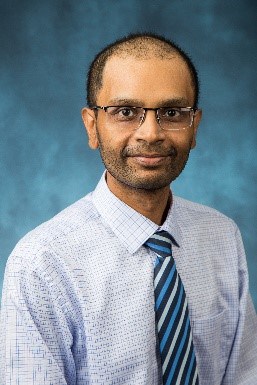
Karl Boehme, Ph.D.

Karl Boehme, Ph.D.

Translational Research at UAMS. “We will continue to evaluate antibody rates over the next several months to monitor the impact of COVID-19 in Arkansas.”

Seroprevalence is the proportion of people in a population whose blood serum tests positive for a particular disease. Unlike diagnostic tests for COVID-19, the seroprevalence antibody testing looks back into the immune system’s history. A positive antibody test means the person was exposed to the virus and developed antibodies against the virus.

It will give state leaders a good estimate of how many Arkansans have been infected with the virus since it first came to the state, even if they did not become ill or have symptoms.

Kennedy praised the collaboration of UAMS Regional Campuses, whose family medical centers in Fayetteville, Fort Smith and Pine Bluff are all contributing remnant blood samples. The collaboration was also made possible by the new UAMS Rural Research Network and the Translational Research Institute, whose resources are helping make use of Regional Campuses’ infrastructure to include rural areas of Arkansas in health research.

The study began this summer after UAMS researchers developed high-accuracy antibody testing methods. As part of the research program, UAMS is collecting blood samples from nearly 7,500 Arkansas adults and children. Arkansas Children’s is leading the pediatric component of the study. The UAMS College of Public Health is leading the epidemiology component of the study, using the contact tracing call center to enroll study participants and collect health histories and blood samples from individuals who represent the entire state.

The study is supported by $3.3 million in federal coronavirus aid that was then allocated by the Arkansas Coronavirus Aid, Relief and

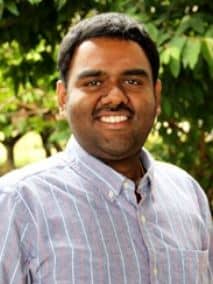
Craig Forrest, Ph.D.

Craig Forrest, Ph.D.

Economic Security Act Steering Committee created by Gov. Asa Hutchinson.

The Translational Research Institute is supported by grant TL1 TR003109 through the National Center for Advancing Translational Sciences of the National Institutes of Health (NIH).

Filed Under: Front, News, Newsroom

USDA Awards Grants for Backyard Gardens and Adapting to Climate Change

Rachel Hale (top left), Community Engagement program manager at the UAMS Translational Research Institute, helped acquire grants for community gardens and energy efficiency projects. She is joined in this file photo by other UAMS community garden volunteers (back row) Carissa Ansel, College of Public Health (COPH) student, Taylor Washington, COPH student, and Carolyn Greene, Ph.D. Front row, COPH students Taylor McClanahan and Sarah Fountain.

A UAMS-community partnership has garnered two grants for community and backyard gardens and energy efficiency projects.

The U.S. Department of Agriculture awarded a one-year $100,000 grant for developing a network of gardens to improve access to local foods for low-income communities of color in central Arkansas. The grant will also fund education programs and initiatives to promote urban agriculture, and will be evaluated by the UAMS Office of Community-Based Public Health.

Another $10,000 was awarded by Climate Reality to increase sustainability through backyard gardens and energy efficiency.

The grants resulted from a partnership that involves the College of Public Health Office of Community-Based Public Health, the Translational Research Institute Community Engagement Program, and community partner Arkansas Interfaith Power and Light. Other partners include the University of Arkansas Business Innovations Clinic and Arkansas Department of Environmental Quality Farm to School Program.

TRI Community Engagement Program Manager Rachel Hale worked with Arkansas Interfaith Power and Light’s Jimmy Parks, Dr.P.H., garden manager and Scharmel Roussel, executive director, to develop plans and apply for project funding.

The funding, which will provide volunteer and part-time internship opportunities for UAMS students , was applauded by Kate Stewart, M.D., director of the Office of Community-Based Public Health in the College of Public Health, and director of the Translational Research Institute’s Community Engagement Program.

“These exciting projects will engage our students as volunteers in their community gardens,” Stewart said. “It will also help them evaluate projects they are doing with community members to increase the use of backyard gardens.”

Projects will be focused in low-income central Arkansas communities of color living with limited access to affordable and nutritious food, especially the elderly, children, and veterans with high rates of food insecurity, high rates of chronic illness, and disproportionately high utility bills.

Activities to improve food security and help communities adapt to a changing climate will include:

  • Supporting community members in starting and maintaining backyard gardens and increasing access to energy efficient items and information.
  • Providing education about plant-rich diets, importance of local food, climate change and health, and energy conservation.
  • Supporting existing community gardens to provide excess food to the UAMS 12th Street Health and Wellness Center and other food pantries.
  • Mentoring youth and young adults interested in becoming urban farmers.

Filed Under: Front, News, Newsroom

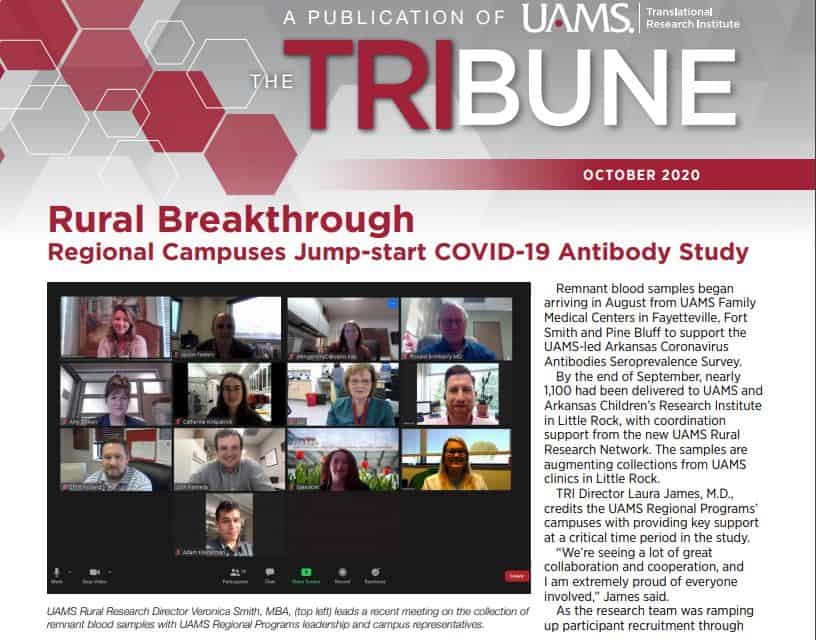
October TRIbune Introduces UAMS Rural Research Network

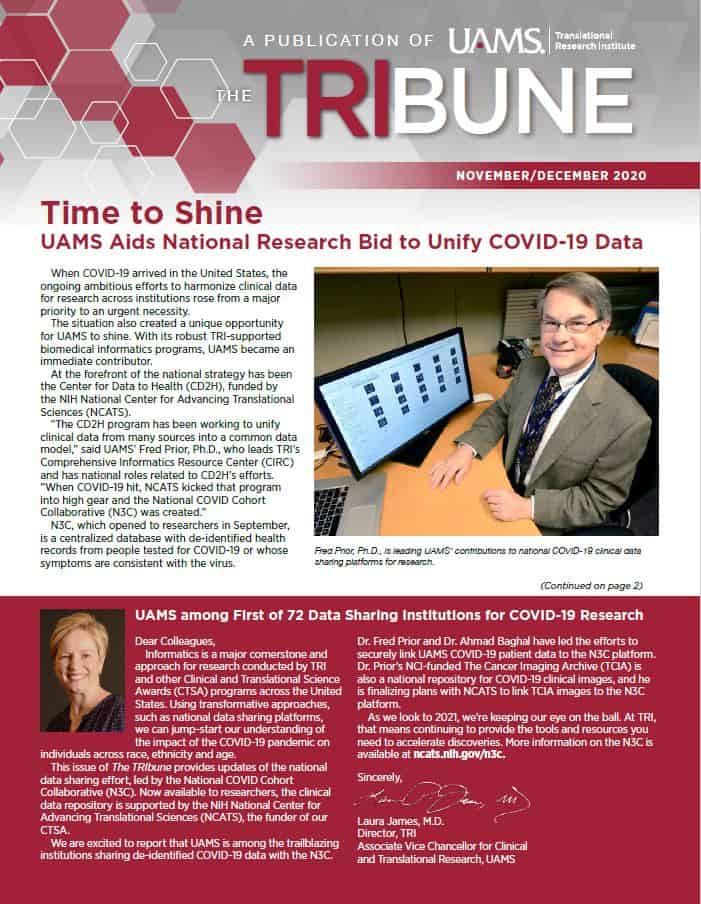
The TRIbune
The TRIbune

This month’s TRIbune newsletter features the new Rural Research Network, an intra-institutional partnership that leverages the infrastructure of UAMS Regional Programs and its regional campuses.

The network will help TRI meet its mission of helping UAMS more effectively address chronic health conditions among rural populations.

Read The TRIbune

Filed Under: Front, News, Newsroom

Testimonial Video: Jessica Snowden, M.D., Explains How TRI, Teens Aided Study Recruitment

In this new video, UAMS researcher Jessica Snowden, M.D., chief of the Division of Pediatric Infectious Disease in the College of Medicine Department of Pediatrics, explains why she was thrilled to consult a group of teenagers about her study recruitment materials.

Snowden, who needed feedback from those in her target audience, was the recipient of a free service provided by TRI’s Community Engagement Program. TRI offers all UAMS-affiliated researchers a one-time, two-hour Community Review Board (CRB) made up of participants whose life experiences are relevant to the study.

To assist Snowden, the Community Engagement team recruited Little Rock high school students who had recently graduated from TRI’s Community Scientist Academy.  

She said the CRB “was insanely helpful” in more effectively recruiting asthmatic children for a multi-site vitamin D study.

Snowden is also co-principal investigator of the NIH-funded IDeA (Institutional Development Awards Program) States Pediatric Clinical Trials Network Data Coordinating and Operations Center. The program directs clinical operations for trial implementation and professional development across a 17-state NIH-funded research group.

Watch the video to learn more about this service.

Filed Under: Front, News, Newsroom

UAMS Research Expo Draws a Virtual Crowd

Yuet-Kin “Ricky” Leung, Ph.D. (left), won the 2020 Research Expo's Grand Door Prize, a manuscript submission fee to be paid by TRI. Leung also enjoyed the 2019 Expo, above with Nagai C. "Neville" Tam, Ph.D. (File Photo)
Yuet-Kin “Ricky” Leung, Ph.D. (left), won the 2020 Research Expo’s Grand Door Prize, a manuscript submission fee to be paid by TRI. Leung also enjoyed the 2019 Expo, above with Nagai C. “Neville” Tam, Ph.D. (File Photo)

The UAMS Research Expo on Aug. 25 drew 184 registrants for the virtual event with 25 research service providers presenting via Zoom.

Sponsored by the UAMS Translational Research Institute (TRI), the event included overviews of up to five minutes from representatives of the research services. Attendees were able to drop into the event to hear scheduled presentations and ask questions via the written comments feature in Zoom. UAMS T-shirts were given away as door prizes, and Yuet-Kin “Ricky” Leung, Ph.D., won the Grand Door Prize, a manuscript submission fee to be paid by TRI.

Attendees expressed their appreciation anonymously in TRI’s feedback survey. “The brief presentations provided a snapshot of many of the resources available at UAMS, several of which I learned about for the first time,” one attendee said.

The UAMS research resources and services presentations: Translational Research Institute (TRI); Office of Research & Sponsored Programs; Institutional Animal Care and Use Committee (IACUC); Office of Research Regulatory Affairs; Division of Laboratory Animal Medicine (DLAM): Office of Research Compliance; TRI Mock Study Section; ARresearch.org Participant Registry; Institute for Digital Health and Innovation (IDHI); TRI Community Engagement; TRI TL1/ Translational Workforce Development; TRI Research Budget Development; TRI KL2 Mentored Research Career Development Award Program; TRI Pilot Award Program; UAMS Research Pharmacy; TRI Comprehensive Informatics Resource Center; Winthrop P. Rockefeller Cancer Institute; BioVentures; Institutional Review Board (IRB); TRI Research Regulatory Support; Clinical Trials Innovation Unit (CTIU); Center for High Performance Computing; Implementation Science; Institutional Biosafety Committee (IBC); Arkansas Children’s Research Institute.

Filed Under: News

The TRIbune Is Here!

In this month’s TRIbune, we catch up with one of our KL2 Program graduates, Keneshia Bryant-Moore, Ph.D., APRN, FNP-BC, whose network of faith leaders is providing crucial information about COVID-19 to Arkansas populations most vulnerable to the disease.

Bryant-Moore built the network using community engagement principles that have led to multiple awards from the Patient-Centered Outcomes Research Institute (PCORI). She recently received a $150,000 COVID-19-focused enhancement of an existing PCORI grant.

This issue also gives you the scoop on the upcoming seminar series – TRI innOVATION, and the first UAMS TRI Regulatory Compliance Conference, which will include a keynote address by Quincy Byrdsong, Ed.D., an award-winning author and sought-after speaker.

Our Study of the Month features Tina Ipe, M.D., M.P.H.

Filed Under: News

TRI Offers Video Tour of Research Facilities

TRI’s Cindy Witkowski, B.S.N., RN, director of clinical trials, introduces viewers to key research facilities as part of a video tour, including the lab of Christian Herzog, Ph.D., (center) here with Amanda Daniell, B.S.N., CRS, a TRI research coordinator.

COVID-19-related restrictions have prevented industry sponsors of clinical trials from inspecting UAMS research facilities in person. In response, TRI recently produced a video tour.

The video includes TRI research facilities at the Institute on Aging Building, the Research Pharmacy in the Winthrop P. Rockefeller Cancer Institute, and a laboratory in the Biomedical II Building. While the video was prompted by distant industry sponsors, it is also available to investigators and other clinical research organizations on the UAMS YouTube channel:  https://youtu.be/fep1ZsEO7J0

Filed Under: News

Mock Study Section Helped Researcher Launch Career

Taren Swindle, Ph.D., recorded a video testimonial on the importance of TRI Mock Study Sections.

UAMS researcher Taren Swindle, Ph.D., whose work is supported by the National Institutes of Health, says a TRI Mock Study Section five years ago was critical to her early funding success. This year, Swindle received a rare perfect score on an application that garnered a two-year, $403,550 NIH award.

As she explains in this video, TRI’s Mock Study Section is a great resource for UAMS researchers.

More information is available on the TRI website. If you have questions, please contact Sandra Hatley, HatleySandraE@uams.edu or (501) 686-5417.

Filed Under: News

Applications Invited for Implementation Science Scholar Awards

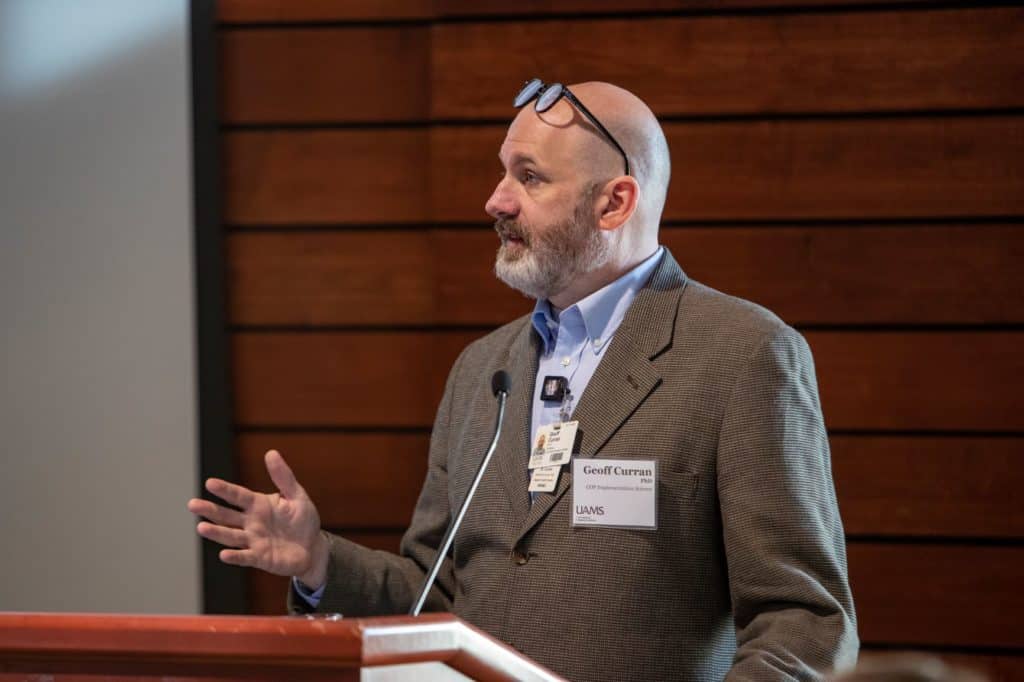
Geoffrey Curran, Ph.D., directs the UAMS Center for Implementation Research and leads the scholars program.

Applications Invited for Implementation Science Scholar Awards 

The UAMS Translational Research Institute (TRI) and the Center for Implementation Research are inviting applications for the second class of Implementation Science Scholars.

The two-year program will support clinical faculty in learning and applying the principles and methods of implementation science—the study of how best to promote systematic uptake of research findings and other evidence-based practices into routine care. The program provides 20% salary support and prepares faculty to publish the results of their implementation science projects. Eligible applicants include UAMS clinical faculty with a professional degree (M.D., Ph.D., Pharm.D., D.N.P., Dr.PH., D.O., etc.).

The program is led by Geoffrey Curran, Ph.D., director of the UAMS Center for Implementation Research and supported by TRI and its Clinical and Translational Science Award.

Using the principles of implementation science, Curran and colleagues will guide faculty through 10 didactic sessions per year and provide oversight and mentoring for experiential implementation science projects. Scholars who want to pursue research grants to expand on their accomplishments would receive assistance from the UAMS Center for Implementation Research.

The program is open to all full-time UAMS faculty, including at Arkansas Children’s Hospital.

Other important dates:

  • Oct. 19, 2020: Applications due (Email to clmosley@uams.edu)
  • Nov. 30, 2020: Awardees notified (estimated)
  • Jan. 6, 2021: Classwork begins (estimated)

Additional information and the RFA are available on the TRI website.

Contact: Cindy Mosley, CLMosley@uams.edu

Filed Under: News

  • «Previous Page
  • Page 1
  • Interim pages omitted …
  • Page 17
  • Page 18
  • Page 19
  • Page 20
  • Page 21
  • Interim pages omitted …
  • Page 48
  • Next Page»
Translational Research Institute LogoTranslational Research InstituteTranslational Research Institute
Mailing Address: 4301 West Markham Street, Little Rock, AR 72205
Phone: (501) 686-7000
  • Facebook
  • X
  • Instagram
  • YouTube
  • LinkedIn
  • Pinterest
  • Disclaimer
  • Terms of Use
  • Privacy Statement
  • Legal Notices

© 2026 University of Arkansas for Medical Sciences