• Skip to primary navigation
  • Skip to main content
  • Skip to primary navigation
  • Skip to main content
Choose which site to search.
University of Arkansas for Medical Sciences Logo University of Arkansas for Medical Sciences
Translational Research Institute
  • UAMS Health
  • Jobs
  • Giving
  • About TRI
    • What We Offer
    • Leadership & Governance
    • Staff
    • Citing Translational Research Institute CTSA Support
    • What is Translational Research?
    • Contact TRI
  • Funding Opportunities
    • Grants
      • Pilot Award Program
      • Consortium of Rural States (CORES) Multi-Institutional Pilot Award Program
      • Team Science Voucher Program
      • Winthrop P. Rockefeller Cancer Institute Rural Research Award Program
    • Scholarships
      • K12 Mentored Research Career Development Scholar Awards Program
      • Health Sciences Innovation and Entrepreneurship Postdoctoral Training Program
      • Implementation Science Scholar Program
      • (STARs) Program – Strategies for Training and Advancing Researchers
      • SMART Program [Master’s in Clinical and Translational Sciences (MS-CTS)]
    • Community
      • Community Based Participatory Research (CBPR) Scholars Program
      • Community Partners Educated as Arkansas Research Leaders (CPEARL) Program
    • Awardee Responsibilities
  • Services & Resources
    • Services
      • Biostatistics, Epidemiology and Research Design (BERD) Consultation
      • Clinical Data Repository (AR-CDR)
      • Comprehensive Informatics Resource Core
      • Mock Study Sections
      • Research Participant Recruitment
      • Research Support: Clinical Trials Innovation Unit (CTIU)
      • Implementation Science Program
      • Research Ethics Consultation
    • Resources
      • ARresearch Registry
      • Center for Health Literacy
      • Data Safety Monitoring
      • Grant Writing & Dissemination
      • UAMS Profiles
      • UAMS Rural Research Network
      • Other Resources
      • COVID-19 Research Guidelines
      • Community Partner Research Training
  • Career Development & Scholarships
    • Scholarship Opportunities
      • K12 Mentored Research Career Development Scholar Awards Program
      • Health Sciences Innovation and Entrepreneurship Postdoctoral Training Program
      • Data Science Scholars Program
      • Implementation Science Scholar Program
      • SMART Program
      • Translational Research Innovations and Partners (TRIP) Program
    • Training & Educational Opportunities
      • innOVATION Seminar Series
      • Path 2 K Program
      • Translational Workforce Development
      • Graduate Certificate in Implementation Science
      • SMART Program [Master’s in Clinical and Translational Sciences (MS-CTS)]
      • Good Clinical Practice Training
    • Didactic Training
  • Community
    • Community Engagement Leadership
    • Community Advisory Board
    • Community Engagement Partners
      • Community Partner Celebration
      • Faith-Academic Initiatives for Transforming Health (FAITH) Network
    • Community Engagement Services
      • Consultations and Technical Assistance
      • Community Review Boards
      • Community Partner Research Training
      • Equipment Library
    • Programs and Funding
      • Community Partners Educated as Arkansas Research Leaders (CPEARL) Program
      • Community Based Participatory Research (CBPR) Scholars Program
      • Community Scientist Academy
    • Toolkits
      • CSA Online Toolkit
      • CPEARL Toolkit
  • Events
    • Research Day
    • Clinical Trials Learning Collaborative
  • Newsroom
  1. University of Arkansas for Medical Sciences
  2. Translational Research Institute
  3. News
  4. Page 8

News

TRI Study of the Month

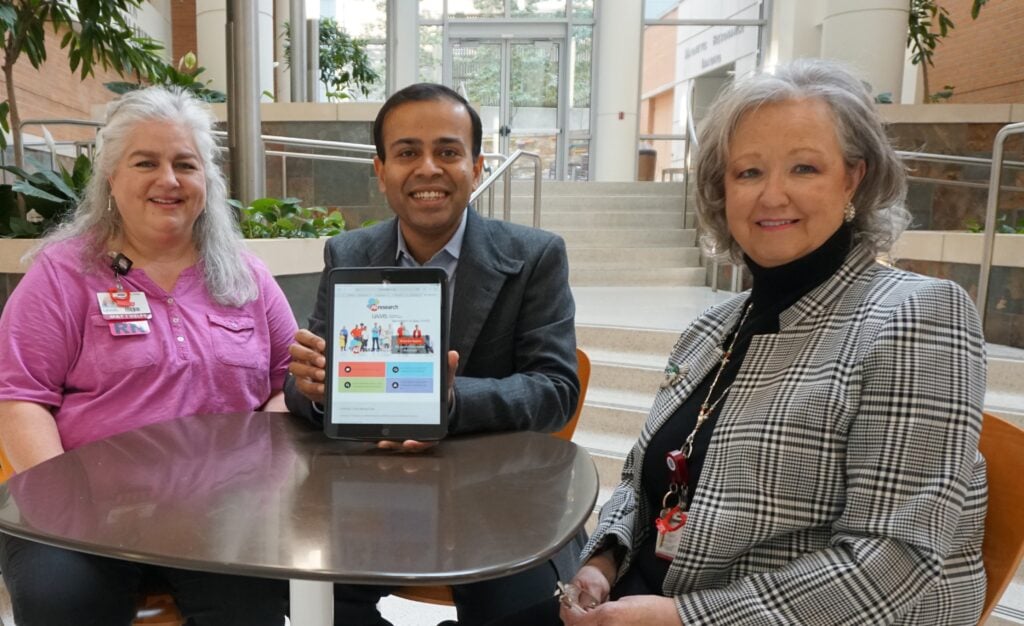
Photo caption: Nishank Jain, M.D., (center) holds an iPad displaying the ARresearch website, where more than 9,400 Arkansans have registered as potential research participants. Michelle White, RN (left), helped successfully recruit participants to Jain’s study using the ARresearch registry, and Pam Christie manages the registry for TRI.

Principal Investigator: Nishank Jain, M.D., associate professor, UAMS College of Medicine, Department of Internal Medicine, Division of Nephrology; TRI KL2 Mentored Research Career Development Program Scholar

Summary: An investigator-initiated study analyzing blood samples of adults with chronic kidney disease (CKD), adults with kidney transplants, and healthy adults to understand the interactions between platelets and leukocytes as possible drivers of inflammation in CKD.

Significance: CKD patients have abnormal inflammation associated with higher risks for heart attack and stroke. Having established that platelets are a primary cause, Jain hopes to identify the abnormal inflammatory pathways in CKD patients so that therapeutics may be found to inhibit platelets and reduce patients’ inflammatory burden.

TRI Services: ARresearch participant registry

Funding Agency: NIHNational Center for Advancing Translational Sciences

Learn more about the participant registry at TRI.uams.edu and ARresearch.org.

Filed Under: Front, News, Newsroom

The TRIbune Is Here!

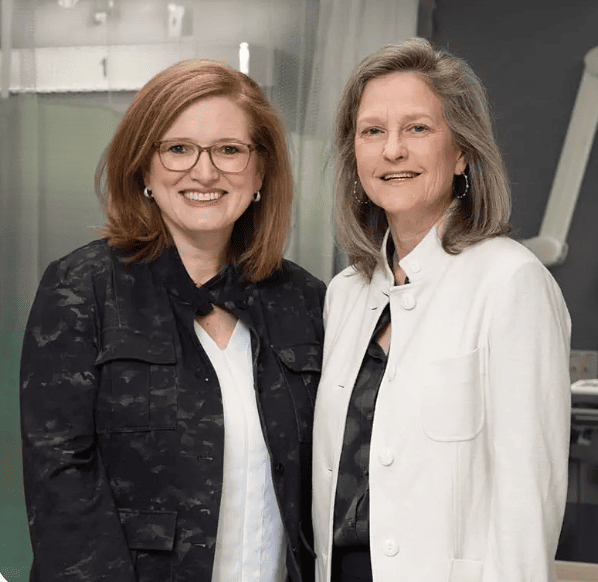
Amy Scurlock, M.D. (left), and Stacie Jones, M.D.
Amy Scurlock, M.D. (left), and Stacie Jones, M.D. (photo courtesy of Arkansas Children’s)

In this issue of The TRIbune, we highlight the latest clinical trial success led by Stacie Jones, M.D., and Amy Scurlock, M.D., UAMS researchers at Arkansas Children’s Hospital and Research Institute.

Their decades-long research careers have included consequential collaborations in national clinical trials of new treatments for food allergies. Their work shows how clinical trials can benefit Arkansans, and Jones is helping bring additional clinical trials to researchers at Arkansas Children’s Research Institute in her role as a TRI liaison to the national CTSA Trial Innovation Network.

This issue of The TRIbune also includes a story and link to a video presentation to help researchers understand the difference between translational research and translational science.

TRI Director Laura James, M.D., is also featured for her work leading a national project to help improve clinical trials, which was published in February in the Journal of Clinical and Translational Science.

Our TRI Study of the Month features Nishank Jain, M.D., whose kidney-related research has been aided by the ARresearch registry of potential research volunteers. 

Read The TRIbune.

Filed Under: Front, News, Newsroom

Translational Research vs. Translational Science – What’s the Difference?

The terms translational research and translational science have been used interchangeably for more than a decade, but that’s changing across Clinical and Translational Science Awards (CTSA)-funded institutions, including TRI.

Driving the transformation is the NIH National Center for Advancing Translational Sciences (NCATS), which funds the CTSA program. Beginning in July of 2024, TRI supported awardees and trainees will need to explain how their research addresses both translational research and translational science. Translational research addresses overcoming a barrier to propel a specific research project forward to develop new treatments or treatment approaches for patients. Translational science takes a step back from the specific research project to ask broader questions such as a) how can the research approach support future research projects or be used by other researchers? or b) how can barriers to research be mitigated to support the broader research community and to support future research? Barriers may be scientific or administrative.  

Translational science is the “science of translational research,” said TRI Director Laura James, M.D. The ultimate goal of translational science is to identify “best practice approaches” for translational research that have broad application for numerous researchers and research disciplines.  One recent example of translational science is the wide-scale use of electronic health records to better understand the impact of COVID-19 on specific patient groups. NCATS created the NC3 data enclave – a national data infrastructure based on electronic health records from over 75 institutions – to better understand COVID-19.

A recorded video presentation on the topic is now available. The video is a condensed version of a recent TRI seminar led by J. Rob Singleton, M.D., director of the University of Utah’s Clinical Research Unit at the Clinical and Translational Science Institute.

View the presentation here.

Filed Under: Front, News, Newsroom

The TRIbune Is Here!

UAMS community health workers in Northwest Arkansas gathered in August 2023 to
celebrate National Community Health Worker Awareness Week.
UAMS community health workers in Northwest Arkansas gathered in August 2023 to
celebrate National Community Health Worker Awareness Week.

In this issue of The TRIbune, we feature a notable achievement led by Pearl McElfish, Ph.D., MBA, and Krista Langston, MBA, that is improving the pay of community health workers. They successfully established a career ladder program in 2023 that raises salaries with additional training, certifications, as well as an opportunity to obtain college credit. Community health workers serve a number of roles, and as trusted members of the communities they serve, they are increasingly important to TRI’s research efforts.

We also highlight our Community Engagement team and its important role providing consultations on community-based research.

This issue also features the NIH-supported biomedical informatics study led by Tremaine Williams, Ed.D., a 2023 graduate of the TRI KL2 Mentored Research Career Development Scholar Award Program.

Read The TRIbune.

Filed Under: Front, News, Newsroom

Master’s Program Opens Doors for Investigators

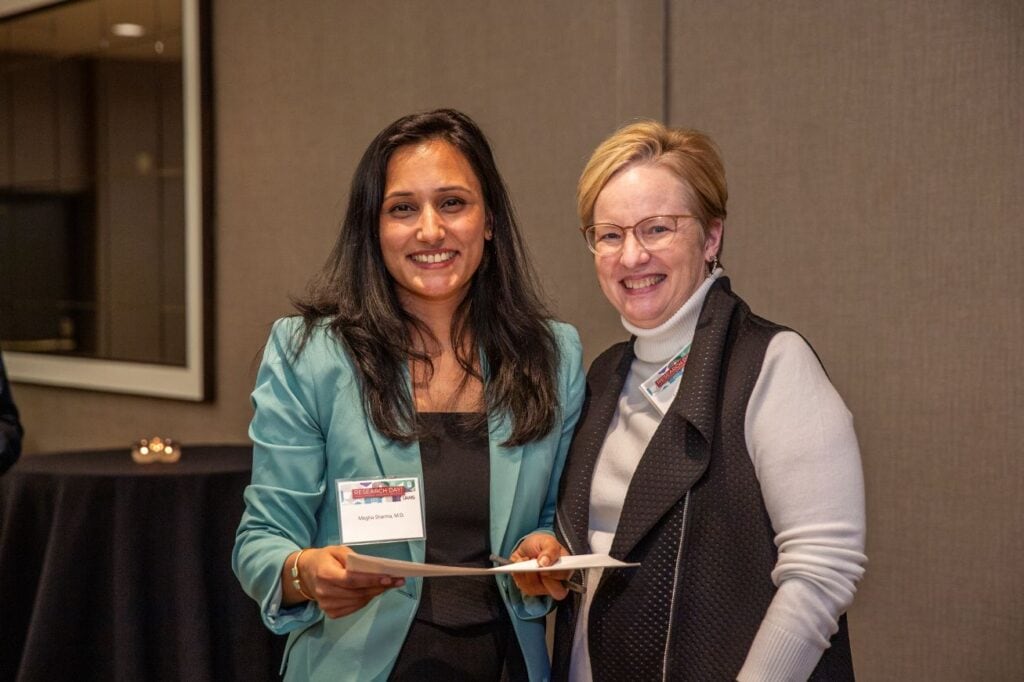
Megha Sharma, M.D., and Jennifer Rumpel, M.D., are leveraging their new knowledge and skills acquired with support from TRI in the Master of Science in Clinical and Translational Science program.
Megha Sharma, M.D., and Jenny Rumpel, M.D., are leveraging their new knowledge and skills acquired with support from TRI in the Master of Science in Clinical and Translational Science program.

Megha Sharma, M.D. M.S., found the perfect way to increase her clinical and translational science skills and help advance her research career. She received a scholarship that provided protected time so she could earn a UAMS Master of Science in Clinical and Translational Sciences (MS-CTS) degree.

Sharma, an assistant professor in the College of Medicine Department of Pediatrics, Division of Neonatology, earned the degree in 2023. She was able to leverage her expanded skillset to secure a prestigious KL2 Mentored Research Career Development Scholar Award and the Marion B. Lyon Revocable Trust New Scientist Development Award offered by the Arkansas Children’s Research Institute.

“I had a fantastic experience in the master’s program,” she said. “I learned to apply what I learned through advanced biostatistics, bioinformatics, epidemiology, and clinical trial design to write a competitive grant application. With guidance from experienced mentors, this experience also helped me develop the art and science of asking the right research question and enriched my understanding of rigorous scientific methods.”  

The MS-CTS program is offered by the UAMS Graduate School. Scholars’ protected time is secured by the Translational Research Institute (TRI) with support from the individual scholar’s department.

The MS-CTS program serves as a feeder program to TRI’s KL2 program as well as other early-career development K awards. (TRI’s KL2 program is transitioning to the K12 program this year, offering the same benefits to its scholars.)

Jenny Rumpel, M.D., another MS-CTS scholarship recipient and graduate of the program, received a KL2 in 2022 and has applied for an NIH K23 Mentored Patient-Oriented Research Career Development Award.

The master’s program, she said, helped her develop skills that will be invaluable to her career.

“It broadened my understanding of the possibilities in clinical research design through collaboration with researchers from other departments,” said Rumpel, an assistant professor in the Department of Pediatrics. “I loved that there was strong focus on grant writing skills right as I walked into the program.”

She said the program has also been invaluable for getting to know other TRI-supported researchers and finding prospective research mentors.

“I have met some great new friends,” Rumpel said.

Learn more here about the MS-CTS Scholarship Program and view the 2024 application form.

Filed Under: Front, News, Newsroom

Free Grant-Writing Workshop by AtKisson Training Group

TRI is excited to announce that registration is now open for a grant-writing workshop March 21 and 22 by the AtKisson Training Group (ATG). 

Peg AtKisson, Ph.D.
Peg AtKisson, Ph.D.

Don’t miss out on this exclusive opportunity to elevate your grant-writing skills at this free workshop sponsored by TRI and the UAMS Office of Community Health & Research.

Workshop Focus: Structuring NIH Proposals

Time: 9 a.m. to noon (Thursday and Friday)

Location: Virtual

Lead Presenter: M.S. (Peg) AtKisson, Ph.D., an acclaimed public speaker, trainer and former neuroscientist at Tufts University.

What to Expect: Hands-on activities focusing on the Specific Aims and Research Strategy sections of an NIH proposal. Dive deep into the mechanics of effective proposal construction and writing. Engage in practical exercises using both sample documents and sections related to your own proposals. This workshop promises vital insights and strategies to improve your grant application success.

Please register here. 

“Dr. AtKisson and her team provide engaging, hands-on seminars filled with practical examples and exercises that will immediately impact the quality of your grant writing and funding success. I highly recommend the ATG Training Group to take your grant writing to the next level.” – Mario Schootman, Ph.D., co-director, TRI Translational Workforce Development

Contact: Adam Kleinerman, akleinerman@uams.edu

Filed Under: Front, News, Newsroom

Postdoctoral Fellows Invited to Apply for Funded Training in TRI HSIE Program

Megan Reed, Ph.D., and Julia Tobacyk, Ph.D., are 2023 graduates of the HSIE program.

The Translational Research Institute (TRI) is inviting applications for the 2024 TL1 Health Sciences Innovation and Entrepreneurship (HSIE) Training Program, which includes two years of funding and other support for postdoctoral fellows.

Applications are due March 29 and are welcome from all UAMS colleges. The graduate certificate program begins July 1, 2024, and will support four postdoctoral fellows.

Faculty are encouraged to share this unique opportunity with postdoctoral fellows in their area.  

HSIE Postdoctoral Scholars have a primary mentor and receive value-added training in business principles, entrepreneurial skills, team science, and strategies to innovate and commercialize health care technologies. 

The program is a partnership between TRI and the Entrepreneurship Graduate Program in the Sam M. Walton College of Business at the University of Arkansas, Fayetteville.

HSIE trainees receive:

  • Stipend (including fringe) at NIH funding level for two years
  • Tuition and fees for a 15-credit HSIE Graduate Certificate 
  • Non-stipend support, for research and classroom supplies
  • Travel allowance to attend an HSIE-related national meeting or symposium

Anyone interested in this opportunity is encouraged to attend the information session on Friday, March 8, at 10 a.m., via Zoom. Please register here.

View the Request for Applications. Contact: Pam Kahler, KahlerPamJ@uams.edu

Filed Under: News, Newsroom

NIH R21 Supports KL2 Graduate’s Study of Human-Computer Interaction, Influence on Heart Failure Patient Outcomes

Tremaine Williams, Ed.D., in his office at UAMS.
Tremaine Williams, Ed.D.
(Image credit: Artez Irvin )

A University of Arkansas for Medical Sciences (UAMS) research team led by Tremaine Williams, Ed.D., has received a National Institutes of Health (NIH) grant to better understand how nurses influence outcomes of heart failure patients.

About 6.2 million people in the United States have heart failure. The two-year, $406,897 R21 grant from the NIH National Institute of Nursing Research (NINR) will focus on African American heart failure patients, whose hospitalization rates are nearly 2.5 times that of white heart failure patients nationally.

The collaboration with UAMS nurses and nursing leadership will enable Williams to document how nurses use individualized patient risk factors (risk stratification) and will include 200 nurse surveys and 20 interviews.

His team is bringing a biomedical informatics approach that could potentially help nurses and other care team members fine tune risk stratification to improve personalized care for higher risk patients and better predict what types of care they need.

“It’s this intersection of human-computer interaction, how they’re working with these computational tools within the electronic health record to improve patient outcomes,” said Williams, an assistant professor in the College of Medicine Department of Biomedical Informatics.

Williams’ prior research found that patient care teams with registered nurses saw reduced hospitalizations and readmissions for all congestive heart failure patients. The study was published in the journal PLOS One, and it is the foundation for his NIH/NINR-funded study.

The PLOS One paper reported that registered nurses were the only members of patients’ care teams consistently associated with a 30% decreased risk of hospitalization and a 31% decreased risk of readmissions for heart failure patients. The findings were based on analyses of 80,921 heart failure patient care encounters at UAMS from 2014 to 2021.

“This project is literally about the nurses and the hard work that they do to demonstrate that UAMS is a leader in both nursing and nursing science,” Williams said. “We know nurses are doing something right. Now they will help us generate evidence about what’s working at the bedside and help us create tools and interventions to optimize care here at UAMS and nationally.”  

Williams’ co-investigators on the grant are:

  • Kevin Sexton, M.D., associate professor, College of Medicine Department of Surgery; president, BioVentures LLC at UAMS; co-director, TRI Health Science Innovation and Entrepreneurship program.
  • Taren Swindle, Ph.D., associate professor, College of Medicine Department of Family and Preventive Medicine
  • Pearman Parker, Ph.D., RN, assistant professor, College of Nursing

Williams’ work has been supported by the UAMS Translational Research Institute (TRI) through its KL2 Mentored Research Career Development Scholar Award program. He graduated from the program in 2023 after receiving two years of research funding and translational research training.

TRI is supported by the NIH National Center for Advancing Translational Sciences, Clinical and Translational Science Award number TR003107. 

Filed Under: Front, News, Newsroom

TRI innOVATION Seminar to Discuss Translational Science vs. Translational Research

J. Rob Singleton, M.D.

All are invited to hear J. Rob Singleton, M.D., from the University of Utah, present, “Translational Science: Understand and Embrace the Discipline as a Part of Your Research Portfolio,” Tuesday, Feb. 13, 1 – 2 p.m., via Zoom.

This important TRI innOVATION Seminar will help you understand the difference between translational science and translational research, plus the benefits of incorporating translational science elements into your research activities. The CME presentation will include examples of translational science across the translational research spectrum.

Since 2010, Singleton has directed the Clinical Trial Services Foundation (CTSF) at the Utah Clinical and Translational Science Award (CTSA) site where he oversees the 70+ protocols currently using the CTSF. He is a professor and vice chair in the University of Utah Department of Neurology and site principal investigator for the NIH National Institute of Neurological Disorders and Stroke NeuroNEXT clinical trials consortium. 

Register here.

CME Information:

Speaker: Rob Singleton, M.D.

Topic: Translational Science: Understand and Embrace the Discipline as a Part of Your Research Portfolio

Objectives:  At the conclusion of this activity, the participant will be able to:

1. Understand the difference between Translational Research and Translational Science

2. Learn examples of Translational Science across the translational research spectrum

3. Understand the benefits of incorporating Translation Science elements into their research activities

Date/Time:    Tuesday February 13th/1:00 PM                  

Location: Zoom Register here

Accreditation: In support of improving patient care, this activity has been planned and implemented by University of Arkansas for Medical Sciences. University of Arkansas for Medical Sciences is jointly accredited by the Accreditation Council for Continuing Medical Education (ACCME), the Accreditation Council for Pharmacy Education (ACPE), and the American Nurses Credentialing Center (ANCC), to provide continuing education for the healthcare team.

AMA Credit Designation:  The University of Arkansas for Medical Sciences designates this live activity for a maximum of 1 AMA PRA Category 1 Credit(s)™. Physicians should claim only the credit commensurate with the extent of their participation in the activity.

ANCC Credit Designation: The University of Arkansas for Medical Sciences designates this live activity for a maximum of 1 ANCC contact hour(s).  Nurses must attend the entire session In order to receive credit.

ACPE Credit Designation: These knowledge based activities will provide pharmacists up to 1 contact hour(s) or .10 CEU.  Credit will be uploaded to CPE Monitor within 60 days of the session. JA0000298-0000-23-070-L01-P/T

Disclosure of Financial Relationships:

The planners of this RSS, Martha Rojo, RN and Corey Hayes have no relevant financial relationships with ineligible companies to disclose.

The following planners and moderators of this RSS have financial relationship(s) with ineligible companies to disclose:

Jessica Snowden, M.D., Pfizer, Consulting Fee

All relevant financial relationships have been mitigated.

The speaker of this RSS has no relevant financial relationships with ineligible companies to disclose.

The accreditation compliance reviewers of this RSS, Brandie Jones, Sara Hale, and Courtney Bryant, have no relevant financial relationships with ineligible companies to disclose.

Filed Under: Front, News, Newsroom

Teenage Researcher Leads TRI-Supported Parkinson’s Study Published in Scientific Reports

Anu Iyer, top left, meets with the UAMS research team: Fred Prior, Ph.D., (top right); middle: Aaron Kemp, MBA, and Yasir Rahmatallah, Ph.D.; and bottom row: Tuhin Virmani, M.D., Ph.D., and Linda Larson-Prior, Ph.D.

Eighteen-year-old Anu Iyer, the recent Little Rock Central High School graduate and machine-learning sensation collaborating with a University of Arkansas for Medical Sciences (UAMS) research team, is the lead author on a publication in Scientific Reports, part of the Nature portfolio journals.

She was joined as co-first author by UAMS’ Aaron Kemp, MBA, a Ph.D. student in the College of Medicine Department of Biomedical Informatics.

The publication stems from Iyer’s work with Kemp and other UAMS researchers using machine learning to detect Parkinson’s disease on a project supported by a UAMS Translational Research Institute (TRI) Team Science Champion Award.

Now a student at Georgia Tech, Iyer has been mentored since high school by UAMS’ Fred Prior, Ph.D., distinguished professor and chair of the Department of Biomedical Informatics.

“Anu is exceptionally talented, and we are proud that she is part of our team,” Prior said. “Her work demonstrates the immense potential of machine learning and artificial intelligence for advancing medical diagnoses and treatment.”

He knew in 2022 that the then-high school student would be an ideal fit for the research team led by UAMS neurologist Tuhin Virmani, M.D., Ph.D., which was testing digital health innovations that may benefit rural patients with movement disorders such as Parkinson’s disease.

Virmani directs the UAMS Movement Disorders Clinic and the Huntington’s Disease Society of America Center of Excellence at UAMS.

Iyer was able to confirm the reliability of telephone voice recordings to detect Parkinson’s. The UAMS study team collected telephone voice samples from 50 people diagnosed with Parkinson’s and 50 healthy control participants, then applied machine learning classification with voice features related to phonation.

“We show the superiority of our deep learning model for the task of classifying people with Parkinson’s disease as distinct from healthy controls,” the paper concludes.

Iyer is conducting similar research at Georgia Tech and Emory University and will continue her UAMS collaborations. “I plan to continue working with UAMS and Dr. Prior and Dr. Virmani’s team, specifically with applying bioinformatics approaches to Parkinson’s,” she said.

In addition to Kemp, Prior and Virmani, the paper’s co-authors are:

  • Aliyah Glover, research technician
  • Lakshmi Pillai, M.S., research program manager, College of Medicine Department of Neurology
  • Linda Larson-Prior, Ph.D., professor, College of Medicine Department of Neurobiology and Developmental Sciences and Department of Psychiatry
  • Yasir Rahmatallah, Ph.D., assistant professor, Department of Biomedical Informatics

Rahmatallah also secured additional grants to support work on the project. These include a National Science Foundation EPSCoR grant (OIA-1946391) of $100,919 administered through the Data Analytics that are Robust and Trusted (DART) program; and a $25,000 Barton Intramural Grant from the UAMS College of Medicine.  

TRI’s support for the project is made possible by a Clinical and Translational Science Award (CTSA) from the National Center for Advancing Translational Sciences at the National Institutes of Health, award UL1 TR003107.

Filed Under: Front, News, Newsroom

  • «Previous Page
  • Page 1
  • Interim pages omitted …
  • Page 6
  • Page 7
  • Page 8
  • Page 9
  • Page 10
  • Interim pages omitted …
  • Page 48
  • Next Page»
Translational Research Institute LogoTranslational Research InstituteTranslational Research Institute
Mailing Address: 4301 West Markham Street, Little Rock, AR 72205
Phone: (501) 686-7000
  • Facebook
  • X
  • Instagram
  • YouTube
  • LinkedIn
  • Pinterest
  • Disclaimer
  • Terms of Use
  • Privacy Statement
  • Legal Notices

© 2026 University of Arkansas for Medical Sciences