• Skip to primary navigation
  • Skip to main content
  • Skip to primary navigation
  • Skip to main content
Choose which site to search.
University of Arkansas for Medical Sciences Logo University of Arkansas for Medical Sciences
Translational Research Institute
  • UAMS Health
  • Jobs
  • Giving
  • About TRI
    • What We Offer
    • Leadership & Governance
    • Staff
    • Cite TRI
    • What is Translational Research?
    • Contact TRI
  • Funding Opportunities
    • Grants
      • Pilot Award Program
      • Consortium of Rural States (CORES) Multi-Institutional Pilot Award Program
      • Team Science Voucher Program
      • Winthrop P. Rockefeller Cancer Institute Rural Research Award Program
    • Scholarships
      • K12 Mentored Research Career Development Scholar Awards Program
      • HSIE (T32) Training Program
      • Implementation Science Scholar Program
      • (STARs) Program – Strategies for Training and Advancing Researchers
      • SMART Program [Master’s in Clinical and Translational Sciences (MS-CTS)]
    • Community
      • Community Based Participatory Research (CBPR) Scholars Program
      • Community Partners Educated as Arkansas Research Leaders (CPEARL) Program
    • Awardee Responsibilities
  • Services & Resources
    • Services
      • Biostatistics, Epidemiology and Research Design (BERD) Consultation
      • Clinical Data Repository (AR-CDR)
      • Comprehensive Informatics Resource Core (CIRC)
      • Mock Study Sections
      • Research Participant Recruitment
      • Research Support: Clinical Trials Innovation Unit (CTIU)
      • Implementation Science Program
      • Research Ethics Consultation
    • Resources
      • ARresearch Registry
      • Center for Health Literacy
      • Data Safety Monitoring
      • Grant Writing & Dissemination
      • UAMS Profiles
      • UAMS Rural Research Network
      • Other Resources
      • COVID-19 Research Guidelines
      • Community Partner Research Training
  • Career Development & Scholarships
    • Scholarship Opportunities
      • K12 Mentored Research Career Development Scholar Awards Program
      • HSIE (T32) Training Program
      • Data Science Scholars Program
      • Implementation Science Scholar Program
      • SMART Program
      • Translational Research Innovations and Partners (TRIP) Program
    • Training & Educational Opportunities
      • innOVATION Seminar Series
      • Path 2 K Program
      • Translational Workforce Development
      • Graduate Certificate in Implementation Science
      • SMART Program [Master’s in Clinical and Translational Sciences (MS-CTS)]
      • Good Clinical Practice Training
    • Didactic Training
  • Community
    • Community Engagement Leadership
    • Community Advisory Board
    • Community Engagement Partners
      • Community Partner Celebration
      • Faith-Academic Initiatives for Transforming Health (FAITH) Network
    • Community Engagement Services
      • Consultations and Technical Assistance
      • Community Review Boards
      • Community Partner Research Training
      • Equipment Library
    • Programs and Funding
      • Community Partners Educated as Arkansas Research Leaders (CPEARL) Program
      • Community Based Participatory Research (CBPR) Scholars Program
      • Community Scientist Academy
    • Toolkits
      • CSA Online Toolkit
      • CPEARL Toolkit
  • Events
    • Research Day
    • Clinical Trials Learning Collaborative
  • Newsroom
  1. University of Arkansas for Medical Sciences
  2. Translational Research Institute
  3. JAMA Health Forum Publishes TRI-Supported Researcher’s Novel Model for Ranking Biomedical Research Priorities

JAMA Health Forum Publishes TRI-Supported Researcher’s Novel Model for Ranking Biomedical Research Priorities

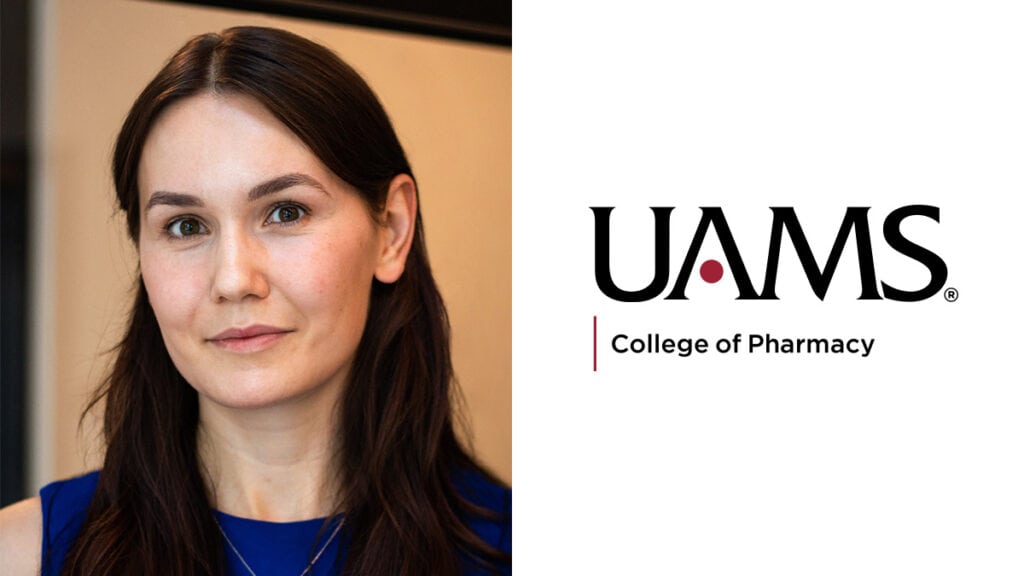
Laura Gressler, Ph.D., is first author on the JAMA publication.

In a new study led by UAMS’ Laura Gressler, Ph.D., researchers presented a novel model to help research funding agencies and groups prioritize their funding for various health conditions.

The study was published in the Journal of the American Medical Association (JAMA) Health Forum and included co-authors from the U.S. Department of Health and Human Services and U.S. Food and Drug Administration.

“It’s really exciting,” said Gressler, whose current work is supported by the UAMS Translational Research Institute. “This is the culmination of more than three years of very hard work with many collaborators and stakeholders, and I hope that a model like this can be used in the future to help inform funding decisions.”

For Gressler, an assistant professor in the College of Pharmacy Division of Pharmaceutical Evaluation and Policy, it was her second JAMA publication as first author and third as a co-author.

The team’s paper, “Data-Driven Model Identifies Gaps in Biomedical Innovation: A Proof-of-Concept Study,” ranks 13 common health conditions based on each condition’s health care burden, cost and biomedical product innovation.

Typically, Gressler said, federal agencies, industry leaders and stakeholders who fund research will consider only one aspect of the condition such as public health burden or cost alone when determining how to prioritize research funding support.

“We argue that it should be a multipronged approach and demonstrate our proposed approach. That’s what’s novel about this, and from those three factors we are finding that balance,” she said.

The 13 disease areas, ranked in order of priority, are:

  1. Diabetes mellitus
  2. Osteoarthritis
  3. Drug use disorders
  4. Ischemic heart disease
  5. Alzheimer disease and other dementias
  6. Chronic kidney disease
  7. Chronic obstructive pulmonary disease
  8. Cirrhosis and other liver disease
  9. Colorectal cancer
  10. Stroke
  11. Depressive disorders
  12. Tracheal, bronchus, and lung cancer
  13. Lower respiratory infections

“My work on this JAMA publication reinforced my research interests by highlighting the existing gaps in available data and methodologies needed to inform decision-making so that limited resources can be directed to the most important and/or most neglected aspects of health care,” Gressler said.

Gressler receives research funding support through the Translational Research Institute Data Scholars Program and Team Science Voucher Program. She has also participated in the institute’s Path 2 K program which aided her recent submission of an early-career development (K) award application with the National Institutes of Health (NIH).

As a Translational Research Institute data scholar, she is using natural language processing to identify and assess hip arthroplasty devices. As part of her proposed K award, she will use natural language processing and other machine learning methods to augment existing datasets for the evaluation of medical devices. As a co-investigator on the team science voucher study, she is evaluating the role of medical marijuana policies and available treatment options among patients with chemotherapy-induced nausea and vomiting.

The Translational Research Institute is funded by the NIH National Center for Advancing Translational Sciences, Clinical and Translational Science Award UL1 TR003107.

Posted by David Robinson on June 20, 2023

Filed Under: Front, News, Newsroom

Translational Research Institute LogoTranslational Research InstituteTranslational Research Institute
Mailing Address: 4301 West Markham Street, Little Rock, AR 72205
Phone: (501) 686-7000
  • Facebook
  • X
  • Instagram
  • YouTube
  • LinkedIn
  • Pinterest
  • Disclaimer
  • Terms of Use
  • Privacy Statement
  • Legal Notices

© 2025 University of Arkansas for Medical Sciences