• Skip to primary navigation
  • Skip to main content
  • Skip to primary navigation
  • Skip to main content
Choose which site to search.
University of Arkansas for Medical Sciences Logo University of Arkansas for Medical Sciences
Translational Research Institute
  • UAMS Health
  • Jobs
  • Giving
  • About TRI
    • What We Offer
    • Leadership & Governance
    • Staff
    • Cite TRI
    • What is Translational Research?
    • Contact TRI
  • Funding Opportunities
    • Grants
      • Pilot Award Program
      • Consortium of Rural States (CORES) Multi-Institutional Pilot Award Program
      • Team Science Voucher Program
      • Winthrop P. Rockefeller Cancer Institute Rural Research Award Program
    • Scholarships
      • K12 Mentored Research Career Development Scholar Awards Program
      • Health Sciences Innovation and Entrepreneurship Postdoctoral Training Program
      • Implementation Science Scholar Program
      • (STARs) Program – Strategies for Training and Advancing Researchers
      • SMART Program [Master’s in Clinical and Translational Sciences (MS-CTS)]
    • Community
      • Community Based Participatory Research (CBPR) Scholars Program
      • Community Partners Educated as Arkansas Research Leaders (CPEARL) Program
    • Awardee Responsibilities
  • Services & Resources
    • Services
      • Biostatistics, Epidemiology and Research Design (BERD) Consultation
      • Clinical Data Repository (AR-CDR)
      • Comprehensive Informatics Resource Core
      • Mock Study Sections
      • Research Participant Recruitment
      • Research Support: Clinical Trials Innovation Unit (CTIU)
      • Implementation Science Program
      • Research Ethics Consultation
    • Resources
      • ARresearch Registry
      • Center for Health Literacy
      • Data Safety Monitoring
      • Grant Writing & Dissemination
      • UAMS Profiles
      • UAMS Rural Research Network
      • Other Resources
      • COVID-19 Research Guidelines
      • Community Partner Research Training
  • Career Development & Scholarships
    • Scholarship Opportunities
      • K12 Mentored Research Career Development Scholar Awards Program
      • Health Sciences Innovation and Entrepreneurship Postdoctoral Training Program
      • Data Science Scholars Program
      • Implementation Science Scholar Program
      • SMART Program
      • Translational Research Innovations and Partners (TRIP) Program
    • Training & Educational Opportunities
      • innOVATION Seminar Series
      • Path 2 K Program
      • Translational Workforce Development
      • Graduate Certificate in Implementation Science
      • SMART Program [Master’s in Clinical and Translational Sciences (MS-CTS)]
      • Good Clinical Practice Training
    • Didactic Training
  • Community
    • Community Engagement Leadership
    • Community Advisory Board
    • Community Engagement Partners
      • Community Partner Celebration
      • Faith-Academic Initiatives for Transforming Health (FAITH) Network
    • Community Engagement Services
      • Consultations and Technical Assistance
      • Community Review Boards
      • Community Partner Research Training
      • Equipment Library
    • Programs and Funding
      • Community Partners Educated as Arkansas Research Leaders (CPEARL) Program
      • Community Based Participatory Research (CBPR) Scholars Program
      • Community Scientist Academy
    • Toolkits
      • CSA Online Toolkit
      • CPEARL Toolkit
  • Events
    • Research Day
    • Clinical Trials Learning Collaborative
  • Newsroom
  1. University of Arkansas for Medical Sciences
  2. Translational Research Institute
  3. Newsroom
  4. Page 4

Newsroom

The TRIbune Is Here!

The February issue of The TRIbune features a vital partnership with UAMS Regional Programs to bring a national research effort to UAMS family medicine clinics in rural Arkansas. UAMS family medicine physicians Jacquelene Childs, M.D., in El Dorado and Jordan Weaver, M.D., in Batesville bring their crucial rural perspectives to the recently funded NIH initiative Communities Advancing Research (CARE) for Health. 

The TRIbune also includes a story introducing you to members of our Community Engagement Core team, as well as information about our expanded Research Day on April 10-11, and upcoming certified mentor training.

Read The TRIbune.

Filed Under: Front, News, Newsroom

The TRIbune Is Here!

Geoffrey Curran, Ph.D., discusses implementation science opportunities with attendees of the 2024 TRI Research Expo. (Photo by Bryan Clifton)
Geoffrey Curran, Ph.D., discusses implementation science opportunities with
attendees of the 2024 TRI Research Expo. (Photo by Bryan Clifton)

In this month’s TRIbune newsletter, we highlight Geoffrey Curran, Ph.D., who has made UAMS a national hub for implementation science. Dr. Curran has brought innovative approaches to build capacity in the field through his leadership of the Center for Implementation Research and TRI’s Implementation Science Scholars Program, which equips clinicians with practical tools to enact lasting changes in health care.

Our Study of the Month features John Arthur, M.D., Ph.D., the UAMS principal investigator who is utilizing TRI’s services and resources to participate in a multicenter clinical trial related to Long COVID-19.

We also highlight TRI Research Day 2025 and our new Clinical Trials Learning Collaborative Seminar Series, designed especially for clinicians who may be interested in leading clinical trials at UAMS. 

Read The TRIbune.

Filed Under: Front, News, Newsroom

New TRI Seminar Series! Erika Petersen, M.D., to Kick off Clinical Trials Learning Collaborative Seminar Series Jan. 28

Erika Petersen, M.D.

The Translational Research Institute (TRI) is excited to announce the launch of its Clinical Trials Learning Collaborative Seminar Series. The inaugural session will feature Erika Petersen, M.D., a professor and director of the Section of Functional and Restorative Neurosurgery at UAMS. Petersen will present “Clinical Trials: Enhancing Health While Creating Opportunities for Networking and Career Development” on Tuesday, Jan. 28, from noon to 1 p.m., via Zoom.

This monthly seminar series is designed to expand our community of clinical trialists, featuring state-of-the-art approaches and insights in clinical trials research.

Petersen is a national leader in neuromodulation research and innovation, specializing in technologies that alter nerve activity to treat conditions such as Parkinson’s disease, chronic migraines, stroke and spinal cord injuries. About 90% of her surgical cases involve implanting neuromodulation devices, many of which were initially part of clinical trials she led. Her groundbreaking work has been supported by TRI’s Clinical Trials Innovation Unit, enabling her to bring cutting-edge advancements to patients.

This seminar offers a unique opportunity to learn from Petersen’s expertise, gain insights into clinical trials research, and explore its impact on health outcomes, networking and career development.

Please register here to receive your Zoom link.

View the PDF event flyer.

Contact: Betsy Eglash, BEglash@uams.edu and Tuhin Virmani, M.D., Ph.D., TVirmani@uams.edu.

Filed Under: Front, News, Newsroom

TRI Implementation Science Scholar Earns National Advocacy Award

Kapil Arya, M.D.

Kapil Arya, M.D., a  graduate of the TRI Implementation Science Scholar Program, has been selected for the 2025 Viste Patient Advocate of the Year Award from the American Academy of Neurology (AAN).

Arya will be honored at the AAN annual meeting in April for his outstanding work with Spinal Muscular Atrophy (SMA), including his leadership as an Implementation Science scholar to implement statewide newborn screening for the rare disease.

Arya is an associate professor in the Department of Pediatrics in the Section of Pediatric Neurology. He directs the SMA and spasticity programs at Arkansas Children’s.

If not detected and treated within a few weeks of birth, SMA can be debilitating and often fatal. The Arkansas General Assembly enacted a law requiring newborn screening for SMA in 2019, but a complex system was still needed for the screening to become routine across the state. Arya developed the system as an Implementation Science scholar in the UAMS Center for Implementation Research in 2020. You can read more about this transformative initiative in this UAMS news story.  In addition to receiving the AAN award, Arya will present the AAN’s priorities to congressional lawmakers as part of the “Neurology on the Hill” advocacy program in 2025.

Filed Under: Front, News, Newsroom

The TRIbune Is Here!

The Olly Neal Community Health Center, represented by (l-r) LaFay Broadway and Cassandra Franklin, received the Research Partner of the Year Award. Laura James, M.D., TRI director, and Tiffany Haynes, Ph.D., director of TRI’s Community Engagement Core, presented the award.
The TRIbune newsletter features TRI’s recent Community Partner Celebration. The event included a presentation of the Research Partner of the Year Award, which went to the Olly Neal Community Health Center in Marianna. (L-R) LaFay Broadway and Cassandra Franklin received the award on behalf of the center. 

In this November-December issue of The TRIbune, we highlight the TRI Community Partner Celebration, which honors community partners who play key roles in helping UAMS advance research and improve health, especially for rural communities. 

The celebration on Dec. 6 was a great success, with more than 80 attendees from across Arkansas.

The TRIbune also features Jure Baloh, Ph.D., who received National Institutes of Health funding to support his work related to addiction treatment. He is a 2022 graduate of the TRI KL2 (now K12) Mentored Research Career Development Program and an assistant professor in the Fay W. Boozman College of Public Health.

We also highlight the three new Implementation Science Scholars: Paige Beck, M.D., Ph.D., Tisha Deen, Ph.D., and Saritha Ranabothu, M.D.

In addition, we note the recent meetings of our UM1 and K12 External Advisory Boards. In its report following the November meeting, the UM1 EAB described TRI as a “gem activity” at UAMS.  

Read The TRIbune.

Filed Under: Front, News, Newsroom

TRI’s Gail Runnells, RN, Wins 2024 Bonny Hope Wallace Award

Gail Runnells, RN, a clinical research nurse manager at the UAMS Translational Research Institute, recently received the 2024 Bonny Hope Wallace Award for Excellence in Human Subject Research for her outstanding work as a research coordinator, mentor and manager.

Gail Runnells, RN (left), receives the Bonny Hope Wallace Award from Jennifer McClusky, UAMS research compliance manager.

The Bonny Hope Wallace Award goes to a UAMS certified research specialist selected by their peers. Wallace worked in research at UAMS for more than 30 years before her death in 2004. The award in her name was presented at the conclusion of the Dec. 11 Certified Research Specialist (CRS) Awards Ceremony, sponsored by the UAMS Office of Research Compliance.

Runnells, who joined the Translational Research Institute in 2017, was nominated by her colleagues.

Her passion for research and work ethic are an inspiration to those who work with Runnells, said Anja Rassmann, BSN, RN, CCRP, a clinical research nurse manager at the Translational Research Institute.

“Gail truly embodies what it means to be an outstanding clinical research professional,” Rassmann said. “She has a true passion for research and our research patients. She displays respect, integrity and professionalism in all aspects of the clinical trial.”

Rory McCoy, BSN, RN, CRS, a clinical research coordinator at the Translational Research Institute, said Runnells’ mentorship has had a profound impact on him.

“Gail’s unwavering support and mentorship have shaped my pursuit of knowledge and inspired my dedication to research,” McCoy said.

Erin Hatcher, a clinical research coordinator, also praised Runnells’ dedication to research participants as well as her less experienced colleagues.

“She always ensures that the participants understand the research process and that they feel comfortable and cared for during the process,” Hatcher said. “She takes on several studies and yet always is available to mentor and teach others. She is patient, nurturing and supportive when teaching others.”

Among Runnells’ significant contributions was her vital role recruiting participants for the breast cancer research project known as “Spit for the Cure.” The groundbreaking initiative, launched in 2007, recruited nearly 26,000 women from all 75 Arkansas counties to participate in breast cancer research through DNA collection. Gail’s recruiting efforts helped establish the robust cohort of volunteers, which continues to impact cancer research today.

“Receiving the Bonny Hope Wallace Award is truly an honor,” Runnells said. “Bonny set a high standard for research professionalism and integrity, and I’m humbled to be recognized in her name. I share this award with my incredible colleagues and mentors, who inspire and support me every day. Most of all, I’m grateful for the research participants who trust us with their care and make our work possible.”

Wallace was an instructor in surgery and laboratory director for surgical research at the Department of Surgery at UAMS as well as clinical coordinator of research at the Arkansas Children’s Hospital (ACH) Burn Unit. She was instrumental in pioneering ACH’s Burn Unit. Her efforts were focused on cutting-edge research to promote women’s health. She is remembered for her respectful treatment of research participants and her commitment to research integrity.

Filed Under: Front, News, Newsroom

Community Partner Celebration Honors Efforts to Address Critical Health Challenges

The Ninth Annual Translational Research Institute Community Partner Celebration on Dec. 6 brought attendees from across Arkansas to recognize the pivotal role of community partnerships in advancing research and improving health.

The celebration included a keynote address by UAMS’ Nakita Lovelady, Ph.D., MPH, and Joyce Raynor, who leads the Center for Healing Hearts & Spirits. They discussed their NIH-funded hospital-based violence intervention program, UAMS Project Heal.

Organized by the institute’s Community Engagement Core, the event at the Mosaic Templars Cultural Center in Little Rock drew more than 80 attendees representing community and academic partnerships to address critical health challenges in Arkansas.

Laura James, M.D., institute director, recognized attendees for their dedication to helping UAMS improve health through research.

“I want to thank everybody for all of your contributions throughout the year to help us be successful as an institution,” said James, also associate vice chancellor for Clinical and Translational Research.

James and Tiffany Haynes, Ph.D., director of the Community Engagement Core, presented awards in five categories. The 2024 awardees are:

Research Partner of the Year: Olly Neal Community Health Center

Kelsey Bounds (center), who nominated the Olly Neal Community Health Center for Research Partner of the Year, poses with the center's representatives, Cassandra Franklin (left) and LaFay Broadway.
Kelsey Bounds (center), who nominated the Olly Neal Community Health Center for Research Partner of the Year, poses with the center’s representatives, Cassandra Franklin (left) and LaFay Broadway.

The Olly Neal Community Health Center, based in Marianna, Arkansas, was celebrated for its work in the Mississippi Delta, one of the state’s most underserved regions. Cassandra Franklin and LaFay Broadway accepted the award on behalf of the center for their successful efforts recruiting Type 2 diabetes participants for the research project “Home Food Delivery for Diabetes Management in Patients of Rural Clinics.”

Franklin said the award is “amazing,” and she has been gratified to see the impact of her work.

“It’s been wonderful to meet the patients who need this service and to see their health improve through education and food delivery boxes,” Franklin said.

UAMS’ Kelsey Bounds, assistant director of research at the Institute for Community Health Innovation, which oversees the National Institutes of Health-funded study, nominated the center for the award.

“The work they do in the Delta and in Lee County is just outstanding,” Bounds said. “Their reach in the rural communities of the Delta is exemplary of how we should be working with our neighbors.”

Chancellor’s Community Engaged Research Partner of the Year: Boys, Girls, Adult Community Development Center

The Boys, Girls, Adult Community Development Center in Marvell was honored for its partnership with Tiffany Miles, Ph.D., an instructor in the UAMS College of Medicine Department of Pediatrics. Together, they are tackling obesity and diabetes prevention through a community-led research project developed during training in the Translational Research Institute’s yearlong Community-Based Participatory Research (CBPR) Scholars Program.

Miles and the center received a $25,000 pilot grant to support their project to develop a community-led obesity intervention program and to develop ideas for sustaining the intervention.

“We have been a partner of UAMS for a long time and it’s a great honor,” said Beatrice Shelby, the center’s executive director. “UAMS values our partnership, and we just really enjoy working with them. We’re so fortunate to be working with Dr. Tiffany Miles because she is so committed to our project and our goals.”

Taren Massey-Swindle, Ph.D., receives her award.

The research team will assess the community’s perceptions of obesity, maternal health, maternal nutrition and nutrition in general, as well as get the community’s input about potential interventions.

Miles said she has been impressed by the center’s commitment to its community and to the project.

“I’ve been in communication with them for about a year and a half, and they were proactive from the start in pursuing this project,” Miles said. “It’s been beautiful building that relationship.”

  1. Kate Stewart Community Engaged Researcher of the Year: Taren Massey-Swindle, Ph.D.

Taren Massey-Swindle, Ph.D., is an associate professor in the College of Medicine departments of Pediatrics and Family and Preventive Medicine. She has built strong partnerships with diverse communities across Arkansas and secured multiple national grants to help improve feeding practices in early childhood care and education settings.

“I couldn’t have received this award without incredible community partners and the dedication that they have every day to doing good work for child health. It’s because of those partnerships that I’m able to do community engaged research,” said Massey-Swindle.

Community Engaged Student/Trainee of the Year: Rachel Hale

Rachel Hale is a Ph.D. student in the UAMS Fay W. Boozman College of Public Health in the college’s Health Promotion and Prevention Research program. She is an instructor and co-director of the Climate, Rural, and Global Health Master of Public Health program. Her award stems in part from her research project “Climate Change and Health Risk Perceptions of Arkansas Small Farmers through the Application of the Health Belief Model.” Hale secured a pilot grant to support her project, and she has demonstrated to her peers and students that community is always at the forefront of her work.

Ason Mohammed receives his award.

Community Engaged Research Staff Member of the Year: Ason Mohammed

Ason Mohammed is a senior data analyst at the Institute for Community Health Innovation.

He was recognized for his exemplary work on the research project “Comparative Evaluation of Telehealth Multi-Component Optimal Model of Postpartum Care among Rural, Low-Income and Diverse Women.” Mohammed manages databases and performs data analysis for multiple community-based participatory research projects, providing invaluable support to the institute’s research staff and principal investigators. His technical expertise and attention to detail have greatly improved all of the institute’s research projects in his time at UAMS.

Naomi L. Cottoms Community Advisory Board of the Year: Barber Shop Talk Steering Committee

With a new name this year, the award honors the memory of Naomi Cottoms, who died March 5. She was executive director of the Tri-County Rural Health Network, based in Helena-West Helena, and a longtime UAMS community partner. Cottoms was well known for her passionate work on behalf of underserved communities in the Delta.

The Barber Shop Talk Steering Committee is providing guidance on the research project “Barbershop Talk: Reducing Excessive Alcohol Use among Black Men.” The project focuses on reducing unhealthy drinking habits by bringing treatment to a more accessible location for Black men. The steering committee helped shape the research project prior to its implementation and has been instrumental in the positive progress of the study.

The celebration included a keynote address by UAMS’ Nakita Lovelady, Ph.D., MPH, and Joyce Raynor, who leads the Center for Healing Hearts & Spirits. They discussed their NIH-funded

Representatives of the Barbershop Talk research project include (l-r) Camille Hart, research program director, and Steering Committee members Jasmine Nesby, Roderick Vincent and Amanda Benton; Jennifer Coopwood (right) is the project’s community health coordinator.
Representatives of the Barbershop Talk research project include (l-r) Camille Hart, research program director, and Steering Committee members Jasmine Nesby, Roderick Vincent and Amanda Benton. Jennifer Coopwood (right) is the project’s community health coordinator.

hospital-based violence intervention program, UAMS Project Heal. Lovelady is a recent graduate of TRI’s KL2 Mentored Research Career Development Award program, and she is an assistant professor in the Fay W. Boozman College of Public Health. Their successful partnership led to Raynor winning the 2023 Chancellor’s Community Engaged Research Partner of the Year, and Lovelady winning the 2023 M. Kate Stewart Community Engaged Researcher of the Year.

UAMS Chancellor Cam Patterson, M.D., MBA, told the audience that their dedication embodies what UAMS is striving to achieve: a healthier, more equitable future for everyone in Arkansas.

“It’s only through partnerships like these that we can move the needle on health outcomes, particularly in the rural and underserved communities that need it most,” he said.

Filed Under: Front, News, Newsroom

KL2 Scholar Jure Baloh, Ph.D., Receives $657,000 NIH Grant to Test Addiction Treatment Supervision Strategy

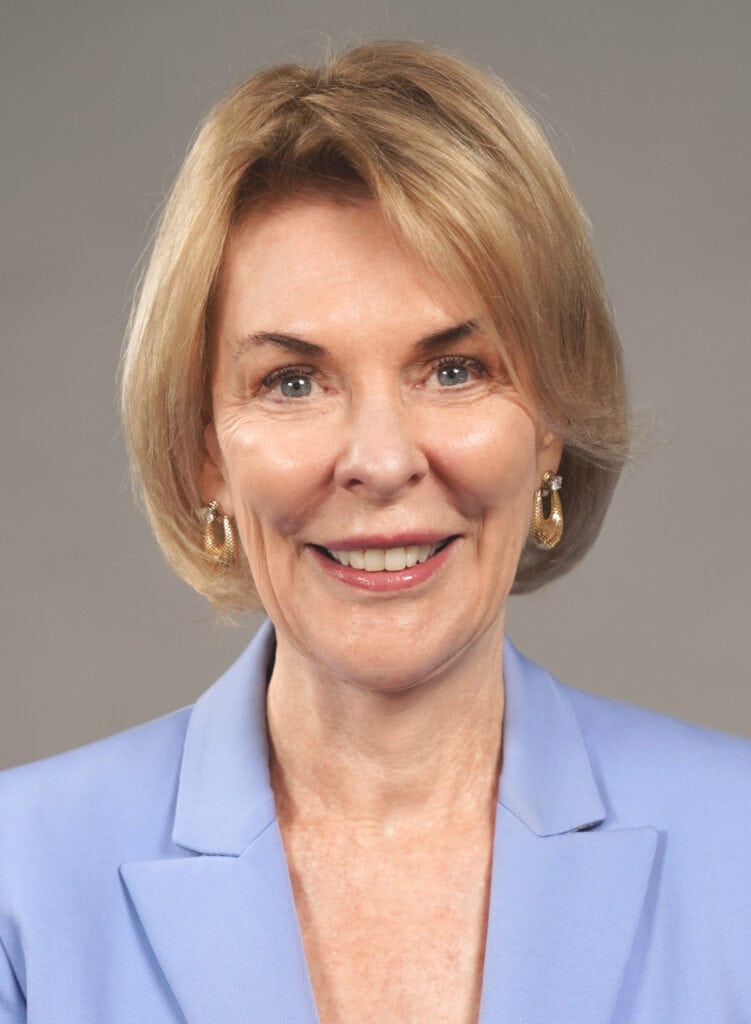
Jure Baloh, Ph.D., MHA

Jure Baloh, Ph.D., MHA, a 2022 graduate of the UAMS Translational Research Institute’s (TRI) KL2 Mentored Research Career Development Scholar Award Program, is using a recent National Institutes of Health (NIH) grant to support his work related to addiction treatment.

Baloh, an assistant professor in the UAMS Fay W. Boozman College of Public Health’s Department of Health Policy and Management, is developing and piloting a supervision strategy to support management and staff of addiction treatment programs.

The project is funded by a three-year, $657,103 R34 grant from the NIH National Institute on Drug Abuse. Baloh said there is a straight line from his KL2 (now K12) award to the R34.

“My KL2 experience was foundational for the success of my NIH application,” he said. “The mentorship, training, preliminary research and protected time over those two years allowed me to focus on this project and develop a truly competitive application.”

The study will provide the foundation for a future large-scale test of the supervision strategy.

“We’re trying to develop a system for addiction treatment facility supervisors to help support their counselors,” Baloh said. “That way, supervisors and staff can feel empowered and have the tools to help them do their jobs well. We think this approach can also help reduce the rates of burnout. We want to solve those issues.”

Previous studies suggest that treatment facility jobs can be highly demanding with low pay and long hours. That results in low morale and staff shortages, ultimately undermining the quality of services. The level of assistance a program can provide factors heavily into a person’s ability to recover from a substance use disorder, Baloh added.

“People receiving treatment need ongoing support from an attentive workforce to lead them,” he said. “Quality services are a key component to a successful recovery.
“Therefore, this study is focusing on the counselors, not so much the treatment. We’re focused on people having access to high quality treatment, to help them recover.”

This planning study will also emphasize the need for an increase in the use of evidence-based practices that provide support for the staff and supervisors.

“We’re trying out some components to see if we can do this at different levels,” Baloh said. “We’ll survey and interview supervisors and counselors to get an idea if they like the intervention, if it’s helpful, if it’s not too burdensome. If we’re successful in doing all that, they should be better supported to provide evidence-based treatments.”

In the U.S., addiction to opioids, methamphetamines and alcohol harm almost 50 million people annually. For supervisors of substance abuse centers to properly support counselors, they need evidence-based supervision strategies. According to Baloh, it’s common for supervisors of the programs to receive limited support.

That’s a major reason why developing and refining a supervision strategy and piloting it in treatment programs is important.

“The study is a small piece in a larger picture to improving the issues that the workforce experiences, which can help ensure access to high quality treatment,” Baloh said. “This study will provide information to inform planning and design of a future study to assess the effectiveness of the new supervision strategy in a large sample of substance use disorder programs.”

Assisting programs with methods for upgrading team morale and reducing turnover is important for Arkansans.

“The individuals working in the treatment field are our neighbors, family members, church members and friends,” Baloh said. “We hope that what we learn from this study — and future studies — is that we’ll be able to show that supervision strategies can support the workforce and increase the quality of care provided.”

“If the workforce does not receive good support, they’re unlikely to do quality work,” he said. “It’s an immediate problem to address.”
The information can also help future health professionals create methods to help supervisors and staff at other types of facilities.

“If it all proves effective, perhaps it’s something we can teach in our college’s Master of Health Administration program or other leadership trainings,” he said.

TRI is funded by the National Center for Advancing Translational Sciences of the NIH, Clinical and Translational Science Award numbers UM1 TR004909, K12 TR004924, and T32 TR004918.

Filed Under: Front, News, Newsroom

Why Is Asthma More Challenging for Arkansas Children? ACRI/UAMS Researcher Aims to Find Out with NIH Funding

Akilah Jefferson, M.D., received funding from the National Institutes of Health to explore why asthma is uniquely troublesome for Arkansas children.
Akilah Jefferson, M.D., will use the NIH funding to explore why asthma is uniquely troublesome for Arkansas children.

Children who grow up in Arkansas have a harder time with asthma than their peers elsewhere, and a scientist at Arkansas Children’s Research Institute (ACRI) and the University of Arkansas for Medical Sciences (UAMS) hopes to discover why.

Akilah Jefferson, M.D., an early career researcher at ACRI, will use a $662,000 four-year award from the National Institutes of Health (NIH) to explore why asthma is uniquely troublesome for Arkansas children. Jefferson, a recent graduate of the UAMS Translational Research Institute’s two-year KL2 (now K12) Mentored Research Career Development Award Program, is also an assistant professor in the College of Medicine Department of Pediatrics in the Division of Allergy and Immunology. She treats children with allergies and immune conditions at Arkansas Children’s Hospital (ACH) and Arkansas Children’s Northwest (ACNW).

Asthma is among the most common childhood conditions and can be especially daunting for children in underresourced and rural areas. In Arkansas, children living in rural communities often face higher rates of asthma, especially those from low-income families. They are also much more likely to have complications from asthma that put their lives at risk.

Jefferson and her research team will explore factors like a child’s home environment, access to health care and the quality of care they receive. They will also examine how different communities and health care providers might contribute to these challenges.

“A child’s zip code should have nothing to do with how easy it is for them to breathe. Arkansas children need our help to determine why asthma is so challenging in our state and to create new ways to help them,” Jefferson said. “Our goal is to ensure that every child, regardless of where they live, has the chance to breathe easy and thrive.”

By learning more about these factors, Jefferson hopes to develop targeted interventions that can improve asthma outcomes for children in rural Arkansas. This could include providing better education about asthma management, increasing access to health care, or addressing environmental factors that can trigger asthma attacks.

The funds are awarded through NIH’s Mentored Patient-Oriented Research Career Development (K23) program, designed to provide protected time for clinically trained researchers to receive intensive, supervised research training in biomedical research. The award supports a period of supervised research and research career development to prepare the candidate to successfully seek an NIH R01 or equivalent major research grant by the end of the award period. Tamara Perry, M.D., chief of Allergy and Immunology at Arkansas Children’s and a professor of Pediatrics in the UAMS College of Medicine, serves as Jefferson’s mentor on the project.

This work was supported by the UAMS Translational Research Institute, which is funded by the National Center for Advancing Translational Sciences at the National Institutes of Health, grant award Kl2 TR003108.

Filed Under: Front, News, Newsroom

UAMS Faculty Join TRI Leadership Team

(L-R) Jason E. Farrar, M.D., Melody Greer, Ph.D., and Tuhin Virmani, M.D., Ph.D., are new members of TRI’s faculty leadership team.

The UAMS Translational Research Institute (TRI) recently welcomed three UAMS faculty members to its leadership team, with Jason E. Farrar, M.D., Melody Greer, Ph.D., and Tuhin Virmani, M.D., Ph.D., providing oversight of key programs and serving on the TRI Leadership Council.

Farrar is co-director and a multiple principal investigator of the K12 Mentored Research Career Development Award Program, joining co-directors/MPIs John Arthur, M.D., Ph.D., and Mario Schootman, Ph.D. Farrar is an associate professor of pediatric hematology/oncology and director of the Arkansas Children’s Research Institute Genomic Core Laboratory. He is also co-director of the Arkansas Children’s Hospital Leukemia and Lymphoma Program.

Greer is co-director of the T32 Health Sciences Innovation and Entrepreneurship (HSIE) Training Program for postdoctoral fellows, joining co-director/principal investigator John Imig, Ph.D. Greer is an assistant professor in the College of Medicine Department of Biomedical Informatics and a graduate of the HSIE program.

Virmani is co-director of Translational Workforce Development, joining Schootman. Virmani will also lead new initiatives in clinical trials education through the Clinical Trials Learning Collaborative, scheduled to launch in 2025. He is an associate professor in the College of Medicine Departments of Neurology and Biomedical Informatics. He is also vice chair for Education and chief of the Neurodegenerative Disorders Division in the Department of Neurology. In addition, he is director of the Mission MSA Center of Excellence, the Huntington’s Disease Society of America’s Center of Excellence, and co-director of CurePSP Center of Care.

TRI Director Laura James, M.D., said she is excited to have them on the team.

“Each of these faculty leaders brings unique experience and expertise to TRI,” she said. “They are each committed to helping our programs thrive, and I am thrilled that they are here.”

Filed Under: Front, News, Newsroom

  • «Previous Page
  • Page 1
  • Page 2
  • Page 3
  • Page 4
  • Page 5
  • Page 6
  • Interim pages omitted …
  • Page 37
  • Next Page»
Translational Research Institute LogoTranslational Research InstituteTranslational Research Institute
Mailing Address: 4301 West Markham Street, Little Rock, AR 72205
Phone: (501) 686-7000
  • Facebook
  • X
  • Instagram
  • YouTube
  • LinkedIn
  • Pinterest
  • Disclaimer
  • Terms of Use
  • Privacy Statement
  • Legal Notices

© 2026 University of Arkansas for Medical Sciences