• Skip to primary navigation
  • Skip to main content
  • Skip to primary navigation
  • Skip to main content
Choose which site to search.
University of Arkansas for Medical Sciences Logo University of Arkansas for Medical Sciences
Translational Research Institute
  • UAMS Health
  • Jobs
  • Giving
  • About TRI
    • What We Offer
    • Leadership & Governance
    • Staff
    • Citing Translational Research Institute CTSA Support
    • What is Translational Research?
    • Contact TRI
  • Funding Opportunities
    • Grants
      • Pilot Award Program
      • Consortium of Rural States (CORES) Multi-Institutional Pilot Award Program
      • Team Science Voucher Program
      • Winthrop P. Rockefeller Cancer Institute Rural Research Award Program
    • Scholarships
      • K12 Mentored Research Career Development Scholar Awards Program
      • Health Sciences Innovation and Entrepreneurship Postdoctoral Training Program
      • Implementation Science Scholar Program
      • (STARs) Program – Strategies for Training and Advancing Researchers
      • SMART Program [Master’s in Clinical and Translational Sciences (MS-CTS)]
    • Community
      • Community Based Participatory Research (CBPR) Scholars Program
      • Community Partners Educated as Arkansas Research Leaders (CPEARL) Program
    • Awardee Responsibilities
  • Services & Resources
    • Services
      • Biostatistics, Epidemiology and Research Design (BERD) Consultation
      • Clinical Data Repository (AR-CDR)
      • Comprehensive Informatics Resource Core
      • Mock Study Sections
      • Research Participant Recruitment
      • Research Support: Clinical Trials Innovation Unit (CTIU)
      • Implementation Science Program
      • Research Ethics Consultation
    • Resources
      • ARresearch Registry
      • Center for Health Literacy
      • Data Safety Monitoring
      • Grant Writing & Dissemination
      • UAMS Profiles
      • UAMS Rural Research Network
      • Other Resources
      • COVID-19 Research Guidelines
      • Community Partner Research Training
  • Career Development & Scholarships
    • Scholarship Opportunities
      • K12 Mentored Research Career Development Scholar Awards Program
      • Health Sciences Innovation and Entrepreneurship Postdoctoral Training Program
      • Data Science Scholars Program
      • Implementation Science Scholar Program
      • SMART Program
      • Translational Research Innovations and Partners (TRIP) Program
    • Training & Educational Opportunities
      • innOVATION Seminar Series
      • Path 2 K Program
      • Translational Workforce Development
      • Graduate Certificate in Implementation Science
      • SMART Program [Master’s in Clinical and Translational Sciences (MS-CTS)]
      • Good Clinical Practice Training
    • Didactic Training
  • Community
    • Community Engagement Leadership
    • Community Advisory Board
    • Community Engagement Partners
      • Community Partner Celebration
      • Faith-Academic Initiatives for Transforming Health (FAITH) Network
    • Community Engagement Services
      • Consultations and Technical Assistance
      • Community Review Boards
      • Community Partner Research Training
      • Equipment Library
    • Programs and Funding
      • Community Partners Educated as Arkansas Research Leaders (CPEARL) Program
      • Community Based Participatory Research (CBPR) Scholars Program
      • Community Scientist Academy
    • Toolkits
      • CSA Online Toolkit
      • CPEARL Toolkit
  • Events
    • Research Day
    • Clinical Trials Learning Collaborative
  • Newsroom
  1. University of Arkansas for Medical Sciences
  2. Translational Research Institute
  3. Author: uamsonline
  4. Page 19

uamsonline

NCATS Seeks Applications to Repurpose Existing Drugs

The National Center for Advancing Translational Sciences (NCATS) is seeking applications for rigorous, pre-clinical research projects that are based on repurposing existing drugs or biologics. Through this new funding opportunity, NCATS anticipates committing $4.3 million in fiscal year 2016 to issue 10 to 15 awards in support of studies that establish the rationale for a clinical trial.

Pre-clinical studies funded through this initiative will serve as “use cases” to demonstrate the utility of an independent crowdsourcing effort or of a computational algorithm to predict new therapeutic uses of an existing drug or biologic. The goal of an individual project must be to explore the potential new use of an existing investigational therapeutic or one already approved by the Food and Drug Administration to treat another disease.

Interested researchers should submit a letter of intent by Dec. 13, 2015. Applications are due Jan. 13, 2016.

To learn more about RFA-TR-16-001, contact Therapeutics.Discovery@nih.gov.
Filed Under: News, Newsroom

TRI Offering Research Forums

Research Forum participant Aliza Brown, Ph.D.

Nov. 30, 2015 | Do you have a research idea and need some assistance moving forward? Have you submitted a grant application that did not get funded? The Translational Research Institute (TRI) may be able to help through its Research Forums. Research Forums are individually tailored help sessions to address your specific needs. They are private meetings between you and a panel of experts that can help you move your research ideas and projects forward.

Over the past year, TRI has hosted 10 Research Forums for researchers from UAMS, Arkansas Children’s Hospital, Central Arkansas Veterans Healthcare System, and the UAMS Northwest Campus. You can request a Research Forum at TRIServices@uams.edu.

Read here about the Research Forum experience of UAMS’ Aliza Brown, Ph.D.

Filed Under: Front, News, Newsroom

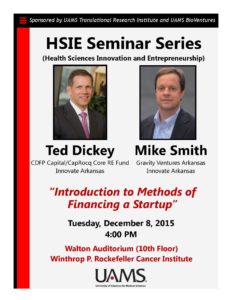
Dec. 8 Seminar: ‘Introduction to Methods of Financing a Startup’

December 8 2015 Dickey and Smith

The next monthly Health Sciences Innovation and Entrepreneurship (HSIE) seminar will be Dec. 8 at 4 p.m., Cancer Institute, 10th floor, Walton Auditorium. The seminar, “Introduction to Methods of Financing a Startup,” will be presented by two Innovate Arkansas advisors: Ted Dickey, a chartered financial analyst and general partner of CDFP Capital’s real estate fund; and Mike Smith Jr., a managing member of Gravity Arkansas, a member-managed angel fund.
Sponsored by the UAMS Translational Research Institute and UAMS BioVentures, the seminar series is open to all. It is available via WebEx. Get details.

Join WebEx meeting

Meeting number:  808 443 283

Join by phone: +1-855-749-4750 U.S. Toll Free

+1-415-655-0001 U.S. Toll

Access code: 808 443 283

Global call-in numbers  |  Toll-free calling restrictions

Add this meeting to your calendar.

Can’t join the meeting? Contact support.

Filed Under: News, Newsroom

TRI Research Grants Support UAMS Collaboration in Other States

Nov. 24, 2015 | The UAMS Translational Research Institute announced recipients of two pilot grants aimed at stimulating collaborative research with institutions in other states.

UAMS’ Joshua Kennedy, M.D., is the co-leader of a one-year project with the University of New Mexico Health Sciences Center (UNM HSC).  Another project is co-led by UAMS’ Sean Adams, Ph.D., with John Thyfault, Ph.D., at the University of Kansas Medical Center (KUMC).

The competitive awards were made available through the Western States Consortium Pilot Awards program. The consortium includes the University of Utah in addition to UAMS, KUMC and UNM HSC. Of the eight applications submitted, three one-year pilots of up to $50,000 were awarded, with costs shared by the institutions.

“Collaboration is essential in successful translational research, and I am proud that UAMS researchers represent two of the three projects selected for the 2015 program,” said TRI Director Laura James, M.D.

The UAMS – UNM HSC project, “Host-Pathogen Genomic Determinants of Pediatric Respiratory Infection Severity,” will study the role of genetics in children with acute respiratory infections.

Kennedy is 2013 recipient of the Translational Research Institute’s KL2 Mentored Research Career Development Award. His primary collaborator at UNM, Darrell Dinwiddie, Ph.D., is also a KL2 recipient.

Sean Adams, Ph.D.
Sean Adams, Ph.D.

The pilot award is expected to strengthen their ongoing KL2 research programs by uniquely blending their expertise in genetics, next-generation sequencing, virology, clinical infectious disease, and allergy and immunology.  The project, which will enroll 100 pediatric patients, involves two distinct populations with differing respiratory infection patterns.

The UAMS – KUMC project is titled “Metabolomics Signatures That Occur in Alzheimer’s Disease (AD) Patients With and Without Type 2 Diabetes in Comparison to Controls (non-AD) With or Without Type 2 Diabetes.”  The two institutions are combining their expertise in Alzheimer’s disease and type 2 diabetes (KUMC), and metabolomics and bioinformatics in metabolic disease states including type 2 diabetes (UAMS). They anticipate their work will provide key information on the links between type 2 diabetes and Alzheimer’s. It will also provide metabolic-based information on the cause and development of Alzheimer’s and possibly highlight therapeutic targets.

Other researchers on the project are UAMS’ Kartik Shankar, Ph.D., and KUMC’s Jill Morris, Ph.D., and Brian Piccolo, Ph.D.

Filed Under: Front, News, Newsroom

UAMS TRI, Community Groups Celebrate Research Partnerships

Nov. 20, 2015 | Twenty-five community groups were honored Nov. 13 for their contributions to research at the 3rd annual Community Partner Celebration sponsored by the UAMS Translational Research Institute (TRI).

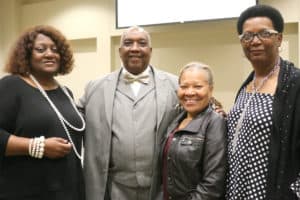
TRI Community Advisory Board members Naomi Cottoms, Charles Moore and Ann Huff with Kathryn Hall-Trujillo (center).
TRI Community Advisory Board members Naomi Cottoms, Charles Moore and Anna Huff Davis with Kathryn Hall-Trujillo (center).

The celebration, at the Center at University Park in Little Rock, included welcome remarks from TRI Director Laura James, M.D., and UAMS Chancellor Dan Rahn, M.D. The keynote speaker was Kathryn Hall-Trujillo, M.P.H., founder of the Birthing Project USA, which began as a community project to assist pregnant women and has been replicated in other countries.

The key message to the 88 attendees representing 21 grassroots community organizations and four advisory boards, was how important their work is to finding solutions to society’s most challenging health problems.

Rahn noted that Arkansas ranks at or near the bottom on virtually every key measure of health. No matter how much knowledge there is about obesity, diabetes or cancer deaths, he said, it is of no value without new, innovative approaches to improving health.

“If we keep doing what we’ve been doing we’ll get what we already got,” Rahn said.

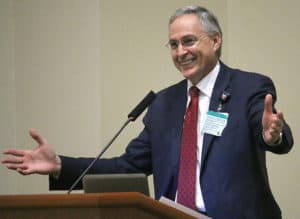
UAMS Chancellor Dan Rahn, M.D., welcomed UAMS' partners to the celebration in their honor.
UAMS Chancellor Dan Rahn, M.D., welcomed UAMS’ partners to the celebration in their honor.

“The future hinges on some new ways of thinking and developing new knowledge and new methodologies to actually change the future,” he added. “That’s what you can help us with. We thank you for doing this, we thank you for partnering with us. We truly need our partners to help us chart a course for a healthier tomorrow.”

James said the perspective of UAMS’ grassroots partners is key.

“We need to interact with our community partners, and we need to partner with you to do research that is the most meaningful to Arkansans,” James said. “What’s important about tonight is we are celebrating and thinking about how we can in partnership take scientific discoveries or new findings and push them into the homes and families and communities and churches out in the state to improve the health of our state.”

Featured speaker Hall-Trujillo, an Arkansas native whose Birthing Project has become an international model for helping pregnant women, praised the work of the attendees.  A key to the success of her project was realizing the need for communities to understand how important systems and resources work, such as university, medical, education, housing and legal systems.

“The resources we brought to the table were partnered with people who had resources,” Hall-Trujillo said. “What we need to do is be the best relationship builders, the best ambassadors and best liaisons for the families we support.  I can see by looking at this room, that that is exactly what you’re doing, and I applaud you for doing it, and I can see a better place.”

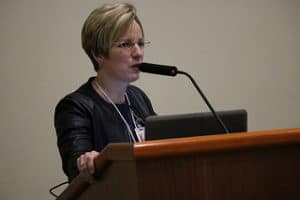
Laura James, M.D., TRI Director, applauded the work of UAMS' community partners.
Laura James, M.D., TRI Director, applauded the work of UAMS’ community partners.

The community organizations honored this year are:

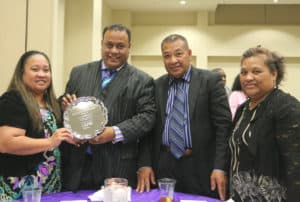
Representatives of King's Chapel with their award.
Representatives of King’s Chapel with their award.
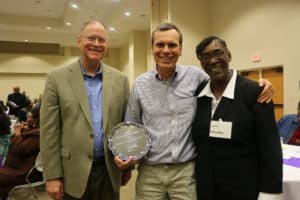
Representatives of Oak Forest United Methodist Church with their award.
  • Arkansas Community Health Worker Association (ARCHWA)
  • Arkansas Voices for the Children Left Behind
  • Cisneros Center for New Americans
  • Divine Deliverance
  • East Arkansas Family Health Center
  • El Zócalo Immigrant Resource Center
  • First Baptist Dew Drop Church
  • Hispanic Women’s Organization of Arkansas
  • House of Benjamin
  • Human Rights Campaign
  • King’s Chapel
  • Lee County Cooperative Clinic
  • New Light MBC
  • Oak Forest United Methodist Church
  • Planting A Seed Foundation
  • Pleasant View Ministries Church
  • Regenerated Missionary Baptist Church
  • Rural Community Alliance
  • Seeds of Liberation
  • Washington Regional Medical Center Employee Education Department
  • Young Adult Opportunity Center

The community advisory boards honored this year are:

  • Arkansas Fetal Alcohol Spectrum Disorders Task Force
  • Thomas & Lyon Longevity Clinic Patient
  • and Family Advisory Council
  • TransForm Health Arkansas Research Working Group
  • UAMS Hospital Patient and Family Advisory Council

VIEW THE EVENT PHOTO ALBUM

Filed Under: Front, News, Newsroom

TRIbune Newsletter

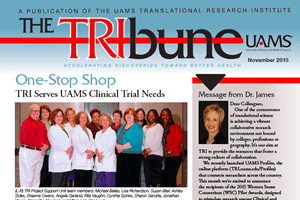
The November issue of TRI’s newsletter, The TRIbune, is now available. This issue features our clinical trials services, our promotion of health sciences innovation and entrepreneurship, KL2 Awardee Ling Gao, M.D., Ph.D., published in the NEJM, and TRI-cited publications.  

 DOWNLOAD NEWSLETTER

nov15

Filed Under: Front, News, Newsroom

Request a Mock Study Section by Dec. 4 for February Proposals

TRI is pleased to be able to offer Mock Study Sections for any researcher seeking review of an external grant application. Reviews are available for laboratory, animal and human

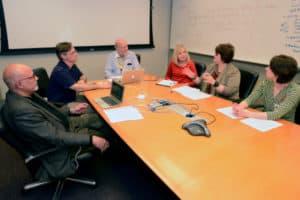
TRI Mock Study Section

participant study proposals. New submissions and resubmissions will be considered. Interested researchers can request a Mock Study Section through the TRI Portal (TRIServices@uams.edu) and should submit draft copies of their proposal, budget, and biosketch, as well as comments from a previous submission (if applicable).  The request deadline for review of February proposals is Dec. 4, 2015.

Mock Study Sections are intended to be learning experiences and investigators should plan to be present. Collaborators are also encouraged to attend. Participating investigators will be expected to provide TRI with follow-up information on grant submission outcomes, scores and funding awards.

Filed Under: Front, News, Newsroom

UAMS Clinical Trials Medicare Coverage Analyses

Dec. 3, 2015 | The Medicare National Coverage Determination (NCD) for Clinical Trials outlines items and services that are not billable to Medicare. These include “items and services customarily provided by the research sponsors free-of-charge for any enrollee in the trial.”  The NCD provides no further clarification for this language.

Historically UAMS has not negotiated when a sponsor offered to pay for an item or service; as a result that offer was accepted as a term of the final agreement. An item or service that is paid by the sponsor is not billable to Medicare and must be designated “research,” even if it would otherwise be considered conventional care.

Based upon a recent review of our process with the Office of Institutional Compliance, UAMS has determined that the sponsor’s offer to pay for such items and services is merely a part of the overall negotiation of the final clinical trial agreement. A number of statements, FAQs, and other language from CMS was analyzed as a part of this review, including the following from a proposed replacement Clinical Trial NCD:  “Medicare does not cover usual patient care when such care is provided free to the Medicare beneficiary or when the study sponsor agreement with investigator sites or the informed consent documents provided to the patient specify that the care will be provided free to participants (§1862(a)(2); 42 CFR 411.4).”

Accordingly, investigators will be able to use the sponsor exhibit as a guide in negotiations rather than something that must be accepted exactly as written. However, once negotiations are complete and the contract is signed, the final signed contract must be followed exactly as written. Once signed, these items will be analyzed as they have been, according to language in the contract, protocol and consent.

The TRI Research Finance Team will now perform coverage analyses in which they initially do their analyses based on the protocol, consent, sponsor exhibit and CTA. However, the team will also provide notes regarding any item or service subject to a proposed sponsor payment that may be billable to Medicare or other payors as conventional care. The research team will have this information available for their negotiations with the sponsor. The final coverage determination for items and services will occur upon completion of the signed clinical trial agreement.

Caveat:

One issue has arisen under this new approach. Billing rules may limit a sponsor’s ability to pay for various activities that occur during certain visits or procedures. For example, where a visit/procedure is bundled, that is, where the services may not be itemized individually for payment, neither the sponsor nor UAMS may pick and choose which items can be invoiced to the sponsor and which can be billed as routine care. The TRI Research Finance Team will identify these instances for investigators as part of the coverage analysis.

For any questions related to this new approach please contact Kennetha Newman, TRI program coordinator, at 501-526-7665.

Filed Under: News, Newsroom

UAMS Staff Expertise Helps Researcher Make History

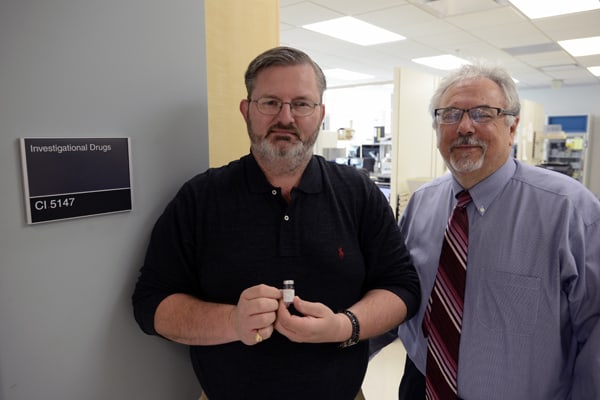
Larry Parker (left) in the UAMS Office of Research Regulatory Affairs, with Thomas Kieber-Emmons, Ph.D., in the UAMS Research Pharmacy. Parker has been a mainstay in the years-long effort to bring Kieber-Emmons’ breast cancer vaccine to clinical trial.

Oct. 22, 2015 | Behind the headlines of his breast cancer vaccine, now in a phase II clinical trial, UAMS’ Thomas Kieber-Emmons, Ph.D., tells a back story that inspires him and even draws applause from colleagues.

Kieber-Emmons peppers the story with some significant numbers: 1, 6, 28, 1,500, 4,000. The story begins in 2005 with 1, meaning  Kieber-Emmons’ first-in-man, computer-designed vaccine. No researcher at UAMS had developed such a vaccine or attempted the mammoth effort to deliver a synthesized product that could be safely tested in humans.

“This is not for the faint of heart,” he said.

In addition to required preclinical safety/toxicity studies mandated by the FDA, which were firsts in their own right at UAMS, requiring a rethinking of how the institution viewed such studies, Kieber-Emmons sought assistance within UAMS to prepare his investigational new drug (IND) application for the FDA.  A meeting was arranged with the then-Research Support Center, now the Office of Research Regulatory Affairs.

“There were 28 people there,” he recalled, shaking his head in amazement. “My first thought was, ‘why 28?’ So many people were part of this story, and it turns out they all had a meaningful role to play. It really did take a village.”

Having joined UAMS from the University of Pennsylvania, which has a much larger biomedical research enterprise, Kieber-Emmons was astonished that UAMS had such expertise. His previous employer would have had to hire a contract firm to handle what UAMS did by itself, he said. “It’s just phenomenal. The resources that UAMS brought to this is big-time.”

UAMS Office of Research Regulatory Affairs Manager Lyndsey Avery and Quality Assurance Unit Manager Larry Parker with reports compiled by their office to help launch human studies of a new breast cancer vaccine.

Still, getting his vaccine discovery into a form that could be tested in humans tested the limits of UAMS’ research resources, said Larry Parker, a mainstay on the project as Quality Assurance Unit manager for the Office of Research Regulatory Affairs.

“We were stretched to pull it off,” he said. “There are a lot of wheels and gears that have to be moving in the right direction to do this kind of stuff.”

Other key staff included Carole Hamon, Regulatory Affairs Unit Manager (retired, 2014), and Raymond Anderson, Quality Assurance Unit manager (retired, 2009).

In addition to numerous meetings with FDA staff, there were weekly meetings involving Kieber-Emmons and UAMS staff as they worked to meet the agency’s extensive safety requirements. Their work included writing 97 standard operating procedures (SOPs) that required the agency’s approval.

The IND application, submitted in 2011, was more than 1,500 pages, the largest IND application ever submitted by UAMS. Of all the numbers in Kieber-Emmons’ story, six may be his most prized; that’s how many questions the FDA posed after its review of the application.

“I’m almost more proud of that than the results of the vaccine, which is doing very well,” Kieber-Emmons said. “Other investigators are just amazed when I tell them there were only six questions; people clap.”

The FDA’s questions were received by Kieber-Emmons late on a Friday, and he and staff went to work that weekend drafting their responses, which went in the mail on Monday.

The experience speaks to the quality of people at the Office of Research Regulatory Affairs, he said.

“Our research support people know what they’re doing and they are very careful, so I love them, and I think they’re just the best,” he said.

The vaccine proved to be safe in a phase I trial. The phase II trial is examining if the vaccine improves the efficacy of preoperative chemotherapy. The trial includes women who are newly diagnosed with breast cancer to determine if the combination of vaccine and standard chemotherapy improves the benefit from preoperative therapy.

The heavy workload on Kieber-Emmons’ project continues for the UAMS Office of Research Regulatory Affairs. Annual reports, adverse event reporting and annual product stability testing are all part of the project’s management. Parker’s work, Kieber-Emmons said, includes working closely with the company that manufactures the vaccine, another company that tests the manufacturing process and a third company that is putting the vaccine into vials.

In his quality assurance/project management role, Parker has been the UAMS contact with these three companies. His job has included planning of testing protocols, manufacturing/testing timelines, review and approval of batch records, product labels, and testing reports. He organizes all the product information from the companies into a format required by FDA for submission.

Parker notes that he has more than 4,000 emails specific to the project dating to March 2006, and several people in his office have in excess of 1,000 emails for the project.

“We’re in the process of filing the fifth complete version of the Chemistry Manufacturing and Control (CMC) section of the IND,” Parker said. “Each of these versions has been in excess of 450 pages, and the current revision is in excess of 600 pages. This doesn’t include the filing of all protocol amendments and annual progress reports to the IND.  Needless to say, we’ve killed a few trees to keep this IND up to date with FDA.”

The Office of Research Regulatory Affairs currently manages 15 active INDs that include 20 current clinical trials and 15 investigational device exemptions (IDEs). Parker urges researchers to call his office if they are planning regulated research such as for new drugs or devices.

“Call us sooner rather than later,” he said. “The later we’re involved, the more work the researcher has to redo.”

The Office of Research Regulatory Affairs can be reached at 501-526-6876.

Filed Under: Front, News, Newsroom

PCORI Releases CME Videos for Researchers

The Patient Centered Outcomes Research Institute (PCORI) has released a series of six free CME/CE activities on its methods standards for patient-centered outcomes research. The CME/CE modules are available for viewing at: http://www.pcori.org/research-results/cmece-activities. Researchers who wish to seek funding from PCORI will want to know about these new standards. Led by highly qualified faculty, these CME/CE modules include the PCORI Methodology Standards recommendations for researchers on best practices for conducting patient-centered outcomes-oriented clinical research.

The number of AMA PRA Category 1 Credits™ are listed with each of the online activities below.  All other partnering entities’ credit designation information (physician assistants, nursing, pharmacy) can be found in the Accreditation/Credit Designation statement for each individual activity.

  1. Basic Context, Role, and Development of Standards in Comparative Effectiveness Research. Faculty: Mark Helfand, M.D. .50 AMA PRA Category 1 Credits™
  2. Role of Standards in PCORI Funding Announcements and the Application Process. Faculty: Robin Newhouse, Ph.D. and Peter H. Schwartz, M.D., Ph.D.  .50 AMA PRA Category 1 Credits™
  3. Standards Categories 1 & 2 — Formulating Research Questions and Patient Centeredness. Faculty: C. David Mullins, Ph.D., and Susan Zickmund, Ph.D. 1.0 AMA PRA Category 1 Credits™
  4. Standards Categories 3, 4 & 5 — Data Integrity, Preventing and Handling Missing Data, and Heterogeneity of Treatment Effects. Faculty: Mark Helfand, M.D., and Sharon-Lise Normand, Ph.D.  .50 AMA PRA Category 1 Credits™
  5. Standards Categories 6, 7 & 8 — Data Registries, Data Networks, and Causal Inference. Faculty: Jason T. Connor, Ph.D., and Mark Helfand, M.D. 1.0 AMA PRA Category 1 Credits™
  6. Standards for Specific Study Designs: Standard Groups 9 & 10 — Adaptive and Bayesian Trials Designs and Diagnostic Tests. Faculty: Mark Helfand, M.D.  .50 AMA PRA Category 1 Credits

These activities are approved for AMA PRA Category 1 Credits™.

Filed Under: News, Newsroom

  • «Previous Page
  • Page 1
  • Interim pages omitted …
  • Page 17
  • Page 18
  • Page 19
  • Page 20
  • Page 21
  • Interim pages omitted …
  • Page 29
  • Next Page»
Translational Research Institute LogoTranslational Research InstituteTranslational Research Institute
Mailing Address: 4301 West Markham Street, Little Rock, AR 72205
Phone: (501) 686-7000
  • Facebook
  • X
  • Instagram
  • YouTube
  • LinkedIn
  • Pinterest
  • Disclaimer
  • Terms of Use
  • Privacy Statement
  • Legal Notices

© 2026 University of Arkansas for Medical Sciences